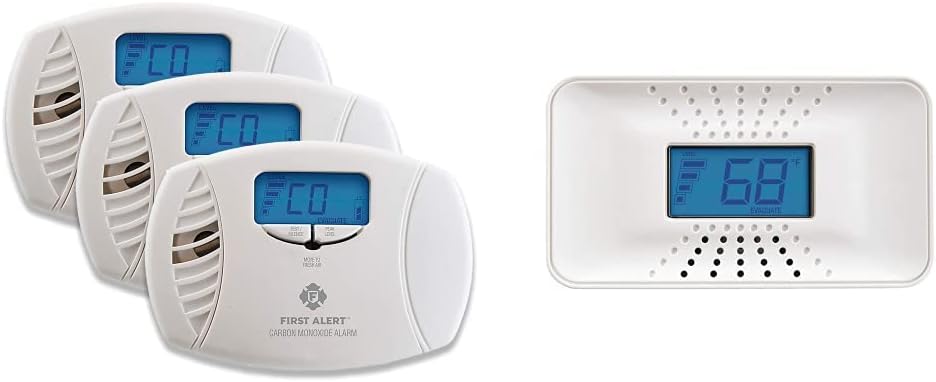
A sealed 10-year battery is the whole argument for the CO710: nothing to replace, nothing to buy again, and an end-of-life warning when the decade is up. An electrochemical sensor drives an 85-decibel alarm, and a backlit digital display shows the current carbon monoxide reading alongside room temperature. It mounts on a wall or sits on a shelf, and it is small and light enough that owners move it between homes and hotel rooms. There is no app and no hub.
Full review
A sealed battery that outlasts the sensor
The battery is not user-serviceable and is not meant to be. It is sized to run the sensor for ten years, after which the unit signals end of life and gets replaced whole. Owners who have kept units for the full term report the end-of-life chirp arriving on schedule rather than early. That model also matches building codes in the growing number of jurisdictions that now require sealed-battery alarms instead of ones with a removable cell.
85 decibels from an electrochemical sensor
Detection is electrochemical, the standard approach for residential carbon monoxide alarms and the one least prone to nuisance triggering from cooking or steam. The alarm is rated at 85 decibels, loud enough to carry through a closed bedroom door in most homes. It is a carbon monoxide alarm only, so it does not replace a smoke detector and should be planned alongside one rather than instead of it.
A digital readout, not just a warning light
The display shows the measured carbon monoxide level and the room temperature, and it is backlit for reading in the dark, though it does not stay lit. The readout is the practical difference between this and a bare alarm: a low but rising level from a blocked flue or an idling car in an attached garage becomes visible before it becomes loud, which is what lets a problem get fixed early.
The test button wants a firm press
The test button needs a deliberate, firm press, and enough owners have assumed a dead unit on the first light tap that it is worth knowing before installing. It is a design annoyance rather than a fault, but on a safety device the difference matters. The housing is compact enough for a shelf and light enough to carry, which is also why some owners take one along when traveling.
No connectivity of any kind
There is no Wi-Fi, no app and no interconnect, so this alarm cannot tell another alarm to sound and cannot notify a phone when nobody is home. For a single-story home or a rental where drilling and wiring are not options, that is an acceptable trade. For a large house where an alarm in the basement needs to wake someone upstairs, an interconnected or connected model is the better buy.
Strengths
- +10-year sealed battery eliminates need for battery replacement
- +Digital display shows carbon monoxide levels clearly
- +Easy to install and portable for travel use
- +Works well in various locations including hotels
Watch-outs
- −Requires firm pressing to test function
- −Some users report conflicting information about optimal placement
How it compares
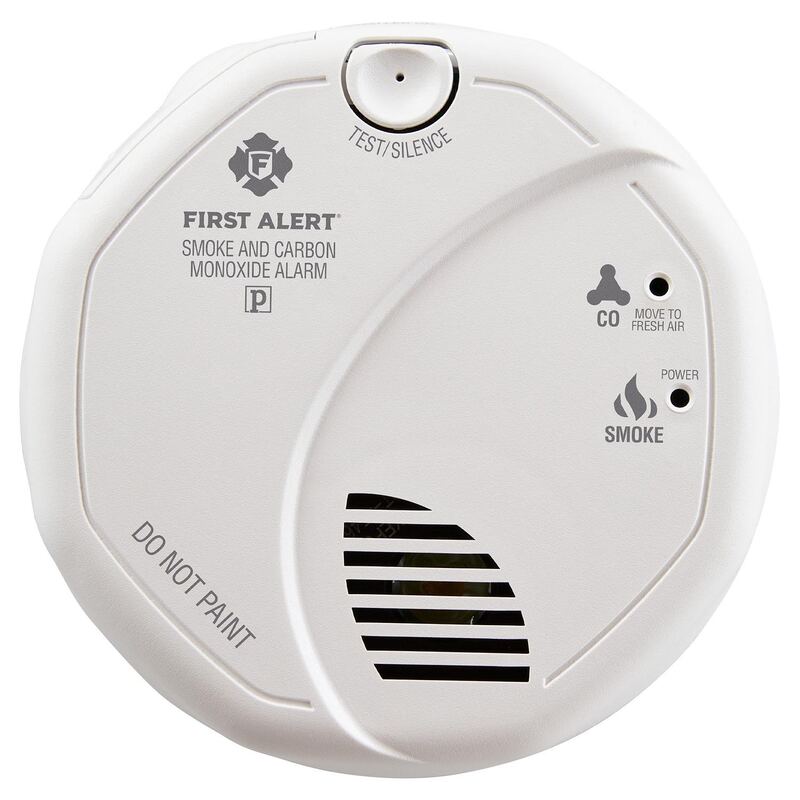
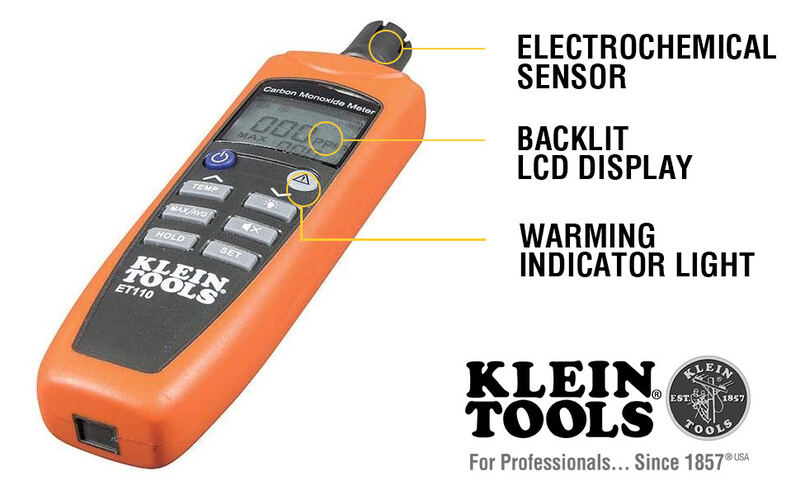
The CO710 excels with its 10-year sealed battery, unlike the Klein ET110 which requires periodic calibration and the SC5 which needs regular battery replacements. While the SC5 offers smart features and the basic First Alert detector provides dual protection, the CO710 stands out for its portability and travel-friendly design, making it ideal for temporary living situations.
Rating sources
Our 4.0 score is the average of these published ratings. Ratings marked * were derived from the reviewer’s written analysis or video transcript — the publisher didn’t print an explicit numeric score, so we inferred one from their own words. Click through to verify. More about methodology.