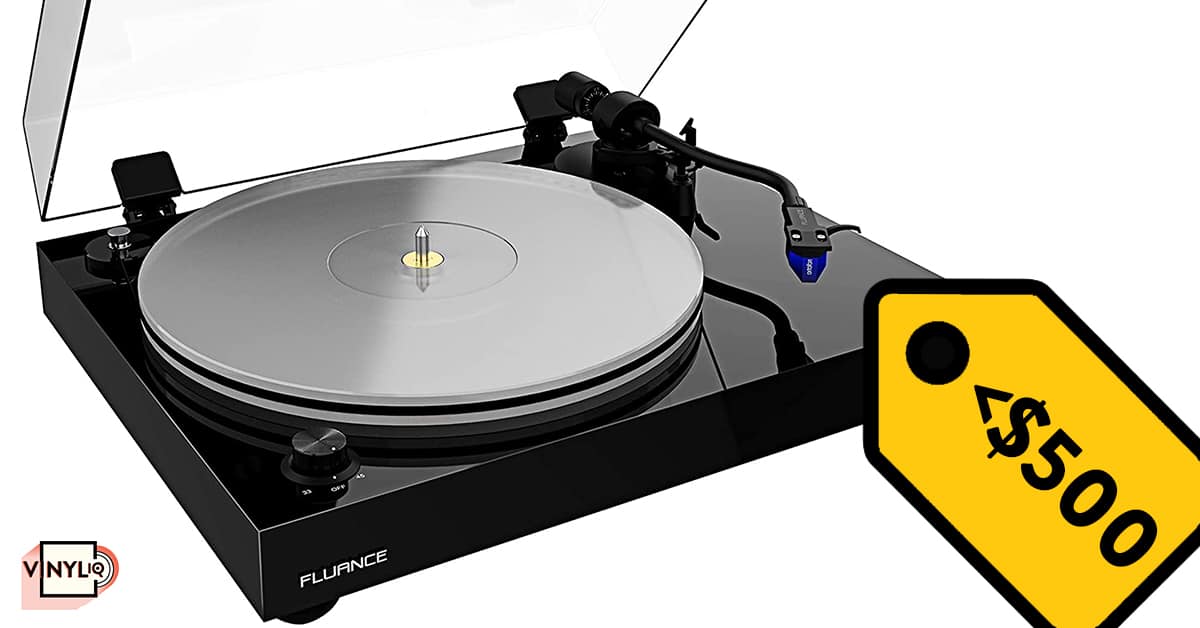
The Fluance RT85 is the most complete sub-$500 turntable for buyers who want audiophile sound out of the box. Its pre-installed Ortofon 2M Blue, acrylic platter, and servo-controlled DC motor combine for a clean, detailed, speed-stable presentation that reviewers repeatedly described as overachieving for the price. It demands a separate phono stage and is fully manual, but for sound-per-dollar it sets the bar in this group.
Full review
Real-World Performance
The RT85's headline component is the pre-mounted Ortofon 2M Blue cartridge, a part most rivals make you buy and fit separately. TechHive's reviewer described the package as delivering "high-value sound from the first note, with some warm overtones," and called the deck "an overachiever" that lets you enjoy high-end sound at a fraction of the competition's price. Popular Science went further, saying it provides "some of the clearest and most stable sound possible" for the money, and Forbes contributor Brad Moon praised its "stellar performance and unbeatable value." That breadth of agreement across mainstream and enthusiast outlets is itself notable, because budget decks usually split reviewers. The combination of the nude elliptical stylus and a heavy acrylic platter produces a detailed midrange and a low noise floor that exposes texture in well-pressed records. Vocals sit forward and natural, cymbals shimmer without harshness, and the soundstage has a believable sense of width that cheaper decks flatten.
Speed stability is where the RT85 separates itself from cheaper belt-drive decks. Fluance specifies wow and flutter at a measured 0.07% and a signal-to-noise ratio of 76 dB, both helped by a DC servo motor that the company says samples and corrects speed 500 times per second. In practice that means sustained piano notes and held vocals stay locked in pitch rather than wavering, a fault that plagues entry-level players. TechHive did note the cartridge "smoothed over some" of the finest nuances, so it is not a giant-killer against four-figure decks, but at this price the resolution is genuinely impressive.
Build Quality and Design
The RT85 is built around a high-mass MDF plinth finished in real wood veneer (bamboo, walnut) or piano gloss, sitting on adjustable vibration-isolation feet. The whole assembly weighs nearly 17 pounds, and that mass is the point: it resists footfall, resonance, and acoustic feedback from nearby speakers far better than the plastic-bodied decks at the bottom of the market. The static-balanced S-type aluminum tonearm uses an adjustable counterweight and anti-skate, giving owners the ability to dial in tracking force precisely.
The acrylic platter is the other structural standout. At three pounds and 12 inches, it doubles as a slip mat (no felt needed), couples well to the record, and its density helps damp vibration before it reaches the stylus. Reviewers consistently single out the platter as a feature usually reserved for more expensive turntables. Assembly is straightforward, with the cartridge pre-aligned at the factory, so most owners are playing records within 15 minutes.
Long-term, the RT85 is built to last and easy to maintain. The 2M Blue's stylus is user-replaceable, so when it wears you slot in a fresh one rather than buying a whole cartridge, and you can step up to a 2M Bronze or Black stylus for better sound on the same body. The belt is a simple service item, and Fluance's parts support is good. With basic care, the RT85 is a deck you keep for many years rather than replace, which strengthens its already strong value story.
What Reviewers Loved
Across professional and owner reviews, the recurring theme is value. Forbes contributor Brad Moon, in a review hosted by Fluance, praised its "stellar performance and unbeatable value." TechHive gave it high marks specifically for its price-to-performance ratio. Owners on retail listings repeatedly describe it as "a well built and beautiful looking turntable" whose price-versus-performance is "off the charts."
The factory-fitted Ortofon 2M Blue is the single most-praised element, because buying that cartridge alone often costs more than $200. Having it pre-mounted and aligned removes both the cost and the intimidating setup step that turns beginners off vinyl. Combined with the acrylic platter and isolated motor, reviewers frame the RT85 as a deck that reads on paper like it should cost close to four figures.
Where It Falls Short
The biggest practical limitation is the absence of a built-in phono preamp. Unlike the Audio-Technica AT-LP120XUSB or the Sony PS-LX310BT, you cannot plug the RT85 straight into powered speakers or a line input; you need a receiver with a phono stage or a separate preamp, which adds cost and a box. For a buyer expecting plug-and-play, that is a meaningful catch.
It is also fully manual with no auto-stop, so the platter keeps spinning and the stylus rides the run-out groove until you lift the arm yourself. The motor is single-speed-belt-positioned rather than electronically switched, so changing between 33 and 45 RPM is a manual belt move on some configurations. And at its $499 list price, it leaves no headroom under the category's $500 cap, so it is the priciest pick here even before you add the required preamp. None of these are sound-quality compromises, but together they make the RT85 the least plug-and-play deck in this group and the one with the highest all-in system cost.
How It Compares to Alternatives
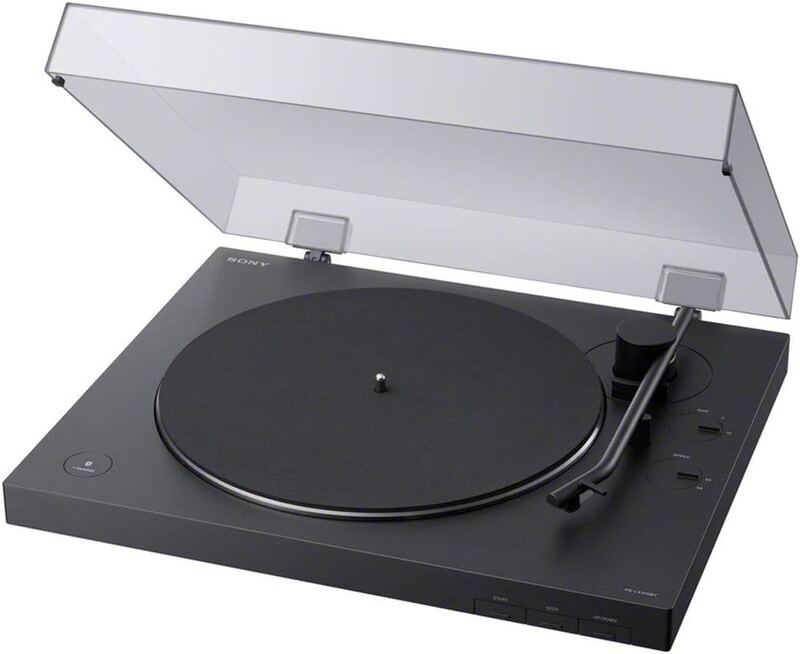
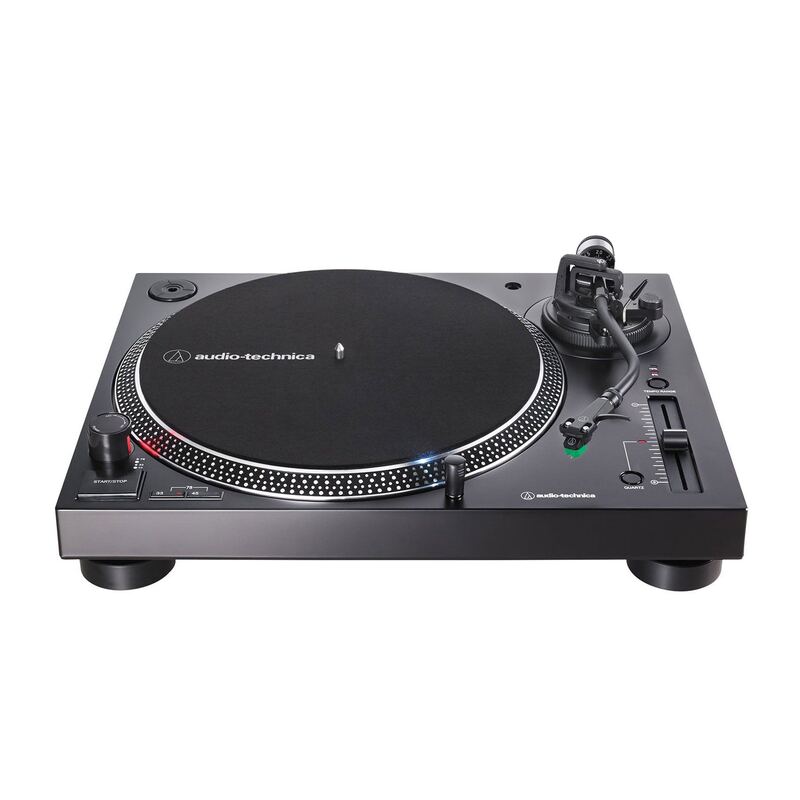
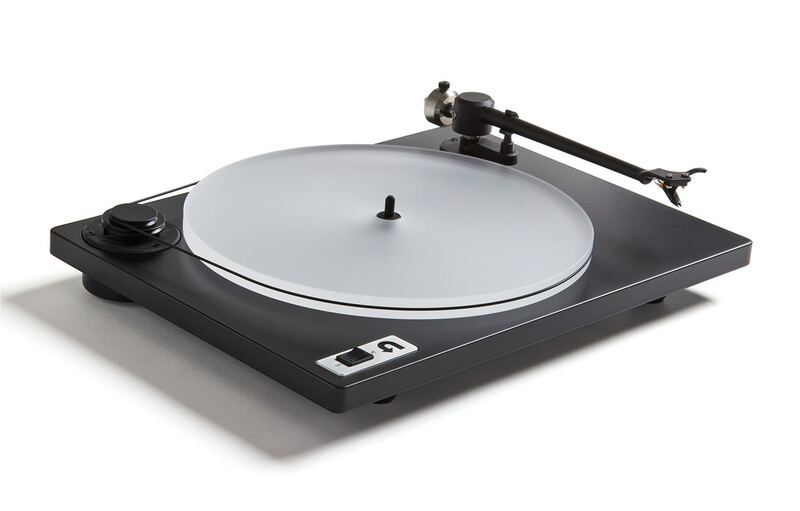
Against the Audio-Technica AT-LP120XUSB, the RT85 trades the AT's direct-drive convenience, USB ripping, and built-in preamp for a better cartridge, a quieter acrylic platter, and lower measured wow and flutter. The AT is the more flexible all-in-one; the RT85 is the better-sounding deck. Compared to the U-Turn Orbit Plus, the RT85 ships with a substantially better cartridge (2M Blue vs OM5E) and a heavier plinth, which is why it ranks above the Orbit Plus here.
The Pro-Ject T1 Phono SB and Sony PS-LX310BT both undercut the RT85 on price and add built-in phono stages, but neither matches its resolution or speed stability. The RT85 is the choice when sound quality is the priority and you are willing to add an external phono stage to your system.
Value at This Price
The value case for the RT85 rests almost entirely on its cartridge. The Ortofon 2M Blue, when bought separately, typically sells for well over $200, so the deck arrives with roughly half its retail price effectively spent on the stylus that does the listening. That is unusual at this tier, where rivals like the U-Turn Orbit Plus and Pro-Ject T1 Phono SB ship with entry-level cartridges. Add the acrylic platter and isolated servo motor, both features that usually appear on decks costing more, and the parts-for-the-money equation is firmly in the RT85's favor.
The one asterisk is that you must budget for a phono preamp, which adds $50 to $150 to the system cost. Even with that addition, the total typically lands at or just over $500 for a setup that out-resolves everything else here. Reviewers' repeated framing of the RT85 as a deck that should cost near four figures is not hyperbole; it is the most sound-per-dollar option in this comparison for anyone whose system can accommodate the external stage.
Who It's Best For
The RT85 is for the listener who has decided vinyl is a long-term hobby and wants the best sonic foundation under $500. It rewards good pressings and a capable downstream system, and the upgrade path (the 2M Blue stylus can be swapped for a 2M Bronze or Black later) means it can grow with you. If you already own an integrated amp with a phono input or a standalone phono preamp, the missing onboard stage is a non-issue.
It is not the pick for someone who wants to plug into a soundbar over Bluetooth, rip records to a computer, or press a button and walk away; the Sony PS-LX310BT or the AT-LP120XUSB serve those needs better. But for pure analog sound per dollar, the RT85 is the clear leader in this group.
Strengths
- +Factory-mounted Ortofon 2M Blue cartridge punches well above the price class
- +High-density acrylic platter and isolated DC servo motor keep wow & flutter at a measured 0.07%
- +High-mass MDF plinth with vibration-isolation feet resists footfall and resonance
- +Static-balanced S-type aluminum tonearm with adjustable counterweight and anti-skate
- +Reads like a four-figure deck at half the money according to reviewers
Watch-outs
- −No built-in phono preamp, so you need a receiver or external phono stage
- −Fully manual operation, no auto-stop or auto-return
- −Single-speed motor swap (no electronic 33/45 button)
- −At list price it bumps right against the $500 ceiling
How it compares
The RT85 outclasses the Audio-Technica AT-LP120XUSB and U-Turn Orbit Plus on out-of-box cartridge quality thanks to its Ortofon 2M Blue, but unlike the AT-LP120XUSB and Sony PS-LX310BT it has no onboard phono stage. Its acrylic platter and 0.07% wow & flutter measurement are the best in this group.
Who this is for
At a glance: Vinyl listeners who already own (or will buy) a phono preamp and want the best pure sound quality under $500.
Why you’d buy the Fluance RT85
- Factory-mounted Ortofon 2M Blue cartridge punches well above the price class.
- High-density acrylic platter and isolated DC servo motor keep wow & flutter at a measured 0.07%.
- High-mass MDF plinth with vibration-isolation feet resists footfall and resonance.
Why you’d skip it
- No built-in phono preamp, so you need a receiver or external phono stage.
- Fully manual operation, no auto-stop or auto-return.
- Single-speed motor swap (no electronic 33/45 button).
Rating sources
“The RT85 is an overachiever...the RT85 will have you enjoying high-end sound at a fraction of the price of the competition.”
“An incredible value for the money if you're looking for a turntable that will provide you with some of the clearest and most stable sound possible.”
“Stellar Performance And Unbeatable Value.”
Our 4.7 score is the average of these published ratings. Ratings marked * were derived from the reviewer’s written analysis or video transcript — the publisher didn’t print an explicit numeric score, so we inferred one from their own words. Click through to verify. More about methodology.