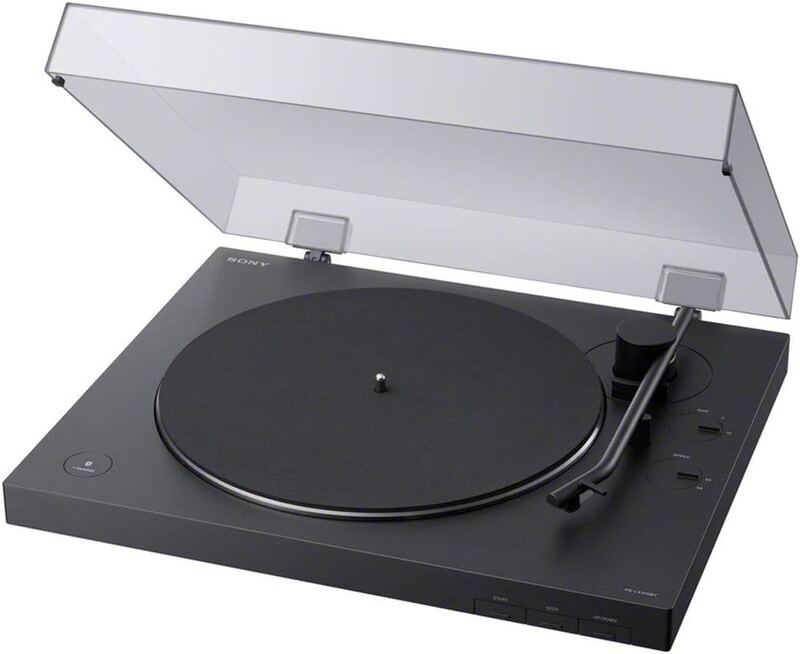
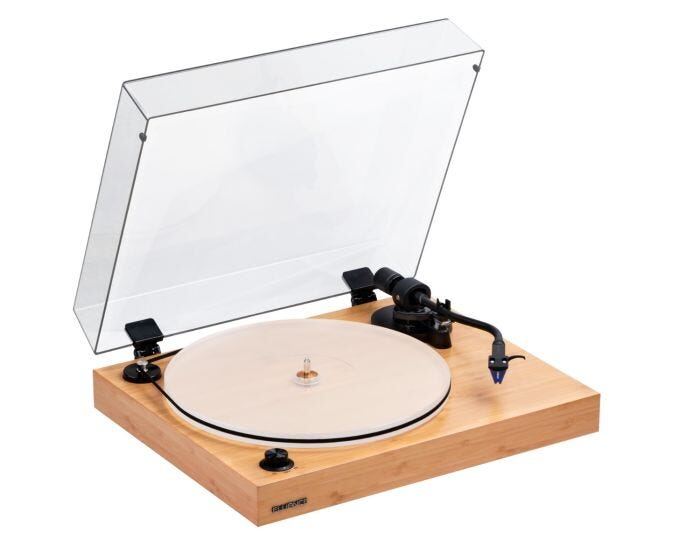
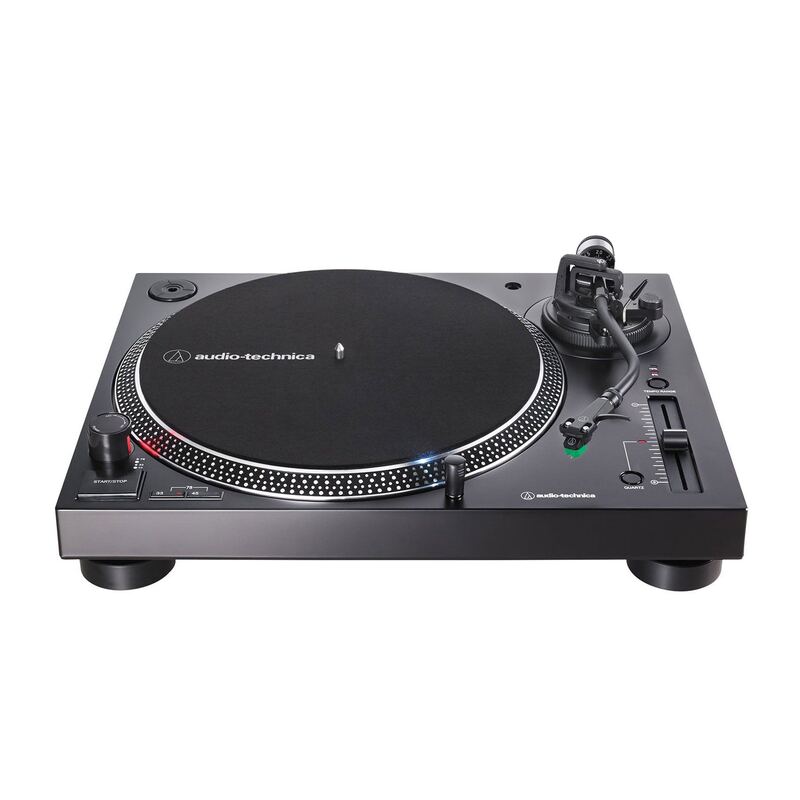
The U-Turn Orbit Plus is a hand-assembled, made-in-USA belt-drive turntable that pairs a grooved acrylic platter and a precision magnesium-armtube tonearm with an Ortofon OM5E cartridge. Reviewers praise its clarity and clean design, rating it on par with the best in the group for detail. Its higher price relative to features (the preamp is an add-on) keeps it from the top spot, but it is a tidy, upgradeable deck for sound-first buyers.
Full review
Clarity matched the AT-LP120XUSB, TechGearLab found
The Orbit Plus is built around a grooved, precision-machined acrylic platter and an external belt drive, a combination U-Turn says improves speed consistency and reduces resonance. Future Audiophile's reviewer found that it "captured the atmospheric elements and delicate textures with remarkable precision," praising the OM5E cartridge for "detailed sound reproduction with a balanced frequency response." TechGearLab, while critical of its value, conceded that "its overall clarity was on par with that of the top scoring Audio Technica AT-LP120XUSB and the Pro-Ject Debut Carbon," which is high praise for outright detail retrieval. That a reviewer otherwise skeptical of the deck still rated its clarity among the best in the test underlines that the Orbit Plus's weakness is value and convenience, not sound.
U-Turn specifies wow and flutter under 0.125%, rumble below -63 dBA, and a signal-to-noise ratio of -79 dBA. In listening, the acrylic platter and decoupled motor produce a quiet background and stable pitch, letting the OM5E's neutral, slightly forward presentation come through. It is not as resolving as the Fluance RT85 with its pricier 2M Blue, but it is a clean, honest sound with no obvious coloration. Acoustic recordings in particular benefit from the quiet background, letting reverb tails and instrument decay come through without the low-level hash that plagues plastic-platter decks at the bottom of the market.
Hand-assembled in Woburn, Massachusetts
U-Turn assembles every Orbit Plus by hand in Woburn, Massachusetts, and it shows in the tidy, minimalist presentation. The OA3 tonearm uses a one-piece magnesium armtube on a precision gimbal bearing with internal anti-skate and an adjustable counterweight, a genuinely good arm at this price. The plinth is available in powder-coated MDF or solid hardwood, and the whole deck carries a 3-year warranty, longer than most rivals.
The grooved acrylic platter is the centerpiece. Future Audiophile noted it "is meticulously machined to reduce resonance and vibration," and like the Fluance's platter it doubles as the record surface so no mat is needed. The design is deliberately spare, with a single power toggle and no clutter, which appeals to buyers who want their turntable to look as good as it sounds. The footprint is compact at roughly 16.75 by 12.5 inches, so it slots onto a standard shelf or console without dominating it, and the external motor pod keeps vibration sources away from the plinth. Fit and finish are tidy throughout, reflecting the hand assembly, and the deck feels substantially more considered than the mass-produced plastic players at the bottom of the market.
Configurable with an optional Pluto preamp add-on
Reviewers consistently single out the Orbit Plus for clarity and build. Future Audiophile praised its precision and the balanced OM5E cartridge; TechGearLab acknowledged its clarity matched far more expensive decks. Tom's Guide, reviewing U-Turn's closely related Orbit Special, captured the brand's reputation by saying "for the price, you won't find much better in the US market," reflecting the consistent praise U-Turn's acrylic-platter Orbit line earns.
The modularity is another draw: buyers can add the Pluto built-in preamp, upgrade the cartridge, or choose a hardwood plinth, so the Orbit Plus can be configured up or down. The made-in-USA assembly and long warranty give it a quality-and-support story that the mass-market rivals do not match. Reviewers also note that the deck looks the part on a shelf, with a minimalist aesthetic that has helped make U-Turn's Orbit line a design favorite as much as a sonic one.
Scored just 68 out of 100 versus the AT's 81
The Orbit Plus's main weakness is value relative to its rivals' feature sets. TechGearLab was blunt: it "is significantly more expensive than the better sounding and easier-to-use Audio-Technica AT-LP120XUSB," and scored it 68/100 against the AT's 81. The core issue is that the base Orbit Plus has no built-in phono preamp; adding U-Turn's Pluto stage costs extra, whereas the AT and Sony include one for free.
It is also fully manual, with speed changes requiring you to move the belt between pulley steps by hand rather than pressing a button. And while the OM5E is a fine cartridge, it is a clear step below the Ortofon 2M Blue that ships on the similarly priced Fluance RT85, which is the main reason the Orbit Plus does not rank higher here. Buyers who add the Pluto preamp and a better cartridge can close those gaps, but doing so pushes the total cost past the better-equipped rivals, which is the crux of the value criticism.
OM5E cartridge, a step below the RT85's 2M Blue
Against the Fluance RT85, the Orbit Plus matches the acrylic-platter design but ships with a lesser cartridge (OM5E vs 2M Blue), so the RT85 edges it on outright sound at a similar price. Compared to the Audio-Technica AT-LP120XUSB, the Orbit Plus is more expensive once you add a preamp and lacks USB and direct-drive convenience, though some listeners prefer its quieter belt-drive character.
The Pro-Ject T1 Phono SB and Sony PS-LX310BT both include preamps and cost less, so they are better value for plug-and-play buyers, but neither offers the Orbit Plus's hand-built quality, magnesium tonearm, or upgrade path. The Orbit Plus is the boutique choice in this group.
Put simply, the Orbit Plus is the deck for buyers who care about how a turntable is made and want to tinker. It does not win the spec-sheet value contest against the AT-LP120XUSB, and it does not match the Fluance RT85's out-of-box sound, but it occupies a distinct niche: a clean, serviceable, US-assembled belt-drive deck with a genuinely good tonearm and a long support relationship that few competitors at any price can match. For the right owner, those intangibles outweigh the raw feature count, which is exactly why it has a devoted following despite the value criticism.
Upgrade Path and Ownership
One of the Orbit Plus's quiet strengths is how configurable it is, both at purchase and afterward. U-Turn sells the deck with optional upgrades: the Pluto built-in preamp, a hardwood plinth, a cork-rubber mat, and higher-tier cartridges. Because the gimbal tonearm uses a standard mount, owners can later step up to an Ortofon 2M Red or Blue and meaningfully raise the deck's ceiling, narrowing the gap with the Fluance RT85 over time. That modularity is rare at this price and is central to U-Turn's pitch.
Ownership is reassuring too. The 3-year warranty is longer than most rivals offer, and because U-Turn hand-assembles and services the decks in Massachusetts, support and replacement parts come straight from the maker rather than a distant distributor. Belts, mats, and cartridges are all readily available. For a buyer who sees a turntable as something to tinker with and improve rather than a sealed appliance, the Orbit Plus rewards that mindset more than the more locked-down Sony PS-LX310BT or Pro-Ject T1 Phono SB.
For buyers who value US-made craftsmanship
The Orbit Plus suits the buyer who values craftsmanship, a clean aesthetic, and the ability to upgrade over time, and who either already owns a phono preamp or is happy to add U-Turn's Pluto stage. The 3-year warranty and US assembly appeal to people who want to support a domestic small manufacturer and keep a deck for the long haul.
It is a weaker pick for shoppers focused purely on dollars-per-feature, where the Audio-Technica AT-LP120XUSB or the cheaper Pro-Ject T1 Phono SB win, and for anyone who needs Bluetooth or full automation. But as a sound-first, upgradeable belt-drive deck with genuine build quality, the Orbit Plus earns its place.
Strengths
- +Grooved acrylic platter improves speed consistency and damps motor vibration
- +Precision OA3 gimbal tonearm with one-piece magnesium armtube
- +Ortofon OM5E elliptical cartridge gives balanced, neutral sound
- +Hand-assembled in the USA with a 3-year warranty and modular upgrade path
- +Clean minimalist design with low measured rumble (-63 dBA) and S/N of -79 dBA
Watch-outs
- −Base model has no built-in preamp (Pluto stage is a paid add-on)
- −Manual belt move required to switch between 33 and 45 RPM
- −TechGearLab flagged it as poorer value than the cheaper AT-LP120XUSB
- −OM5E cartridge is a step below the Fluance's Ortofon 2M Blue
How it compares
The Orbit Plus shares an acrylic platter philosophy with the Fluance RT85, but ships with a more modest entry-level Ortofon cartridge rather than the RT85's pricier 2M Blue. TechGearLab found its clarity on par with the Audio-Technica AT-LP120XUSB but noted it is poorer value because, unlike the AT-LP120XUSB and Sony PS-LX310BT, its base configuration has no built-in preamp.
Rating sources
“Its overall clarity was on par with that of the top scoring Audio Technica AT-LP120XUSB and the Pro-Ject Debut Carbon.”
“The turntable captured the atmospheric elements and delicate textures with remarkable precision.”
Our 4.1 score is the average of these published ratings. Ratings marked * were derived from the reviewer’s written analysis or video transcript — the publisher didn’t print an explicit numeric score, so we inferred one from their own words. Click through to verify. More about methodology.