PCMag's John R. Delaney credits the Google Nest Learning Thermostat (4th Gen) for its learning smarts and how tightly it fits into Google's ecosystem. Tom's Guide highlights how intuitively it adapts to your behavior, along with the energy reporting features. Reviewers raise the premium price and the dependency on Google services as concerns. Households already invested in Google's smart home platform are the fit; anyone who prefers cross-platform compatibility is not.

Full review
A 2.68-inch domed display on a smaller base
The fourth generation drops the thick silver ring for an oval body and a 2.68-inch domed screen running 600 by 600 pixels. WIRED's reviewer described the reflective face as a piece of modern art, and also, less kindly, as a funhouse mirror when light or your own face catches it. The base is smaller than the previous generation despite the larger screen, and the finishes are chosen to sit against a wall rather than announce themselves.
The mounting base is new, so the old one comes off
This is not a straight swap onto an existing Nest plate. The base is a different size and has to be replaced, which adds a step and a wiring check to what used to be a quick job. The connector buttons are very small and stiff, a complaint WIRED's reviewer and PCMag both raised, and anyone with large fingers should expect to fight them. The Google Home app walks through the process with animations, and Tom's Guide found the guided setup straightforward, but a wiring-compatibility question is still a support call.
Matter, Thread and Wi-Fi, all inside Google Home
Connectivity covers Wi-Fi, Thread and Bluetooth LE with Matter support, but day to day the experience is bound to the Google Home app, which is where schedules, history and the bundled remote sensor live. PCMag reported no connectivity drops and no disagreement between what the app displayed and what the thermostat was actually doing, which was not always true of earlier Nests. If the rest of the house runs on another platform, this is the wrong thermostat regardless of how good the hardware is.
It learns a schedule and adjusts against the weather
The learning behaviour is the reason to buy a Nest over a cheaper programmable thermostat: it builds a schedule from how the house is actually used and adjusts against outside conditions instead of running a fixed profile. Eco mode pulls back automatically against outdoor temperature, and a safety floor keeps the house above freezing when nobody is home, which TechGearLab called out as a practical feature rather than a marketing one. The included remote sensor extends the same logic to a second room.
Within 0.314 degrees of a reference sensor
TechGearLab measured the thermostat's reading within 0.314 degrees Fahrenheit of a nearby reference sensor, a gap nobody would ever feel. The display is high-contrast and legible across a room, though the reflective surface picks up whatever stands in front of it. Between that accuracy, the bundled sensor and the learning schedule, TechGearLab scored it 4.9 out of 5 and CNET 7.9 out of 10.
$249 buys into Google's ecosystem and nothing else
The price sits above the third-generation model and well above basic smart thermostats, and it only earns that inside Google Home. There is no meaningful way to run it well on another platform, setup assumes a smartphone, and the new base means replacing hardware on the wall rather than swapping a face. For a household already using Google Home, the learning schedule and the included sensor justify the money. For anyone else it is an expensive way to buy a thermostat that will not talk to the rest of the house.
Strengths
- +Intuitive learning algorithm adapts to user schedules automatically
- +Excellent integration with Google Assistant and Android devices
- +Clean, modern design fits well in most home decors
- +Energy usage reporting provides detailed insights into consumption patterns
Watch-outs
- −Higher price point compared to previous Nest models
- −Requires Google account for full functionality
- −Limited compatibility with non-Google smart home ecosystems
How it compares
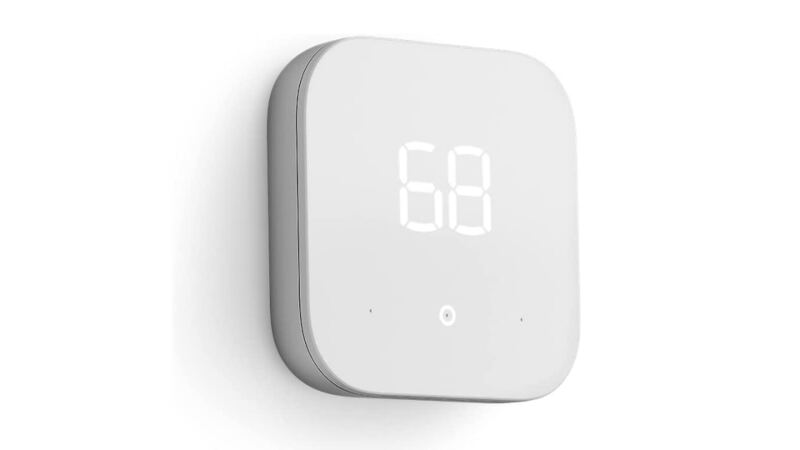
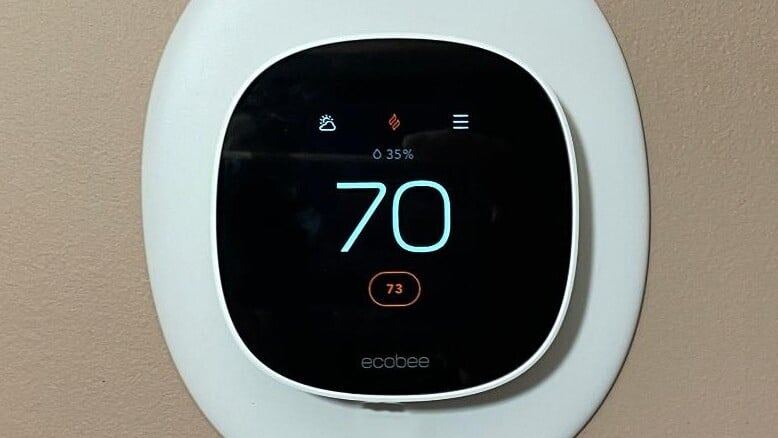
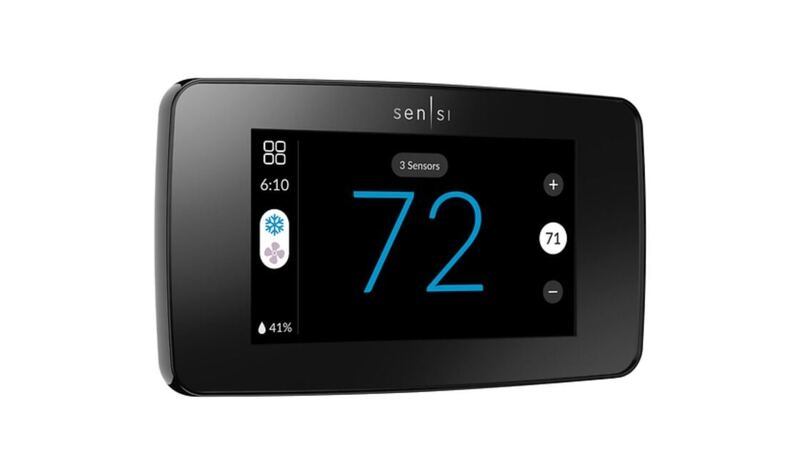
The Nest Learning Thermostat (4th Gen) leads on automation, learning your routine automatically and adapting to weather in ways the simpler Amazon Smart Thermostat and Sensi Touch 2 don't attempt. It costs more and is happiest inside Google's ecosystem; shoppers who want add-on occupancy sensors or broader platform flexibility may lean toward the Ecobee Smart Thermostat Essential.
Rating sources
Our 4.2 score is the average of these published ratings. More about methodology.