The iSpring RCC7AK is the best value-plus-remineralization RO system, a 6-stage unit with whole-system NSF/ANSI 58 certification and an alkaline remineralization stage that restores healthy minerals and balanced pH. It reduces 93-98% of TDS along with PFAS, lead and over 1,000 other contaminants, and earns about 9.1/10 from owners. The bulky tank and slower tank-based dispensing are the trade-offs. For mineral-balanced RO water at a fair price, it's excellent.

Full review
Filtration and Certification
The iSpring RCC7AK distinguishes itself with a certification detail that matters: it carries NSF/ANSI 58 certification for the entire water filtration system, not just for individual components, which sets it apart from many competitors that certify only a single part. As the Veridly review noted, it is 'NSF Certified for the entire system,' giving buyers confidence that the whole assembly, not just one filter, has been independently validated.
Performance is strong across the board. iSpring states the system reduces TDS by 93-98%, PFAS by 96-99%, chlorine by 95-99%, lead by over 98.9%, and chromium by over 99.2%, along with more than 1,000 other contaminants. That puts its contaminant reduction in the same elite tier as the premium tankless systems, and the six-stage process earns consistent praise from owners for delivering clean, great-tasting water.
Remineralization and Taste
The RCC7AK's signature feature is its sixth stage: an alkaline remineralization filter. Standard five-stage RO systems produce slightly acidic water, often a pH at or below 7.0, because the membrane removes beneficial minerals along with contaminants. As Water Filter Portal explained, 'the RCC7AK's alkaline remineralization filter restores healthy minerals and produces a balanced alkalinity,' adding back calcium and magnesium for better taste and a more neutral-to-alkaline pH.
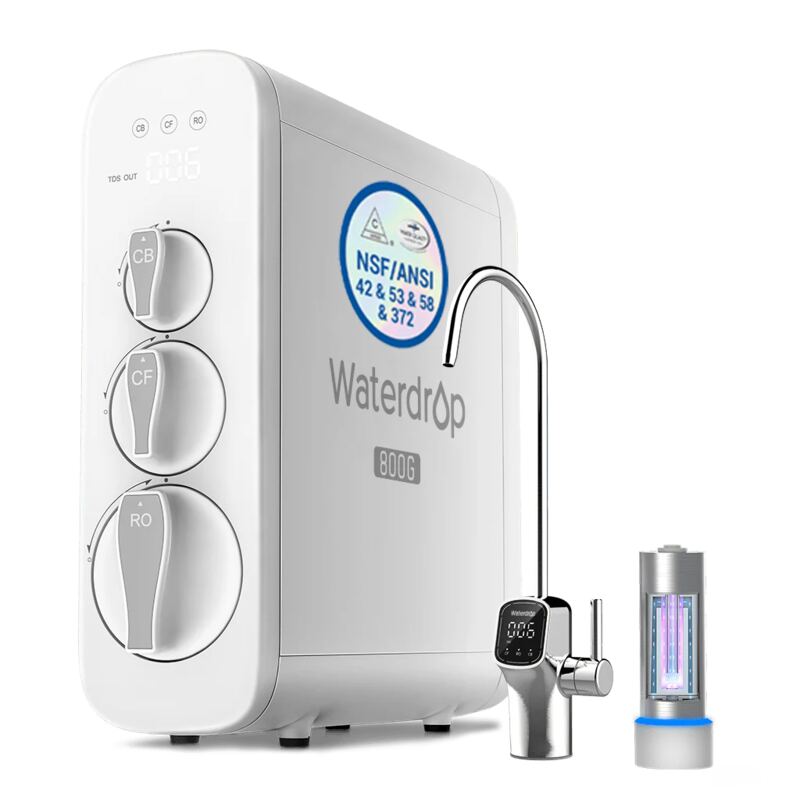
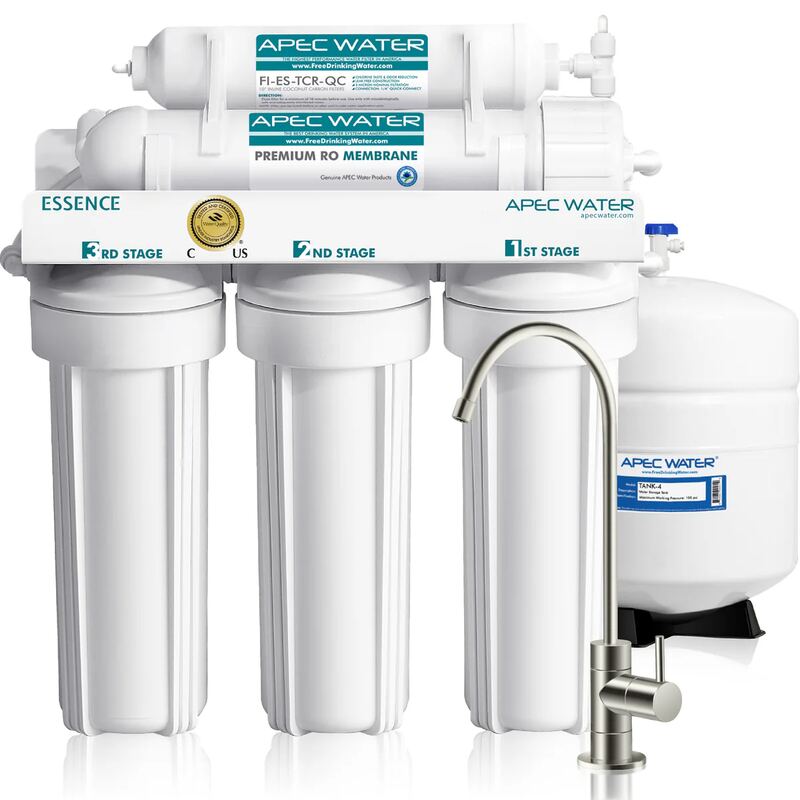
This is the key advantage over pure-RO systems like the Waterdrop G3P800 and APEC ROES-50, which require a separate add-on for the same effect. For buyers who find pure RO water tastes flat or who specifically want mineral-balanced, mildly alkaline water, the built-in remineralization is a major draw and a big reason the RCC7AK earns roughly 9.1 out of 10 in aggregated owner ratings.
Design and Installation
The RCC7AK is a traditional tank-based RO system with a 4-gallon storage tank that automatically refills, so purified water is always ready on demand at the dedicated faucet rather than being produced slowly in real time. iSpring uses a patented top-mounted faucet design that the company says simplifies installation, a welcome touch given that RO systems are inherently more involved to install than direct-connect filters.
That said, this is still a six-stage system with a tank and a drain connection, so installation takes more effort than a simple cartridge filter, and owners should set aside time for it. iSpring backs the install with clear instructions and helpful online videos, and reviewers generally describe the process as straightforward for a moderately handy homeowner, even if it's more work than the streamlined tankless units.
4-gallon tank needs cabinet room to spare
The tank is the main practical drawback. A 4-gallon storage tank takes up significant under-sink space, which can be a problem in crowded cabinets, and tank-based systems dispense more slowly than the on-demand tankless Waterdrop units. Tank RO also typically wastes more water to drain than the efficient 3:1 ratio of the G3P800.
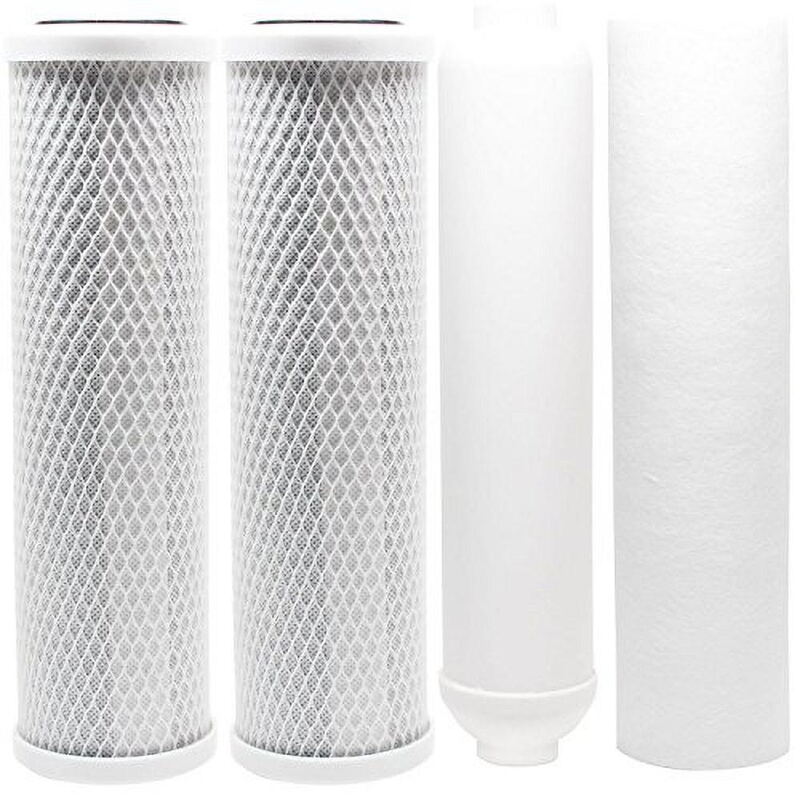
Six stages also mean more filters to track and replace over time, adding a bit to maintenance complexity, though the filters themselves are affordable. None of this detracts from the water quality, which is excellent, but buyers prioritizing speed, efficiency and minimal cabinet footprint will prefer a tankless system, accepting the higher price and the need to buy remineralization separately.
Whole-system NSF 58 edges out the ROES-PH75
Against the Waterdrop G3P800 and Waterdrop D6, the iSpring RCC7AK is slower to dispense and bulkier but cheaper and includes the alkaline remineralization those tankless systems omit. Against the APEC ROES-50, it adds the remineralization stage and offers whole-system NSF 58 certification versus APEC's TDS-only certification. Against the APEC ROES-PH75, which also remineralizes, the two are close competitors, with the iSpring's whole-system certification a slight edge.
It's the natural pick for value-focused buyers who specifically want mineral-balanced, fully certified RO water and don't mind a storage tank. Those who prize tankless speed and efficiency step up to the Waterdrop G3P800; those wanting the simplest, cheapest pure-RO option look at the APEC ROES-50.
$219 undercuts every tankless system here
At around $219 the RCC7AK is one of the best values in reverse osmosis, undercutting the tankless premium systems by a wide margin while delivering top-tier contaminant reduction, whole-system NSF 58 certification and built-in alkaline remineralization. Getting all three at this price is genuinely hard to match.
The running cost is reasonable too, with affordable replacement filters offsetting the slightly higher number of stages. For buyers who don't need tankless speed and are happy to accommodate a tank, the RCC7AK delivers premium water quality and the desirable remineralization feature at a mid-range price, making it the value standout of the category.
Alkaline water at a mid-range price
The iSpring RCC7AK is ideal for value-focused households that want mineral-balanced, mildly alkaline RO water from a fully certified system and have room under the sink for a storage tank. It's the pick for buyers who care about taste and pH balance as much as contaminant removal, without paying tankless prices.
It's less suited to those with tight cabinet space or a strong preference for fast, efficient tankless dispensing, where the Waterdrop G3P800 or D6 are better, or to buyers wanting the absolute simplest pure-RO setup, where the APEC ROES-50 wins. For certified, remineralized RO at a fair price, the RCC7AK is hard to beat.
Strengths
- +Whole-system NSF/ANSI 58 certification, not just individual components
- +6th-stage alkaline remineralization restores healthy minerals and balanced pH
- +Strong contaminant reduction: 93-98% TDS, 96-99% PFAS, 98.9%+ lead
- +75 GPD output with a 4-gallon storage tank for on-demand water
- +Patented top-mounted faucet design simplifies installation
Watch-outs
- −Tank takes up significant under-sink space
- −Slower dispensing than tankless systems and wastes more water
- −Six stages mean more filters to track and replace
- −Installation is more involved than direct-connect filters
How it compares
Its whole-system certification is stronger than the APEC ROES-50's TDS-only certification.
Rating sources
Our 4.5 score is the average of these published ratings. Ratings marked * were derived from the reviewer’s written analysis or video transcript — the publisher didn’t print an explicit numeric score, so we inferred one from their own words. Click through to verify. More about methodology.