The G Pro X Superlight 2 is the shape competitive shooters settled on, at 60 grams, with Logitech's HERO 2 sensor and a 2000 Hz polling rate over the Lightspeed dongle. IGN scored it eight out of ten and PCMag four out of five, and neither argues with the tracking. What you give up is a scroll wheel that feels thin, click switches heavy enough to bother tap-firers, and $146.99 for two side buttons and no lighting.
Full review
60 grams in the same shell as the original Superlight
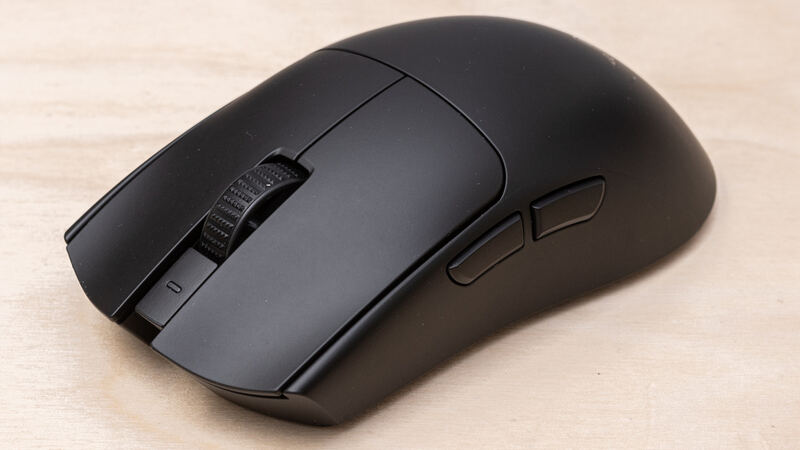
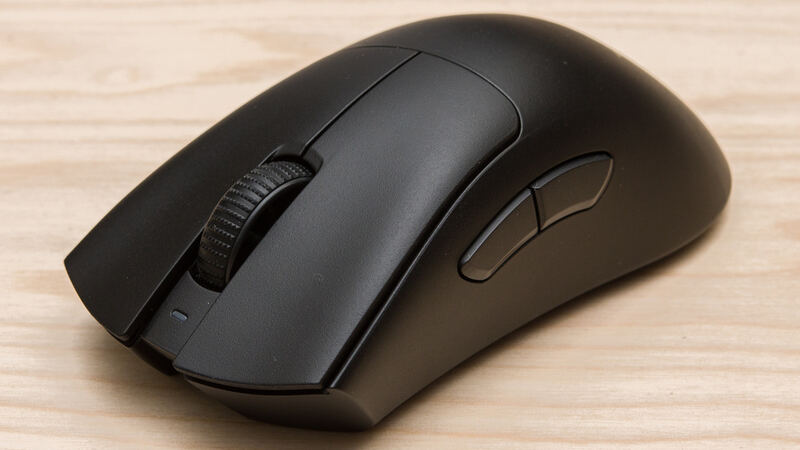
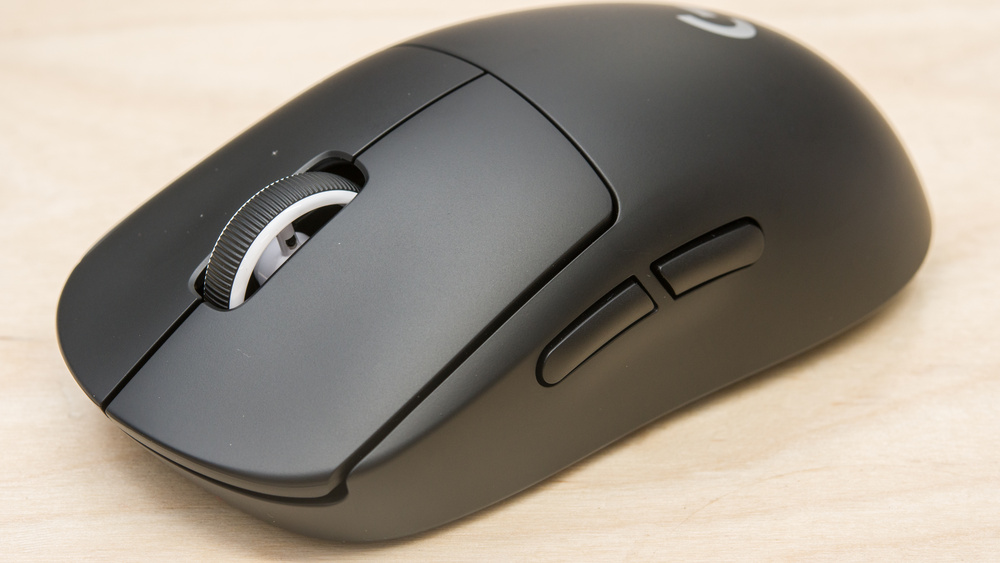
The Superlight 2 keeps the symmetrical shape of the mouse it replaces and trims the weight to 60 grams. Tom's Guide's review treats the reduction as small on paper and obvious in the hand, particularly for players who lift and reset the mouse constantly. The shell suits palm and claw grips, with a medium hump that fills the back of the hand; fingertip users and people with small hands are the ones most likely to find it awkward.
Nothing else about the outside has changed much. The base rides on PTFE feet, the two side buttons sit high on the left flank so they are hard to catch by accident, and there is no lighting and no thumb cluster. The scroll wheel is the weak point — thinner than the original's and flimsy under a firm press, which is what the weight target cost.
HERO 2 sensor at 32,000 DPI and 2000 Hz polling
The sensor is Logitech's HERO 2, quoted at 32,000 DPI with a 2000 Hz polling rate over the Lightspeed dongle. PCMag's review found tracking accurate through fast flicks and sudden direction changes, which is the only sensor behaviour that matters at this price — every modern flagship sensor is accurate enough at sensible settings. Tom's Guide reached the same conclusion in Counter-Strike and Valorant.
Wireless is dongle-only. There is no Bluetooth, so a phone or tablet is out, and the receiver has to live in a port or on the bundled extender. Logitech rates the battery at 95 hours, helped by hybrid switches that draw less current than a purely optical design.
Lightforce switches feel heavy under rapid taps
The clicks are Lightforce hybrids, pairing an optical sensor with a mechanical leaf. IGN's review, which scored the mouse eight out of ten, describes them as snappy, and Tom's Guide agrees the feel is crisp. Both also note the actuation force sits on the heavy side, and that is the recurring complaint: tap-firing and fast double taps take more effort than on the switches this replaces.
For a mouse aimed at competitive players that is a real limitation, and the clearest reason to try one in a shop rather than order on reputation. For ordinary aiming and single clicks it is a non-issue.
$146.99 for two side buttons and no lighting
At $146.99 this is a lot of money for a mouse with two side buttons, no lighting and no charging niceties beyond USB-C. PCMag's four-star verdict lands where most coverage does: the hardware is excellent, and whether it is worth the premium depends entirely on how much the weight and the sensor are worth to you over cheaper wireless mice that also track cleanly.
Strengths
- +Weighs 60 grams, among the lightest wireless mice with a full-size shell
- +HERO 2 sensor rated to 32,000 DPI with a 2000 Hz polling rate over Lightspeed
- +Logitech rates the battery at 95 hours on a charge
- +PTFE feet and a symmetrical shape that suits palm and claw grips
Watch-outs
- −Scroll wheel is thin and feels flimsy under a firm press
- −Lightforce switches actuate heavily enough to hamper rapid tap-firing
- −No Bluetooth, no lighting and only two side buttons at $146.99
How it compares
Industry-leading lightweight design with exceptional sensor accuracy for competitive gaming.
Rating sources
“The G Pro X Superlight 2 is a mostly no-frills update to an already great mouse.”
“The Logitech G Pro X Superlight 2 is an incredible mouse for gaming — boasting a maximum DPI of 32,000 and a 4,000Hz polling rate so you never miss a shot.”
Our 4.2 score is the average of these published ratings. More about methodology.