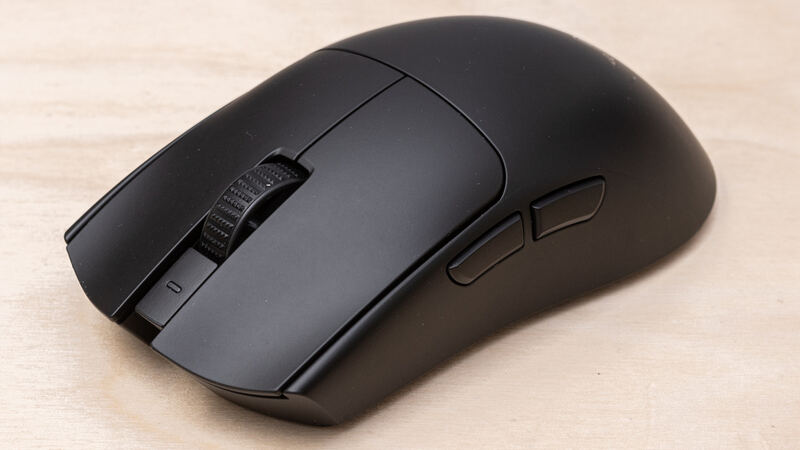
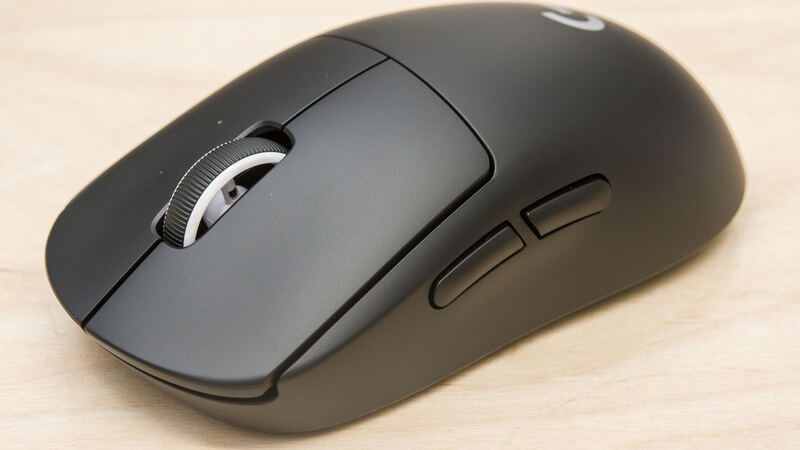
Razer's iconic right-handed ergonomic mouse gets lighter and faster in the DeathAdder V3 Pro: 63 g, 90-hour battery, and the Focus Pro 35K optical sensor. IGN's 9/10 review highlighted the refined right-hand-only shape, the durable PTFE feet, and HyperSpeed Wireless latency that goes head-to-head with Logitech's G Pro X Superlight 2. Palm-grip FPS players who want Razer's flagship sensor in a true ergonomic body are the audience.

Full review
A hump moved forward and left
The V3 Pro reshapes the DeathAdder rather than reinventing it. The central hump sits further forward and further left than before, which fills the palm earlier and puts the index finger near the top of the arc where the main click lives. It is a right-handed shape and unapologetically so: the left flank is scooped for the thumb and there is no ambidextrous variant, which rules the mouse out for left-handers and for claw grips that want a flatter back. IGN's 9 out of 10 review singled out the refined shape as the headline upgrade, and palm-grip players are the intended beneficiaries.
63 grams with no RGB
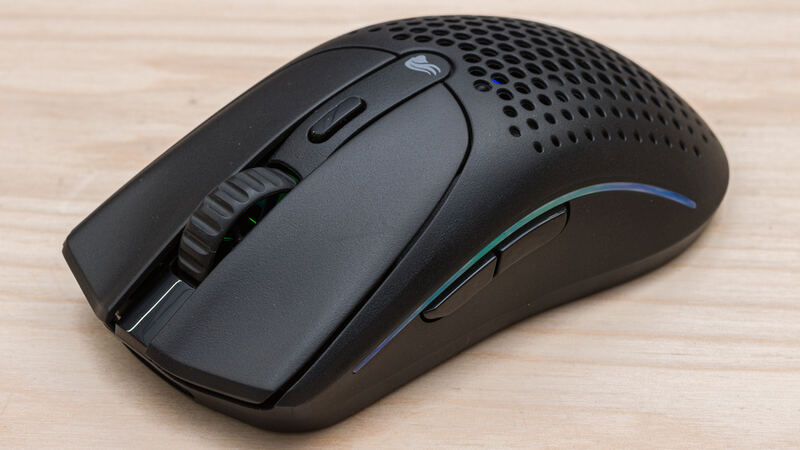
At 63 g this is a light mouse without being a shell full of holes: the body is solid plastic rather than honeycomb, and it feels rigid instead of hollow. Part of how Razer got there is subtraction, because there is no RGB lighting anywhere on the mouse, which will disappoint anyone building a lit desk and is one reason the battery lasts as long as it does. PTFE feet are fitted from the factory and glide well out of the box. Build quality is the least contested thing about this mouse across the published reviews.
Focus Pro sensor and HyperSpeed wireless
Tracking comes from Razer's Focus Pro optical sensor, specified to 30K DPI, over the 2.4GHz HyperSpeed link, with polling up to 4000Hz when paired with Razer's dongle. IGN put the wireless latency alongside Logitech's G Pro X Superlight 2, which is the comparison that matters in this bracket. What is missing, as Tom's Guide notes, is Bluetooth: there is no low-power fallback for pairing to a laptop without carrying the dongle, a gap several competitors at this price close. For gaming the omission is irrelevant, since nobody competes over Bluetooth, but for a mouse someone also wants to travel with it is a genuine annoyance.
Optical switches and a hidden DPI button
The main clicks use Razer's third-generation optical switches, stiff when new and settling into a firmer, more definite action once broken in, with little side-to-side play in the button plates. Eight programmable buttons cover the usual layout, and the side pair is well shaped and easy to hit without misclicking. Two decisions will irritate some buyers: the DPI selector sits on the underside, so changing sensitivity mid-match is not an option without rebinding it in software, and the scroll wheel has no tilt, removing two inputs that MMO players and desktop users often lean on.
Ninety hours between charges
Battery life is quoted at 90 hours, TechRadar notes, and it is one of the few claims in this category that owners consistently report holding up, which follows naturally from a mouse with no lighting to feed. Charging is over USB-C and the same cable runs the mouse wired if the battery does run flat mid-session. Set against rivals that want charging every few days, a mouse that lasts a fortnight of heavy use is a real quality-of-life difference, and it removes most of the argument for keeping a wired mouse on a competitive desk.
Scroll wheel failures in owner reports
The recurring durability complaint is the scroll wheel. Owner reports describe wheels that begin skipping and stop registering cleanly within months of purchase, in some cases repeatedly across warranty replacements, with the fault presenting the same way each time. It is clearly not universal, since plenty of units run for years without trouble, but it appears often enough to be worth knowing before paying flagship money, and it is the one thing that would make a buyer hesitate over an otherwise well-built mouse. Razer's warranty covers it, which helps only for as long as the warranty runs.
Where the four published scores converge
The scoring is tight: IGN at 9 out of 10, PCMag at 4.5 out of 5, TechRadar at 4 out of 5, and Tom's Guide at 3 out of 5. They agree on the shape, the sensor and the battery, and they push back in the same places — right-handed only, no RGB, no Bluetooth and a price at the top of the market. Nothing there suggests a mouse with a hidden flaw so much as a specialised one. If a right-handed palm grip and a long battery are the priorities it is close to the best available; if not, the compromises are all structural.
Strengths
- +Classic ergonomic shape
- +63g lightweight design
- +Focus Pro 35K sensor
- +90-hour battery life
Watch-outs
- −Right-handed only
- −No RGB lighting, as PCMag notes
- −Premium pricing
How it compares
Perfect blend of classic ergonomic comfort and modern lightweight wireless performance.
Rating sources
“It’s not really surprising that the Deathadder V3 Hyperspeed is a superb gaming mouse.”
Our 4.1 score is the average of these published ratings. More about methodology.