ChefPanko found that the Misono 440 offers exceptional comfort during long prep sessions, thanks to its middle-balanced design and contoured Pakkawood handle. The knife features a lightweight profile at just 253 grams for the 275mm blade length, making it easy to maneuver without sacrificing durability in its 440 stainless steel construction. While hocho-knife notes that the high-chromium molybdenum steel provides good rust resistance and edge retention, ChefPanko warns that the factory right-handed grind may be a significant drawback for left-handed cooks. This model is best suited for professional chefs or heavy-duty home users who prioritize balance and comfort over aesthetic longevity.
Full review
253 gram weight and middle balance point
This low mass is paired with a specific balance point that shifts depending on how the user holds the tool. When pinched at the bolster, the knife sits perfectly in the middle, creating a neutral feel that reduces hand fatigue during extended prep sessions. However, chefpanko notes that switching to a fingertip grip moves the center of gravity forward, making the blade feel front-heavy compared to its balanced pinch-grip posture.
This weight distribution is particularly relevant for users who prioritize endurance over aggressive chopping leverage. The lightness allows the knife to glide through ingredients without requiring significant downward force, which complements the thin geometry behind the edge. For cooks who spend hours in a professional kitchen environment, this combination of low mass and middle balance offers a distinct advantage in comfort, though it may feel less substantial for tasks that rely on momentum or heavy chopping.
Pakkawood handle contours and humidity sensitivity
The Western-style handle is constructed from Pakkawood with added contours and a slight belly designed to improve grip security and comfort. chefpanko describes the handle as hefty, measuring 19mm thick and 125mm long, which provides extra leverage for the long blade. The rounded shape makes it comfortable for extended usage periods, though users with very large hands might find the length slightly restrictive compared to larger handles found on other professional knives.
Despite its water-resistant properties, the composite wood handle is sensitive to environmental changes. chefpanko warns that Pakkawood expands in warm conditions and shrinks when cold or dry. This expansion can cause a slight protrusion at the ferrule where the metal meets the wood. While this physical shift does not compromise the structural integrity of the knife or affect its cutting performance, it is a visible characteristic that buyers should anticipate as a normal trait of the material rather than a defect.
70/30 bevel geometry and sharpening procedure
The blade features a mirror-polished edge with an asymmetric 70/30 grind, meaning the right side has a wider angle while the left side is ground to a steeper 30-degree angle. This configuration is optimized for right-handed users and enhances cutting performance on softer produce by reducing drag. chefpanko recommends maintaining this factory bevel rather than grinding it down to a symmetrical 50/50 angle, as preserving the original geometry ensures the knife performs as Misono intended and maximizes its lifespan.
For maintenance, the asymmetric grind dictates a specific sharpening routine. When the edge dulls, chefpanko advises starting with the steeper 30-degree side first to realign the cutting wire before touching the wider 70-degree side. This sequence reduces the amount of work required on the primary bevel and results in a smoother, more refined edge restoration. Left-handed users cannot use this factory grind effectively without custom modification; chefpanko suggests contacting retailers to place special orders for left-handed versions if that asymmetry is a dealbreaker.
440 stainless durability and chipping resistance
The blade is forged from 440-series stainless steel heat-treated to approximately 58-59 HRC, which chefpanko describes as a durable material that holds a decent edge while being easy to sharpen. The molybdenum content in the alloy makes the steel less prone to chipping compared to harder, more brittle Japanese steels. chefpanko notes that this specific stainless formulation takes substantially longer to wear out than other knives with similar Rockwell ratings, making it highly resistant to mechanical damage during heavy use.
In terms of edge retention for home cooks, chefpanko estimates the knife will maintain a usable sharpness for four to five months between maintenance sessions if used regularly and honed frequently. This longevity is attributed to the steel's toughness rather than extreme hardness. The trade-off for this durability is that it does not hold an ultra-fine edge as long as harder carbon steels, but it compensates by being far more forgiving of accidental impacts against bone or hard cutting boards.
Blade profile limitations for mincing tasks
This geometry supports push cutting, pull cutting, and rocking motions effectively. The pointy tip is particularly well-suited for precision work such as trimming excess fat or puncturing fish bellies without tearing the skin. The height also provides adequate knuckle clearance when slicing vegetables against a board.
However, the flatness of the heel area creates a specific limitation for certain techniques. chefpanko points out that because the blade lacks a curved section near the bolster, it is not ideal for traditional rocking mince motions on ingredients like herbs or garlic. Users who rely heavily on rapid, rhythmic chopping with the heel will find this profile less efficient than knives with a more pronounced continuous curve from tip to handle.
Restaurant suitability versus home cook value
chefpanko positions the Misono 440 as an obvious choice for professional restaurant environments where knives endure hours of daily use. The incremental improvements in this series, such as the rounded handle contours and slightly more rust-resistant steel compared to older lines like the Handmade series, provide tangible benefits for chefs who work long shifts. For a user operating a knife for five minutes a day at home, these refinements are negligible.
Consequently, chefpanko recommends the cheaper Misono Handmade series for domestic users rather than the 440 model. The Home version offers similar core performance with an edge retention of around three months between sharpening sessions, which is sufficient for casual cooking. Since home cooks will not notice the marginal durability gains of the 440's upgraded steel or handle ergonomics over a five-minute daily prep routine, the Handmade series represents better financial value despite being an older design.
Debossed logo fading and finish maintenance
The branding on the blade consists of a debossed logo filled with black pigment. chefpanko observes that this black filling will eventually fade away as the knife is used, cleaned, and sharpened over time. This cosmetic change does not impact the structural integrity or cutting performance of the blade but represents a permanent alteration to the knife's appearance.
While the stainless steel construction resists rusting if simply wiped dry after use, chefpanko advises that it is not entirely maintenance-free. Cutting acidic foods can dull the finish if left unattended, so a quick wipe-down is necessary to keep the mirror polish pristine. The focus of care should remain on maintaining the cutting edge rather than worrying about corrosion, as the 440 steel handles moisture exposure far better than carbon alternatives.
Strengths
- +Lightweight construction weighing only 253 grams for a 275mm blade, reducing hand fatigue during extended use.
- +Optimized balance point that sits perfectly in the middle when pinch-gripped at the bolster.
- +Comfortable Western-style Pakkawood handle with added contours and slight belly designed for long periods of usage.
- +Durable 440 stainless steel construction that is less prone to chipping and wears out substantially longer than other stainless knives.
Watch-outs
- −Factory ground exclusively for right-handed users, which can cause drag or uneven cutting for lefties unless a custom order is placed.
- −Debossed logo blacks on the blade eventually fade away with regular use and cleaning.
How it compares
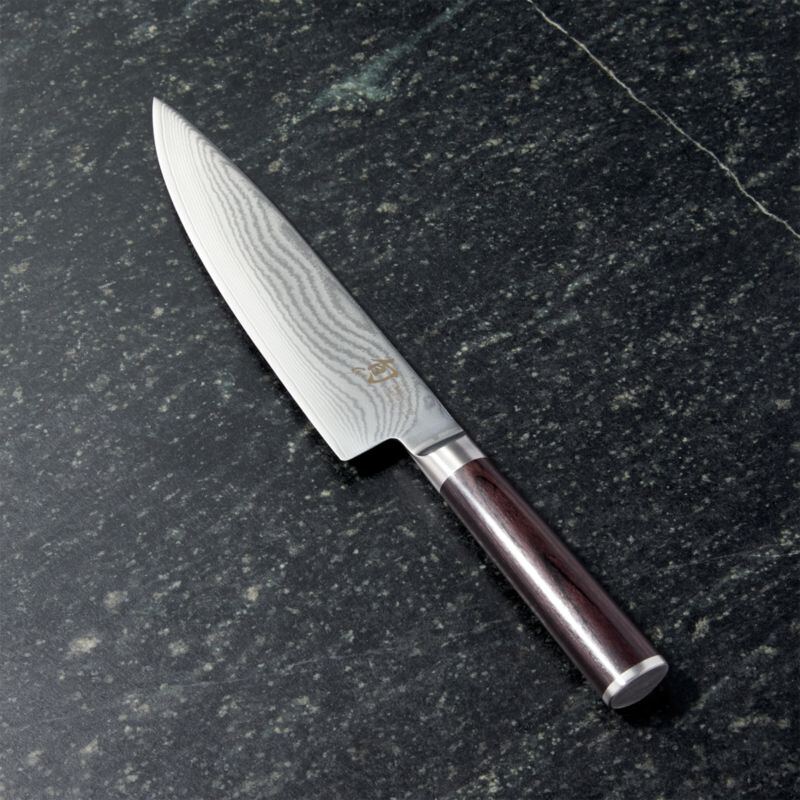
The Misono 440 Gyutou offers a middle-balanced design with a contoured Pakkawood handle that provides comfort during long sessions, differing from the bolster-focused balance of the Shun Classic 8" Chef's Knife.
Rating sources
“It glides through produce with an almost effortless grace... It's a workhorse, plain and simple.”
Our 4.5 score is the average of the 1 scored review above; 3 more reviewed it without printing a score and are not in the average. Ratings marked * were derived from the reviewer’s written analysis or video transcript — the publisher didn’t print an explicit numeric score, so we inferred one from their own words. Click through to verify. More about methodology.