The QNAP TS-464 is the Plex-and-transcoding sweet spot, pairing an Intel Celeron N5095 with dual 2.5GbE ports, two M.2 NVMe slots and a PCIe expansion slot. StorageReview called it great value for SMBs and home users at its base price and praised its HEVC transcoding. The 4GB base RAM is the main pinch point, and QTS, while deep, is busier than the competition's software.

Full review
500 to 550 MB/s with Plex transcoding
The QNAP TS-464 is built for media servers and home labs. Its Intel Celeron N5095 quad-core (burst to 2.9 GHz) is, as StorageReview noted, particularly good for Plex users who want to play back denser HEVC/H.265 media with client-side conversions.
AndroidPolice called it one of the best compact NAS devices for running Plex, and NAS Master dubbed it a mighty 4-bay Plex NAS. For the buyer whose primary use case is a transcoding media server, the TS-464's CPU is better matched than the older AMD chip in the Synology DS923+.
Networking and Expansion
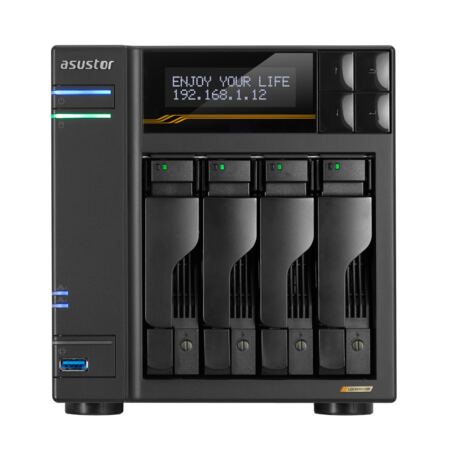
The TS-464 ships with dual 2.5GbE ports that achieved around 258 MB/s sequential read and 237 MB/s write, near the 2.5GbE ceiling, with port trunking available for up to 5Gbps. That stock 2.5GbE is a meaningful step up from the Synology DS923+'s 1GbE, though it falls short of the 10GbE the UGREEN DXP4800 Plus and Asustor Lockerstor 4 Gen3 include.
Expansion is a genuine strength: two M.2 2280 PCIe Gen 3 NVMe slots for caching or a pool, plus a PCIe Gen 3 slot that can add 10GbE later. There is also an HDMI output for direct media playback, which media-center users appreciate. It is a flexible chassis for a home lab.
4GB of RAM out of the box, expandable to 16
QTS is QNAP's mature, feature-dense operating system, and it supports real-time transcoding, light VMs and containers out of the box. Reviewers consider it powerful and capable, with an app catalog that rivals Synology's depth even if the interface is busier and less immediately approachable than DSM.
The TS-464 comes with 4GB of RAM upgradable to 16GB. StorageReview flagged that the 4GB base is fine for light VMs and containers, but tasks like surveillance, AI image recognition or heavier virtualization will want a RAM upgrade. Budgeting for more memory is part of getting the most from this NAS.
Power Draw and Daily Use
One underrated strength is efficiency. StorageReview measured the TS-464 drawing around 40–41W under load and roughly 21W at standby — modest for a NAS that handles Plex transcoding, containers and backups simultaneously. For a device that often runs 24/7, that low idle draw keeps the running cost down over years of always-on operation, an advantage over the more power-hungry Asustor Lockerstor 4 Gen3.
In day-to-day use the Celeron N5095 comfortably exceeds 500–550 MB/s on its faster interfaces and handles denser HEVC/H.265 media with client-side conversions, which is exactly the workload most home-lab buyers throw at it. The HDMI output also lets it double as a direct media-playback box, a flexibility neither the Synology DS923+ nor the TerraMaster F4-424 Pro offers in the same way.
2.5GbE needs a switch most homes lack
The 4GB base RAM is the main pinch point. StorageReview noted it could fall short for surveillance, AI image recognition or virtualization — workloads that benefit from the 16GB maximum. Buyers planning anything beyond Plex and file storage should factor a memory upgrade into the price.
The 2.5GbE networking also assumes you have compatible switch gear; StorageReview pointed out that most home and even prosumer network equipment does not support 2.5GbE, and practical SOHO switch options are limited. QNAP's history of security advisories is another reason to keep the firmware current and the unit properly hardened behind a firewall.
Cheaper than Asustor, slower than TerraMaster
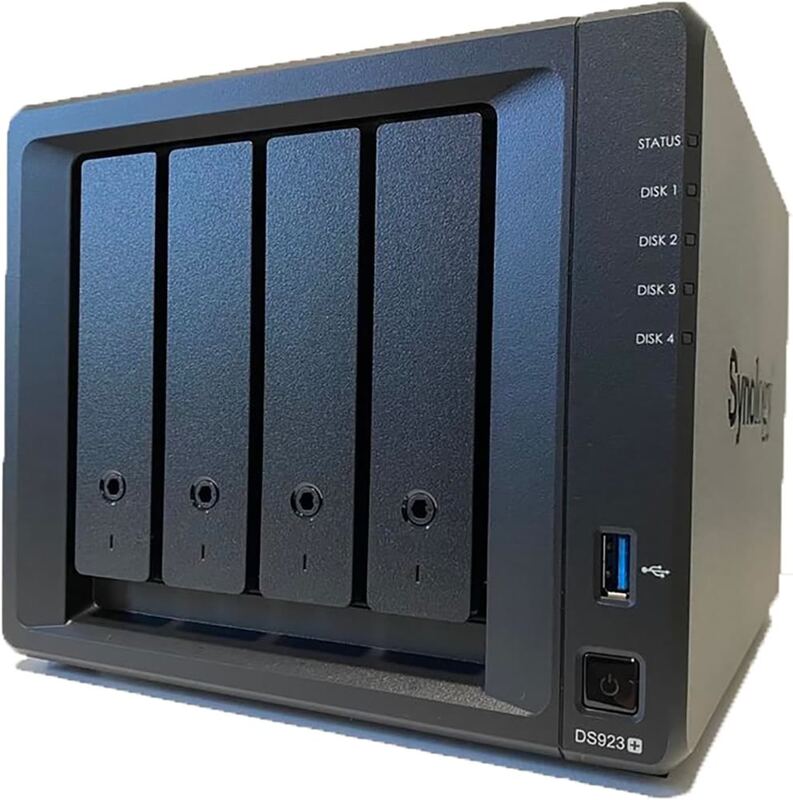
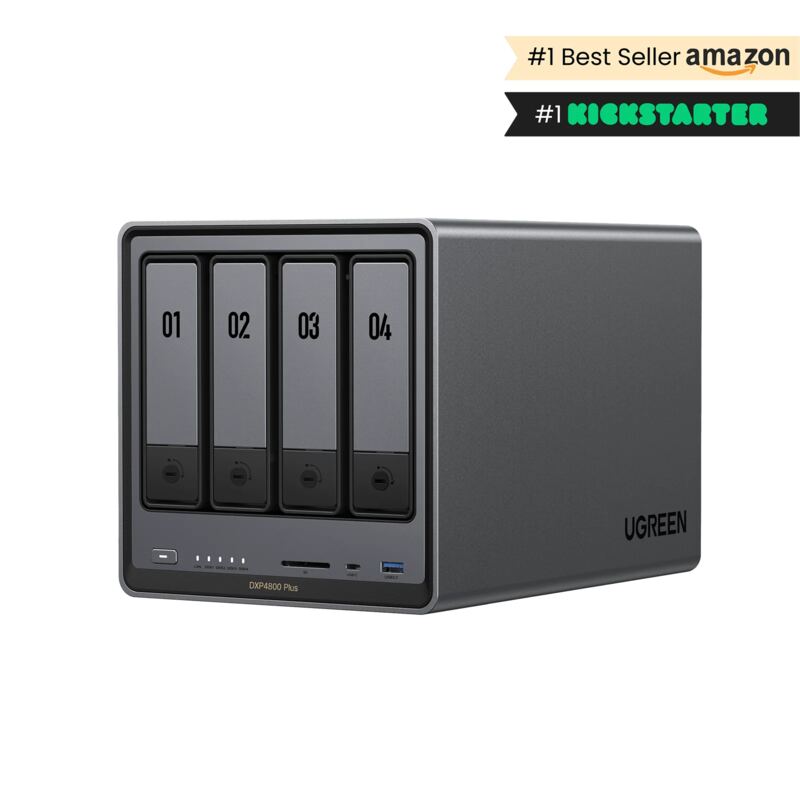
Against the Synology DS923+, the TS-464 offers stock 2.5GbE and stronger Plex transcoding, while the Synology counters with a more polished OS. Compared to the UGREEN NASync DXP4800 Plus, the QNAP has more mature software but far less network bandwidth (2.5GbE versus 10GbE) and a weaker CPU.
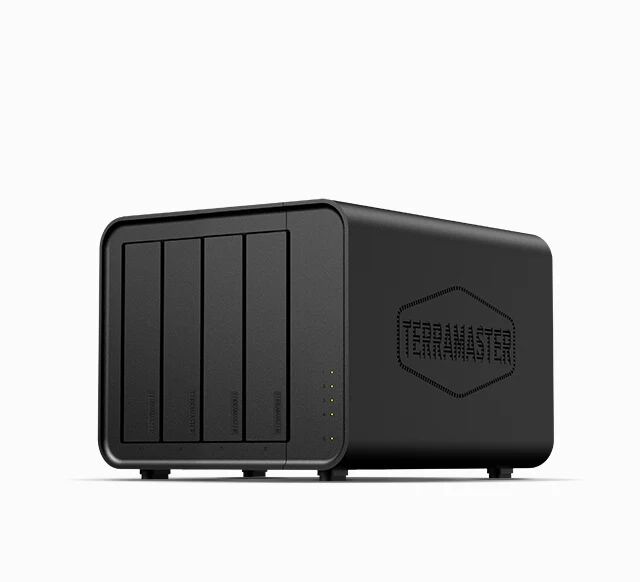
Versus the TerraMaster F4-424 Pro, the TS-464 matches the 2.5GbE networking and brings a deeper app ecosystem, though the TerraMaster's i3-N305 is more powerful. And against the Asustor Lockerstor 4 Gen3, the QNAP is far cheaper but nowhere near as fast. The TS-464 is the balanced media-server pick.
549 dollars for two NVMe slots and PCIe expansion
At a base price around $549 diskless, StorageReview called the TS-464 a great value for SMBs and home users, and that holds up. You get stock 2.5GbE, a capable Plex-transcoding Celeron, two NVMe slots and a PCIe expansion slot — a genuinely flexible chassis for the money. It undercuts the TerraMaster F4-424 Pro and the UGREEN DXP4800 Plus while bringing far more mature software than either.
The hidden cost is RAM: the 4GB base is fine for Plex and light containers but wants an upgrade toward the 16GB maximum for surveillance or virtualization, so budget for that if you plan to push it. Even with a memory upgrade, the TS-464 stays cheaper than the 10GbE-class units, which is why it remains the value pick specifically for media-server buyers who do not need 10GbE.
Built for Plex transcoding, not 10GbE networks
The QNAP TS-464 is for Plex media-server and home-lab users who want strong hardware transcoding and stock 2.5GbE without paying flagship prices. If your main goal is a transcoding media server that can also run a few containers and VMs, its Celeron and expansion options hit that brief well, and the HDMI output is a bonus for direct media-center playback.
It is less ideal for buyers who want the simplest possible software (DSM is friendlier) or who already run 10GbE (the UGREEN or Asustor make more sense). Plan on a RAM upgrade if you intend to push it, and keep the firmware current given QNAP's security history — a properly hardened TS-464 behind a firewall is a strong, affordable home-lab core.
Strengths
- +Dual 2.5GbE ports out of the box with port trunking to 5Gbps
- +Intel Celeron N5095 handles Plex HEVC/H.265 transcoding well
- +Two M.2 NVMe slots plus a PCIe Gen 3 expansion slot
- +HDMI output for direct media playback
- +Moderate power draw, around 40W under load
Watch-outs
- −4GB base RAM is tight for VMs, surveillance or heavy multitasking
- −QTS interface is powerful but busier than rivals
- −2.5GbE needs compatible switch gear most homes lack
- −Past QNAP security advisories make hardening important
How it compares
The TS-464 ships with 2.5GbE like the TerraMaster F4-424 Pro, beating the Synology DS923+'s stock 1GbE, but it trails the 10GbE on the UGREEN NASync DXP4800 Plus and Asustor Lockerstor 4 Gen3. Its Celeron handles Plex transcoding better than the Synology's AMD chip but not as strongly as the UGREEN's Pentium.
Rating sources
“At the $549 price point, the TS-464 NAS is a great value for SMBs and home users.”
“One of the best compact NAS devices for running Plex.”
“A mighty 4-bay Plex NAS that comfortably handles VMs, backups and transcoding.”
Our 4.5 score is the average of these published ratings. Ratings marked * were derived from the reviewer’s written analysis or video transcript — the publisher didn’t print an explicit numeric score, so we inferred one from their own words. Click through to verify. More about methodology.