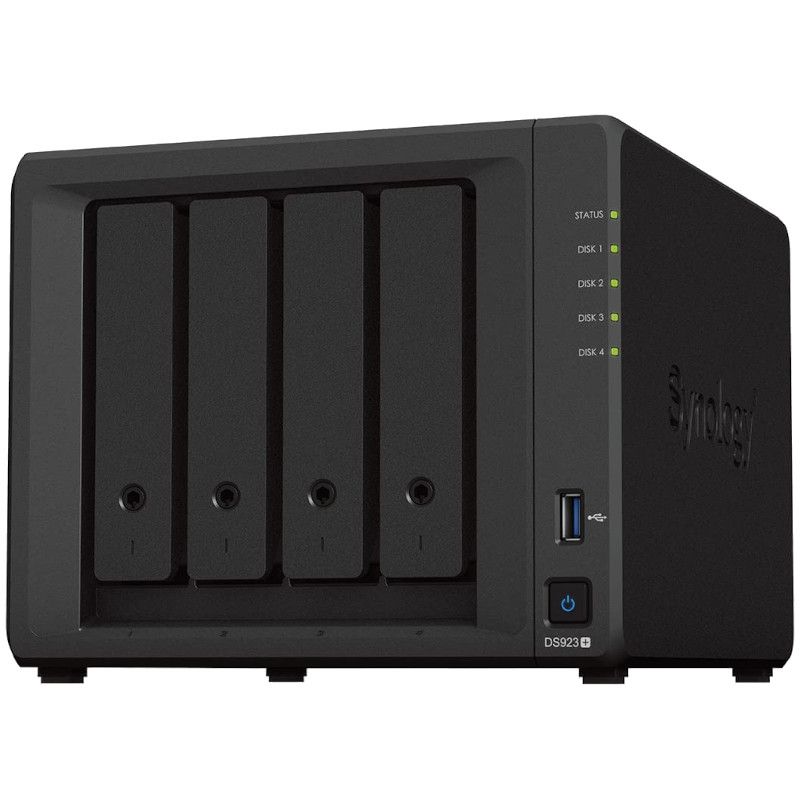
The Synology DS923+ remains the safe default 4-bay NAS thanks to DSM, the most mature operating system in the category, and a deep app ecosystem. StorageReview measured strong RAID-5 throughput and sustained 1,000+ MB/s once a 10GbE module is added. Its weak spots are dated networking (dual 1GbE stock) and a modest CPU, but for households who want it to just work, it is still the most recommended pick.
Full review
32,017 read IOPS over SMB
The Synology DS923+ is built around an AMD Ryzen R1600 dual-core CPU and 4GB of DDR4 ECC memory expandable to 32GB. StorageReview measured 32,017 IOPS read and 22,853 IOPS write over SMB, and with the optional 10GbE module installed they saw sustained transfers above 1,000 MB/s on large files. Even on the stock dual Gigabit ports, performance lands around 225 MB/s in a RAID-5 configuration, which is plenty for the home-and-small-office buyer this NAS targets.
Reviewers consistently frame the DS923+ as the dependable choice rather than the fastest. AndroidPolice called it an AMD-powered NAS with a few minor flaws, and CGMagazine described it as a powerful and expandable solution for home offices and small businesses. It is not the hardware leader of this group.
10GbE module installs without a PCIe card
DSM is the reason the DS923+ stays near the top. StorageReview singled out DSM and the deep application library as the best Synology benefits, and across reviews the software is treated as the most mature, polished NAS operating system you can buy. The app catalog covers backup, sync, Synology Photos, surveillance and more, with first-party support that newer rivals like UGREEN's UGOS are still chasing.
Initial setup is genuinely beginner-friendly, and the 10GbE upgrade is notably painless: Synology's proprietary module installs in seconds rather than requiring a PCIe card and driver work. That ecosystem polish is what justifies choosing the DS923+ over hardware that, on a spec sheet, looks stronger for the money.
Expandability and Storage
The DS923+ has four bays that expand to nine with a DX517 expansion unit, plus two built-in M.2 2280 NVMe slots for SSD caching or a storage pool. Fully populated with 22TB drives it reaches 88TB of raw capacity, and the ECC memory is a genuine reliability advantage for anyone storing irreplaceable data.
There is a catch on the NVMe side: StorageReview noted that the NVMe storage-pool feature is still very limited, with support restricted to Synology-branded drives. For SSD caching that is less of an issue, but anyone hoping to build an all-flash pool from third-party NVMe will hit Synology's drive-compatibility wall.
ECC memory guards against silent data corruption
Reliability is the quiet reason the DS923+ keeps getting recommended. The ECC memory guards against the silent bit-flips that can corrupt data over years of operation, a feature the QNAP TS-464 and most consumer NAS units omit. Combined with Synology's long, consistent DSM update cadence, it is the NAS reviewers trust to run unattended for a decade — the kind of set-and-forget reliability that matters more than peak benchmarks for a backup appliance.
StorageReview's testing showed steady RAID-5 throughput around 225 MB/s on the stock Gigabit ports, with no thermal or stability concerns over sustained transfers. That dependability, rather than headline speed, is the DS923+'s real product: it is engineered to protect data quietly for years, which is exactly what a home or small-office buyer wants from the box holding their photos and documents.
Ships with just two Gigabit ports
The biggest weakness is networking. The DS923+ ships with only two 1GbE ports, and as StorageReview put it, that puts off buyers who already have the infrastructure to use the 2.5GbE found by default on competing units. To exceed Gigabit you must buy Synology's proprietary 10GbE module, an extra cost rivals avoid by including faster ports stock.
The AMD Ryzen R1600 is also an older, modest dual-core chip — every other NAS in this roundup has a more capable processor. Combined with the Synology-only NVMe pool restriction, these are the trade-offs you accept in exchange for DSM. For pure hardware value, the UGREEN DXP4800 Plus or TerraMaster F4-424 Pro deliver more.
The software pick, not the spec-sheet pick
Against the UGREEN NASync DXP4800 Plus, the DS923+ trades away 10GbE-stock networking and a much faster Intel CPU in exchange for far more mature software. Compared to the QNAP TS-464, it loses on stock 2.5GbE and Plex-transcoding muscle but matches QNAP on ecosystem depth and arguably beats it on polish.
Versus the TerraMaster F4-424 Pro, the DS923+ has a weaker CPU but a vastly more refined OS — TerraMaster's TOS still reads like a work in progress. And against the Asustor Lockerstor 4 Gen3, the DS923+ is far cheaper and simpler, ceding raw performance to a unit that costs more than twice as much. The DS923+ is the software pick, not the spec-sheet pick.
Weakest hardware-per-dollar in the group
At around $599 diskless the DS923+ is priced in the middle of this group, and on a pure hardware-per-dollar basis it loses — the UGREEN DXP4800 Plus and TerraMaster F4-424 Pro give you more CPU, more RAM and faster networking for similar or less money. Judged only by its spec sheet, the Synology looks like the weakest value here.
But the value calculation for a NAS is not just hardware; it is the years of reliable software and updates that protect your data. That is where the DS923+ earns its price. DSM's maturity, the depth of the first-party app catalog, and Synology's long track record of firmware support are worth a premium to buyers who do not want to gamble their backups on a newer platform. For software-first buyers, the DS923+ is fair value; for spec-chasers, it is not.
For buyers who want to set it and forget it
The DS923+ is for home and small-office users who want the most polished, reliable NAS software and the deepest app ecosystem, and who value that over raw hardware. If you want to set up a NAS once, trust DSM to handle backups, photos and surveillance, and not think about it again, this is still the most recommended 4-bay on the market, and the ECC memory adds a layer of data-integrity insurance.
It is not the right pick if you already run a 2.5GbE or 10GbE network and want to saturate it out of the box, or if you want the most CPU per dollar — in those cases the UGREEN DXP4800 Plus or QNAP TS-464 make more sense. Buy the DS923+ when software experience and reliability matter more than headline specs, and budget for the 10GbE module if you will ever need more than Gigabit.
Strengths
- +DiskStation Manager (DSM) is the most polished, mature NAS OS available
- +Deep, well-supported app library for backup, sync, photos and surveillance
- +Two built-in M.2 NVMe slots for SSD caching or a storage pool
- +Expandable to 9 bays via the DX517 expansion unit
- +Optional Synology 10GbE module installs in seconds for over 1,000 MB/s
Watch-outs
- −Ships with only dual 1GbE ports; 2.5GbE rivals beat it out of the box
- −AMD Ryzen R1600 is an older, modest dual-core CPU
- −NVMe storage-pool support is limited to Synology-branded drives
- −10GbE requires a paid proprietary add-in module
How it compares
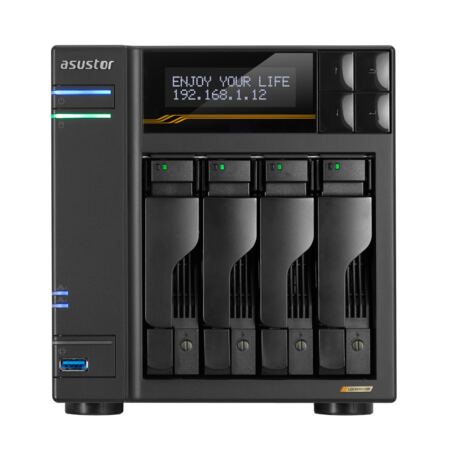
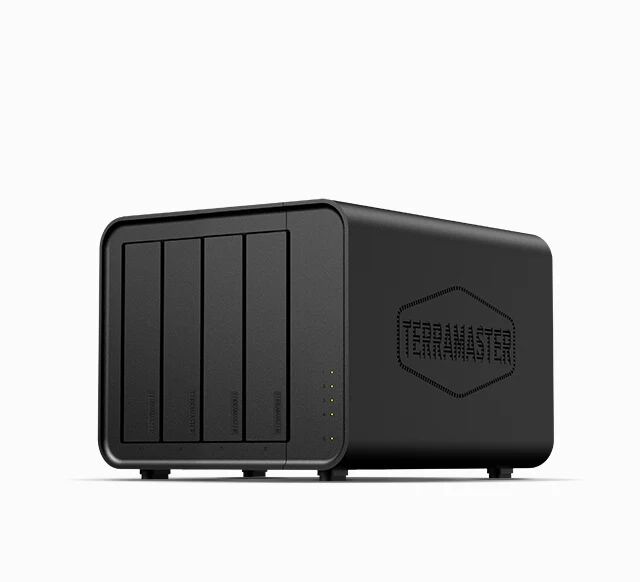
The DS923+ wins on software maturity over the UGREEN NASync DXP4800 Plus and QNAP TS-464, but its stock dual 1GbE networking trails the 2.5GbE on the QNAP and TerraMaster F4-424 Pro and the 10GbE on the UGREEN and Asustor Lockerstor 4 Gen3. Its CPU is older and weaker than every rival here.
Rating sources
“DSM and the deep application library continue to be the best Synology benefits.”
“An AMD-powered NAS with a few minor flaws but excellent software.”
Our 4.2 score is the average of these published ratings. Ratings marked * were derived from the reviewer’s written analysis or video transcript — the publisher didn’t print an explicit numeric score, so we inferred one from their own words. Click through to verify. More about methodology.