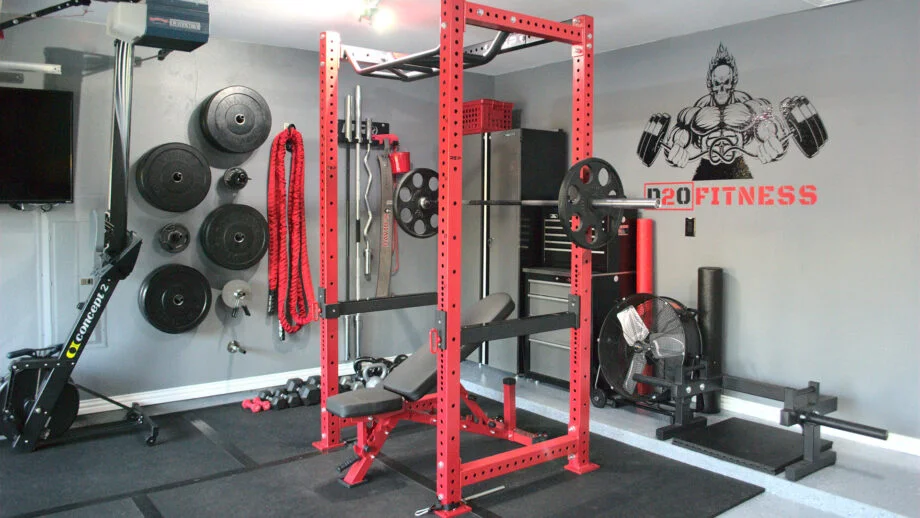
The REP Fitness PR-4000 is the home-gym value benchmark: 3x3-inch 11-gauge steel, a 1,000-pound rackable capacity, Westside hole spacing, and a deep ecosystem of more than ten attachments, all starting around $621. Reviewers from Garage Gym Reviews and BarBend consistently frame it as matching or beating racks costing far more. REP's rack builder lets you configure it fully, with 80- or 93-inch heights and four depth options, which makes it the centerpiece most builders should default to.
Full review
The Home-Gym Value Benchmark
The REP Fitness PR-4000 has become the rack other home-gym racks are measured against, and for good reason. It is built from 3x3-inch 11-gauge steel with a 1,000-pound rackable capacity, the spec sheet of a commercial-grade rack, but it starts around $621 for the base configuration. Garage Gym Reviews summed up its reputation directly, noting the rack has garnered excellent reviews largely because of how great its features are for the price point.
That price-to-spec ratio is the whole story. BarBend described the PR-4000 as a versatile rack that may offer the customization most buyers need to fit their home gym, and REP customers widely praise the build quality, with one owner noting the welds on the rack and all accessories look great and feel high quality, and that the laser-cut holes line up perfectly. For most people building a serious garage gym, the PR-4000 is the default recommendation.
Build Quality and Steel
The PR-4000 uses 3x3-inch uprights in 11-gauge steel, the configuration found on most high-end racks. That thickness translates to a rigid, stable platform that does not flex under heavy squats or rack pulls, and the 1,000-pound rackable capacity is more than any recreational or even most competitive lifters will ever approach.
Hole spacing is a standout. The PR-4000 uses Westside spacing, meaning 1-inch holes through the bench-press zone for precise liftoff and safety positioning, widening to 2-inch elsewhere. Laser-cut numbers every five holes make it trivial to reset your J-cups and safeties to the same position every session, a quality-of-life detail that cheaper racks often omit.
Configuration and Attachments
Where the PR-4000 separates itself is the rack-builder ecosystem. Buyers choose between 80-inch or 93-inch heights, four depth options from 16 to 41 inches, and four- or six-post configurations. A six-post build adds on-rack plate storage and removes the need to bolt the rack down; a four-post build saves space and money but needs front stabilization or floor anchoring.
REP backs the rack with more than ten attachment options beyond the required pull-up bar, J-cups, and safeties, including the Ares cable machine with dual weight stacks, a lat pulldown, dip attachment, landmine, and weight-storage horns. BarBend noted this turns the rack into a genuine all-in-one training station over time, letting you start basic and expand as budget allows.
REP's customer service replaces parts fast
Owners and reviewers consistently report a rock-solid feel under load. The 3x3 11-gauge frame combined with the option to bolt down or run six posts means the rack does not wobble or shift during heavy work, a common complaint on thinner budget racks. The laser-cut numbering removes the guesswork of matching J-cup heights between bench and squat days.
REP's customer service also earns repeated praise in owner reviews, with buyers describing fast replacement of missing or damaged parts. For a piece of equipment intended to last decades, that support reputation is a meaningful part of the value proposition alongside the steel itself.
Fully loaded builds can climb past $2,000
The PR-4000 is not flawless. BarBend flagged that the upright numbers are printed on the front faces only, which can make lining up rear safeties slightly fiddly, and that the D-handles on the Ares cable attachment lack knurling for a secure grip. Neither is a structural concern, but both are real ergonomic nitpicks.
The bigger caution is budget creep. The base price is excellent, but a fully loaded build with the cable machine, lat pulldown, and plate storage can climb well past $2,000. The rack also still demands roughly five square feet of floor and adequate ceiling height, so it is not a fit for the tightest or lowest spaces, where a folding rack would be smarter.
Wins on value, Rogue wins on finish
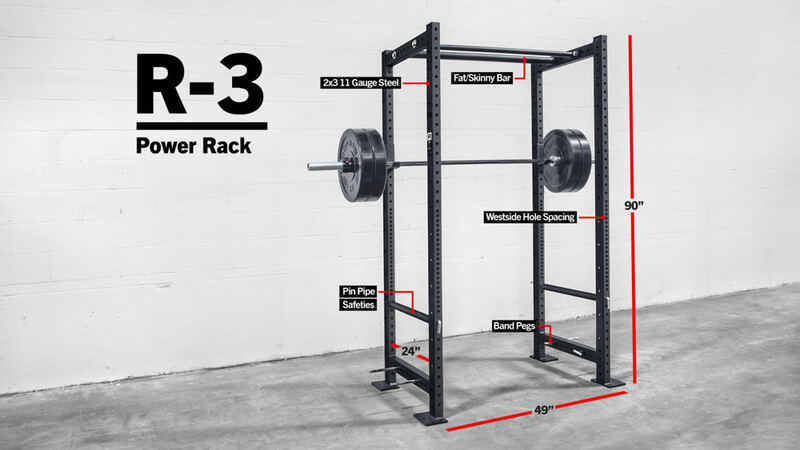
The closest rival is the Rogue R-3, which shares the 11-gauge steel, 1,000-pound capacity, and Westside spacing but uses 2x3 uprights, costs more, and has a shallower attachment catalog. The PR-4000 generally wins on value and configurability while Rogue retains a slight edge in finish and brand cachet.
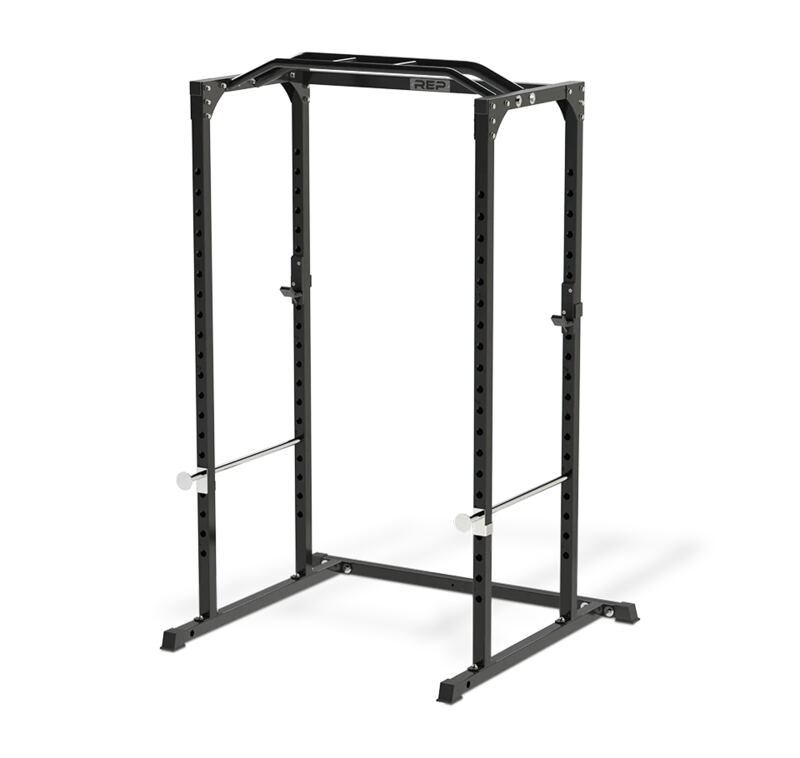
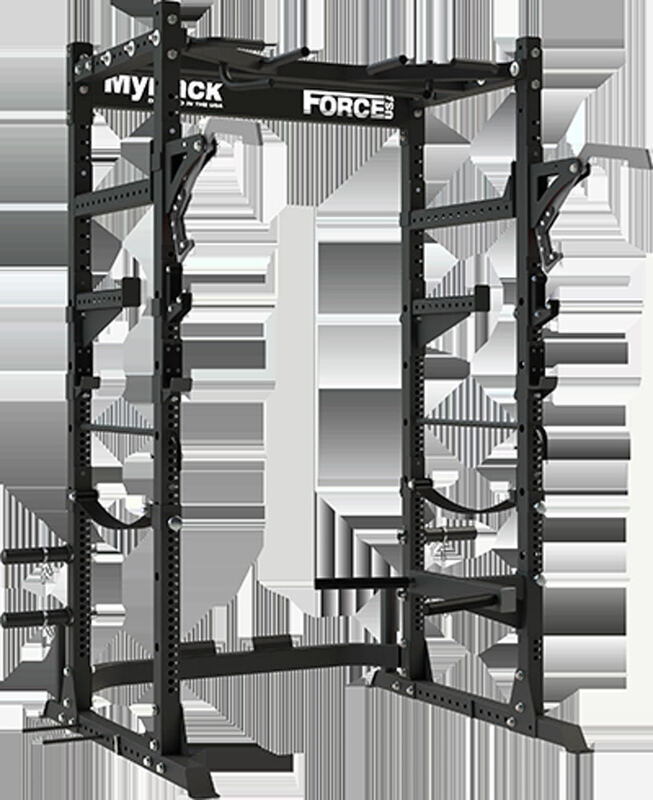
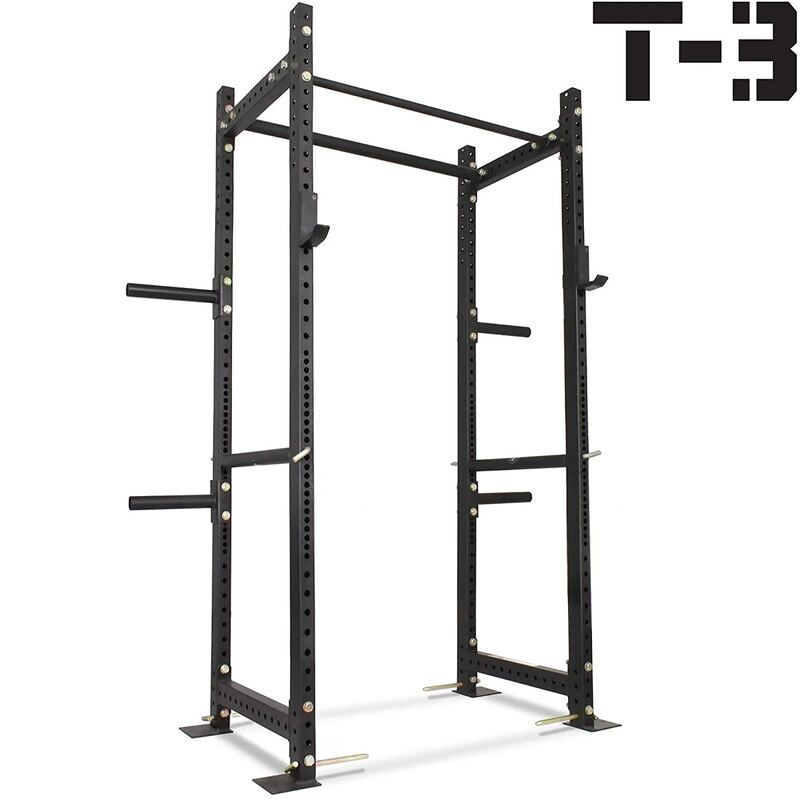
Against the budget options in this category, the gap is wider. The REP PR-1100 and Titan T-3 are lighter-duty racks, the PR-1100 in 2x2 14-gauge and the Titan a bolt-together design, both aimed at cost-conscious buyers. The Force USA MyRack packs in cable attachments at a low price but uses thinner 12-gauge steel and proprietary 2.4-inch uprights. The PR-4000 sits above all of them as the do-everything 3x3 option.
Built for buyers who'll add attachments over time
The PR-4000 is the right rack for the committed home-gym builder who wants a true 3x3 commercial-grade platform, plans to add attachments over time, and has the floor and ceiling space to house it. It is the safe, future-proof default for anyone serious about barbell training at home.
It is overkill for the casual lifter in a tight apartment or a low-ceiling basement, where the more compact REP PR-1100 or a folding Titan T-3 makes more sense, and it is unnecessary for someone who specifically wants a built-in cable station on a tight budget, where the Force USA MyRack is the cheaper route.
Strengths
- +3x3-inch 11-gauge steel with a 1,000 lb rackable capacity
- +Westside (1-inch bench-zone) hole spacing with laser-cut numbers
- +Fully configurable height, depth, and post count via rack builder
- +More than ten attachments including Ares cable, lat pulldown, and dip
- +Limited lifetime frame warranty at a mid-tier price
Watch-outs
- −Upright numbers are printed on the front only, complicating rear safety setup
- −Cable-attachment D-handles lack knurling for grip
- −Configurations can balloon in price as attachments are added
- −Still requires roughly five square feet plus ceiling height
How it compares
Uses the same 3x3-inch 11-gauge steel and 1,000 lb capacity as the Rogue R-3 but at a lower price with a deeper attachment ecosystem. Far more rack than the budget REP PR-1100 (2x2, 14-gauge) and the Titan T-3, and built from thicker steel than the 12-gauge Force USA MyRack.
Rating sources
“This rack has garnered excellent reviews from us and others and it's largely due to how great its features are for the price point.”
“This versatile power rack from REP Fitness may offer the customization you need to fit your home gym.”
Our 4.5 score is the average of these published ratings. Ratings marked * were derived from the reviewer’s written analysis or video transcript — the publisher didn’t print an explicit numeric score, so we inferred one from their own words. Click through to verify. More about methodology.