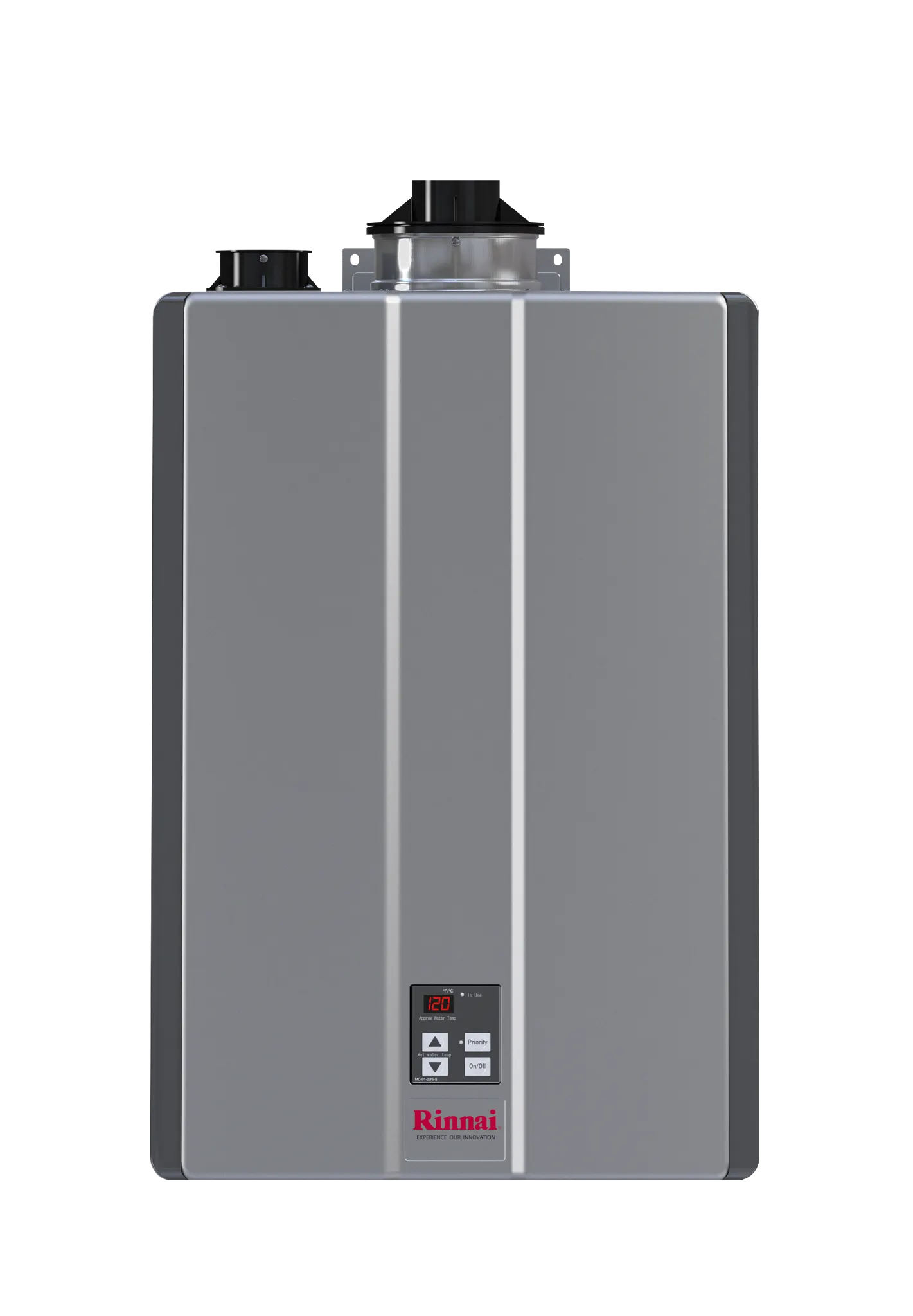
The Rinnai RU199iN is the best overall gas tankless water heater for whole-home use, good for up to 11 GPM and 199,000 BTU, enough hot water for up to five appliances or a 3-4 bathroom house running at once. Bob Vila named the Rinnai SENSEI line its best overall, and reviewers consistently praise the condensing efficiency (0.95 UEF, which qualifies for the federal tax credit) and Wi-Fi control. It is the priciest pick and needs gas service and condensing venting. For a busy household in any climate, nothing here matches its capacity.
Full review
Whole-Home Capacity
The RU199iN exists to never run out of hot water. With a maximum flow rate of 11 GPM and 199,000 BTU of heating power, it can supply a 3-4 bathroom home running multiple fixtures at once — the scenario where smaller units cave. Bob Vila, which named Rinnai's SENSEI line its best overall, credited its 'energy-efficient operation, ample flow rate, and easy-to-use controls,' and Rinnai rates it to produce hot water for up to five appliances simultaneously. For a large family where someone is always showering, doing dishes, or running laundry, that headroom is the entire point.
Gas is what makes that capacity possible. As reviewers across the category note, gas wins decisively on flow rate (9-11 GPM versus 3-7 for electric) and on cold-climate performance, because it can deliver a large temperature rise without the amperage limits that constrain electric units. The RU199iN sits at the top of that gas range.
Condensing Efficiency
The RU199iN is a condensing unit, meaning it extracts extra heat from its own exhaust before venting, pushing its Uniform Energy Factor to 0.95. That efficiency isn't just a utility-bill story — at UEF 0.95 it clears the threshold for the Inflation Reduction Act's Energy Efficient Home Improvement Credit, worth 30% up to $600 on a qualifying gas tankless unit. Reviewed praised tankless units broadly for saving 'massive amounts of space and energy consumption over a traditional water heater without sacrificing performance,' and the condensing RU199iN is at the efficient end of that spectrum.
Wi-Fi control, but a professional-only install
The RU199iN includes Wi-Fi for remote monitoring and control through the Rinnai app, so you can adjust temperature, check status, and get maintenance alerts from your phone. That said, this is not a DIY install: a condensing gas unit needs proper gas line sizing and condensing-rated venting, plus condensate drainage, so professional installation is strongly recommended and is part of why total installed cost runs high. Once in, though, the SENSEI platform is well-supported with parts and one of the longer heat-exchanger warranties in the gas segment.
Bob Vila's pick for best overall performance
Bob Vila's best-overall nod and Reviewed's inclusion of the SENSEI line both rest on the same foundation: reliable, high-capacity hot water with strong efficiency. Reviewers highlight the easy controls, the app, and the sheer flow rate that keeps a busy home supplied. The consensus is that if you have gas and a houseful of demand, this is the safe, capable choice.
Wasted capacity for a one-bathroom home
The RU199iN's drawbacks are cost and complexity. It is the most expensive unit on this list before installation, and the condensing venting and gas requirements push the installed price higher still. It needs natural gas service, so it's a non-starter for all-electric homes. And for a small home or apartment with one bathroom, its capacity is wasted — you'd pay a large premium for flow you'll never use, where an electric unit like the EcoSmart ECO 27 or a point-of-use Rheem RTEX-13 would suffice.
The least likely unit to run out of hot water
Buy the Rinnai RU199iN if you have gas service and a larger home where multiple fixtures run at once and cold-climate performance matters. It is the whole-home workhorse of this group and the one least likely to leave you with a cold shower. If you don't have gas, or you're heating a smaller space, the electric Stiebel Eltron Tempra 36 Plus or EcoSmart ECO 27 will cost far less to buy and install while meeting more modest demand.
A 30 percent tax credit worth up to 600 dollars
On sticker price the RU199iN is the most expensive unit here, and the installed cost climbs further once you factor in gas-line work and condensing venting. But the value math is longer-term: a tankless unit eliminates the standby losses of a tank, the condensing design squeezes more heat from every therm of gas, and the 0.95 UEF earns a 30% federal tax credit up to $600 that effectively discounts the purchase. For a household that genuinely needs 11 GPM, paying for that capacity once beats undersizing and living with cold-water surprises. For a small home, though, the value collapses — you'd be paying flagship money for flow you never touch, which is exactly why the cheaper electric units exist lower in this list.
Strengths
- +Industry-leading 11 GPM flow rate handles a 3-4 bathroom home at once
- +Condensing design with a 0.95 UEF qualifies for the 30% federal tax credit
- +199,000 BTU output keeps up even in cold inlet climates
- +Wi-Fi monitoring and control via the Rinnai app
- +SENSEI line is widely supported with parts and a long heat-exchanger warranty
Watch-outs
- −Highest upfront and installation cost of the group
- −Requires gas service and proper condensing venting
- −Overkill for a small home or apartment
- −Professional installation strongly recommended
How it compares
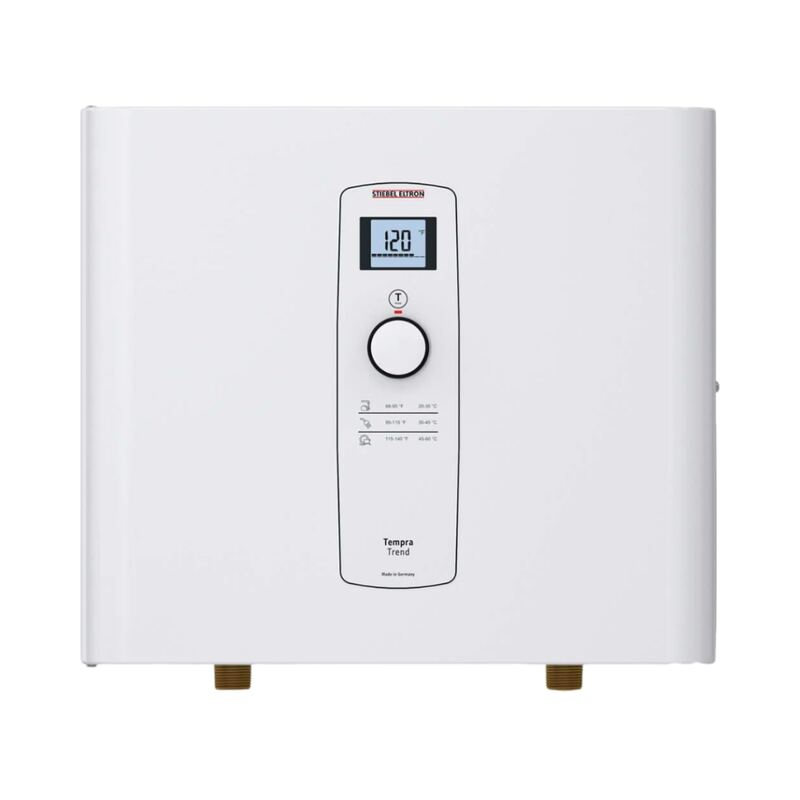
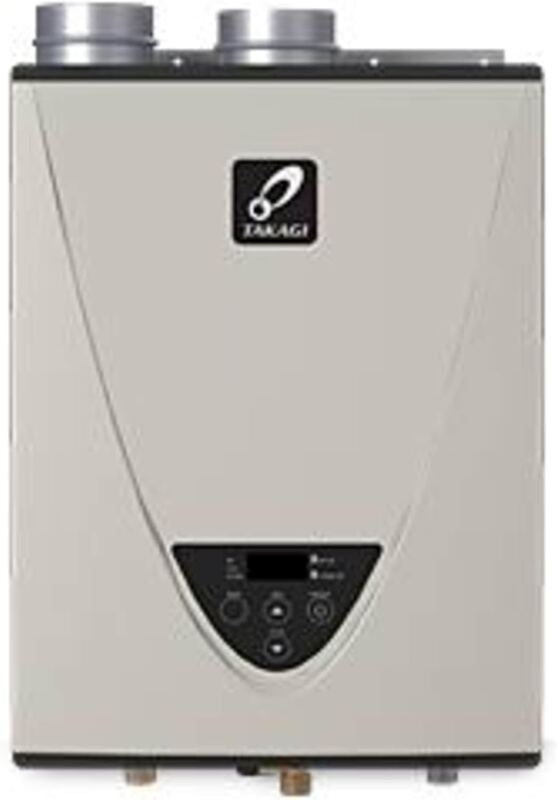
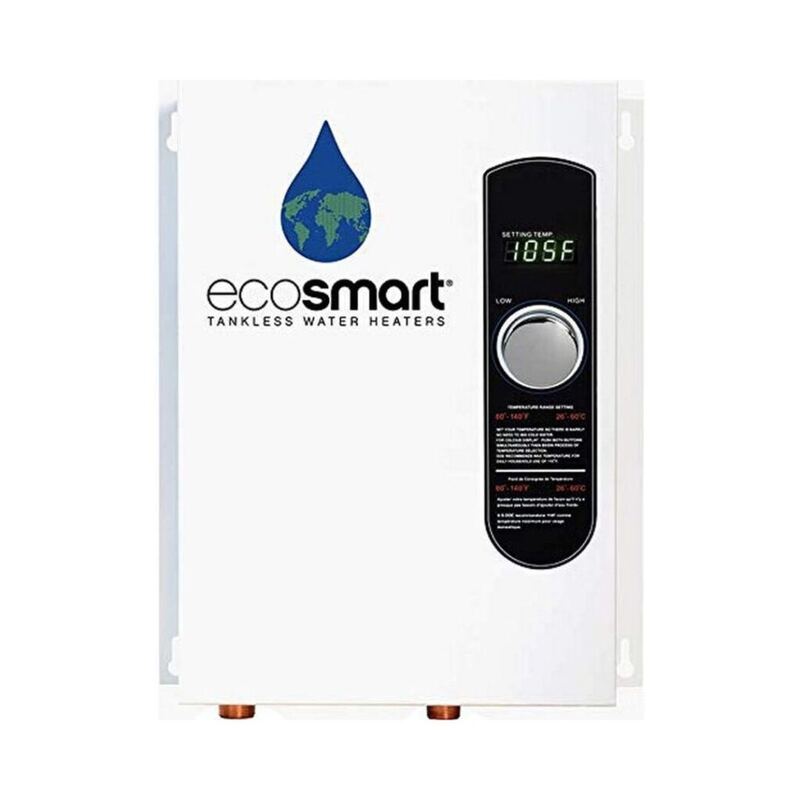
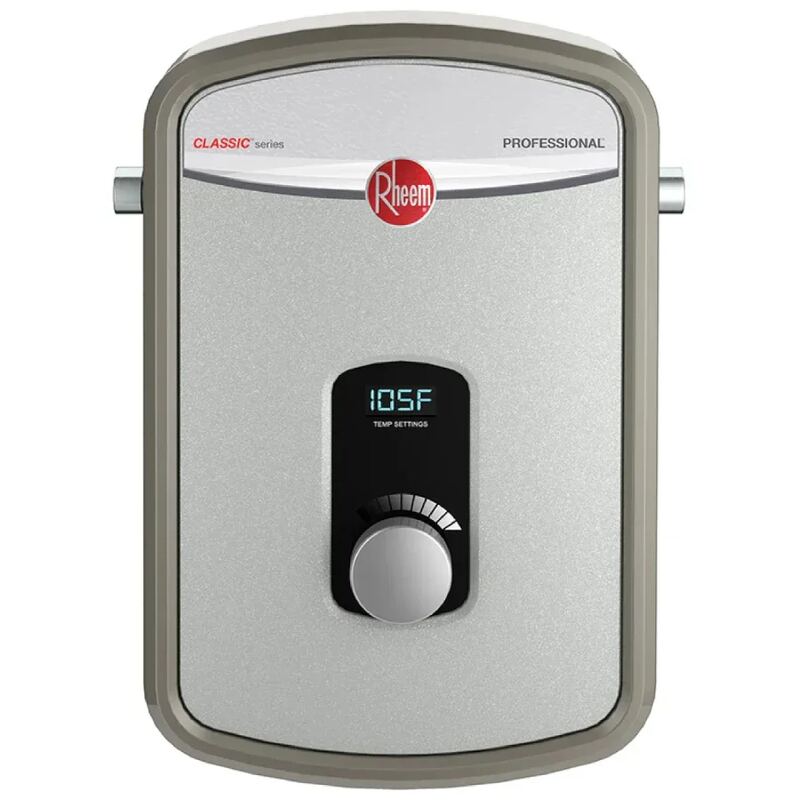
The Rinnai RU199iN is the highest-capacity unit here, with an 11 GPM gas flow rate that dwarfs the electric Stiebel Eltron Tempra 36 Plus (7.5 GPM), EcoSmart ECO 27, and Rheem RTEX-13. Only the gas Takagi T-H3-DV-N approaches it, and the RU199iN edges it on UEF efficiency. It costs the most upfront and, unlike the electric units, requires gas and condensing venting.
Rating sources
“energy-efficient operation, ample flow rate of up to 10 gallons per minute, and easy-to-use controls”
“These small units save massive amounts of space and energy consumption over a traditional water heater without sacrificing performance.”
Our 4.5 score is the average of these published ratings. Ratings marked * were derived from the reviewer’s written analysis or video transcript — the publisher didn’t print an explicit numeric score, so we inferred one from their own words. Click through to verify. More about methodology.