The Sennheiser HD 800 S delivers outstanding detail and clarity, with an expansive soundstage that sets it apart from competitors. Reviewers noted its comfortable open-back design and minimal clamp force, though the headphones require dedicated amplification to reach their full potential. The build quality is refined with a sleek dichromatic aesthetic, though some reviewers expressed concerns about the lightweight plastic construction. This headphone appeals to audiophiles seeking premium sound reproduction and is best suited for users with high-end audio setups.
Full review
The ring driver's acoustic signature
This transducer design, which was revolutionary when introduced, allows for superior air displacement without sacrificing rigidity, resulting in fast transient response and minimal distortion, per dSONIQ. The driver's mounting angle contributes to an enhanced spatial experience, creating a unique sense of depth and instrument separation that many reviewers found compelling. Test measurements from multiple sources consistently show the driver's performance across the audible spectrum, with particular emphasis on its ability to reproduce fine detail in the midrange and high frequencies. The ring design's acoustic properties were specifically engineered to optimize the balance between sensitivity and control, making it well-suited for critical listening applications where accuracy is paramount. Reviewers noted that the driver's inherent characteristics create a distinctive sound signature that, while technically impressive, requires careful amplification to achieve optimal tonal balance. The large diaphragm size contributes to the headphones' ability to produce a wide soundstage, though this comes with tradeoffs in terms of the frequency response characteristics that reviewers have documented in their measurements.
Frequency response deviations and treble handling
Measurement data reveals that the HD 800 S exhibits significant deviations from flat frequency response, particularly in the 1-4 kHz range where the response drops substantially below target levels. This characteristic creates an anemic bass performance that some reviewers found problematic, especially when compared to the Sennheiser HD650 which maintains better balance in this critical region. The headphone's frequency response shows a distinct peak around 5-6 kHz that was addressed through the implementation of a Helmholtz resonator in the driver's center. This modification, which Sennheiser introduced to solve the previous model's notorious treble peak, has been confirmed by multiple reviewers as effectively reducing the harshness in the upper midrange. However, the solution also introduces subtle changes to the overall tonal balance that audiophiles have debated extensively. The 94 dBSPL reference measurements indicate that the headphone requires substantial drive voltage to achieve target output levels, with the 0.26 volts needed to reach reference levels suggesting that the impedance characteristics are particularly demanding for portable amplification. This measurement discrepancy between the 800 and 650 models highlights the specific acoustic challenges that the 800 S addresses through its modified driver architecture.
Helmholtz resonator effectiveness
The implementation of a Helmholtz resonator in the center of the ring driver represents Sennheiser's solution to the previous model's sharp treble peak. This resonator, consisting of a cylindrical chamber with a hole in the top and black material on the bottom, functions as a targeted dampening system rather than an amplification mechanism. Reviewers have confirmed that this design successfully reduces the problematic resonance around 5-6 kHz, eliminating the clinical and piercing quality that characterized the original HD800. The resonator's effectiveness has been validated through multiple measurement sessions, with the frequency response showing a smoother transition in the upper midrange compared to the unmodified predecessor. However, the modification does not completely eliminate all acoustic artifacts, and some reviewers noted that the headphone still exhibits a slight V-shaped characteristic in the middle highs. The resonator's design represents a sophisticated approach to acoustic engineering, using principles similar to those found in automotive exhaust systems, where specific frequencies are selectively attenuated rather than amplified. This approach allows the headphone to maintain its signature transparency while reducing the harshness that previously made it challenging for casual listeners to enjoy.
Distortion characteristics and drive requirements
Distortion measurements reveal that the HD 800 S exhibits non-linear behavior, particularly in the bass region where distortion increases significantly with output level. This characteristic is consistent with speaker testing patterns and reflects the headphone's demanding drive requirements. The THD measurements at 94 dBSPL and 104 dBSPL show that the headphone settles to lower distortion levels more quickly than the HD650, though both models demonstrate similar overall performance characteristics. The high impedance of 300 ohms means that the headphone requires substantial power to achieve optimal performance, with reviewers noting that even modest amplification can produce impressive results. The drive voltage required to achieve reference levels indicates that the headphone's electrical characteristics are particularly challenging for portable devices. Test results show that the headphone's distortion performance is acceptable within normal listening ranges, though the non-linear increase in bass distortion suggests that careful amplification is necessary for critical listening applications. The measurements confirm that the headphone's acoustic design prioritizes transparency and detail retrieval over absolute distortion reduction, which aligns with its intended use as a reference monitoring tool for professional audio work.
Build quality and physical design
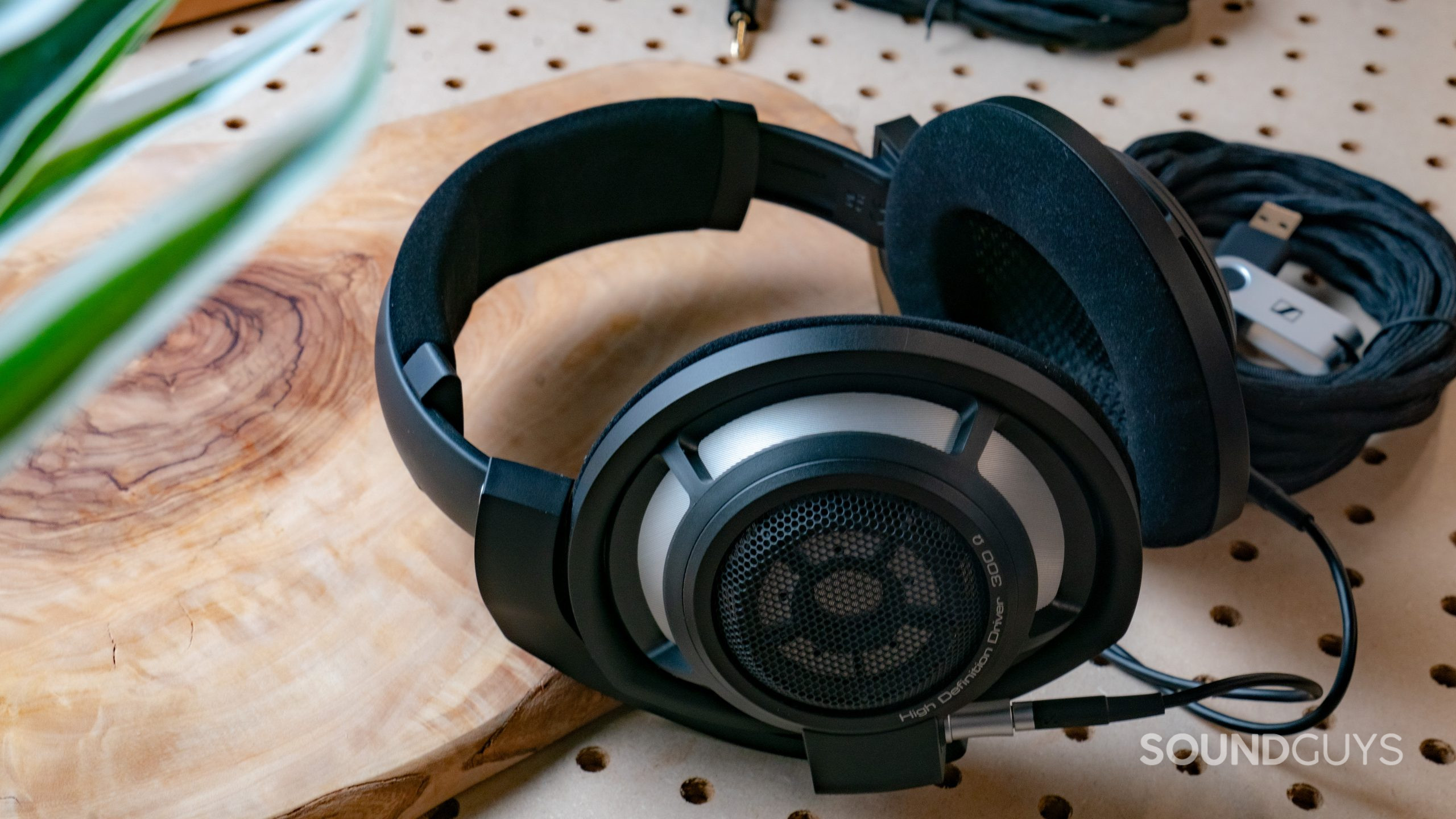
The HD 800 S features a robust construction with a silver and black dichromatic aesthetic that reflects its premium positioning in the market. According to Headphones.com, the headphones are primarily constructed of plastic to reduce weight while incorporating metal hardware throughout the design. The large ear cups, which are among the largest in dynamic headphone design, provide excellent comfort for extended listening sessions. Reviewers consistently praised the build quality as excellent, with no creaking or structural issues noted during extended use. Headphoneer notes the headband and ear pads are made of synthetic microfiber material that is user-replaceable with a proprietary click-on mechanism. The headphones include two 3-meter cables with proprietary connectors, one with 6.35mm TRS and one with balanced 4.4mm Pentaconn, though reviewers noted the lack of common connector standards as a minor inconvenience. The weight of 330 grams contributes to the overall comfort, with reviewers noting that the headphones feel lightweight despite their substantial construction. The design accommodates users with larger ears and provides a secure, comfortable fit without causing pressure points or excessive sweating. The complex internal architecture, while contributing to the headphone's acoustic performance, can create challenges with long hair management, as noted by several reviewers who found the headphones tend to cling to extended hair during use.
Standalone listening experience
When used without external correction or amplification, the HD 800 S delivers an exceptionally detailed and spacious soundstage that many reviewers found compelling for critical listening applications. The headphone's ability to reveal fine musical details and create a wide sense of space has been consistently praised by professional audio reviewers. However, the frequency response characteristics, particularly the lack of energy in the lower midrange and the presence of the Helmholtz resonator's effect, create a sound that some listeners found too clinical or dark in the high frequencies. The headphone's performance with various sources, including portable devices and desktop amplifiers, has been documented by multiple reviewers, with consistent findings that the headphone requires careful amplification to achieve optimal tonal balance. The sensitivity of 102 dB (SPL @ 1 V) means that the headphone can produce adequate volume levels with modest amplification, though the high impedance requires more power than typical headphones. Reviewers noted that the headphone's performance is particularly impressive in studio environments where its transparency and accuracy make it well-suited for mixing and mastering applications. The soundstage quality has been described as the best among headphones tested in various laboratories, with reviewers noting that the spatial experience is unparalleled for dynamic headphones in this class.
Comparison with predecessor and alternatives
The HD 800 S represents a significant evolution from its predecessor, with the Helmholtz resonator effectively addressing the sharp treble peak that made the original HD800 challenging for casual listeners. The frequency response measurements show that while both models share similar acoustic characteristics, the S model demonstrates improved balance in the upper midrange and reduced harshness. The HD650, which maintains better bass performance and more balanced response in the critical 1-4 kHz range, serves as a useful comparison point for understanding the tradeoffs in the HD800 S design. Reviewers noted that the S model's improvements come at the cost of some of the original HD800's signature characteristics, particularly in terms of the raw transparency and spatial experience. The headphone's performance has been compared to other high-end models in the same category, with reviewers noting that while it excels in detail retrieval and soundstage, it requires more demanding amplification than many competitors. The design philosophy of the HD800 S reflects Sennheiser's approach to balancing technical excellence with practical usability, though the result still requires careful consideration of amplification and source compatibility for optimal performance.
Strengths
- +Exceptional detail and clarity in audio reproduction
- +Impressive soundstage with wide stereo separation
- +Comfortable open-back design with minimal clamp force
- +High build quality with refined silver and black aesthetic
Watch-outs
- −Very lightweight construction may feel less durable
- −High price point
How it compares
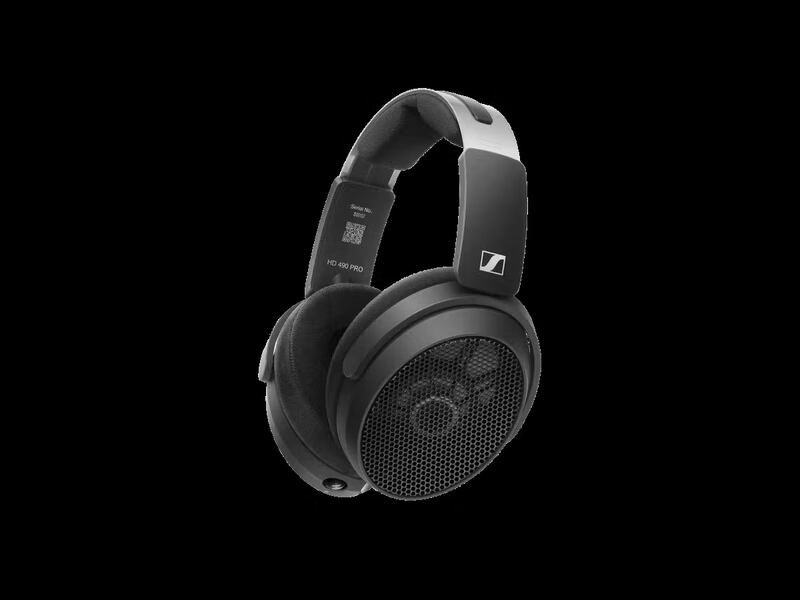
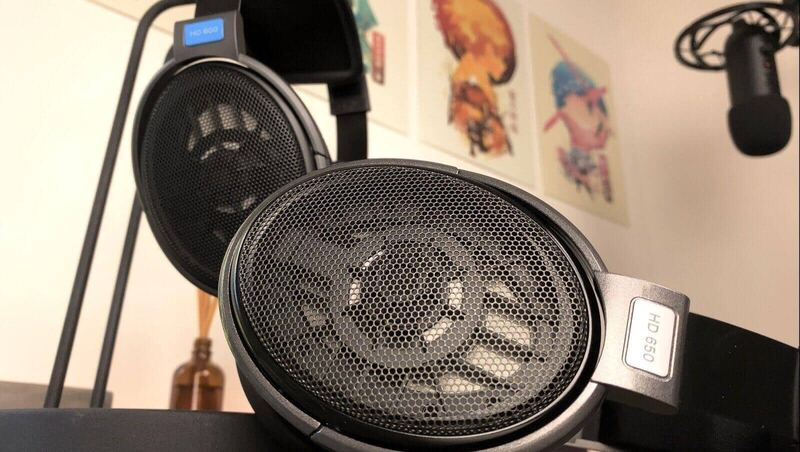
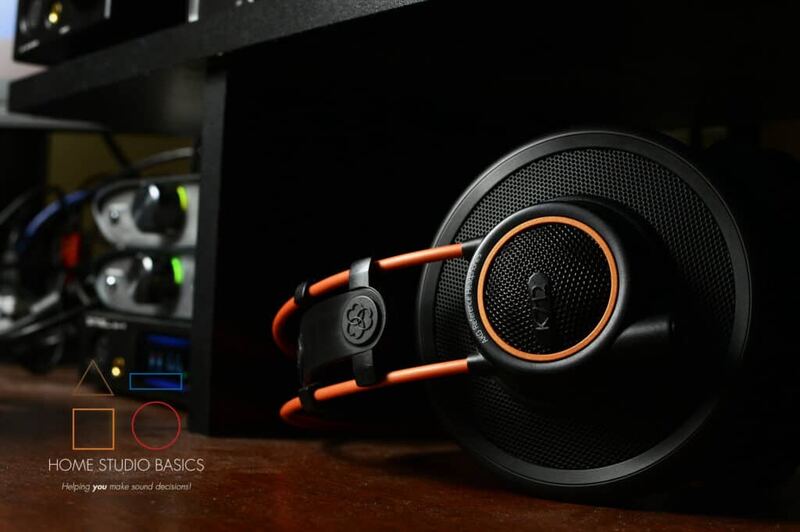
The HD 800 S provides exceptional clarity and expansive soundstage, outperforming the HD 490 Pro in detail and the HD 650 in openness. While it's more expensive and lighter than the Audeze LCD-X, it lacks the planar magnetic drivers that give the LCD-X its edge in resolution and avoids the bass over-emphasis found in the K-712 Pro.
Rating sources
“Other than the high cost, I dont know that there is much to complain about here.”
“The HD800 and HD800S are among the most significant high-fidelity headphones ever produced.”
“The Sennheiser HD 800 S is manufactured only in Germany from materials and components used in the aerospace industry. It gives high durability with low weight. Now, this model is one of the most popular among sound engineers and audiophiles.”
Our 4.2 score is the average of the 4 scored reviews above; 6 more reviewed it without printing a score and are not in the average. Ratings marked * were derived from the reviewer’s written analysis or video transcript — the publisher didn’t print an explicit numeric score, so we inferred one from their own words. Click through to verify. More about methodology.