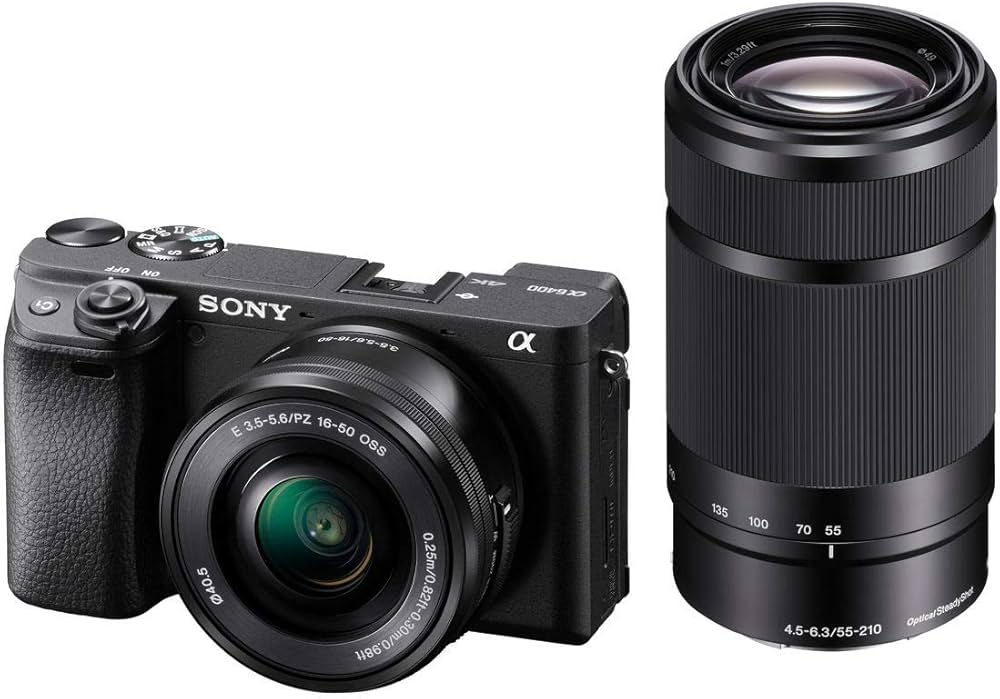
The Sony a6400's autofocus is the reason to buy it. DPReview calls the implementation one of the best out there and effectively game-changing at this price, and the tracking holds up on moving subjects with the silent electronic shutter engaged. Image quality from the 24.2MP APS-C sensor is strong, and 11 fps bursts with full raw capture put it in reach of action shooting. The handling is the weak half: DPReview has never warmed to the ergonomics of this body line, Shotkit's reviewer kept hitting the wrong buttons on the crowded rear panel, and there is no in-body stabilisation.
Full review
Autofocus is the whole argument
DPReview's assessment is that the a6400's autofocus is among the best implementations available and that a pro-grade tracking system this simple to use is genuinely unusual at the price. In practice that means you can point the camera at a moving subject and leave it alone, which is why the camera keeps being recommended to parents and enthusiasts rather than only to sports shooters. The 425 phase- and contrast-detect points cover most of the frame, and tracking survives the switch to the silent full-electronic shutter.
It is not entirely frictionless. DPReview notes that the tracking settings are confusing on first contact, with redundant options, and that tap-to-track in video has to be turned on and off from inside the menus rather than from a button. Once configured it stays out of the way, but the setup is a chore that better-organised cameras avoid.
Sensor holds up, but the shutter shows its age
DPReview rates both JPEG and raw output as up there with the best in this class, and the 24.2MP sensor gives the camera enough resolution and enough latitude for travel and family work. Continuous shooting runs to 11 fps with full raw capture, which is a genuinely capable burst rate for the money. Shotkit's Daniel Stark used it across a wedding and studio portraits and found it coped with mixed light, while flagging low-light output as the area with the most room to improve.
The electronic shutter is where the compromise shows. Fast pans and quick subject movement produce visible skew, so the silent mode is best kept for static scenes. DPReview also points out that the SD slot is UHS-I with slow write times and that there is no lossless or uncompressed raw option, both of which matter more the harder you push the burst rate.
4K comes with a crop and no stabilisation
Video is capable rather than complete. There is 4K at 30p and 1080 up to 120p, recorded at a healthy bitrate, and DPReview highlights the flip-up screen that tilts a full 180 degrees for self-recording. What is missing is in-body stabilisation, so handheld footage needs a stabilised lens or a gimbal, and the 4K/30p mode applies a 1.2x crop that costs you the wide end of whatever lens is fitted.
The stills-and-video split is handled awkwardly too. DPReview notes the camera does not remember exposure settings between the two modes, which means resetting aperture and shutter every time you switch. For a camera whose autofocus makes it an obvious run-and-gun tool, that is a persistent irritation.
A body design DPReview has never liked
The rangefinder-style shell has not meaningfully changed in generations, and DPReview is blunt that the ergonomics of this series have never been a favourite, adding that the handling frustrations only recede because the autofocus is good enough to compensate. Shotkit's Daniel Stark ran into the specific version of that problem: the buttons sit close together to fit the small body, and he kept pressing ones he did not intend to.
Alik Griffin's counterpoint is that the thing is built like a tank and stays genuinely small and light, which is exactly what a travel camera should be. The grip is deeper than the size suggests, the 2.36m-dot OLED finder is good for the class, and the body comes in under a pound. Touchscreen control is limited to focus point selection, and the menus, though revised, still take longer to learn than the competition's.
Best paired with a stabilised lens
This is the camera for someone who wants the autofocus above everything else and will accept a dated interface to get it. Travel and family shooters get a small, tough body with class-leading subject tracking; videographers should budget for a stabilised lens or a gimbal, and anyone who cares about how a camera feels in the hand should try alternatives that are more enjoyable to operate before committing.
Strengths
- +Industry-leading autofocus implementation with 425 phase- and contrast-detect AF points
- +11fps continuous RAW shooting capability
- +Detailed 4K video with 100mbps recording and slow motion
- +Tilting 3.0" 921.6k-Dot touchscreen for selfies and vlogging
Watch-outs
- −Ergonomics are hit-and-miss with no substantive changes from predecessor
- −Lacks in-body stabilization limiting video and low-light performance
How it compares
The Sony α6400 excels in autofocus performance compared to the Canon EOS R50, but lacks the 4K/60p recording and 10-bit color depth of the Sony α6700. Unlike the Fujifilm X-T5, it has a more compact design and better low-light performance, though the X-T5 provides higher frame rates and better in-body stabilization.
Rating sources
“It is absolutely one of the most capable APS-C inter”
“The Sony A6400 is a small, lightweight APS-C camera designed for photographers and videographers looking to maximize versatility and image quality without compromising performance.”
Our 4.1 score is the average of these published ratings. Ratings marked * were derived from the reviewer’s written analysis or video transcript — the publisher didn’t print an explicit numeric score, so we inferred one from their own words. Click through to verify. More about methodology.