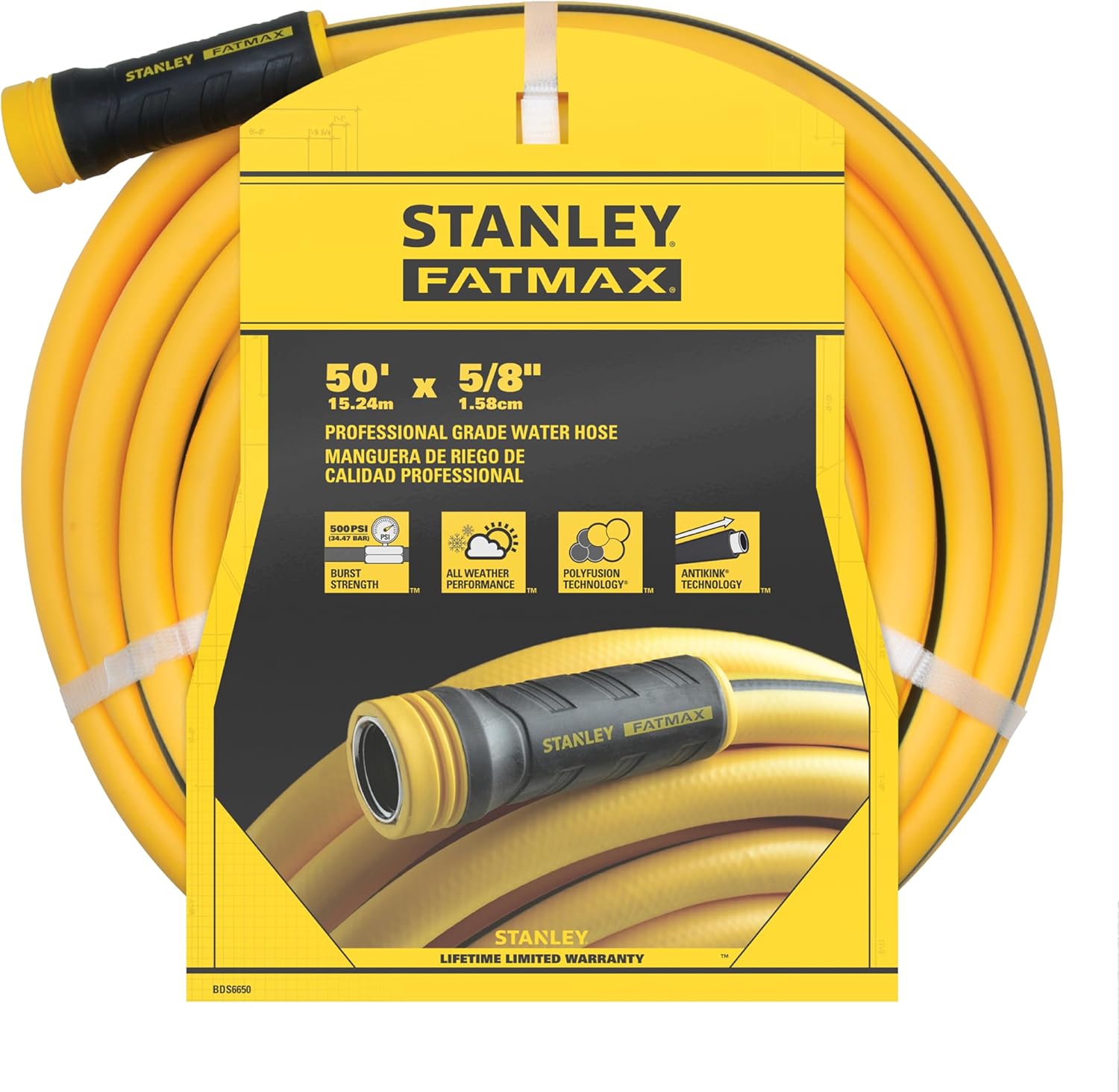
The Stanley Fatmax Professional Grade Water Hose offers a lightweight yet durable solution for gardeners seeking a high-performance hose. It features forged aluminum couplings with integrated washers that prevent leaks, and is drinking water safe. Reviewers noted its pliable nature and ease of handling, though some concerns were raised about its kinking behavior. This hose is ideal for users wanting a reliable, flexible option that maintains performance in cold weather, though it may not completely eliminate kinking issues.
Full review
Lightweight construction with surprising durability
The Stanley Fatmax Professional Grade Water Hose demonstrates a notable departure from traditional garden hose materials, utilizing a hybrid construction that combines polyurethane and PVC in what the manufacturer terms 'PolyFusion' technology. This approach results in a hose that weighs only seven pounds for the 50-foot length, significantly lighter than conventional rubber or vinyl alternatives. Reviewers noted that despite its lightweight nature, the hose maintains robust construction with a 500 PSI burst strength, exceeding industry minimums. The material's flexibility allows it to remain pliable even in cold temperatures down to -15 degrees, though it's worth noting that this flexibility applies to the hose's physical state rather than preventing water freezing inside the tube during winter storage. The hose's construction also incorporates forged aluminum titanium-coated couplings, which provide a more durable connection point compared to typical steel fittings that can corrode or damage washers during installation.
Kink resistance in practical use
While the hose is marketed as anti-kink, real-world testing reveals mixed results depending on conditions. Reviewers observed that the hose does not kink under normal usage when filled with water, but can still develop kinks when empty, particularly when coiled or dragged over rough surfaces. The self-straightening capability becomes apparent when the hose is under pressure, as previously formed bends tend to resolve automatically. One reviewer noted that the hose's performance in kink prevention is most effective when the hose is filled with water, as empty sections can still develop permanent bends that require manual straightening. The hose's ability to maintain shape during uncoiling and recoiling was praised, with users reporting that it rolls up easily and returns to its original configuration without significant memory issues, though this behavior is most pronounced when the hose is under water pressure.
Coupling design and connection reliability
The hose features forged aluminum titanium-coated couplings with integrated washers, which eliminate the need for separate sealing components. These fittings are designed with over-molded plastic collars that provide a secure grip and allow for full-hand tightening without requiring additional tools. The female end includes a rotating grip mechanism that enables users to apply torque with their entire hand rather than struggling with small threaded sections. This design addresses common issues with traditional hoses where connections often require pliers or result in damaged washers. Reviewers specifically noted that the coupling design prevents the common problem of hose ends being damaged during tightening, which typically occurs when thin steel fittings cut into rubber washers. The titanium coating on the aluminum fittings provides corrosion resistance and smooth threading, contributing to the overall durability of the connection points.
Versatile sizing and application range
Available in multiple lengths ranging from 25 to 150 feet, the Stanley Fatmax hose offers flexibility for various applications. The 50-foot length was most commonly tested, with reviewers noting that its weight-to-length ratio makes it easier to handle than standard hoses of similar dimensions. The 5/8-inch diameter provides sufficient flow for most residential and light commercial applications, including pressure washing and general irrigation tasks. Users reported that the hose's flexibility makes it suitable for both large-scale operations and smaller gardening tasks, with the ability to maneuver around obstacles without requiring excessive force or risking damage to the hose structure.
Color and visibility advantages
The bright yellow coloration of the hose provides significant practical advantages over traditional black or green alternatives. Reviewers noted that the vibrant hue makes the hose highly visible, reducing the likelihood of accidental damage from lawn equipment or vehicles. This feature was particularly valued by users who work in areas with multiple hoses or where visibility is important for safety reasons. The yellow color also helps prevent the hose from being run over by lawnmowers or other equipment, which is a common source of damage to traditional garden hoses. The color choice was seen as a practical improvement over standard options, with one reviewer specifically mentioning that the bright color makes it easier to spot when the hose is left in a driveway or yard. The black version was also available for those preferring a more traditional appearance, though the yellow variant was noted to be more functional in preventing accidental damage.
Performance under pressure and flow conditions
When tested under pressure conditions, the Stanley Fatmax hose demonstrated consistent performance with no reported leaks or failures at the coupling points. The hose's ability to maintain full flow even when bent or kinked was noted, though this required the hose to be filled with water for optimal performance. Reviewers observed that the hose's pressure handling capabilities were sufficient for typical garden and light commercial applications, including use with pressure washers and high-flow irrigation systems. The hose's resistance to abrasion and puncture was tested by dragging it over concrete, rocks, and gravel surfaces, with no damage reported. The material's ability to withstand repeated use and exposure to various environmental conditions was seen as a key advantage over traditional hoses that often develop weak spots or fail after extended use.
Comparison to traditional garden hose materials
The Stanley Fatmax hose represents a significant advancement over traditional rubber and vinyl garden hoses in terms of material properties and construction. Unlike conventional hoses that often become rigid in cold weather or develop kinks when bent, the Fatmax maintains flexibility and structural integrity. Reviewers noted that the hose's construction makes it more durable than typical alternatives, with no reported failures during testing despite being subjected to various stress conditions. The lightweight nature of the hose was particularly appreciated by users who frequently moved it between locations, as it reduced physical strain during handling. The hose's ability to maintain its shape and prevent kinking under pressure was seen as a major improvement over older designs, though some reviewers noted that the hose's anti-kink properties are most effective when filled with water rather than when empty.
Strengths
- +Lightweight design at only 7 lbs for a 50' length, per Gardening Products Review
- +Forged aluminum titanium coated couplings with integrated washer prevent leaks, according to Gardening Products Review
- +AntiKink technology helps maintain hose flexibility and usability
- +Drinking water safe with no harmful chemicals like lead, BPA, or phthalates, per Gardening Products Review
Watch-outs
- −May still kink under certain conditions despite anti-kink claims, per Gardening Products Review
- −Not explicitly stated as suitable for freezing temperatures despite flexible claims
How it compares
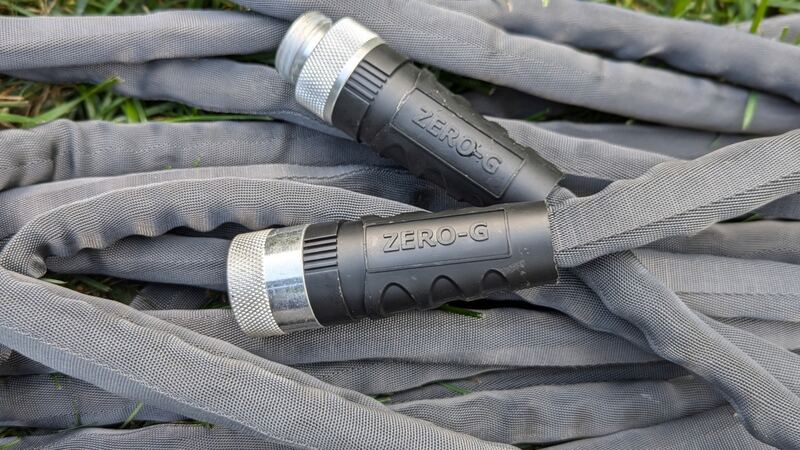
The Stanley Fatmax Professional Grade Water Hose is lighter and more flexible than the Eley Polyurethane Garden Hose, but it doesn't match the Eley's durability and water flow. While the Stanley offers forged aluminum couplings and anti-kink technology, it still has concerns about kinking under certain conditions, unlike the Zero-G Ultra Flexible Durable Garden Hose which actively resists kinking. Compared to the Gorilla ToughLite 50 Heavy Duty Garden Hose, the Stanley is lighter but lacks the same burst strength and crush resistance.
Rating sources
“Lightweight, hefty connectors and pliable - but it kinks”
“The new technology lets these hoses stay solid and flexible down to -15 degrees.”
“The only thing Id suggest is to make sure to grab yourself one of the longer sizes (the lengths available are 25, 50,”
Our 4.0 score is the average of these published ratings. Ratings marked * were derived from the reviewer’s written analysis or video transcript — the publisher didn’t print an explicit numeric score, so we inferred one from their own words. Click through to verify. More about methodology.