The TireMinder Smart TPMS is the pick for tech-minded RVers who want phone-based monitoring, now with CarPlay support that owners call a real quality-of-life upgrade. It checks every six seconds and monitors up to 22 tires, and its customer support is repeatedly singled out as best-in-class. The trade-offs are a dated app, occasional self-clearing false alarms, and reliance on a phone rather than a standalone screen.
Full review
Monitors up to 22 tires via CarPlay
The TireMinder Smart TPMS takes a different path from the dedicated-display systems: it streams tire data to your phone or tablet. RV Outfitting's review highlighted that the CarPlay integration is a huge quality-of-life upgrade for iPhone users, and Nomad Nate's road test crowned TireMinder the winner for app experience, advising buyers who love tech and clean app control to go with it. The Drive lists it as an honorable mention in its TPMS roundup.
Functionally it is thorough: the system checks for slow leaks, rapid leaks, blowouts, low and high pressure, and high temperature every six seconds, and can monitor up to 22 tires from 0 to 232 PSI. Owners repeatedly describe it catching leaks or overheating long before they became major problems.
App and Daily Use
The app auto-scrolls through tires and now supports CarPlay, which owners describe as a meaningful upgrade for keeping tire data visible while driving. For RVers who already live in their phones and prefer not to mount another dedicated screen on the dash, the app-based approach is genuinely convenient.
That said, reviewers are candid that the app feels dated next to modern software. It works and does the job, but the interface has not kept pace with the polish of newer apps. For some buyers the CarPlay support offsets that; for others the dated feel is a real knock against an otherwise capable system.
Sensors, Booster and Support
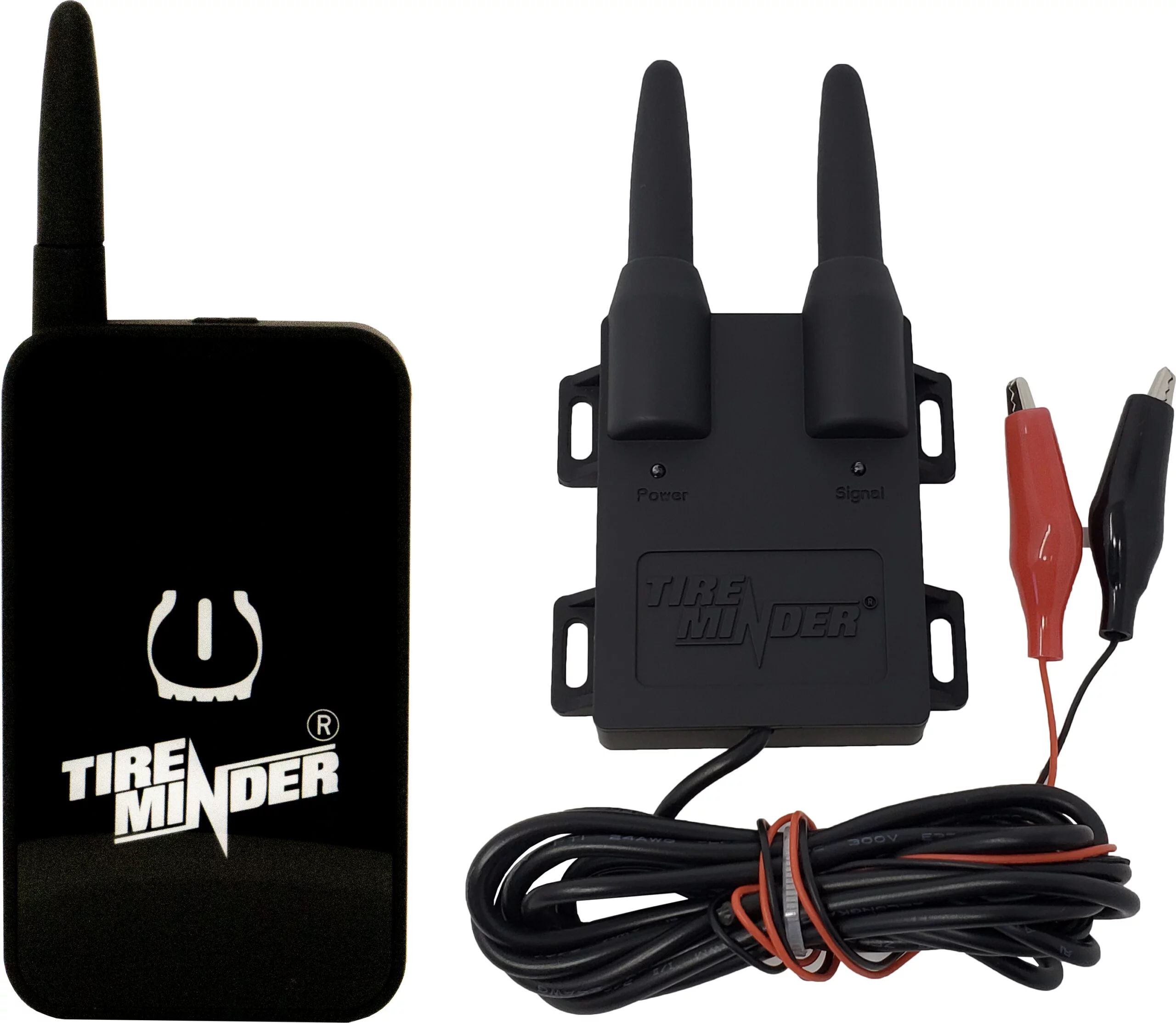
The kit includes four screw-on transmitters plus a Rhino signal booster designed to eliminate electronic interference, along with extras like spare batteries, O-rings, a bracket, anti-theft locking nuts, a carrying case, a free lithium battery exchange program, and unlimited live phone and email support.
That support is the system's standout. Owner comments repeatedly praise named TireMinder reps who quickly send replacement sensors and upgraded units. In a category where sensors are consumables, responsive support is a real long-term value — and it is the reason many owners stick with TireMinder despite the app's age.
Installation and Long-Term Notes
Installation is straightforward — thread the four transmitters onto the valve stems, pair them in the app, and place the Rhino booster to extend range on longer rigs. One long-term tip surfaces repeatedly in owner reports: steel valve stems solve the sensor failures some owners experienced on flexible rubber stems, so swapping to metal stems is worth doing up front on a heavy rig.
Over months of use, reviewers describe the system as a reliable companion that consistently provides accurate readings and peace of mind on long hauls, with the lithium battery exchange program keeping sensor maintenance painless. The recurring long-term frustration is the self-clearing false alerts, which can erode trust over time — owners who tune the alarm thresholds and lean on TireMinder's support tend to stay happy, while those who want zero false alerts often migrate to a dedicated-display system.
False alerts that clear themselves in minutes
The most common complaint is reliability of alerts: reviewers note recurring high/low pressure or no-signal alerts that clear themselves within minutes, which can train owners to ignore warnings. RV Outfitting also flagged that readings do not always match high-quality handheld gauges — some owners see a few PSI difference, others more.
And because it is smartphone-based, the system depends on your phone or tablet being present and the app running, where the TST 507 and EEZTire 518C put the data on an always-on dedicated screen. For buyers who want a glance-and-go display with no app in the loop, that dependency is a drawback.
Trades a dedicated screen for app control
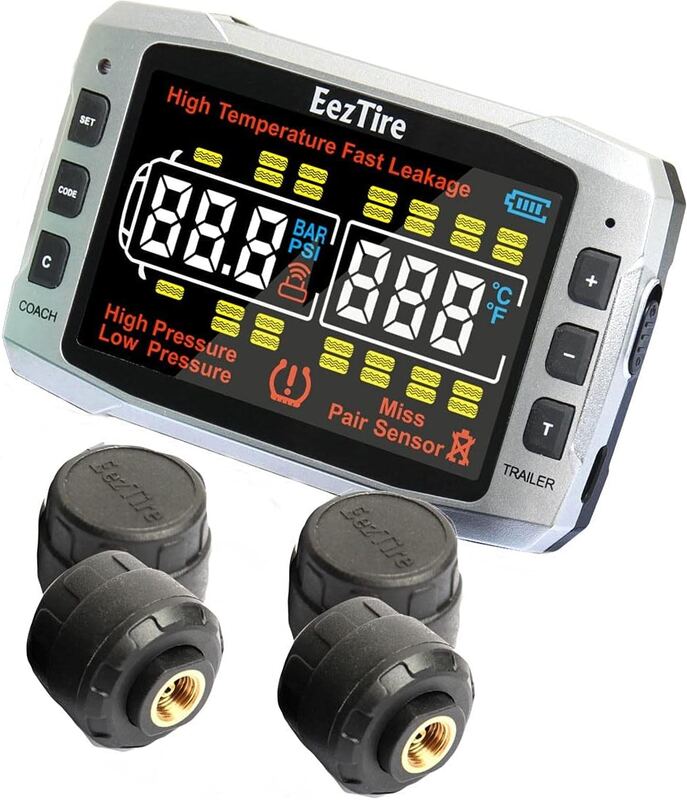
Against the TST 507 and EEZTire-TPMS Pro (518C), the TireMinder Smart TPMS trades a dedicated color display for phone-and-CarPlay control — better for tech-forward owners, worse for anyone who wants an always-on screen and no app quirks. Reviewers frame the choice as TireMinder for tech, TST for durability, EEZTire for value.
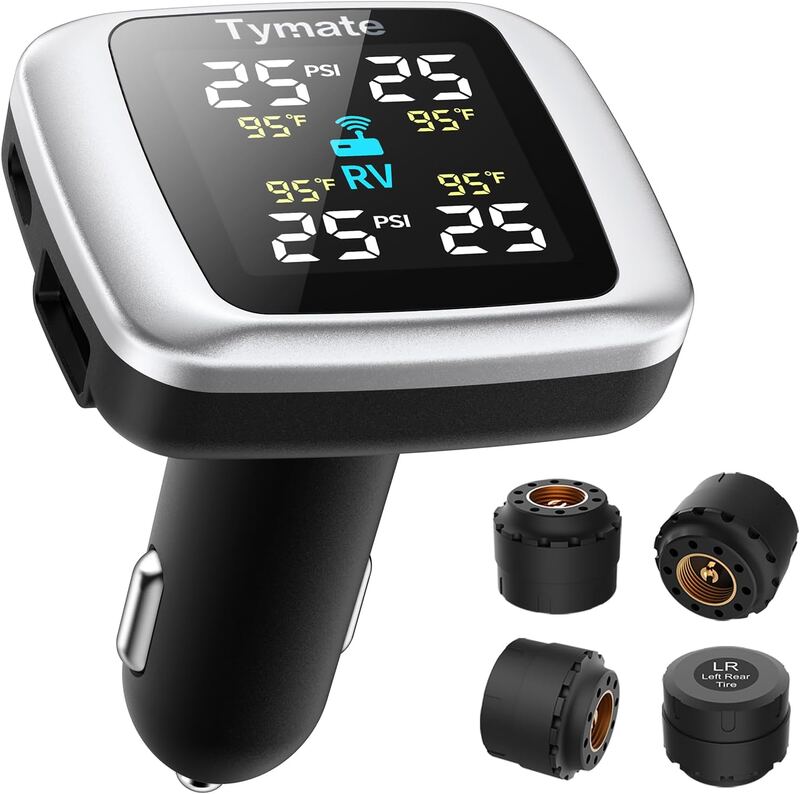
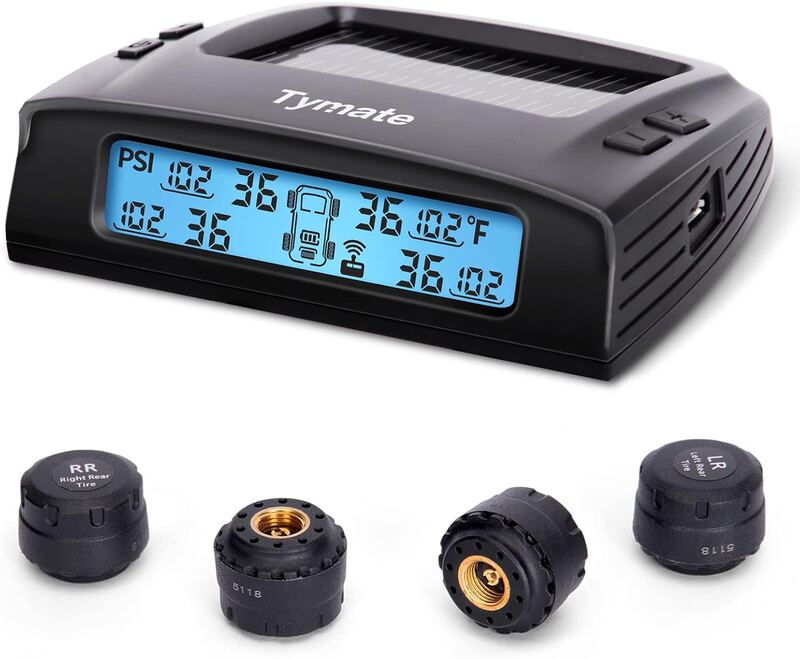
Compared to the budget Tymate TM7 and Tymate M7-3 (Solar), TireMinder is a more capable, far better-supported RV system with higher tire capacity and a booster, at a correspondingly higher price than those car-focused units. Its niche is clear: the app-control pick for smartphone-centric RVers.
Battery exchange program backs up the sensors
The TireMinder Smart TPMS prices similarly to the EEZTire 518C, and its value case rests on two things: the app-and-CarPlay convenience and the customer support. Because the display is your phone, you are not paying for a dedicated screen — the kit instead invests in the Rhino booster, anti-theft nuts, a battery exchange program and unlimited live support. For buyers who already want their data on a phone, that is money well spent.
The value erodes if the app's age or the self-clearing false alarms bother you, since those are exactly the frustrations that push some owners back to a dedicated-display system like the TST 507. The standout support partly offsets this: fast, named-rep sensor replacements add real long-term value in a category where sensors are consumables. TireMinder is good value for the smartphone-centric RVer, less so for anyone who distrusts app-based safety alerts.
Named-rep support replaces failed sensors fast
The TireMinder Smart TPMS is for iPhone and Android RVers who prefer app-based tire monitoring, especially those who want CarPlay and who value responsive, named-rep customer support. If you would rather see tire data on your phone or CarPlay screen than add another dash display, and you want a company that quickly replaces failed sensors, this is the system, and steel valve stems are worth using to avoid the rubber-stem sensor failures some owners report.
It is less ideal for owners who distrust app-based alerts after experiencing self-clearing false warnings, or who simply want an always-on dedicated display — the TST 507 or EEZTire 518C serve them better. Choose TireMinder when smartphone integration and support matter most to how you want to monitor your tires.
Strengths
- +Smartphone-based monitoring with CarPlay support for iPhone users
- +Checks every 6 seconds for leaks, blowouts and high temperature
- +Monitors up to 22 tires from 0 to 232 PSI
- +Rhino signal booster included to fight electronic interference
- +Standout customer support with fast sensor replacements
Watch-outs
- −App interface feels dated compared to modern apps
- −Occasional false high/low or no-signal alerts that self-clear
- −Readings can differ from a high-quality handheld gauge
- −Relies on a phone or tablet rather than a dedicated display
How it compares
The TireMinder Smart TPMS is the smartphone-control alternative to the dedicated-display TST 507 and EEZTire-TPMS Pro (518C), winning on app and CarPlay convenience but depending on a phone. It is a more capable, better-supported RV system than the budget Tymate TM7 or Tymate M7-3 (Solar).
Rating sources
“CarPlay integration is a huge quality-of-life upgrade for iPhone users.”
“A reliable companion that consistently provides accurate readings and peace of mind.”
Our 4.2 score is the average of these published ratings. Ratings marked * were derived from the reviewer’s written analysis or video transcript — the publisher didn’t print an explicit numeric score, so we inferred one from their own words. Click through to verify. More about methodology.