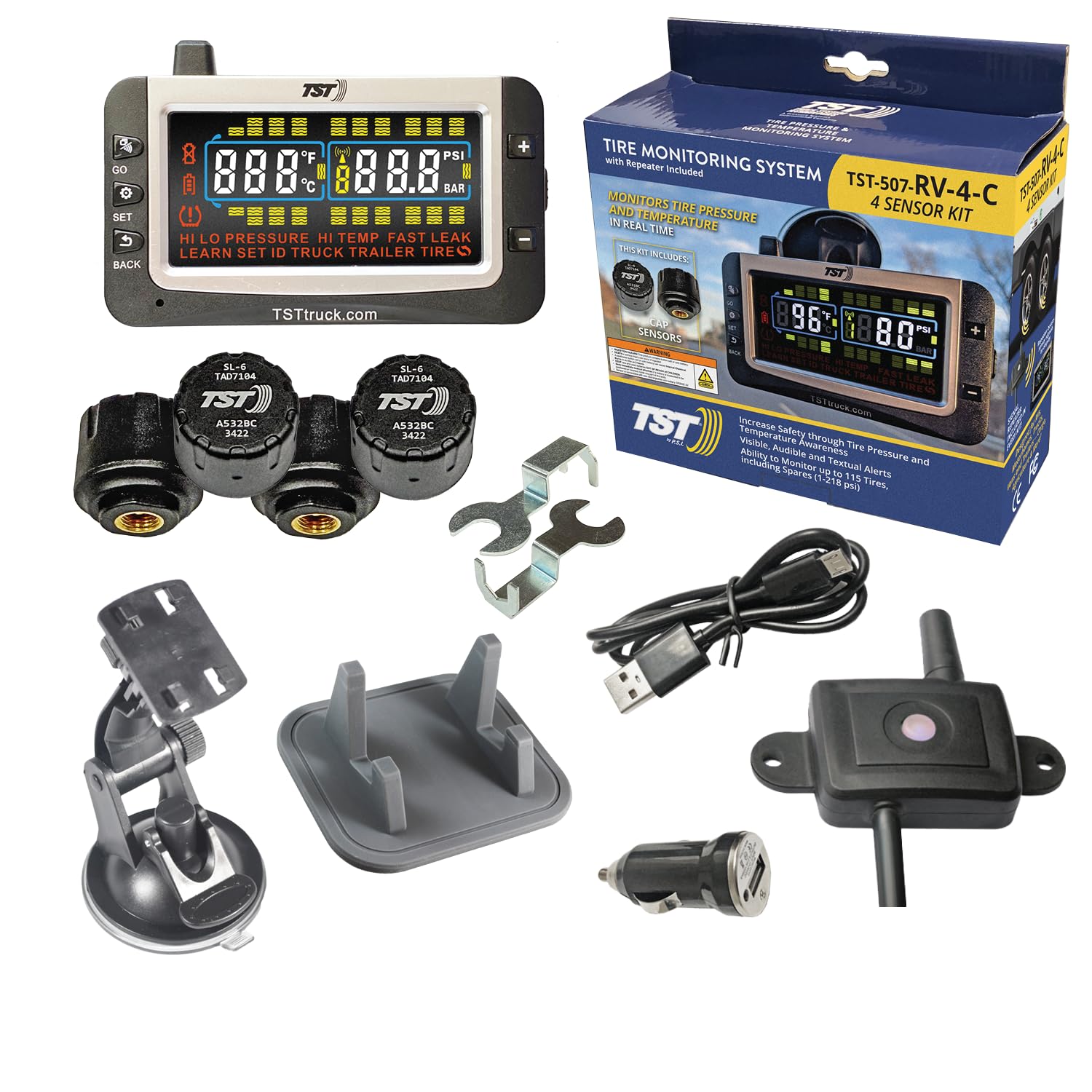
The TST 507 is the best-overall aftermarket TPMS, named the top pick by The Drive for its all-around features and clear color display. RV reviewers consistently report readings within a few PSI of calibrated gauges and credit it with catching slow leaks before they became blowouts. It costs more than car-focused budget units and its display can wash out in glare, but it is the most trusted system here.
Full review
Caught a nail-in-tire leak over 30 minutes
The TST 507 is the system RV reviewers reach for first, and The Drive names it the best overall TPMS for its all-around features and clear, easy-to-read results. RV Outfitting's review found pressure readings consistently match or beat handheld gauges, generally landing within a few PSI of calibrated gauges. Across owner forums the recurring story is the same: the 507 caught a slow leak or a nail-in-tire situation in time to pull over before a roadside emergency.
One full-time RVer described watching the display show gradual pressure loss on a rear trailer tire over about thirty minutes of driving, then finding a nail embedded in the tread and getting it patched before it failed. That kind of early warning is exactly what a TPMS is for, and the 507 delivers it reliably enough that reviewers say it often pays for itself the first time it catches a problem.
Display and Daily Use
The 507 uses a dedicated 3.5-inch color monitor rather than a phone app, which reviewers consider a plus for at-a-glance driving safety. RV Outfitting called the color display easy to read in most lighting conditions, with clear pressure and temperature readouts and user-adjustable high and low alarm thresholds.
The included signal repeater is a meaningful differentiator on longer rigs and toads — it keeps the sensor reception solid where cheaper systems drop out. The system handles a large number of tire positions (well beyond a typical four-tire vehicle), making it equally at home on a fifth wheel as on a tow vehicle.
Sensors and Setup
The 507 ships with four external cap sensors that thread onto standard valve stems, and the lineup offers flow-through and internal sensor variants for buyers who want them. The cap sensors use user-replaceable CR2032 batteries with automatic low-battery alerts, so maintenance is straightforward over the years.
Setup is the one place reviewers urge patience. One owner spent hours fighting the printed instructions before finding the video tutorials, after which all sensors registered within twenty minutes. The lesson echoed across reviews: watch the setup videos first and programming is quick; skip them and it can be frustrating.
Long-Term Ownership
The 507's reputation is built on longevity. Reviewers describe it as battle-tested over a decade, and the three-year warranty backs that up — longer coverage than the EEZTire 518C's one year. Owner forums are full of multi-year reports where the system kept working reliably through full-time travel, which is the real test for a device whose whole job is to be trusted on every drive.
User-replaceable CR2032 batteries in the cap sensors keep running costs low, and the automatic low-battery alerts mean you are warned before a sensor goes dark. Documented accuracy holds up over time too: aside from one outlier reading about 5 PSI low (a 4.55% error), owners consistently report the 507 staying within a few PSI of calibrated gauges across years of use, which is why it remains the long-haul RVer's default recommendation.
Display struggles to read in bright sunlight
The biggest practical gripe is the display in bright sun. RV Outfitting noted the 507 series display struggles in bright sunlight and glare, which can make a quick glance harder on a sunny dash. The TST 770 touchscreen upgrade addresses this for buyers willing to spend more.
Reviewers also flag that, like any cap-sensor TPMS, the 507 cannot instantly detect a complete blowout where the sensor is destroyed or ejected — it monitors trends and leaks rather than catastrophic instant failures. And it is a premium product: it costs noticeably more than car-focused budget units like the Tymate models, which is the trade for its ruggedness and support.
No CarPlay unlike the TireMinder system
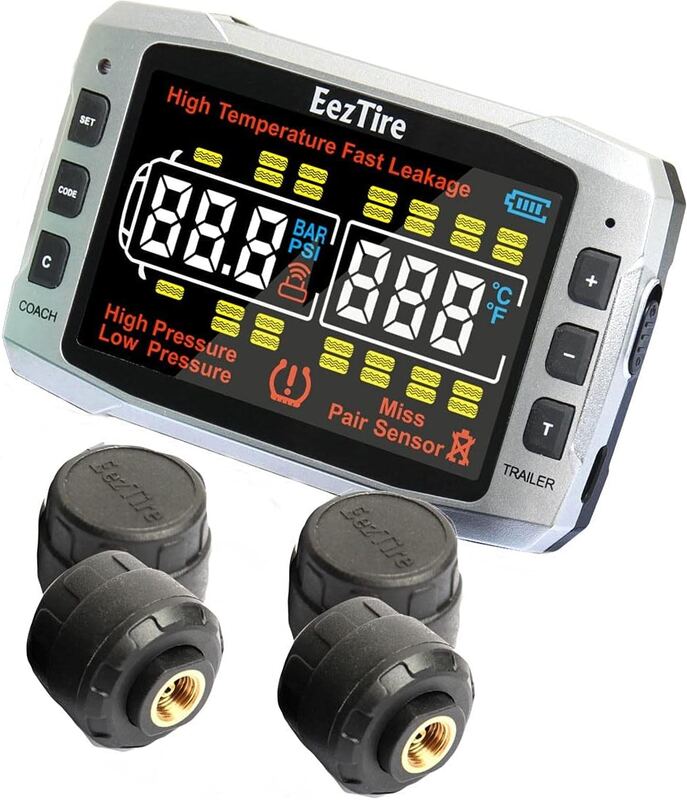
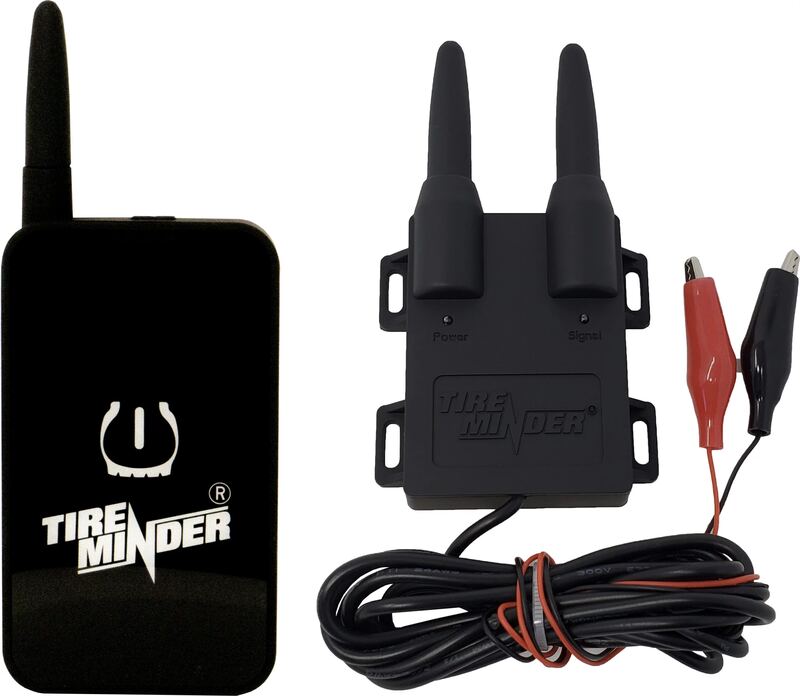
Against the EEZTire-TPMS Pro (518C), the TST 507 is the ruggedness pick — reviewers give TST the edge for durable sensors and strong signal on long rigs, while EEZTire wins on value. Compared to the smartphone-based TireMinder Smart TPMS, the 507's dedicated color display needs no phone and no app quirks, though TireMinder offers CarPlay integration the 507 lacks.
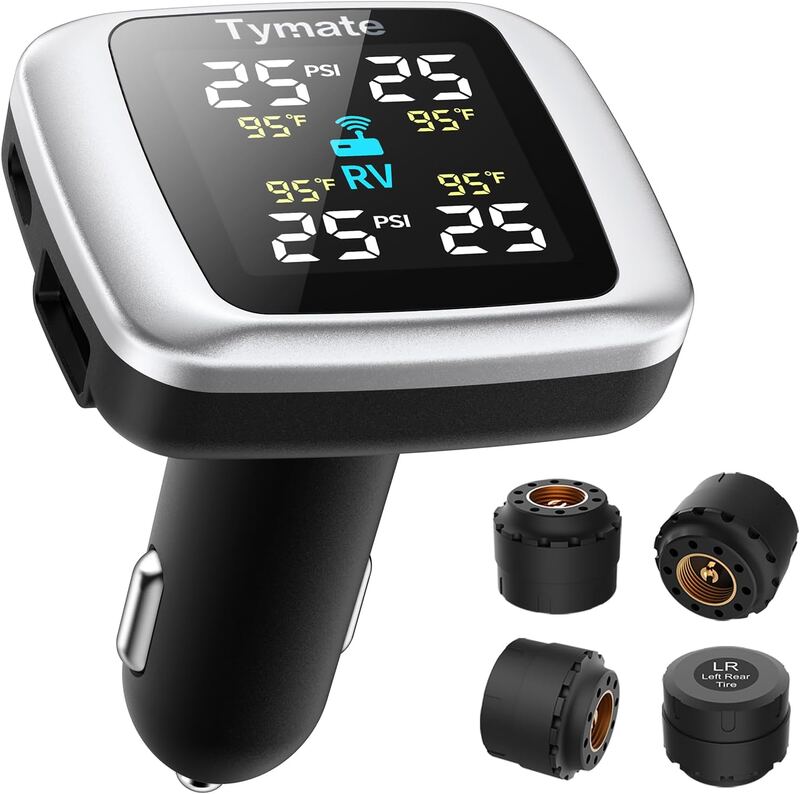
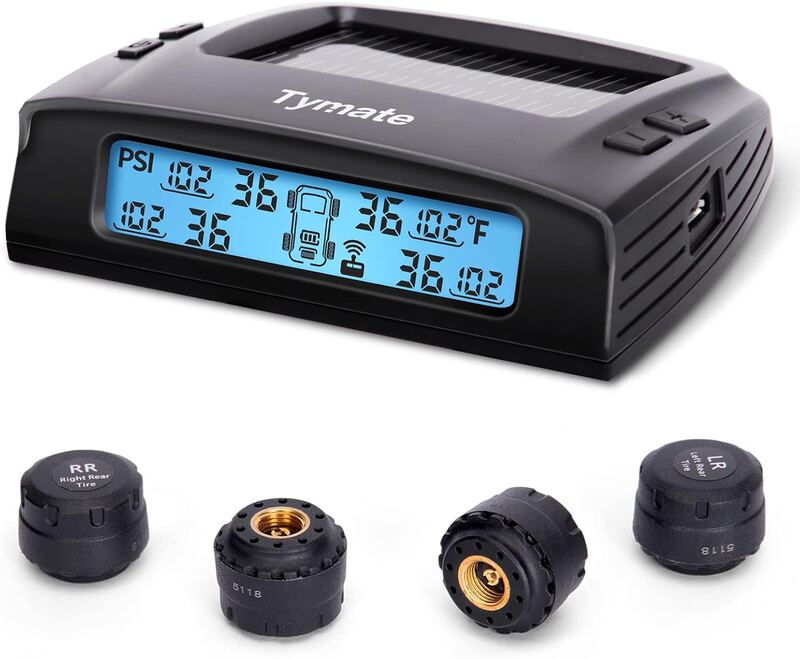
Versus the budget Tymate TM7 and Tymate M7-3 (Solar), the 507 is a clear step up in build quality, signal range and support — and a clear step up in price. The Tymate units are car-and-light-trailer cheap insurance; the TST 507 is the system serious RVers trust for the long haul.
Backed by a three-year warranty
The TST 507 sits at the premium end of the TPMS market, and reviewers are candid that you pay for the name and the ruggedness. RV Outfitting's verdict is that, properly set up, it delivers real-world value that often pays for itself the first time it catches a problem — a framing that matters more than the sticker price for anyone hauling a heavy rig. A single avoided blowout on a fifth wheel dwarfs the cost of the system.
Against cheaper systems the math is about consequences. The Tymate TM7 and M7-3 cost a fraction as much and are fine for a car, but they lack the 507's signal range, repeater and three-year warranty. The EEZTire 518C is the closest value rival and undercuts the 507 on price. The TST earns its premium specifically when ruggedness and support over years of heavy towing are worth more to you than saving money up front.
Includes a signal repeater for long rigs
The TST 507 is for RV, fifth-wheel and trailer owners who want the most rugged and accurate dedicated-display TPMS and are willing to pay a premium for it. If you tow long combinations, travel full-time, or simply want the system with the deepest track record and a three-year warranty, this is the one reviewers recommend without hesitation, and the included repeater means signal reliability even on long rigs.
It is overkill — and overpriced — for someone who just wants basic pressure visibility on a daily-driver car; the Tymate TM7 or M7-3 cover that for far less. But for anyone whose tires carry a heavy rig down the highway, the 507's ruggedness, repeater and support justify the cost, and the optional 770 touchscreen upgrade addresses the one real display gripe.
Strengths
- +Easy-to-read 3.5-inch color display with clear pressure and temperature
- +Cap sensors read consistently within a few PSI of calibrated gauges
- +Included signal repeater keeps reception strong on longer rigs
- +Cap-style sensors swap to flow-through or internal versions
- +Three-year warranty and a decade-long reliability track record
Watch-outs
- −Premium price versus budget car-focused TPMS units
- −Color display can struggle in bright direct sunlight
- −Initial programming takes patience; watch the video tutorials
- −Cannot detect a blowout if the sensor itself is destroyed
How it compares
The TST 507 is the durability and accuracy benchmark, edging the EEZTire-TPMS Pro (518C) on signal strength for long rigs and outclassing the budget Tymate TM7 and Tymate M7-3 (Solar) on build quality. Unlike the smartphone-based TireMinder Smart TPMS, it uses a dedicated color display that needs no phone.
Rating sources
“Best overall TPMS; you'll love the convenient color display.”
“Pressure readings consistently match or beat handheld gauges.”
Our 4.4 score is the average of these published ratings. Ratings marked * were derived from the reviewer’s written analysis or video transcript — the publisher didn’t print an explicit numeric score, so we inferred one from their own words. Click through to verify. More about methodology.