Verdict
Head-to-head · Best Studio Monitor Speakers Under $500

Adam Audio T5V vs Yamaha HS5

Which is the better buy? Side-by-side on rating, price, strengths, and watch-outs — with the published ratings we averaged to get there.

The short answer

Adam Audio T5V comes out ahead by a narrow margin (4.7 vs 4.6). The gap is mostly about home-studio producers and mixing engineers who want reference-grade neutrality and the most revealing top end at this price — read the strengths below before deciding.

Adam Audio T5V
Higher ratedRanked #1 in Best Studio Monitor Speakers Under $500
Adam Audio T5V
$199as of May 26

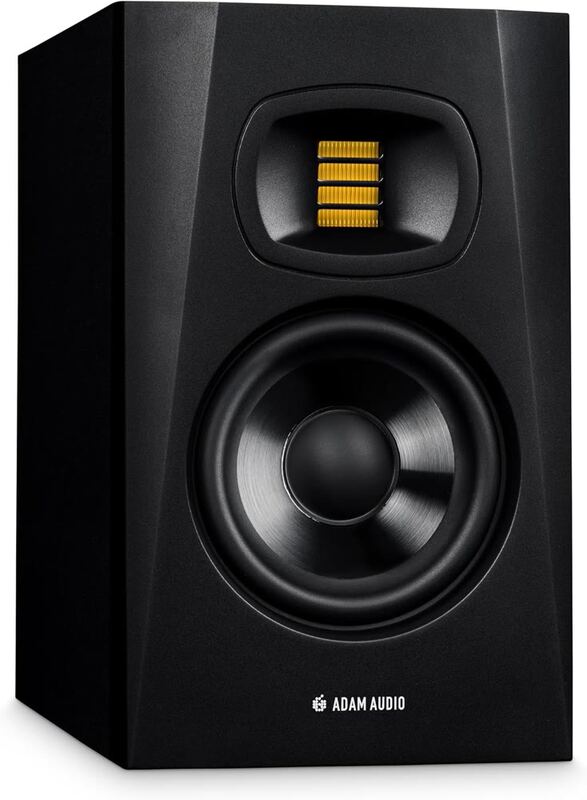
The T5V is the best-overall pick under $500. Its U-ART ribbon tweeter delivers high-frequency detail that punches well above its price class, and reviewers from MusicRadar to TapeOp consistently rank it as the budget reference for home studios. The trade-off is a presentation that runs analytical rather than warm, and a low-mid dip you may want to dial back with the onboard EQ.

Strengths
  • U-ART accelerated ribbon tweeter resolves treble detail no soft-dome competitor at this price matches
  • Frequency response reaches 45 Hz, lower than the Yamaha HS5 or PreSonus Eris E5
  • DSP-controlled Class D amps deliver up to 106 dB SPL per pair from a compact cabinet
Watch-outs
  • Ribbon tweeter sounds clinical and forward to listeners used to a softer dome
  • Low-mid region is slightly recessed; MusicRadar got better balance with LF set to -2 dB
  • Vertical sweet spot is narrow, so listening height matters more than on the JBL 305P MkII
Yamaha HS5
Ranked #2 in Best Studio Monitor Speakers Under $500
Yamaha HS5
$199as of May 26

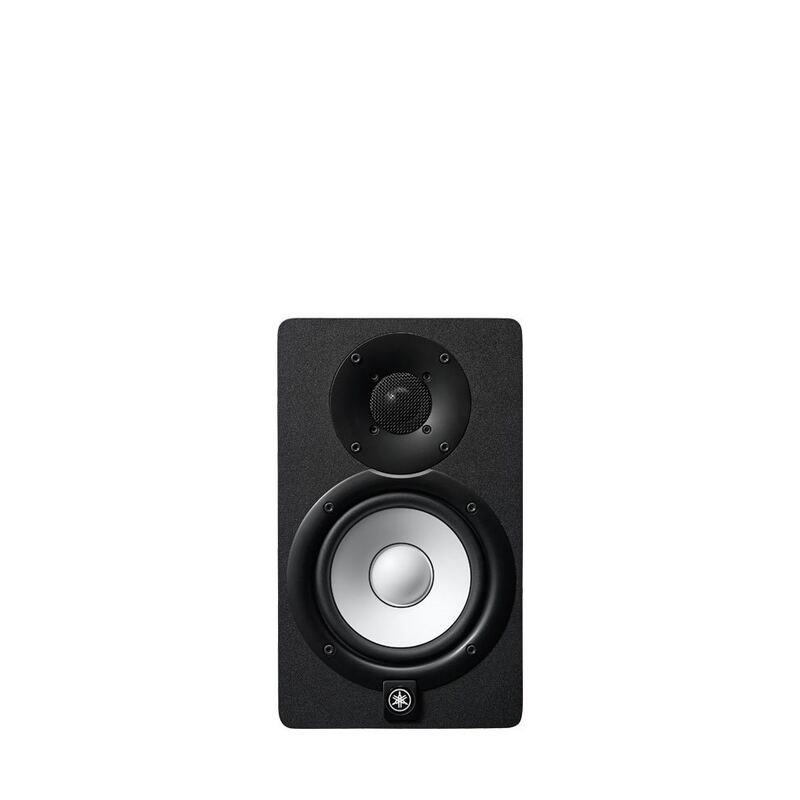
The HS5 is the long-running reference standard for budget nearfield monitoring. MusicRadar called it the best-sounding monitor in its price range by a mile and gave it 4.5 stars, praising imaging and high-frequency detail. Its mid-forward, brutally honest voicing is its whole appeal: it shows you problems, which is exactly what a mixing monitor should do. The trade-off is a shallow low end and a presentation that is the opposite of flattering.

Strengths
  • The benchmark mid-forward reference sound that exposes mix problems other monitors hide
  • Stays clear and articulate even on a console shelf where many nearfields turn muddy
  • 70W bi-amped design with separate 45W LF and 25W HF amplifiers
Watch-outs
  • Rated only to 54 Hz, so bass-heavy genres really need a subwoofer
  • The mid-forward voicing is unforgiving and can sound clinical or fatiguing
  • Sonarworks measured a +3 dB peak near 1 kHz that colors the midrange

How they stack up

Adam Audio T5V

Best detail and neutrality of the group. The ribbon tweeter resolves more high-frequency air than the dome tweeters on the Yamaha HS5, KRK Rokit 5 G5, JBL 305P MkII, or PreSonus Eris E5, and it digs lower than the PreSonus Eris E5. The JBL 305P MkII has a wider sweet spot if your listening position is less controlled.

Yamaha HS5

The industry-standard mid-forward reference. It does not reach as low as the Adam Audio T5V (45 Hz) and lacks the ribbon-tweeter air the T5V offers, but its midrange honesty exposes mix issues more bluntly than the smoother PreSonus Eris E5 or the flattering JBL 305P MkII. The KRK Rokit 5 G5 offers DSP voicings the fixed-character HS5 deliberately does not.

Specs side-by-side

SpecAdam Audio T5VYamaha HS5
Woofer5" polypropylene5" cone
TweeterU-ART 1.9" accelerated ribbon1" dome
Frequency Response45 Hz - 25 kHz (-6 dB)54 Hz - 30 kHz
Amp Power50W LF + 20W HF Class D45W LF + 25W HF (70W bi-amp)
Max SPL106 dB per pair at 1m
InputsXLR + RCAXLR + TRS
EQ2-position HF and LF shelving
Warranty5-year1-year
ControlsRoom Control + High Trim
Weight11.7 lb
← See the full ranking of best studio monitor speakers under $500