Verdict
The Best 5Reviewed by Mike Hunter·May 24, 2026

Best Studio Monitor Speakers Under $500

Top 5 studio monitor speakers under $500 reviewed and ranked.

Quick answer

Adam Audio T5V is our top pick for studio monitor speakers under $500 — an averaged 4.7/5 across 3 published reviews at about $199. Runner-up: Yamaha HS5 (~$199).

At a glance

Tap any product for the full review
1Adam Audio T5VTop Score
(3 sources)
$199Best for: home-studio producers and mixing engineers who want reference-grade neutrality and the most revealing top end at this price
$199 · Check Price on Amazon
(3 sources)
$199Best for: engineers who want the classic, unflattering reference voicing that makes a bad mix sound bad
$199 · Check Price on Amazon
(3 sources)
$150Best for: producers who want one monitor that can switch between accurate mixing and enjoyable casual listening
$150 · Check Price on Amazon
(3 sources)
$149Best for: beginners and content creators who want forgiving placement, high output, and clear sound at the lowest entry price
$149 · Check Price on Amazon
(3 sources)
$119Best for: budget-conscious producers and desktop media users who want a smooth, easy-to-connect monitor that still mixes honestly
$119 · Check Price on Amazon
Verdict is reader-supported. As an Amazon Associate we earn from qualifying purchases. Some links on this page are affiliate links — if you click through and buy, we may earn a small commission at no extra cost to you. Our ratings are sourced from independent publications, not sponsors.
Reviews aggregated from
MusicradarSoundrefTapeopSoundonsoundSonarworksMagneticmagErinsaudiocorner

The full ranking

How we rank →
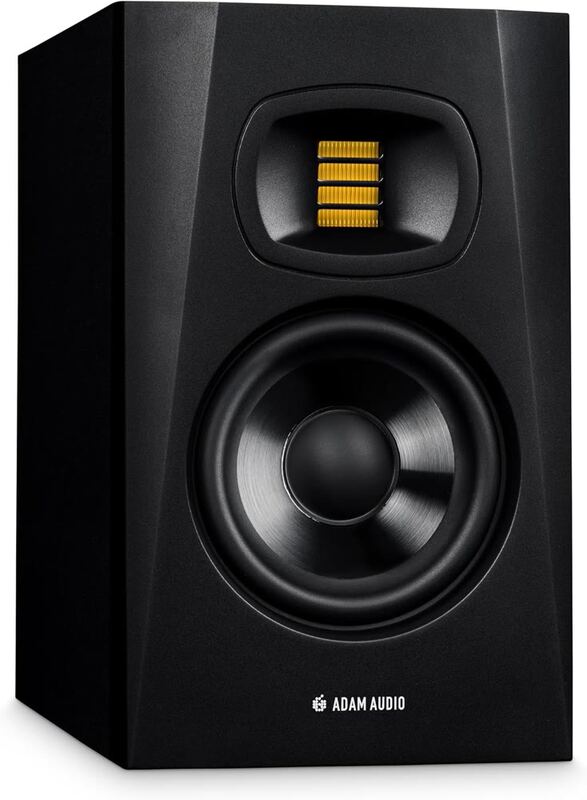
Adam Audio T5V
#1 · Top Score
Best for: home-studio producers and mixing engineers who want reference-grade neutrality and the most revealing top end at this price
Adam Audio T5V
from 3 sources$199as of May 26

The T5V is the best-overall pick under $500. Its U-ART ribbon tweeter delivers high-frequency detail that punches well above its price class, and reviewers from MusicRadar to TapeOp consistently rank it as the budget reference for home studios. The trade-off is a presentation that runs analytical rather than warm, and a low-mid dip you may want to dial back with the onboard EQ.

Strengths
  • U-ART accelerated ribbon tweeter resolves treble detail no soft-dome competitor at this price matches
  • Frequency response reaches 45 Hz, lower than the Yamaha HS5 or PreSonus Eris E5
Watch-outs
  • Ribbon tweeter sounds clinical and forward to listeners used to a softer dome
  • Low-mid region is slightly recessed; MusicRadar got better balance with LF set to -2 dB
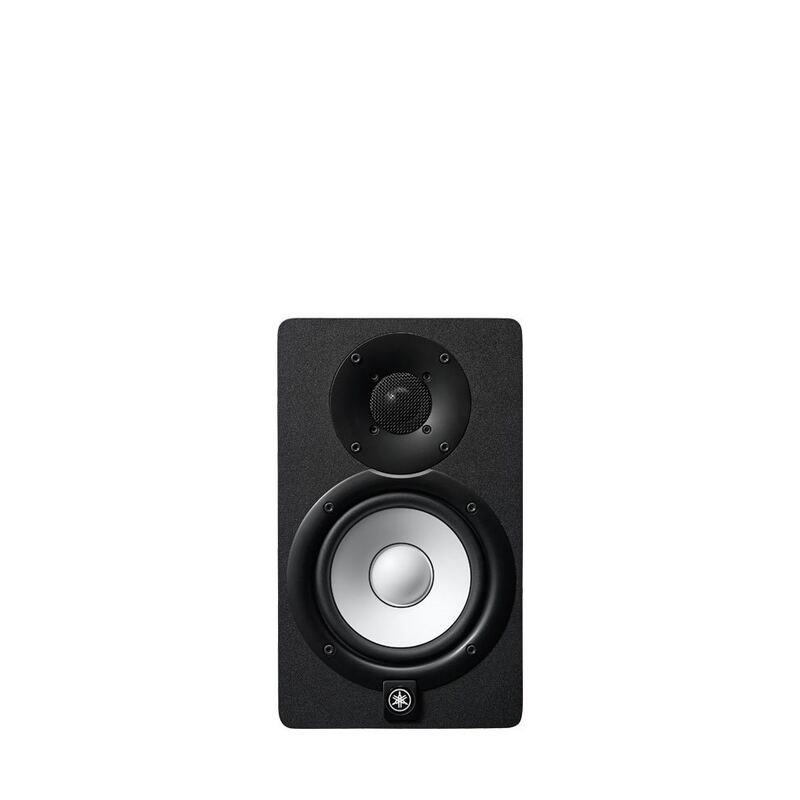
Yamaha HS5
#2
Best for: engineers who want the classic, unflattering reference voicing that makes a bad mix sound bad
Yamaha HS5
from 3 sources$199as of May 26

The HS5 is the long-running reference standard for budget nearfield monitoring. MusicRadar called it the best-sounding monitor in its price range by a mile and gave it 4.5 stars, praising imaging and high-frequency detail. Its mid-forward, brutally honest voicing is its whole appeal: it shows you problems, which is exactly what a mixing monitor should do. The trade-off is a shallow low end and a presentation that is the opposite of flattering.

Strengths
  • The benchmark mid-forward reference sound that exposes mix problems other monitors hide
  • Stays clear and articulate even on a console shelf where many nearfields turn muddy
Watch-outs
  • Rated only to 54 Hz, so bass-heavy genres really need a subwoofer
  • The mid-forward voicing is unforgiving and can sound clinical or fatiguing
KRK Rokit 5 G5
#3
Best for: producers who want one monitor that can switch between accurate mixing and enjoyable casual listening
KRK Rokit 5 G5
from 3 sources$150as of May 26

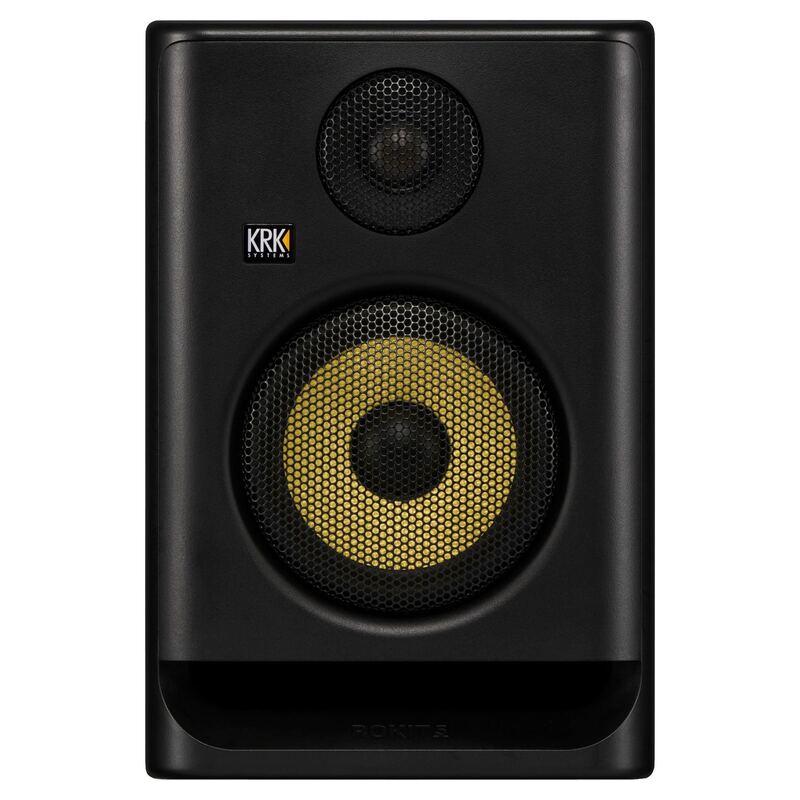
The Rokit 5 G5 is the most flexible monitor here, with three DSP voicing modes and 25 EQ combinations that let one speaker serve mixing, casual listening, and dialogue work. MusicRadar found it a more refined delivery than its predecessor, and Sound on Sound said the Rokit series just keeps getting better. The catch is slightly light low-mids in the accurate Mix mode and the lowest amp power in the group.

Strengths
  • Three DSP voicing modes (Mix, Create, Focus) adapt one monitor to mixing, listening, and dialogue work
  • Kevlar woofer and new silk-dome tweeter extend cleanly to 40 kHz
Watch-outs
  • Low-mids feel slightly light in Mix mode, a trait of front-ported designs this size
  • Only 55W of amplification, the lowest of this group
JBL 305P MkII
#4
Best for: beginners and content creators who want forgiving placement, high output, and clear sound at the lowest entry price
JBL 305P MkII
from 3 sources$149as of May 26

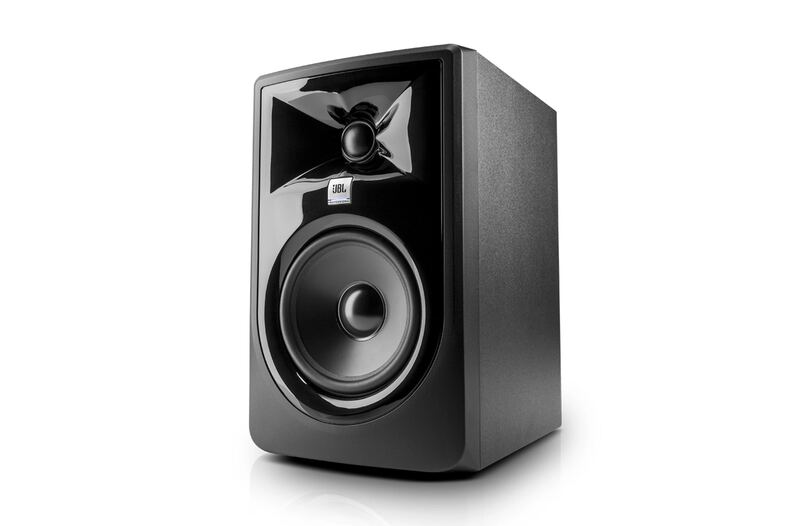
The 305P MkII is the value-and-headroom pick, built around JBL's Image Control Waveguide that gives it the widest sweet spot in this group. MusicRadar was hugely impressed for the price and noted it is a little flattering, which it framed as helpful for beginners. With 82W and a 108 dB peak SPL it has the most output here. Measurement-focused reviewers caught some midbass resonance, so it is not the most surgically neutral option.

Strengths
  • Image Control Waveguide throws an unusually wide, forgiving sweet spot
  • 82W of Class D power and a 108 dB peak SPL, the highest output in this group
Watch-outs
  • Erin's Audio Corner measured midbass resonances and a 1.6-1.8 kHz peak that can color mixes
  • Slightly flattering voicing is less neutral than experienced mixers may want
PreSonus Eris E5
#5
Best for: budget-conscious producers and desktop media users who want a smooth, easy-to-connect monitor that still mixes honestly
PreSonus Eris E5
from 3 sources$119as of May 26

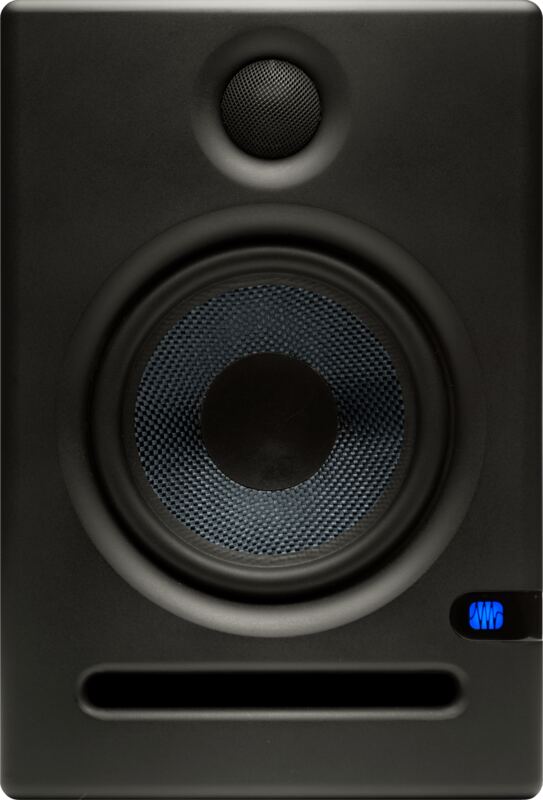
The Eris E5 is the budget value pick, delivering a smooth, mature sound that reviewers say punches above its price. Sound on Sound found vocals sounded absolutely pristine and the bass reasonably tight, while MusicRadar praised the connectivity and onboard EQ. Its low-mids run slightly reserved and it does not resolve the detail of pricier rivals, but for the money it is one of the easiest monitors to live with and the simplest to connect to consumer gear.

Strengths
  • Smooth, detailed highs without the harshness common to budget monitors
  • Tight, controlled bass from the 5.25" woven-composite Kevlar woofer
Watch-outs
  • Low-mids run reserved, a trait MusicRadar and Sound on Sound both noted
  • Rated only to 53 Hz, so it needs a subwoofer for deep bass

Spec comparison

5 products
SpecAdam Audio T5VYamaha HS5KRK Rokit 5 G5JBL 305P MkIIPreSonus Eris E5
Woofer5" polypropylene5" cone5" Kevlar aramid fiber5" (126mm)5.25" woven-composite Kevlar
TweeterU-ART 1.9" accelerated ribbon1" dome1" silk dome1" woven-composite neodymium soft dome1" silk dome
Frequency Response45 Hz - 25 kHz (-6 dB)54 Hz - 30 kHzUp to 40 kHz49 Hz - 20 kHz (±3 dB)53 Hz - 22 kHz
Amp Power50W LF + 20W HF Class D45W LF + 25W HF (70W bi-amp)55W Class D bi-amp82W Class D (41W LF + 41W HF)80W Class AB bi-amp
InputsXLR + RCAXLR + TRSXLR + 1/4" TRS comboXLR + 1/4" TRSTRS + RCA + front 1/8"
EQ2-position HF and LF shelvingBoundary EQ switchLow / Mid / High + Acoustic Space
Warranty5-year1-year1-year limited
Weight11.7 lb10.3 lb

Frequently asked questions

What is the best studio monitor speakers under $500?
Adam Audio T5V is our top pick for studio monitor speakers under $500, with an averaged rating of 4.7/5 from 3 published reviews. The T5V is the best-overall pick under $500. Its U-ART ribbon tweeter delivers high-frequency detail that punches well above its price class, and reviewers from MusicRadar to TapeOp consistently rank it as the budget reference for home studios. The trade-off is a presentation that runs analytical rather than warm, and a low-mid dip you may want to dial back with the onboard EQ.
Is there a cheaper alternative worth considering?
PreSonus Eris E5 (around $119) rates 4.4/5 in our analysis. The Eris E5 is the budget value pick, delivering a smooth, mature sound that reviewers say punches above its price. Sound on Sound found vocals sounded absolutely pristine and the bass reasonably tight, while MusicRadar praised the connectivity and onboard EQ. Its low-mids run slightly reserved and it does not resolve the detail of pricier rivals, but for the money it is one of the easiest monitors to live with and the simplest to connect to consumer gear.
How does Verdict rank these products?
Every rating on Verdict is the numerical average of scores published by independent review sites, YouTube reviewers, and Reddit buyer reports. No editor adjusts the order — the ranking is whatever the source data produces. See our methodology page for the full process.
When was this guide last updated?
This guide was last re-checked in May 2026. We re-run our research pipeline for each category on a rolling basis so prices and rankings reflect current market reality.

Related guides

Browse all →