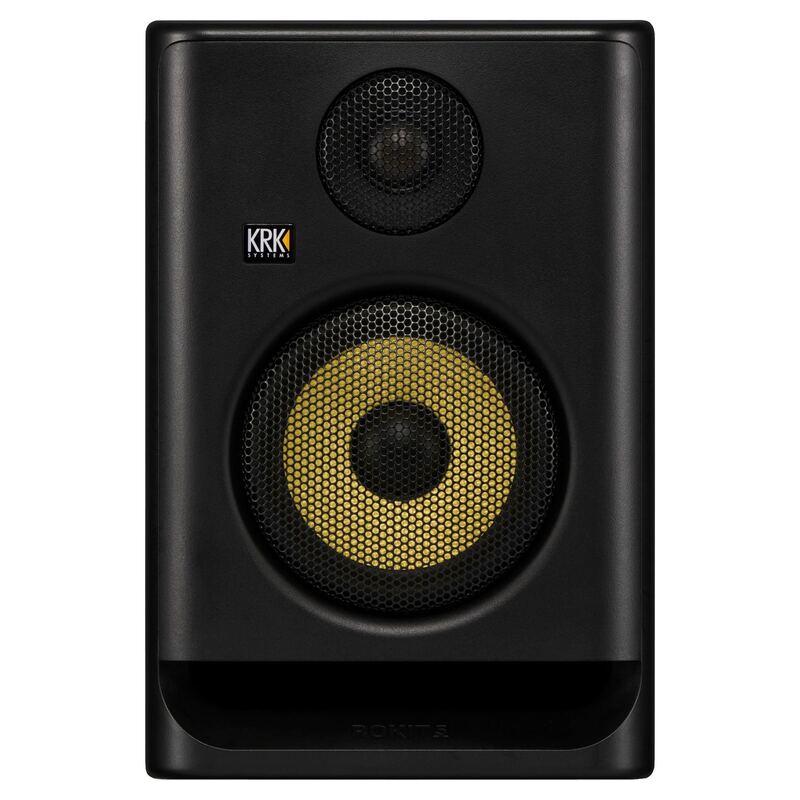
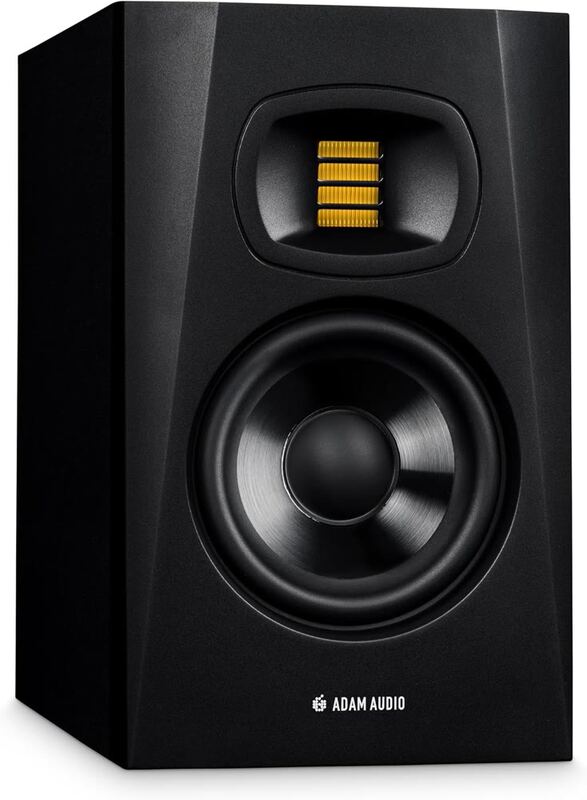
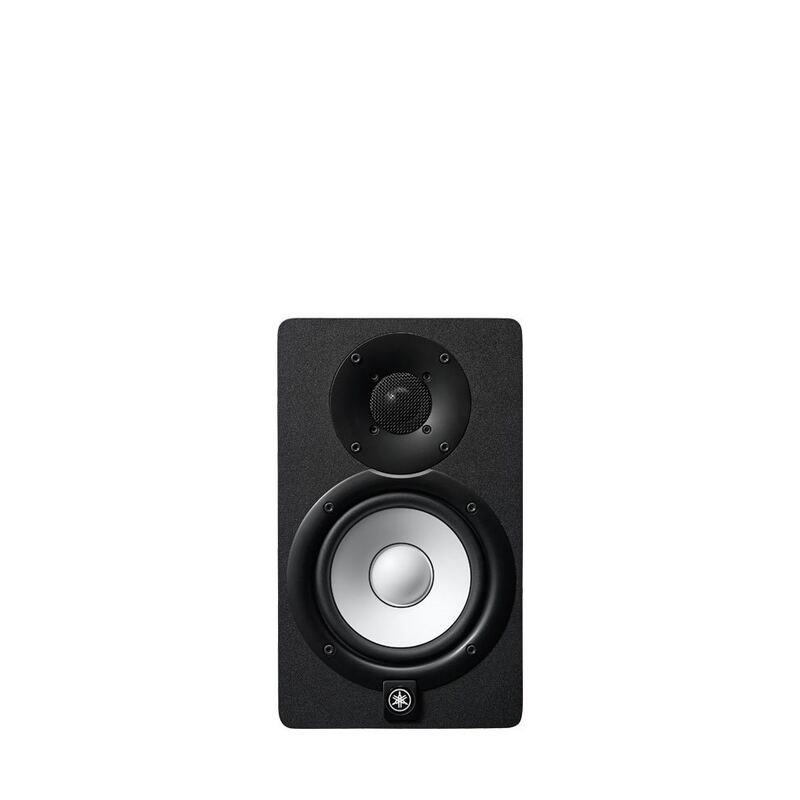
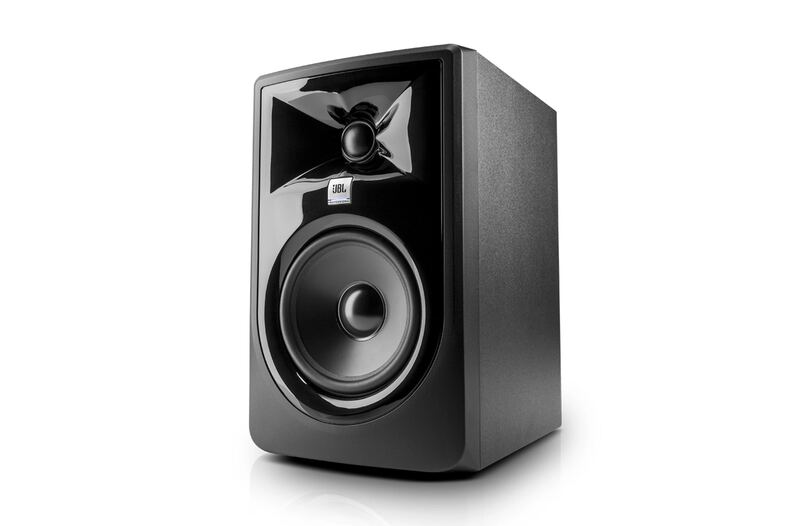
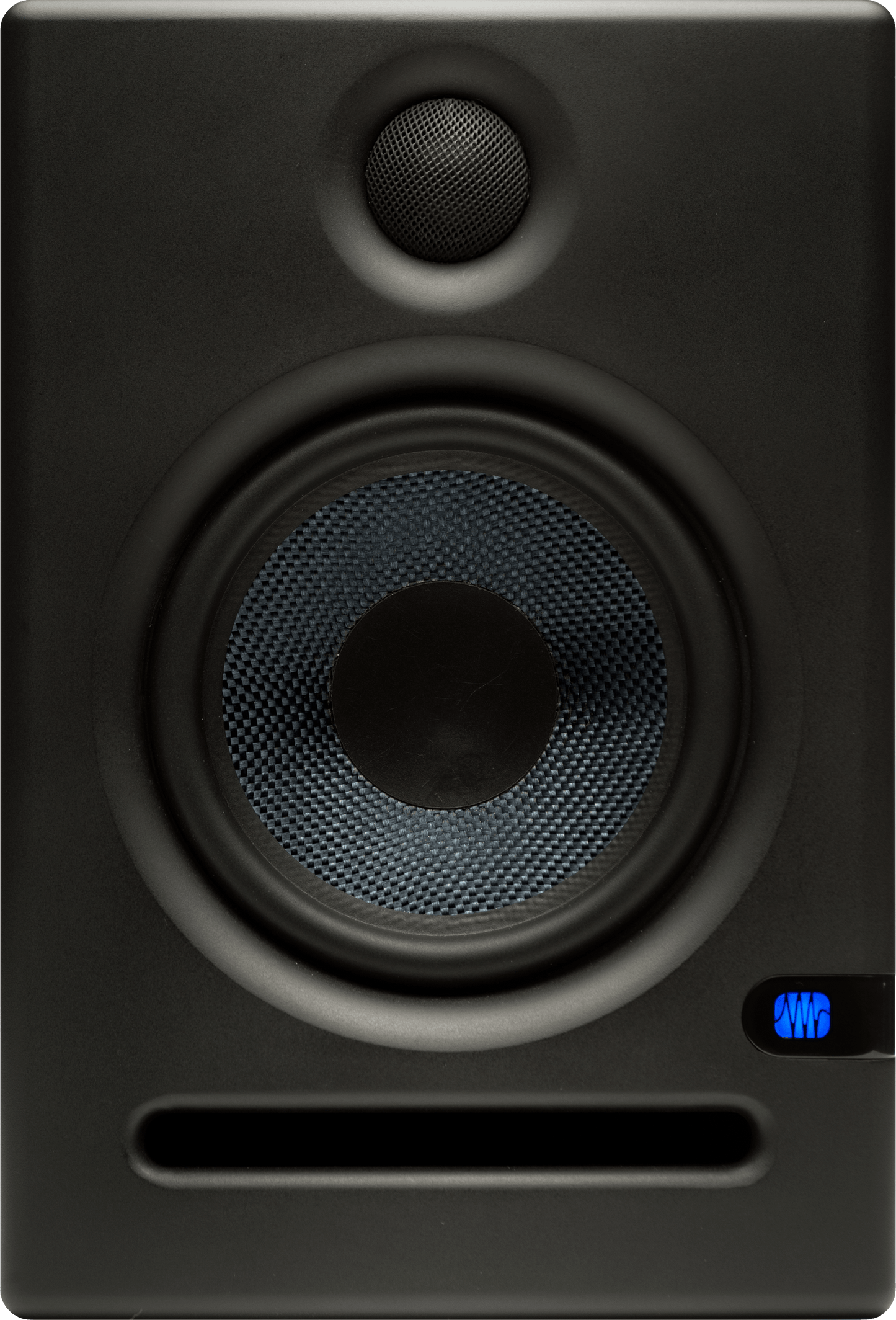
The Eris E5 is the budget value pick, delivering a smooth, mature sound that reviewers say punches above its price. Sound on Sound found vocals sounded absolutely pristine and the bass reasonably tight, while MusicRadar praised the connectivity and onboard EQ. Its low-mids run slightly reserved and it does not resolve the detail of pricier rivals, but for the money it is one of the easiest monitors to live with and the simplest to connect to consumer gear.
Full review
Compared to speakers costing twice as much
The Eris E5 has long been the price-floor entry into honest reference monitoring, and reviewers test it against that expectation. Sound on Sound came away impressed, reporting that everything came over smoothly yet with plenty of detail and that vocals sounded absolutely pristine, even comparing the results to speakers costing double. MusicRadar framed the current Eris as combining decent connectivity with plenty of punch, perfect for a contemporary desktop media setup, which is the dual role most buyers actually use it for.
The practical strength reviewers return to is how easy the E5 is to live with. Sound on Sound noted the highs were detailed without being aggressive, which it called out as a common failing of cheaper monitors. The picture is a monitor that is smooth and forgiving without crossing into the colored, hyped sound that disqualifies a speaker from real mixing work.
Only monitor here with a front-panel input
The E5 pairs a 5.25-inch woven-composite Kevlar woofer, the largest driver in this group, with a 1-inch ultra-low-mass silk-dome tweeter, driven by 80W of Class AB bi-amplification. The slightly larger woofer is part of why TapeOp and Sound on Sound found the bass tight and controlled despite the compact cabinet, and the silk dome gives a smooth top end rather than an analytical one.
Connectivity is the E5's quiet advantage. It offers balanced 1/4-inch TRS, unbalanced RCA, and a front-panel 1/8-inch stereo input, which makes it the only monitor here you can connect to a phone, laptop, or turntable without an adapter. Rear-panel Low, Mid, and High controls plus three-way Acoustic Space tuning handle boundary compensation, covering the room adjustments most desktop setups need.
Low-mids described as a touch reserved
Tonally the E5 is smooth and mature. Sound on Sound described pristine vocals and a well-focused midrange, while flagging that the low-mids run a touch reserved, the same observation MusicRadar made. That slight low-mid dip keeps the E5 from sounding congested but means it is not the most authoritative monitor in the lower midrange compared with the JBL 305P MkII.
The silk-dome tweeter is competent and pleasant but does not resolve the high-frequency detail the Adam Audio T5V's ribbon exposes; this is a friendlier, less analytical presentation. Rated to 53 Hz, the E5 reaches about as low as the rest of the group and, like all of them, benefits from a subwoofer for bass-critical genres. Within its limits it is honest enough to mix on, which is the whole point at this price.
Bundles Studio Magic software for first-timers
The recurring praise is value and ease. Sound on Sound's comparison to speakers costing double, MusicRadar's great-value verdict, and TapeOp's endorsement of the controlled bass all point to a monitor that overdelivers for its money. The Studio Magic software bundle PreSonus includes adds processors, synths, and samples that sweeten the package for a first-time studio buyer.
Reviewers also single out the connectivity and the smooth, non-fatiguing voice as reasons the E5 works equally well as a desktop media speaker and an entry mixing monitor. For someone who wants one affordable pair that does both jobs honestly, the E5's flexibility and friendly character are exactly the draw.
Less headroom than the Class D JBL
The E5's compromises are the predictable ones for its price. The reserved low-mids that both MusicRadar and Sound on Sound noted mean it is not the most punchy or authoritative monitor in that band, and the 80W Class AB amplification gives it less headroom than the 82W Class D JBL 305P MkII feels like it has in practice. The 53 Hz low-end limit, shared across the group, still requires a subwoofer for deep bass.
Sonically, the silk-dome tweeter cannot match the Adam Audio T5V's ribbon for resolution, and the E5 lacks the switchable DSP voicings of the KRK Rokit 5 G5. It is the friendly, affordable generalist of this group rather than the technical leader, and buyers chasing maximum accuracy will outgrow it.
Cheapest per pair among the five monitors
The Eris E5 is the budget anchor of this group, and its comparisons are mostly about what you give up to spend less. Against the Adam Audio T5V it surrenders high-frequency resolution; against the Yamaha HS5 it is friendlier but less brutally honest; against the JBL 305P MkII it reaches slightly less deep and has less amplifier headroom. None of those gaps are large, but together they place the E5 at the bottom of this otherwise excellent ranking.
What the E5 gives back is connectivity and price. It is the only monitor here with RCA and a front-panel 1/8-inch input, making it the easiest to feed from a phone, laptop, or turntable, and it consistently costs the least per pair. The KRK Rokit 5 G5 is its nearest rival on the friendly-voice axis but adds switchable voicings the E5 lacks. For buyers whose budget is the binding constraint, the E5 is the smart floor.
Value ceiling hits once you get serious
Value is the entire reason the Eris E5 has endured. Sound on Sound compared its results to speakers costing double, and the included PreSonus Studio Magic software bundle, packed with processors, synths, and samples, sweetens the deal for a first-time studio buyer who needs tools as well as speakers. At the bottom of this category's price range, it delivers a genuinely mixable monitor rather than a compromised toy.
The value ceiling is real: the reserved low-mids and competent-but-not-revealing tweeter mean serious mixers will eventually want the T5V or HS5. But for the money, nothing here gets you honest monitoring and broad connectivity for less.
Best for combining production and everyday listening
Choose the Eris E5 if you want the lowest pair price among reputable reference monitors, the easiest connectivity for mixed studio-and-media use, and a smooth voice that is comfortable for long sessions. It is the ideal pick for a budget-constrained beginner or a desktop creator who wants one honest pair of speakers for both production and everyday listening.
Step up if your priorities shift. The Adam Audio T5V offers far more high-frequency detail, the Yamaha HS5 offers stricter mixing honesty, the JBL 305P MkII offers more output and a wider sweet spot, and the KRK Rokit 5 G5 offers switchable voicings. The E5's job is to get you genuinely usable monitoring for the least money, and it does that better than anything else here.
Strengths
- +Smooth, detailed highs without the harshness common to budget monitors
- +Tight, controlled bass from the 5.25" woven-composite Kevlar woofer
- +Three-band acoustic-space tuning plus Low, Mid, and High EQ controls
- +RCA and front-panel 1/8" inputs make it the easiest here to feed consumer sources
- +Consistently the lowest pair price among reputable reference monitors
Watch-outs
- −Low-mids run reserved, a trait MusicRadar and Sound on Sound both noted
- −Rated only to 53 Hz, so it needs a subwoofer for deep bass
- −1-inch tweeter is competent but lacks the resolution of the Adam Audio T5V ribbon
- −80W Class AB amplification trails the JBL 305P MkII's output
How it compares
The budget value pick and the easiest to connect, with RCA and front-panel inputs the XLR-and-TRS-only Yamaha HS5, Adam Audio T5V, and JBL 305P MkII lack. Its smooth voice is friendlier than the unforgiving Yamaha HS5 but it resolves less detail than the Adam Audio T5V and reaches less deep than the JBL 305P MkII. It lacks the DSP voicing modes of the KRK Rokit 5 G5.
Rating sources
“Everything came over smoothly yet with plenty of detail; vocals sounded absolutely pristine”
“combine decent connectivity with plenty of punch and are perfect for a contemporary desktop media setup”
Our 4.4 score is the average of these published ratings. Ratings marked * were derived from the reviewer’s written analysis or video transcript — the publisher didn’t print an explicit numeric score, so we inferred one from their own words. Click through to verify. More about methodology.