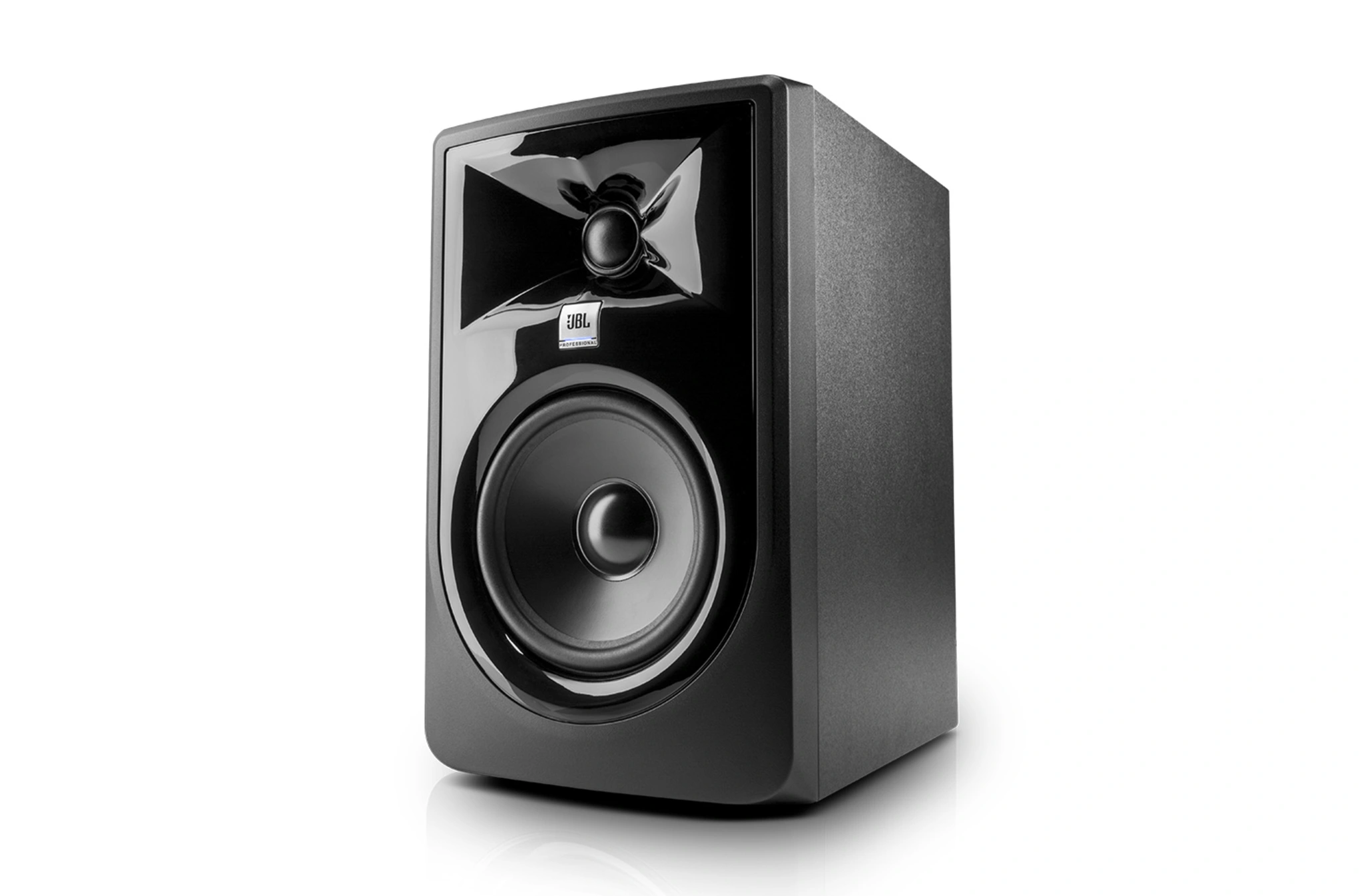
The 305P MkII is the value-and-headroom pick, built around JBL's Image Control Waveguide that gives it the widest sweet spot in this group. MusicRadar was hugely impressed for the price and noted it is a little flattering, which it framed as helpful for beginners. With 82W and a 108 dB peak SPL it has the most output here. Measurement-focused reviewers caught some midbass resonance, so it is not the most surgically neutral option.
Full review
Widest sweet spot thanks to the Image Control Waveguide
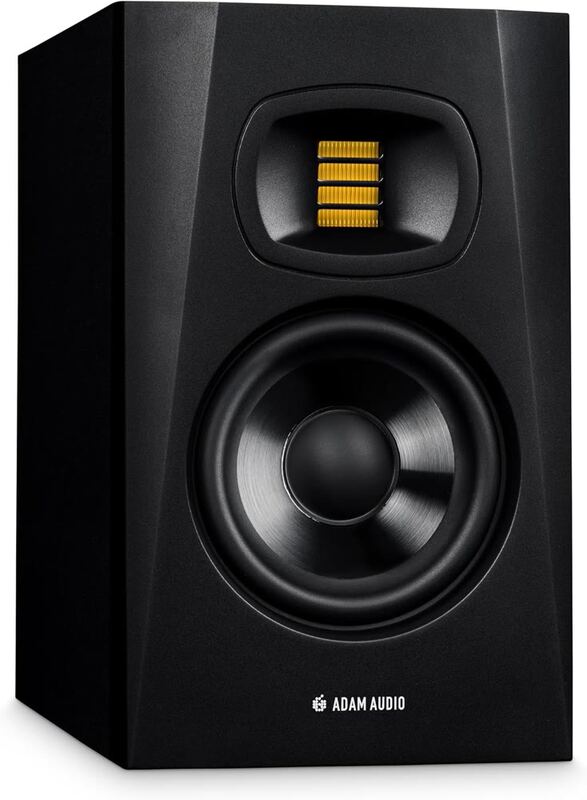
The 305P MkII's defining trait is its Image Control Waveguide, which reviewers credit for a sweet spot wider than anything else at this price. MusicRadar was hugely impressed with the performance for the money and concluded you can absolutely craft some great mixes on these in a well-treated room. The practical upshot is that the speaker stays consistent across a broad listening window, which matters for anyone who cannot lock their head into a single fixed position the way the Adam Audio T5V demands.
MusicRadar also described the voicing as a little flattering, framing it as a positive for beginners because it lets you hone your ear without being too unforgiving. Erin's Audio Corner, working from CTA-2034 Klippel measurements, was more cautious, noting a roughly +3 dB peak around 1.6-1.8 kHz and some midbass resonance, while still concluding that for the price you get a lot of good performance. The two perspectives together describe a monitor that sounds great and measures merely good.
108 dB peak SPL, highest of the group
The 305P MkII uses a 5-inch (126mm) woofer and a 1-inch woven-composite neodymium soft-dome tweeter, driven by dual integrated Class D amplifiers totaling 82W (41W per driver). That is the most amplifier power in this group, and it underpins the 108 dB peak SPL, also the highest here, giving the 305P meaningful headroom for nearfield work in a small-to-medium room.
The cabinet's most distinctive element is the molded Image Control Waveguide around the tweeter, the same technology JBL derived from its higher-end monitors. Connectivity is balanced XLR and 1/4-inch TRS with a +4 dBu / -10 dBV sensitivity switch and a Boundary EQ control for desk and wall compensation. As with the Adam Audio T5V and Yamaha HS5, there is no RCA input, and the speaker is sold individually.
Reaches down to 49 Hz, lower than the HS5
Subjectively, reviewers describe the 305P MkII as clear. The wide waveguide dispersion and slightly flattering balance make it easy to listen to for long sessions, which is part of why it is so popular with newcomers and content creators rather than only mix engineers.
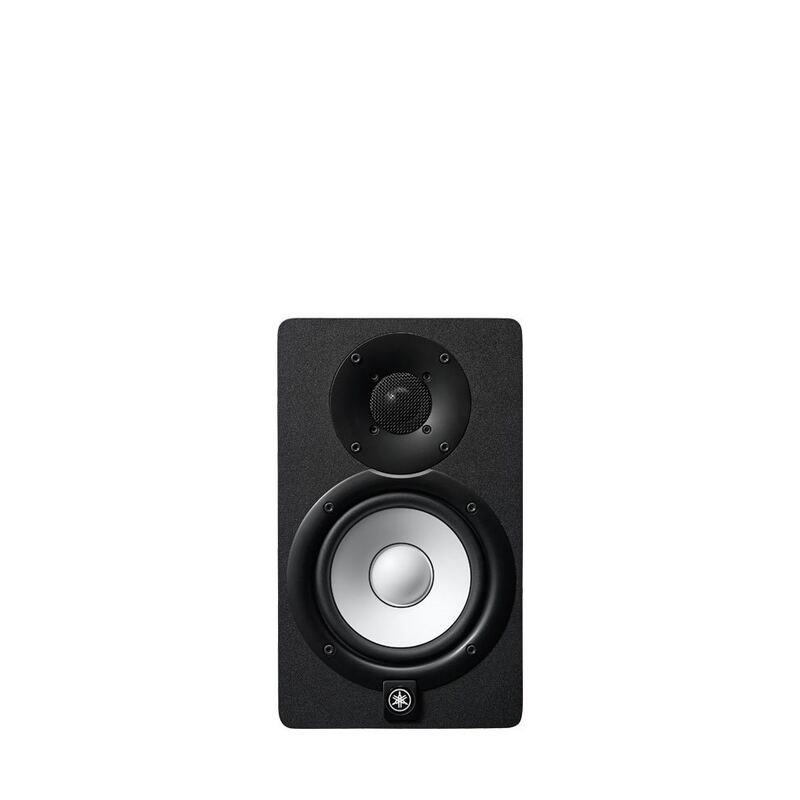
The measurement story adds nuance. Erin's Audio Corner documented the 1.6-1.8 kHz peak and midbass behavior that can subtly color mixing decisions, and noted the in-room response tracks the farfield well above roughly 500 Hz. The 49 Hz low-end spec (±3 dB) reaches slightly lower than the Yamaha HS5's 54 Hz, though like every 5-inch monitor here it benefits from a subwoofer for bass-critical work.
Trickle-down engineering from pricier JBL monitors
The consistent praise is value and accessibility. MusicRadar's hugely-impressed verdict, SoundRef's half-the-price-it-should-be framing, and the monitor's widespread adoption all point to the same conclusion: the 305P MkII delivers a genuinely useful reference monitor at the lowest entry price from a major pro-audio brand. The wide sweet spot and high output are the technical reasons, and the forgiving voicing is the reason beginners stick with it.
Reviewers also value the JBL pedigree behind the waveguide and driver design, which is trickle-down engineering from far more expensive monitors. For someone buying their first monitors who is not yet confident about placement, the 305P MkII removes a class of problems that stricter monitors leave the user to solve.
Midbass resonance measured by Erin's Audio Corner
The flattering voicing that helps beginners is the same trait that makes experienced mixers cautious. Erin's Audio Corner's measured midbass resonances and the upper-mid peak mean the 305P MkII is not as surgically neutral as the Yamaha HS5 or Adam Audio T5V, and MusicRadar itself noted that for experienced mixers it might not be quite as neutral as you need. For mastering-grade accuracy, this is not the first choice.
Practically, the absence of an RCA input is a minor inconvenience for consumer sources, and the individual-unit pricing means budgeting for a pair. None of this undermines the 305P MkII's core value proposition, but it does define the ceiling of what a flattering, mass-market monitor can do for critical work.
More amplifier power than the HS5 or KRK
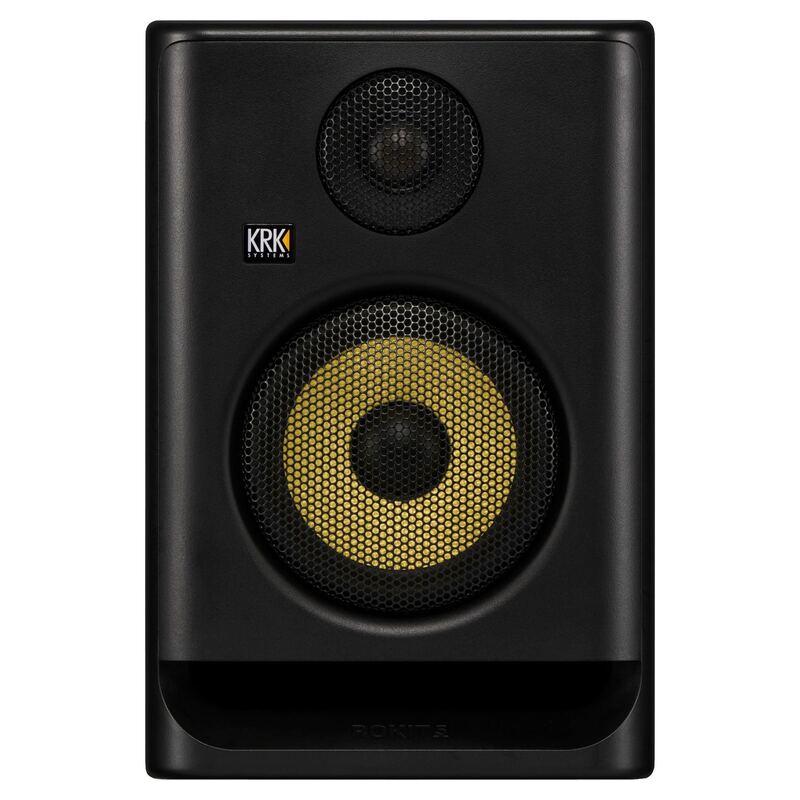
The 305P MkII wins the practical-usability comparison and loses the surgical-accuracy one. Its Image Control Waveguide gives the widest sweet spot here, and its 82W amplification and 108 dB peak SPL beat the Yamaha HS5's 70W and the KRK Rokit 5 G5's 55W. That makes it the most room-forgiving and highest-output monitor of the five, which is exactly why beginners and content creators gravitate to it.
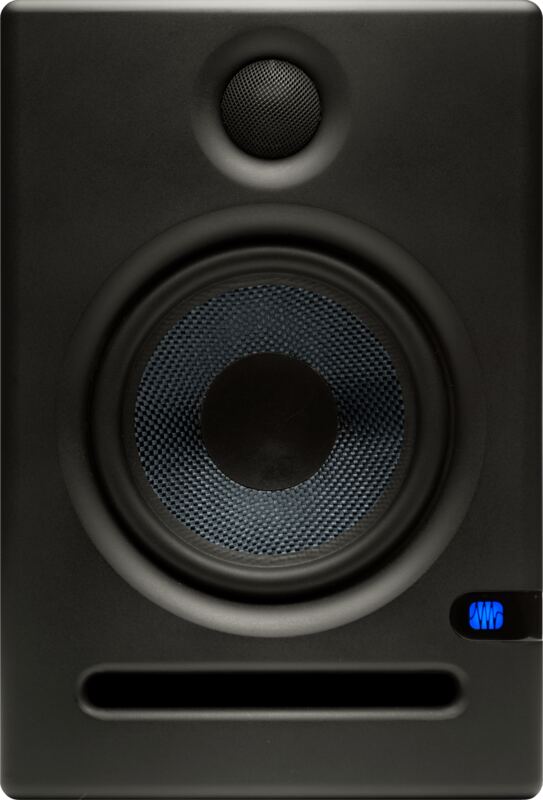
The flip side is neutrality. Erin's Audio Corner's measurements show midbass resonance and an upper-mid peak that the more reference-grade Adam Audio T5V and Yamaha HS5 avoid, and MusicRadar's own note that experienced mixers may want something more neutral confirms the ceiling. The PreSonus Eris E5 is the closest rival on price and friendliness while adding RCA connectivity the JBL lacks. Choose the 305P MkII for forgiveness and output; choose the T5V or HS5 for accuracy.
Called spectacularly clear for half the price
The 305P MkII is the value champion by reputation, repeatedly described by reviewers as delivering far more performance than its price suggests, with SoundRef calling it spectacularly clear for half what it should cost. The combination of JBL's trickle-down waveguide engineering, the highest output here, and frequently the lowest entry price from a major pro-audio brand is hard to argue with for a first set of monitors.
The value calculus shifts only if you are buying for critical mastering, where the measured colorations matter and the stricter Adam Audio T5V or Yamaha HS5 justify their premium. For everyone else, the 305P MkII delivers the most forgiving, highest-output monitoring per dollar in the category, which is why it remains one of the most-recommended budget monitors on the market.
Best for untreated rooms and forgiving beginners
Choose the 305P MkII if you want the most forgiving placement, the most output, and the lowest entry price from a trusted brand. It is the ideal first monitor for a beginner, a content creator, or anyone working in an untreated room where the wide sweet spot and gentle voicing smooth over imperfect conditions. It is the value champion of this group.
Step up to the Adam Audio T5V or Yamaha HS5 if you have learned to mix and now want stricter neutrality and more revealing detail, accepting their narrower sweet spots and less flattering voices in exchange. Consider the KRK Rokit 5 G5 if switchable DSP voicings matter more than raw output, or the PreSonus Eris E5 if you want a similar friendly character with onboard RCA connectivity for even less money.
Strengths
- +Image Control Waveguide throws an unusually wide, forgiving sweet spot
- +82W of Class D power and a 108 dB peak SPL, the highest output in this group
- +Clear, articulate sound that flatters beginners without being misleading
- +Boundary EQ switch compensates for desk and wall placement
- +Frequently the lowest-priced reference monitor from a major pro-audio brand
Watch-outs
- −Erin's Audio Corner measured midbass resonances and a 1.6-1.8 kHz peak that can color mixes
- −Slightly flattering voicing is less neutral than experienced mixers may want
- −Only XLR and TRS inputs, no RCA for consumer sources
- −Sold individually, so the pair price is double the listed number
How it compares
The widest sweet spot and most output of the group, thanks to the Image Control Waveguide and 82W amplification versus the KRK Rokit 5 G5's 55W or the Yamaha HS5's 70W. Its voicing is more flattering and slightly less neutral than the Yamaha HS5 or Adam Audio T5V, but it forgives placement better than the narrow-vertical-window Adam Audio T5V. The PreSonus Eris E5 is its closest value rival.
Rating sources
“You can absolutely craft some great mixes on these in a well-treated room”
“For the price, you do get a lot of good performance”
Our 4.2 score is the average of these published ratings. Ratings marked * were derived from the reviewer’s written analysis or video transcript — the publisher didn’t print an explicit numeric score, so we inferred one from their own words. Click through to verify. More about methodology.