The T5V is the best-overall pick under $500. Its U-ART ribbon tweeter delivers high-frequency detail that punches well above its price class, and reviewers from MusicRadar to TapeOp consistently rank it as the budget reference for home studios. The trade-off is a presentation that runs analytical rather than warm, and a low-mid dip you may want to dial back with the onboard EQ.
Full review
Rated down to 45 Hz, deeper than the HS5
Reviewers consistently single out the T5V's U-ART ribbon tweeter as the reason it outperforms its price. MusicRadar described the top end as very well tuned and praised the clarity and imaging it pulls from a compact cabinet, while TapeOp called the sound startlingly clear and detailed at a budget price. The shared observation across reviews is that cymbal decay, sibilance, and the air around vocal takes all sit further forward than on a comparably priced soft-dome monitor, without tipping into harshness once the HF shelf is set sensibly.
Low-end behavior is the more nuanced story. Adam rates the T5V down to 45 Hz at -6 dB, lower than the Yamaha HS5's 54 Hz spec, and reviewers confirm usable low frequencies for a 5-inch design. MusicRadar noted the low-mid region could be more prominent and got better balance by pulling the LF shelf to -2 dB, a tuning move the onboard EQ makes easy.
Narrow vertical sweet spot rewards ear-height placement
The T5V uses a polypropylene 5-inch woofer paired with the 1.9-inch accelerated ribbon tweeter mounted behind an HPS waveguide. The waveguide is the source of the monitor's defining trait: MusicRadar measured a broad horizontal sweet spot but a more restricted vertical one, meaning the speaker rewards getting the tweeter near ear height. The rear-firing bass port and Class D amplification keep the cabinet compact and the chassis cool, and the build feels solid for a monitor that frequently sells below its rivals.
On the back panel you get XLR and RCA inputs plus two-position HF and LF shelving switches. That EQ is deliberately coarse rather than parametric, but it covers the two adjustments most small rooms actually need: taming a bright tweeter and trimming boundary bass buildup. The five-year warranty is generous at this tier and signals Adam's confidence in the amp and driver assembly.
Extends to 25kHz, exposing detail the HS5 misses
The ribbon tweeter is what separates the T5V from the dome-tweeter crowd. It extends to 25 kHz and disperses high frequencies widely, which reviewers describe as exposing detail at 10 kHz and above that the Yamaha HS5's dome cannot resolve. The flip side, noted by listeners coming from softer tweeters, is that the presentation can feel clinical or analytical at first. That is precisely what you want in a mixing monitor: the speaker tells you what is on the recording rather than flattering it.
Through the mids and lower frequencies the T5V is balanced but honest, with the slight low-mid recession MusicRadar flagged. The 106 dB peak SPL per pair gives enough headroom for nearfield monitoring in a small-to-medium room, and the DSP-managed amps keep distortion low as you approach that ceiling. It is a monitor that rewards careful placement and punishes a lazy listening position.
SoundRef's verdict on the T5V
Across MusicRadar, TapeOp, and SoundRef the recurring theme is value: a ribbon tweeter and a 45 Hz low-end ceiling at a per-unit price that undercuts most reference monitors. SoundRef concluded that the T5V offers 'excellent value for anyone transitioning from headphones, or buying their first pair of studio monitors,' crediting the U-ART ribbon tweeters for premium performance at a fraction of Adam's flagship price. TapeOp placed the T Series at the top of its recommendations for a budding engineer or a home-studio owner who needs solid build and accurate sound without spending big.
Reviewers also appreciated that the detail does not come at the cost of fatigue once the room and EQ are sorted. The consensus is that the T5V is the monitor to beat under $500 if your priority is hearing the recording accurately, and that the only listeners who should hesitate are those who prefer a warmer, more forgiving voice.
Less forgiving of poor placement than the JBL
The T5V's strengths have direct costs. The ribbon tweeter's detail can read as clinical, and listeners migrating from a soft-dome monitor sometimes find it forward in the treble until their ears adjust. The narrow vertical sweet spot means the T5V is less forgiving of poor placement than the JBL 305P MkII, which throws a wider window. And the low-mid dip MusicRadar measured, while small, is something you should correct with the LF shelf rather than ignore.
The other practical limitation is the single-unit pricing convention common to this class: the headline number buys one speaker, so a stereo pair plus stands and cables roughly doubles the spend. None of these are dealbreakers, but they are the reasons a buyer might step toward the warmer JBL or the more affordable PreSonus instead.
Resolves more detail than all four rivals
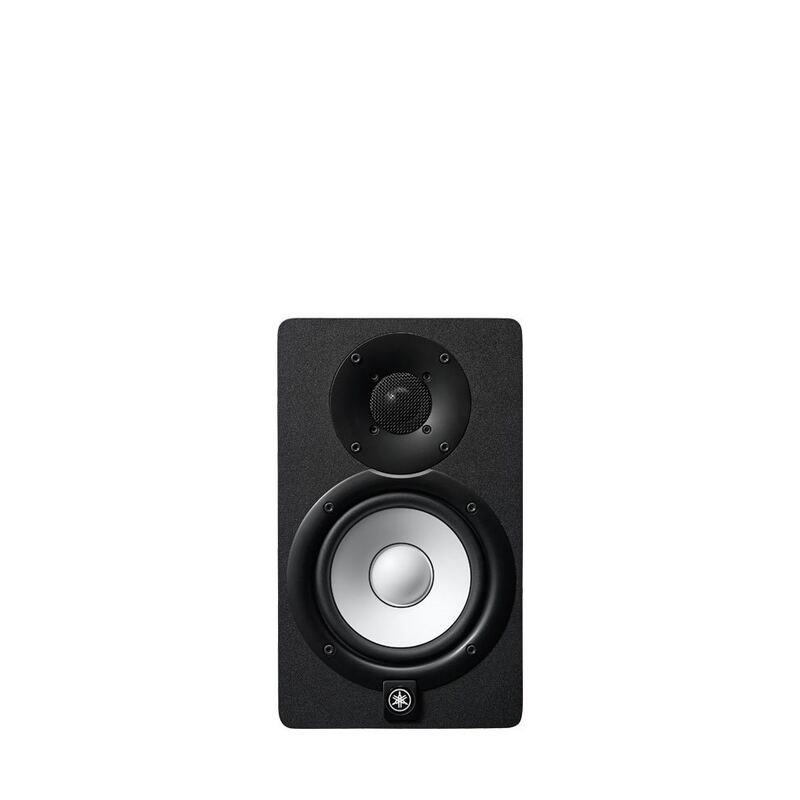
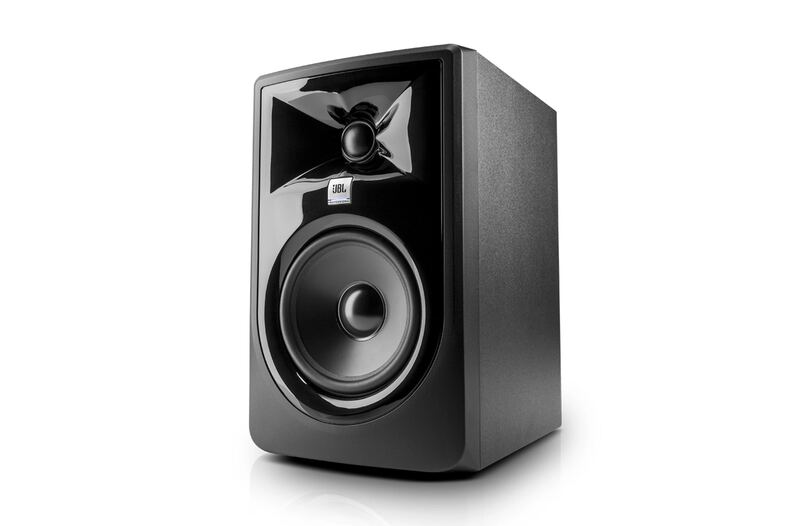
Within this group the T5V is the detail leader. The Yamaha HS5 is its closest rival for mixing honesty, but the HS5 trades the T5V's airy ribbon extension for a mid-forward dome character and a higher 54 Hz roll-off. The JBL 305P MkII counters with more amplifier power and a far wider sweet spot, which is genuinely useful if your listening position drifts, but it does so with a slightly flattering voice that experienced mixers find less surgical than the Adam.
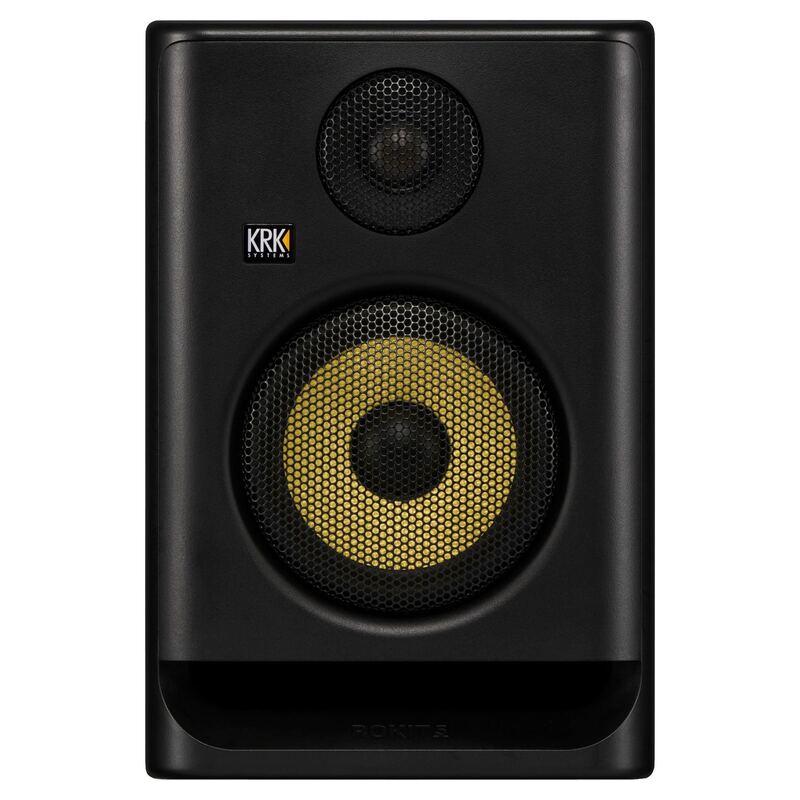
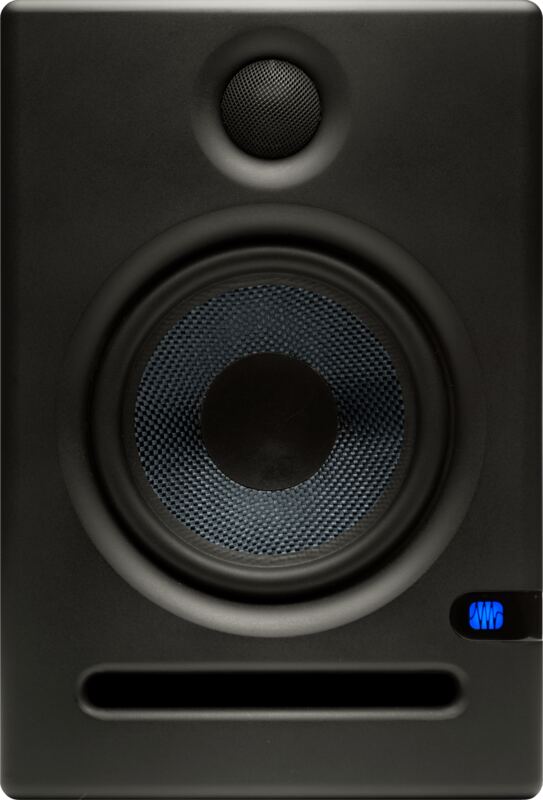
The KRK Rokit 5 G5 offers switchable DSP voicings the fixed-character T5V deliberately omits, and the PreSonus Eris E5 undercuts everything on price while adding RCA connectivity. None of those four match the T5V's high-frequency resolution. The trade you accept for that resolution is the narrower vertical sweet spot and the analytical voice, which is why the ranking puts the T5V first for accuracy but acknowledges that buyers prioritizing forgiveness or budget have strong reasons to look down the list.
Longest warranty in the group at five years
The T5V's value case rests on its ribbon tweeter appearing at a per-unit street price that routinely undercuts dome-tweeter rivals. SoundRef framed the whole proposition as 'excellent value' for anyone buying their first pair of studio monitors, and TapeOp put the T Series at the top of its recommendation list for engineers on a budget specifically because the technology-to-price ratio is unusual. You are paying entry-level money for a driver type normally reserved for monitors costing considerably more.
Factoring in the five-year warranty, the longest in this group, the long-term value improves further. The only asterisk is the single-unit pricing convention: budget for two speakers plus stands and cables, and the total still lands inside a sensible sub-$500 stereo build. For a producer who wants the most revealing monitor their money can buy, the T5V is the clearest value argument in the category.
Best for critical mixing, not casual listening
Choose the T5V if you are mixing or mastering at home and want the most revealing, reference-accurate monitor you can get for under $500 per pair. It is ideal for producers who value an honest top end and are willing to treat their room and set listening height carefully. It is the strongest technical pick of this group for critical work.
Look elsewhere if you want a plug-and-play, room-forgiving monitor for casual production or content creation. In that case the wider sweet spot of the JBL 305P MkII or the smoother, friendlier voice of the PreSonus Eris E5 will be a better fit, and the Yamaha HS5 remains the choice if you specifically want the industry-standard mid-forward reference sound.
Strengths
- +U-ART accelerated ribbon tweeter resolves treble detail no soft-dome competitor at this price matches
- +Frequency response reaches 45 Hz, lower than the Yamaha HS5 or PreSonus Eris E5
- +DSP-controlled Class D amps deliver up to 106 dB SPL per pair from a compact cabinet
- +Two-position HF and LF shelving lets you tune to room and taste
- +Routinely the lowest per-unit street price among reference-grade 5-inch monitors
Watch-outs
- −Ribbon tweeter sounds clinical and forward to listeners used to a softer dome
- −Low-mid region is slightly recessed; MusicRadar got better balance with LF set to -2 dB
- −Vertical sweet spot is narrow, so listening height matters more than on the JBL 305P MkII
- −Sold as a single unit, so a stereo pair is roughly double the listed price
How it compares
Best detail and neutrality of the group. The ribbon tweeter resolves more high-frequency air than the dome tweeters on the Yamaha HS5, KRK Rokit 5 G5, JBL 305P MkII, or PreSonus Eris E5, and it digs lower than the PreSonus Eris E5. The JBL 305P MkII has a wider sweet spot if your listening position is less controlled.
Rating sources
“startlingly clear and detailed sound at a budget price”
“The T5V delivers plenty of clarity, decent imaging and volume from a pretty compact footprint. A tidy package, at a good price.”
Our 4.5 score is the average of these published ratings. Ratings marked * were derived from the reviewer’s written analysis or video transcript — the publisher didn’t print an explicit numeric score, so we inferred one from their own words. Click through to verify. More about methodology.