The Rokit 5 G5 is the most flexible monitor here, with three DSP voicing modes and 25 EQ combinations that let one speaker serve mixing, casual listening, and dialogue work. MusicRadar found it a more refined delivery than its predecessor, and Sound on Sound said the Rokit series just keeps getting better. The catch is slightly light low-mids in the accurate Mix mode and the lowest amp power in the group.

Full review
Three DSP modes for mixing or movie night
The G5 is the generation where KRK stopped chasing the hyped, bass-forward sound the Rokit line was once known for. MusicRadar described it as a more refined delivery than its predecessor and noted a well-tuned flat response in Mix mode, with the new silk-dome tweeter adding refinement to the treble. The recurring observation is that the G5 sounds like a studio monitor first and a fun consumer speaker second, which is the right priority shift for a mixing tool.
The headline feature is the DSP voicing system. MusicRadar walked through all three: Mix mode is the intended studio sound, Create mode delivers fuller low-end and crisper highs for casual listening, and Focus mode emphasizes the midrange for dialogue and detailed analysis. In practice this means one pair of speakers can serve a producer who mixes in the morning and watches a film at night, a versatility no fixed-character rival here offers.
Front port more tolerant of wall placement
The G5 pairs a 5-inch woven Kevlar aramid-fiber woofer with a 1-inch highly damped silk-dome tweeter that extends the response up to 40 kHz. Bi-amplification provides up to 55W of Class D power, the lowest figure in this group but adequate for nearfield use in a small room. The front-firing port is a meaningful practical advantage: it makes the G5 more tolerant of placement near a wall than rear-ported designs.
Connectivity covers XLR and a 1/4-inch TRS combo input. The standout is the room-tuning system: 25 boundary and EQ combinations, adjustable with a free KRK app, plus a magnetically affixed faceplate, an acoustic foam isolation wedge, and a power cord in the box. For a beginner setting up a first room, that bundle removes friction that pricier monitors leave to the buyer.
Risk of mixing accidentally in Create mode
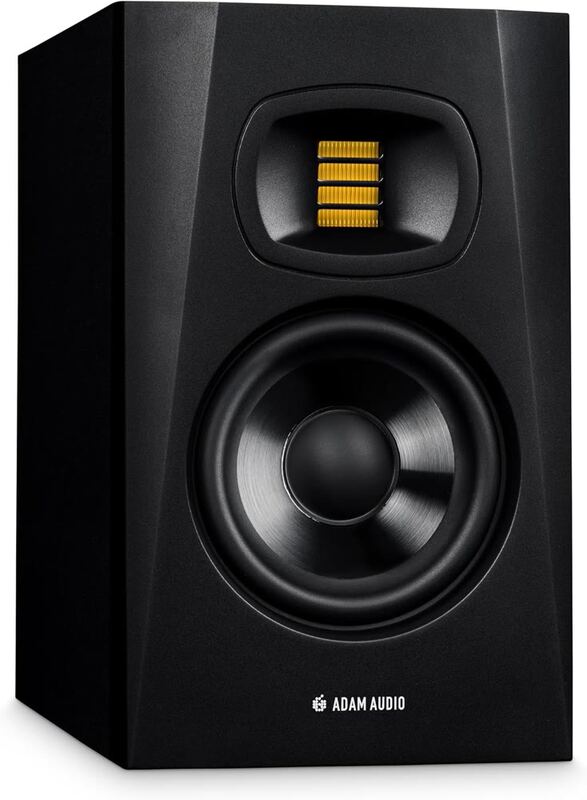
In Mix mode the G5 aims for a flat frequency and phase response. MusicRadar found the low-mids slightly light, a characteristic it attributed to front-ported designs of this size, while praising the silk-dome tweeter for refining the treble versus older Rokits. The result is a balanced, easy-to-trust monitor for the price, even if it does not resolve the last layer of high-frequency detail the Adam Audio T5V's ribbon tweeter exposes.
Create and Focus modes change the character substantially. Create adds low-end weight and treble crispness for enjoyable listening, while Focus pushes the midrange forward for dialogue and critical midrange analysis. The risk, which reviewers flag, is that a beginner mixes in the colored Create mode by accident; Mix mode is the one to use for any work that needs to translate.
Editor's Choice from Magnetic Magazine
Sound on Sound summed up the trajectory with the Rokit series just keeps getting better, and Magnetic Magazine handed the G5 an Editor's Choice award, calling it a fantastic entry-level monitor that is miles ahead of most others at this price point. The praise centers on the combination of a now-genuinely-neutral Mix voicing with the flexibility of the other two modes and the comprehensive room-tuning options.
Reviewers also appreciate the complete out-of-box experience: isolation pad, app-based tuning, and front porting that forgives imperfect placement. For a first-time studio buyer who is not ready to treat a room, the G5 lowers the barrier to a usable monitoring setup more than its rivals do.
Least amplifier power of the group at 55W
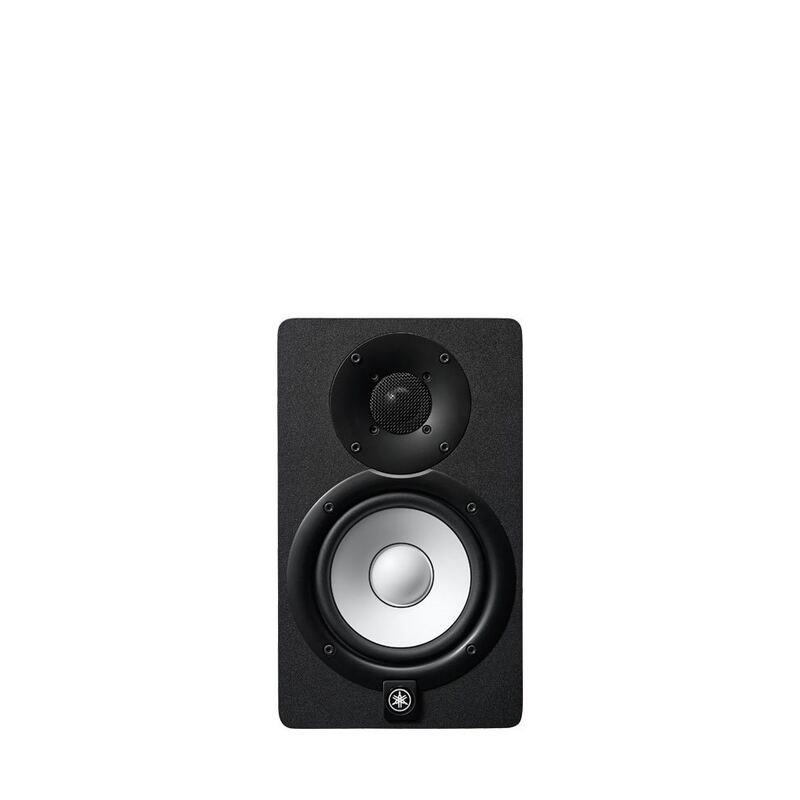
The G5's flexibility is also its trap. The slightly light low-mids in Mix mode mean it is not the most authoritative monitor in the lower midrange, and the temptation to leave it in the flattering Create mode can quietly undermine mix translation for an inexperienced user. The 55W amplification is the lowest here, so it has less headroom than the 70W Yamaha HS5 or 82W JBL 305P MkII in a larger room.
It also still fights its own history: the Rokit name carries an entry-level, bass-heavy reputation that the refined G5 has largely outgrown but not erased. Against the Adam Audio T5V it gives up high-frequency resolution, and against the Yamaha HS5 it gives up the blunt midrange honesty some engineers specifically want.
Only monitor here with switchable voicings
The G5's differentiator is flexibility. Where the Yamaha HS5 and Adam Audio T5V commit to a single fixed voice, the G5 lets you switch between Mix, Create, and Focus, which makes it the natural pick for a room that does double duty. The cost is that none of those voicings is quite as authoritative as the dedicated references: the T5V resolves more detail, and the HS5 is more brutally honest in the midrange.
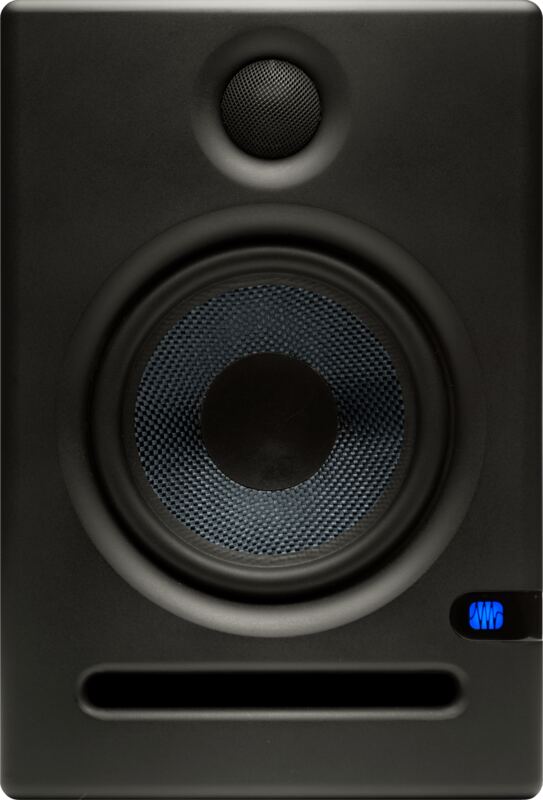
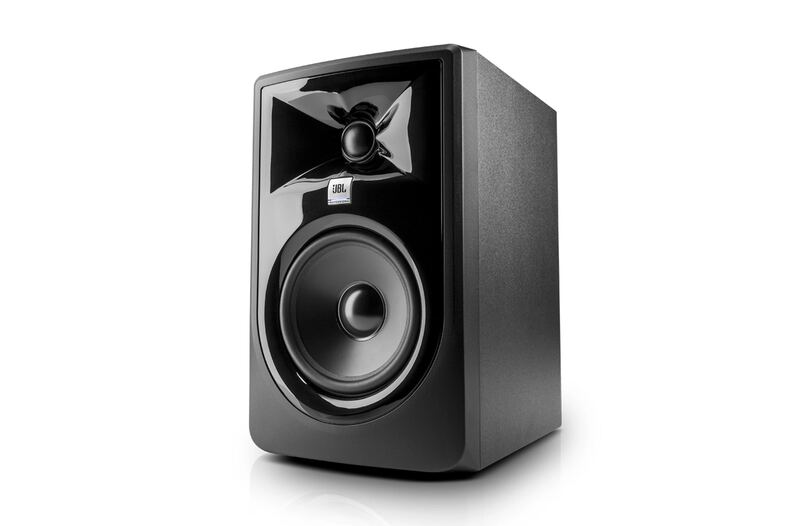
Against the JBL 305P MkII the G5 gives up amplifier power, 55W versus 82W, and some low-mid weight, but it counters with front porting that forgives wall-adjacent placement and the most comprehensive room-EQ system in the group. The PreSonus Eris E5 is the closest competitor on the friendly-voice axis and usually costs less, but it lacks the G5's switchable voicings. The G5 wins on adaptability and loses on raw accuracy.
A stepping stone, not a long-term reference
The G5's value argument is the completeness of the package. Magnetic Magazine's Editor's Choice framing and Sound on Sound's just-keeps-getting-better verdict both reward the fact that KRK bundles an isolation pad, app-based room tuning, and three voicings into a monitor that still lands at an entry price. For a first studio that is not ready to invest in acoustic treatment, that bundle removes real cost and friction.
Where the value softens is at the technical ceiling: buyers who outgrow the friendly Mix voicing will want the stricter neutrality of the T5V or HS5, and the 55W amplification limits headroom in larger rooms. As a do-everything starter monitor the G5 is excellent value; as a long-term critical-mixing reference it is a stepping stone rather than a destination.
Best for one speaker that does both jobs
Choose the Rokit 5 G5 if you want a single pair of monitors that can credibly mix in the morning and entertain at night, and if you value placement tolerance and app-based room tuning in an untreated space. It is the most beginner-friendly pick of the group, with the gentlest learning curve and the most complete accessory bundle.
Look elsewhere if you want maximum mixing accuracy with no temptation to color the sound. The Yamaha HS5 and Adam Audio T5V are stricter references, the JBL 305P MkII offers more amp power and a wider sweet spot, and the PreSonus Eris E5 delivers a similarly friendly voice for less money if you do not need the DSP voicing modes.
Strengths
- +Three DSP voicing modes (Mix, Create, Focus) adapt one monitor to mixing, listening, and dialogue work
- +Kevlar woofer and new silk-dome tweeter extend cleanly to 40 kHz
- +25 boundary EQ combinations plus a free app for in-room tuning
- +Refined, less hyped low-mid delivery than the bass-heavy older Rokit generations
- +Front-firing port makes it more placement-tolerant near a wall
Watch-outs
- −Low-mids feel slightly light in Mix mode, a trait of front-ported designs this size
- −Only 55W of amplification, the lowest of this group
- −DSP voicings tempt beginners toward the colored Create mode for mixing
- −Still carries the entry-level Rokit reputation despite the G5's genuine refinement
How it compares
The most flexible pick thanks to its three DSP voicings, something the fixed-character Yamaha HS5 and Adam Audio T5V deliberately omit. Its silk-dome tweeter is smoother than the analytical ribbon on the Adam Audio T5V but lacks that monitor's resolution. Its low-mids run lighter than the JBL 305P MkII, and it carries the lowest amp power of this group at 55W.
Rating sources
“KRK's Rokit series just keeps getting better!”
“a more refined delivery than its predecessor, with flexible EQ to meet various usage scenarios”
“a fantastic entry-level monitor that is miles ahead of most others at this price point”
Our 4.6 score is the average of these published ratings. Ratings marked * were derived from the reviewer’s written analysis or video transcript — the publisher didn’t print an explicit numeric score, so we inferred one from their own words. Click through to verify. More about methodology.