Verdict
Head-to-head · Best Vlogging Cameras Under $1000

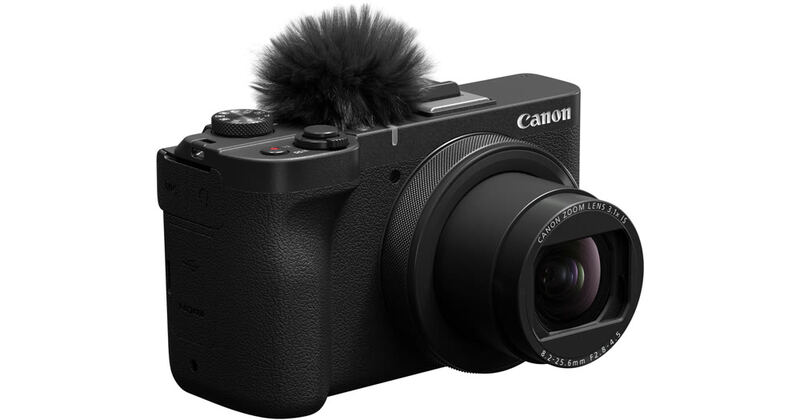
Canon PowerShot V1 vs Fujifilm X-M5

Which is the better buy? Side-by-side on rating, price, strengths, and watch-outs — with the published ratings we averaged to get there.

The short answer

Canon PowerShot V1 and Fujifilm X-M5 score essentially the same (4.4 vs 4.4). Pick the one whose trade-offs match your priorities — the strengths and watch-outs below are where they actually differ.

Canon PowerShot V1
Ranked #3 in Best Vlogging Cameras Under $1000
Canon PowerShot V1
$849as of Jun 7

The Canon PowerShot V1 is the most capable fixed-lens compact for walk-and-talk vlogging under $1000. Its 1.4-inch sensor is bigger than the 1-inch chips in rival compacts, the 16-50mm equivalent lens goes usefully wide, and cooling vents plus a built-in ND filter mean unlimited 4K. The compromises are a modest maximum aperture and a heavy crop when you push to 4K/60fps.

Strengths
  • Large 22.3MP 1.4-inch sensor offers roughly twice the area of the 1-inch sensors in rival compacts
  • Wide 16-50mm equivalent zoom goes wider than most compacts, ideal for arm's-length vlogging
  • Built-in ND filter and cooling vents enable unlimited 4K recording without overheating
Watch-outs
  • 1.4x crop and no stabilization when shooting 4K/60fps
  • Small maximum aperture limits low-light and shallow depth of field
  • No electronic viewfinder or built-in flash for stills shooters
Fujifilm X-M5
Ranked #4 in Best Vlogging Cameras Under $1000
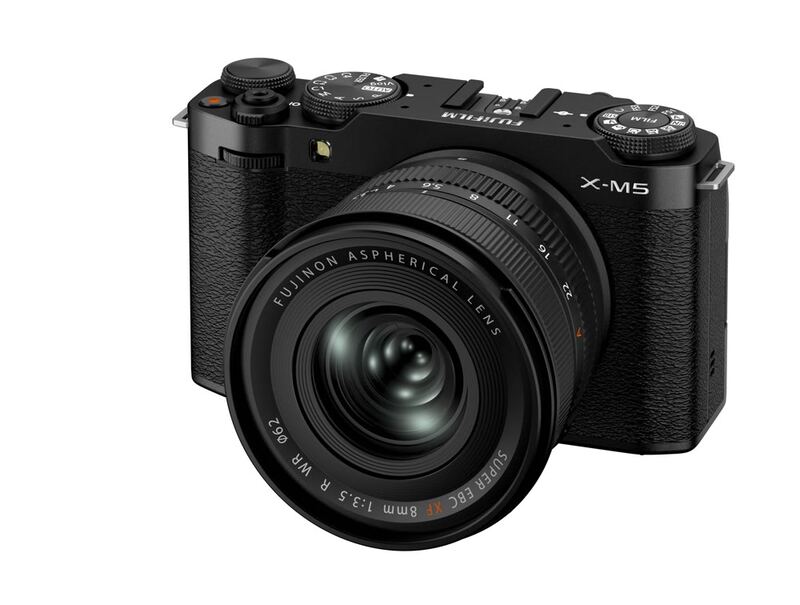
Fujifilm X-M5
$899as of Jun 7

The Fujifilm X-M5 is the best-value video-focused interchangeable-lens camera under $1000. It delivers open-gate 6.2K/30p 10-bit recording and 4K/60p in a body that weighs almost nothing, plus Fujifilm's celebrated color profiles. The compromises are no IBIS and no viewfinder, and its autofocus is a step behind Sony's for face-tracked vlogging.

Strengths
  • Open-gate 6.2K/30p 10-bit video from the full 3:2 sensor for reframing and vertical exports
  • 4K up to 60fps for half-speed cinematic slow motion
  • Extremely light and compact at under 500g even with the kit zoom
Watch-outs
  • No in-body image stabilization, so handheld footage needs a gimbal or steady hands
  • No electronic viewfinder
  • Uses the older-generation 26MP X-Trans sensor rather than the latest chip

How they stack up

Canon PowerShot V1

Has the largest sensor of the fixed-lens cameras here, beating the 1-inch DJI Osmo Pocket 3 and Canon PowerShot G7 X Mark III for image quality, and its wide 16mm-equivalent end is friendlier for vlogging than the G7 X Mark III's tighter lens. It lacks the mechanical gimbal of the Osmo Pocket 3 and the interchangeable lenses of the Sony ZV-E10 II.

Fujifilm X-M5

Like the Sony ZV-E10 II it is an interchangeable-lens APS-C body with no IBIS, but it adds open-gate 6.2K that the ZV-E10 II lacks while trailing it on autofocus. It is lighter and cheaper than the ZV-E10 II and far more flexible than the fixed-lens Canon PowerShot V1 and DJI Osmo Pocket 3, at the cost of handheld stabilization.

Specs side-by-side

SpecCanon PowerShot V1Fujifilm X-M5
Sensor22.3MP 1.4-inch CMOS26MP APS-C X-Trans CMOS
Lens16-50mm equivalent f/2.8-4.5 zoom
Video4K up to 60fps (1.4x crop at 60p)Open-gate 6.2K/30p, 4K/60p, 10-bit 4:2:2
StabilizationOptical (stills) + digital (video)Digital only (no IBIS)
FeaturesBuilt-in ND filter, cooling vents
DisplayFully articulating touchscreenFully articulating vari-angle touchscreen
Weight426gUnder 500g with kit lens
Audio3.5mm mic input
MountFujifilm X-mount
Vertical mode9:16 open-gate vertical recording
AutofocusAI subject-detection phase detection
← See the full ranking of best vlogging cameras under $1000