The Canon PowerShot V1 is the most capable fixed-lens compact for walk-and-talk vlogging under $1000. Its 1.4-inch sensor is bigger than the 1-inch chips in rival compacts, the 16-50mm equivalent lens goes usefully wide, and cooling vents plus a built-in ND filter allow unlimited 4K. The compromises are a modest maximum aperture and a heavy crop once you push to 4K/60fps.
Full review
16mm equivalent lens fits more in frame at arm's length
The PowerShot V1 is Canon's purpose-built answer to the vlogging-compact category, and reviewers were quick to crown it a Sony ZV killer. Digital Camera World, which scored it 4.5 stars, wrote that the Canon PowerShot V1 is going to eat the Sony ZV-1 II's lunch as the creator camera of choice, because it has a wider zoom with optical stabilization, a faster burst rate, a larger sensor, more resolution, and it is much easier and friendlier to use. The wide end of the lens is the practical key: at a 16mm equivalent it goes wider than almost any rival compact, which means you can hold the camera at arm's length and still fit your whole head and some background in the frame, something tighter compacts cannot do.
TechRadar's testing emphasized the bundle of practical video features that set it apart from older point-and-shoots, calling out a suite of video features that include a built-in ND filter and cooling vents for unlimited 4K record times. The cooling vents are not a gimmick: overheating shutdowns are exactly what plague the older G7 X Mark III during long 4K takes, and the V1's active venting means you can record an entire monologue or event without the camera tapping out. Autofocus is described as Canon's best in a compact, tracking faces and eyes reliably for self-shooters.
1.4-inch sensor has twice the area of a 1-inch chip
The V1's headline advantage is its 22.3MP 1.4-inch sensor, which TechRadar notes offers twice the area of the 1.0-inch 20.1MP sensor in the Sony ZV-1 II. More sensor area translates directly into cleaner footage in dim conditions and better dynamic range than the 1-inch crowd, including the DJI Osmo Pocket 3 and Canon's own G7 X Mark III. For a fixed-lens camera that you can slip into a bag, that is a meaningful image-quality edge, and it gives the V1 a slightly more cinematic, less video-camera look than smaller-sensor compacts.
Optical stabilization smooths handheld stills and the digital IS is, in TechRadar's words, reasonable for walking video, though nobody would mistake it for gimbal-class smoothing. The built-in ND filter is a genuinely professional touch that the rest of this category mostly lacks: it lets you keep a cinematic 180-degree shutter speed in bright sunlight without screwing on physical filters, so your motion blur stays natural and your footage does not look strobed. Canon's color science rounds out the package, producing pleasant skin tones straight out of the camera.
426 grams with a 3.5mm microphone input
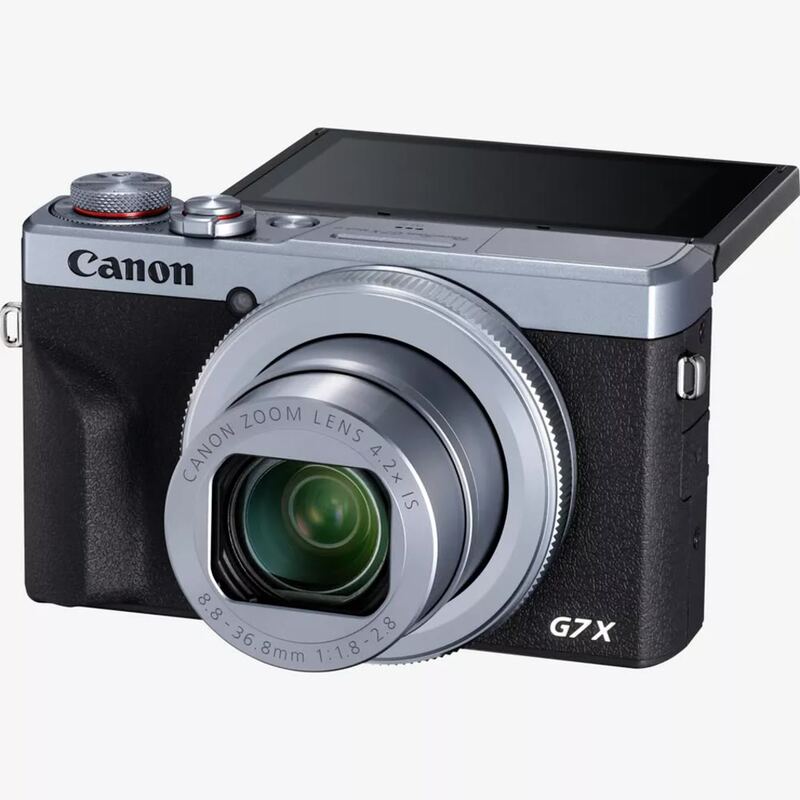
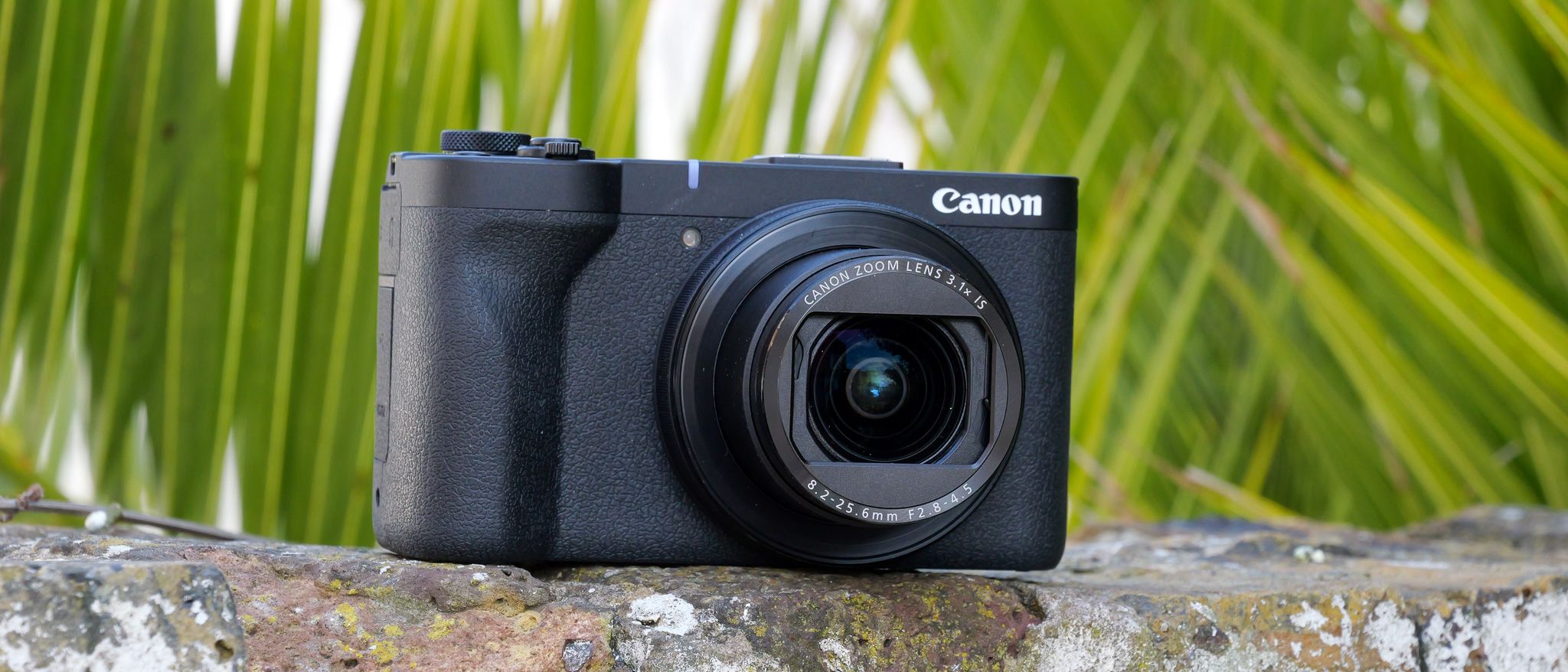
The V1 looks like a scaled-up sibling to the trending G7 X Mark III, and reviewers note the design and control-layout similarities are obvious when the two are placed side by side, with the V1 being the larger of the two. That extra size buys the bigger sensor, the cooling vents, and a more substantial grip, and at 426g it is still easily pocketable in a jacket while feeling more reassuring in the hand than a tiny compact. The fully articulating touchscreen flips out to the side for self-framing and folds away for protection, and the control dials fall naturally under the fingers.
DustinAbbott-style enthusiast notes and Canon's own spec sheet confirm the practical creator touches: a 3.5mm microphone input for better audio, a versatile 16-50mm equivalent zoom that covers wide vlogging through short portrait, and a body that prioritizes video ergonomics. The trade-offs in the design are the omissions stills shooters will notice, namely no electronic viewfinder and no built-in flash, which keep the camera firmly in the video-first camp rather than positioning it as a true hybrid.
4K at 60fps loses stabilization and gains a crop
There are real caveats that keep the V1 out of the top spot. TechRadar's biggest knock was that you get a 1.4x crop and no image stabilization for 4K 60fps video, so the smooth high-frame-rate footage everyone wants comes at the cost of a narrower field of view and shakier handheld results. If you shoot a lot of 4K/60p while walking, that combination is frustrating, and it pushes you toward a tripod or gimbal anyway. The lens also has a modest maximum aperture that ramps to f/4.5 at the long end, which limits low-light performance and the amount of creamy background blur you can pull off compared with a fast-prime mirrorless setup like the ZV-E10 II with an f/1.8 lens.
Stills photographers will miss the lack of a viewfinder and built-in flash, and the V1 is both larger and pricier than truly pocketable compacts such as the G7 X Mark III. It sits in an in-between space in this list: more camera and more capability than the small Canon compact, but less ultimate flexibility than the interchangeable-lens ZV-E10 II and less handheld smoothness than the gimbal-equipped Osmo Pocket 3.
Wider lens than its own G7 X Mark III sibling
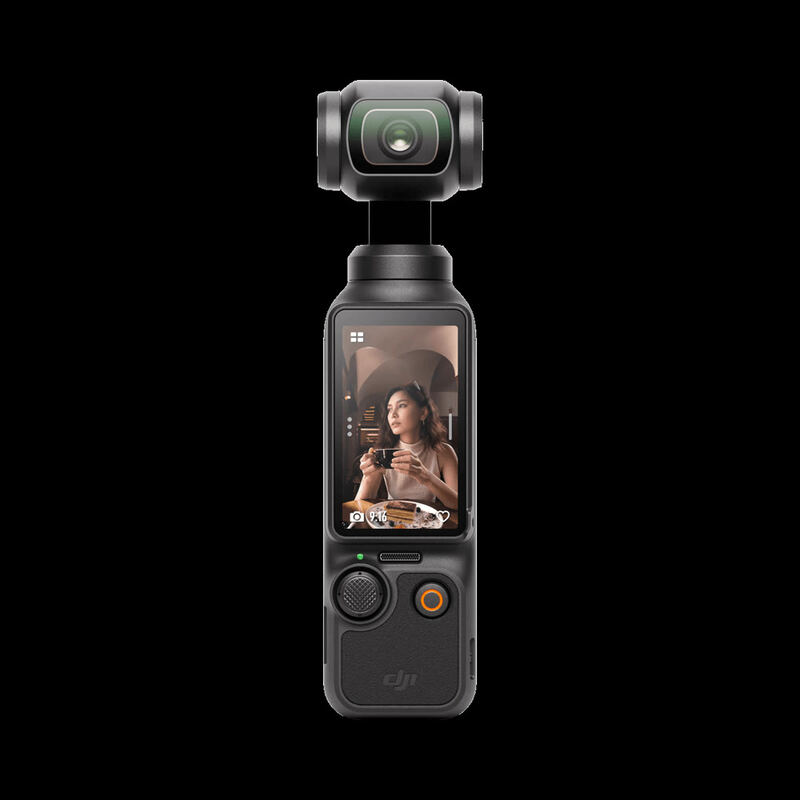
Within this group the V1 occupies a clear niche as the best all-in-one fixed-lens compact for image quality. Its 1.4-inch sensor is the largest of any non-interchangeable-lens camera here, beating both the DJI Osmo Pocket 3 and the G7 X Mark III, and its wide 16mm equivalent makes it more comfortable for solo arm's-length vlogging than the G7 X Mark III's tighter 24mm start. The unlimited 4K thanks to cooling vents directly addresses the older Canon's biggest flaw.
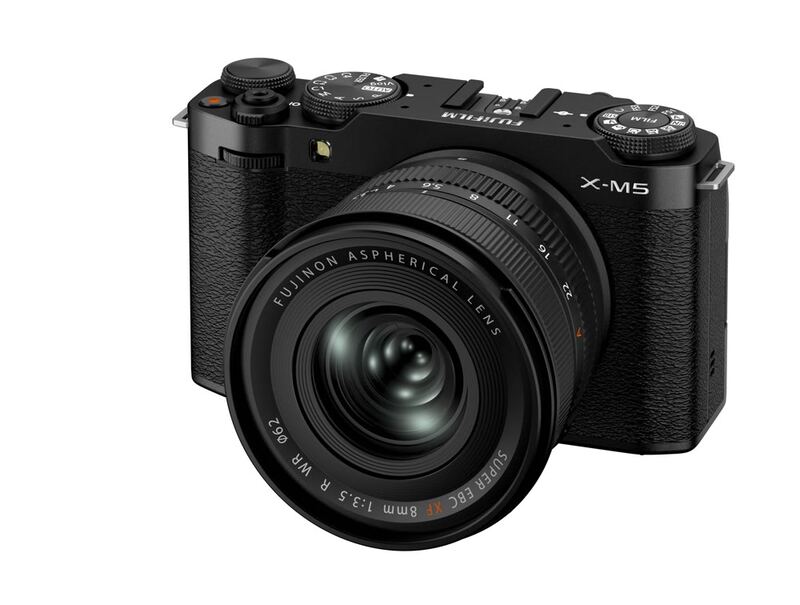
Where it concedes ground, it does so to specialists. The Osmo Pocket 3 destroys it for handheld stabilization because of its mechanical gimbal, and the Sony ZV-E10 II and Fujifilm X-M5 offer larger APS-C sensors plus the ability to change lenses entirely. The V1 is the pick for the buyer who wants one capable, friendly camera that does wide walk-and-talk video well and also takes lovely vacation photos, without committing to a lens system or carrying a gimbal.
Doubles as a family travel point-and-shoot
The V1 is the best choice for a vlogger who wants a single fixed-lens camera that handles wide walk-and-talk footage and doubles as a capable travel and family point-and-shoot. The wide lens, the unlimited 4K recording, the built-in ND filter, and the larger-than-average sensor make it the most versatile compact in this group for video-first creators who do not want to fuss with separate gear. Digital Camera World put it well: anyone looking for a powerful yet straightforward vlogging camera that doubles as a photography point-and-shoot will be well served by the V1.
Skip it if you specifically need uncropped 4K/60p, want the shallowest possible depth of field for portraits, or prioritize gimbal-grade handheld smoothness, in which case the Osmo Pocket 3 or a mirrorless body with a fast prime will serve you better. For everyone else who values Canon's color science, easy operation, and a grab-and-go body that punches above its size, the V1 is a thoroughly well-rounded pick.
Strengths
- +Large 22.3MP 1.4-inch sensor offers roughly twice the area of the 1-inch sensors in rival compacts
- +Wide 16-50mm equivalent zoom goes wider than most compacts, ideal for arm's-length vlogging
- +Built-in ND filter and cooling vents enable unlimited 4K recording without overheating
- +Canon's best autofocus in a compact, with reliable face and eye tracking
- +Optical stabilization for stills plus usable digital stabilization for walking video
Watch-outs
- −1.4x crop and no stabilization when shooting 4K/60fps
- −Small maximum aperture limits low-light and shallow depth of field
- −No electronic viewfinder or built-in flash for stills shooters
- −Larger and pricier than pocket compacts like the G7 X Mark III
How it compares
Has the largest sensor of the fixed-lens cameras here, beating the 1-inch DJI Osmo Pocket 3 and Canon PowerShot G7 X Mark III for image quality, and its wide 16mm-equivalent end is friendlier for vlogging than the G7 X Mark III's tighter lens. It lacks the mechanical gimbal of the Osmo Pocket 3 and the interchangeable lenses of the Sony ZV-E10 II.
Rating sources
“The V1 packs a larger 1.4-inch sensor than rivals, reliable autofocus, decent optical stabilization for photos and reasonable digital stabilization for videos, together with a suite of video features that include a built-in ND filter and cooling vents for unlimited 4K record times.”
“Anyone looking for a powerful yet straightforward vlogging camera that doubles as a photography point-and-shoot will be well served by the V1.”
Our 4.2 score is the average of these published ratings. More about methodology.