Verdict
Head-to-head · Best Mirrorless Cameras For Travel

Fujifilm X-S20 vs Sony α6400

Which is the better buy? Side-by-side on rating, price, strengths, and watch-outs — with the published ratings we averaged to get there.

The short answer

Sony α6400 comes out ahead by a narrow margin (3.8 vs 4.1). The gap is mostly about Photographers prioritizing autofocus — read the strengths below before deciding.

Fujifilm X-S20
Ranked #7 in Best Mirrorless Cameras For Travel
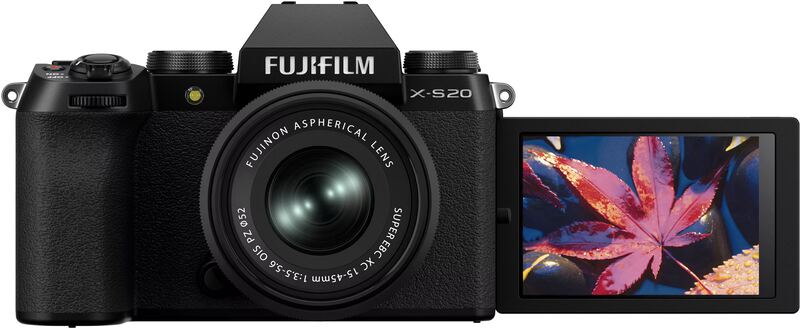
Fujifilm X-S20
$1,399as of May 29

The Fujifilm X-S20 is a midrange APS-C mirrorless camera that builds upon the X-S10 with improved video features and a more user-friendly design. Reviewers noted its enhanced 5-axis stabilization, 4K video capabilities with F-Log2 support, and dedicated vlog mode. The camera's larger grip houses a bigger battery and includes a headphone jack. However, its battery life is limited to 750 shots, and video recording time is constrained without the optional FAN-001 cooling fan. This makes it well-suited for beginners and intermediate users seeking a versatile camera for both photography and video work.

Strengths
  • 26MP X-Trans BSI-CMOS sensor delivers high-resolution images
  • 5-axis in-body image stabilization rated to 7 stops
  • Enhanced video capabilities with 4K/60 4:2:2 10-bit internal recording
Watch-outs
  • Battery life limited to 750 shots per charge
  • Video recording time is constrained without cooling fan
Sony α6400
Higher ratedRanked #4 in Best Mirrorless Cameras For Travel
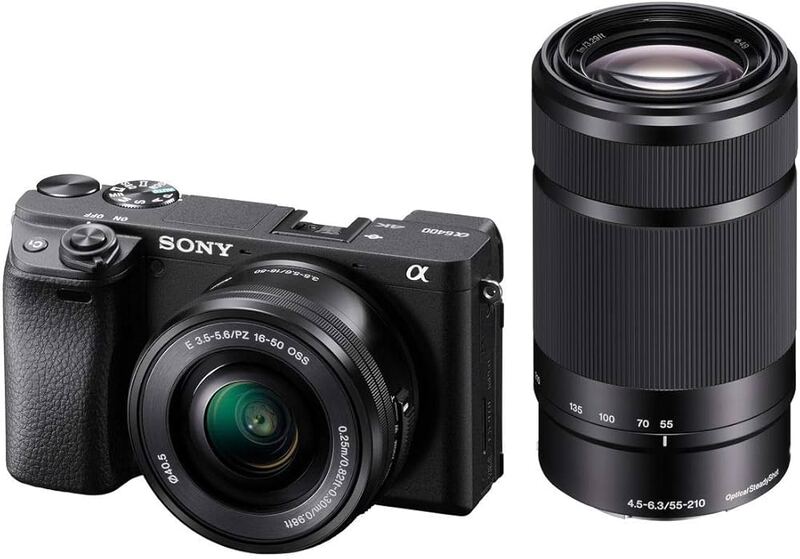
Sony α6400
$848as of May 29

The Sony α6400 stands out primarily for its exceptional autofocus system, which DPReview calls 'one of the best implementations out there' and 'game-changing' for its price range. RTINGS.com notes its 11fps continuous RAW shooting and 4K video capabilities. However, reviewers like Alik Griffin criticize its handling and ergonomics, while others point out the lack of in-body stabilization and confusing menu system. Despite these drawbacks, it's considered one of the most capable APS-C cameras at its price point, particularly for those prioritizing autofocus performance over user experience.

Strengths
  • Industry-leading autofocus implementation with 425 phase- and contrast-detect AF points
  • 11fps continuous RAW shooting capability
  • Detailed 4K video with 100mbps recording and slow motion
Watch-outs
  • Ergonomics are hit-and-miss with no substantive changes from predecessor
  • Lacks in-body stabilization limiting video and low-light performance

How they stack up

Fujifilm X-S20

Unlike the Sony ZV-E10 II, which lacks an EVF and has modest battery life, the Fujifilm X-S20 offers a more robust battery and dedicated vlog mode, making it better suited for extended video work. Compared to the Canon EOS R50, it provides superior video capabilities with 4K/60 4:2:2 10-bit internal recording, though it lacks the R50's affordable price point and lens ecosystem.

Sony α6400

The Sony α6400 excels in autofocus performance compared to the Canon EOS R50, but lacks the 4K/60p recording and 10-bit color depth of the Sony α6700. Unlike the Fujifilm X-T5, it has a more compact design and better low-light performance, though the X-T5 provides higher frame rates and better in-body stabilization.

Specs side-by-side

SpecFujifilm X-S20Sony α6400
Sensor26MP X-Trans BSI-CMOS24.2MP APS-C Exmor CMOS
Stabilization5-axis in-bodyNo in-body stabilization
Video4K/60 4:2:2 10-bit4K/30p, 1080 up to 60p/120p
AutofocusHybrid AF (117 contrast / 425 Phase Detect points)425 Phase- & Contrast-Detect AF Points
Burst RateUp to 20 fps (up to 30 fps with 1.25x crop)Up to 11 fps
Display3" 1.84M-dot fully articulating touchscreen3.0" 921.6k-Dot Tilting
EVF0.39-in OLED EVF, 0.62x magnification, 100HzXGA Tru-Finder 2.36m-Dot OLED
Weight413gLess than 1 lb (body only)
← See the full ranking of best mirrorless cameras for travel