Verdict
Head-to-head · Best Stud Finders

Klein Tools ESF150LL vs Zircon StudSensor A100

Which is the better buy? Side-by-side on rating, price, strengths, and watch-outs — with the published ratings we averaged to get there.

Verdict is reader-supported. As an Amazon Associate we earn from qualifying purchases. Some links on this page are affiliate links — if you click through and buy, we may earn a small commission at no extra cost to you. Our ratings are sourced from independent publications, not sponsors.
The short answer

Zircon StudSensor A100 comes out ahead by a clear margin (4.0 vs 5.0). The gap is mostly about Homeowners hanging shelves and televisions on ordinary drywall. — read the strengths below before deciding.

Klein Tools ESF150LL
Ranked #5 in Best Stud Finders
Klein Tools ESF150LL
2 sourcesall derived$63.99as of Aug 1

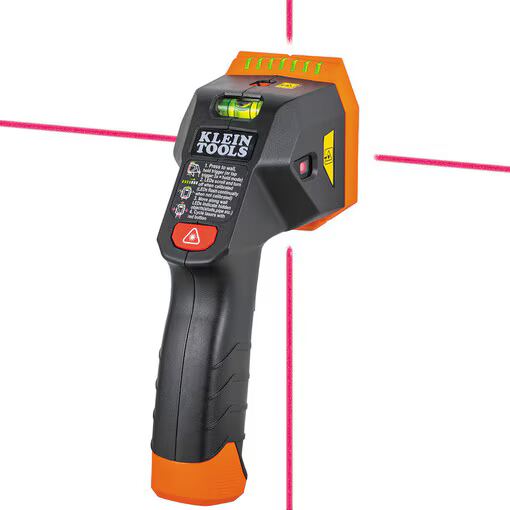
The Klein Tools ESF150LL Electronic Stud Finder with Cross-Line Lasers detects wood and metal studs up to 1-1/2 inches deep. Reviewers praised the dual cross-line lasers, which work independently or together, plus the clear LED indicators and the ergonomic body with wall-protecting felt pads. A hold mode keeps it scanning continuously, and a bubble level vial speeds up alignment. Users like the durability and accuracy, though some noted it needs calibration before each use and that scan depth trails higher-end models. Contractors and DIY enthusiasts who want a dependable tool for wall marking and installation tasks are the fit.

Strengths
  • Detects hidden wood and metal studs with auto deep scan up to 1-1/2-Inch
  • Features horizontal and vertical cross-line lasers usable together or independently
  • Includes bright LEDs spanning the stud width and audible alerts with mute option
Watch-outs
  • Requires calibration prior to each use
  • Limited to 1-1/2-Inch scan depth
Zircon StudSensor A100
Higher ratedRanked #1 in Best Stud Finders
Zircon StudSensor A100
1 sourceall derived$26.32as of Jul 31

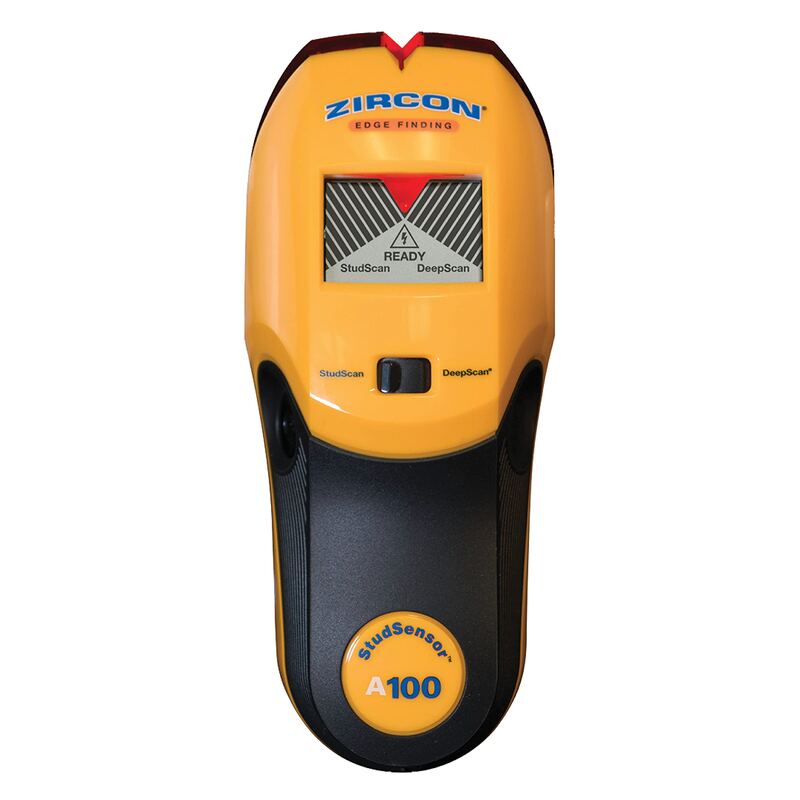
The StudSensor A100 is an edge finder, not a center finder: it marks where a stud begins and ends and leaves the midpoint to be worked out by hand. StudScan reads to ¾ in. (19 mm) and DeepScan doubles that to 1½ in. (38 mm), while WireWarning flags live unshielded AC wiring in either mode. A 9V alkaline battery is required and not included.

Strengths
  • StudScan mode locates edges of wood and metal studs up to 3⁄4 in. (19 mm) deep
  • DeepScan Mode doubles scanning depth to locate edges up to 11⁄2 in. (38 mm) deep
  • WireWarning Detection indicates presence of live unshielded AC electrical wiring up to 2 in. (50 mm) deep
Watch-outs
  • Marks stud edges only, so finding a center means marking both sides and measuring
  • Not recommended for lath and plaster walls
  • Requires a 9V alkaline battery that is not supplied

Derived means the reviewer published no score, so one was inferred from their written verdict. Everything else is a number the publisher printed. How we rank.

How they stack up

Klein Tools ESF150LL

The Klein Tools ESF150LL's dual cross-line lasers and hold mode set it apart from the Zircon StudSensor A100 and C.H. Hanson 03040, which lack laser guidance. While the Franklin Sensors ProSensor M210 offers more sensors and the Bosch GMS120-27 detects more materials, the Klein ESF150LL provides superior visual alignment and ergonomic design. However, it requires calibration and has a limited scan depth compared to the ProSensor M210.

Zircon StudSensor A100

The Franklin Sensors ProSensor M210 lights up a whole stud at once and needs no calibration pass, which is the real upgrade over an edge finder. The battery-free C.H. Hanson 03040 is a magnet, cheaper and dumber. The A100's case for itself is scanning depth plus the wire warning at around $26.32.

Specs side-by-side

SpecKlein Tools ESF150LLZircon StudSensor A100
Detection Depth1-1/2-InchUp to ¾ in. (19 mm)
Battery Type2 AA9V alkaline required (not included)
Weight16 oz4.80 oz. (136 g) without battery
MaterialPC & PC-ABSPlastic
FeaturesCross-Line21
Sensors713
← See the full ranking of best stud finders