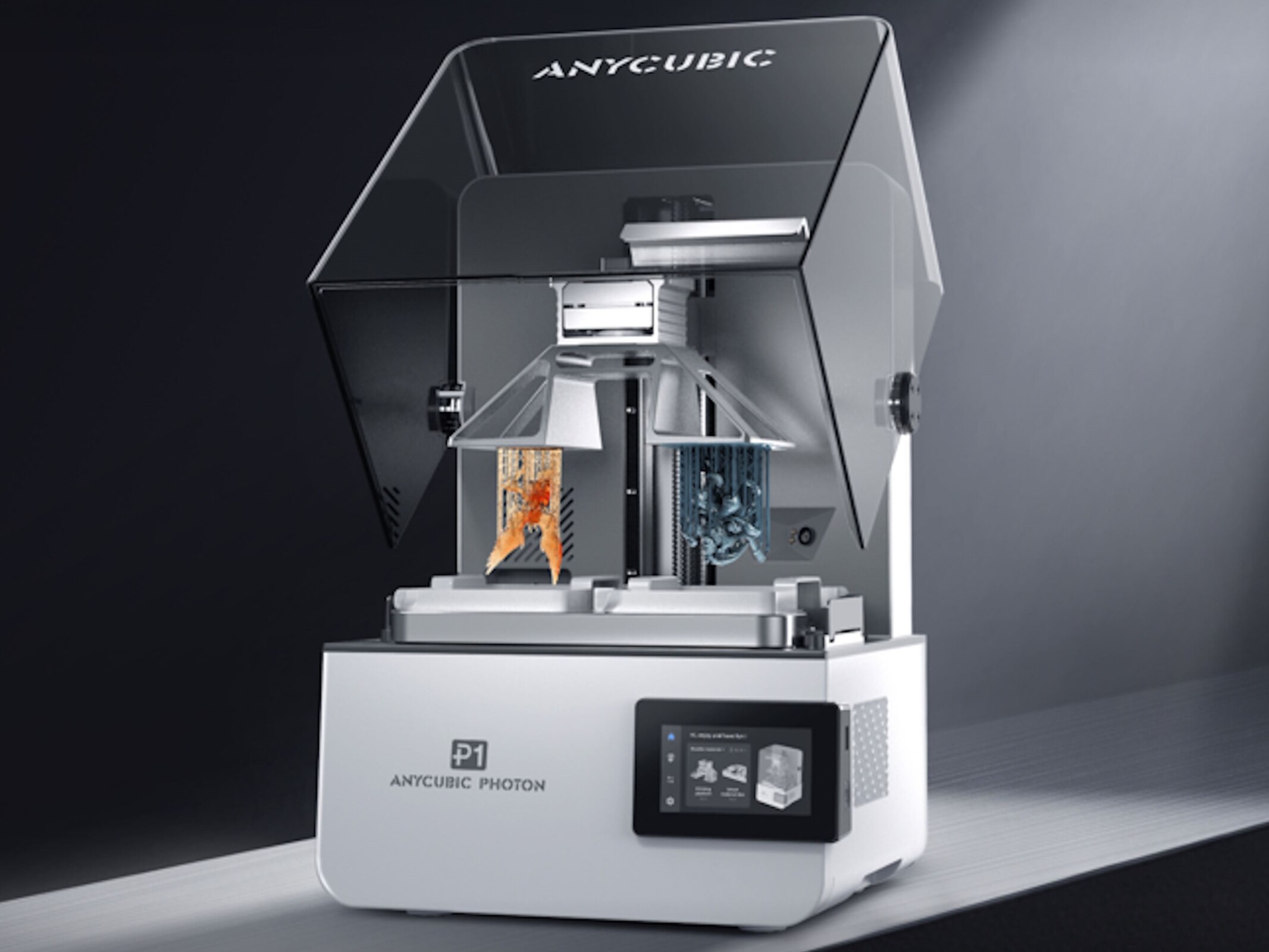
The Anycubic Photon P1 is a high-end resin 3D printer featuring a 14K mono LCD, thermally-controlled resin vat, and dual-material printing capability. Reviewers noted its powerful light system, precision build platform, and auto-leveling features. However, it lacks automated resin filling and the dual-material vat does not include heating. The printer is designed for industrial-grade prosumer use with a 223 x 126 x 230 mm build chamber and weighs 13.6kg. It's suited for users seeking advanced resin printing features but may not appeal to those wanting fully automated workflows.
Full review
Industrial-Grade Build Quality
The Anycubic Photon P1 stands out with its robust industrial-grade construction that sets it apart from typical consumer resin printers. Tom's Hardware noted that the printer's chassis features anodized aluminum and high-density ABS outer panels, with a Z-axis arm that has a more solid industrial finish compared to previous models. The build plate is precision-ground steel rather than the usual anodized aluminum, which provides a flatness of less than 80 µm—significantly better than the 100–150 µm variation common in older models that could cause inconsistent first-layer adhesion. This level of flatness directly impacts print reliability, especially when printing full plates with dozens of small parts, where corner failures were previously common. The machine's weight of 13.6kg (30lbs) and industrial-grade ball screws with dual precision linear rails contribute to its stability and accuracy, with movement accuracy of +/-0.01mm. According to 3DWithUs, this construction approach makes the Photon P1 feel designed to reduce the friction often associated with resin printing, replacing fiddly hardware with quicker latch-based mechanisms and automated checks.
Professional reviewers emphasized that the Photon P1's build quality reflects a shift toward professional-grade components. The inclusion of a milled steel build plate with guaranteed flatness below 80 µm is particularly significant, as this level of precision is typically found in production equipment rather than consumer models. The printer's dual-vat system, while innovative, is supported by industrial-grade ball screws and linear guide rails that ensure consistent performance. Fabbaloo highlighted that the machine's base is notably wider than previous generations, necessary to accommodate the dual-vat system, and that the printer's overall design conveys quality from the first moment. The build volume of 223 × 126 × 230 mm (6.5L) remains consistent with the M7 Pro, but the enhanced structural elements make it a more capable workhorse for serious users.
The design philosophy behind the Photon P1 reflects a deliberate move toward professional standards. Unlike previous models that used traditional screw-down mechanisms, the P1 employs a latch system for both the resin vat and build plate, which 3DWithUs found to be faster, cleaner, and more user-friendly in daily use. The printer's fully enclosed design with a stepless hinged lid that blocks up to >99.99% of UV light, combined with its industrial aesthetic, signals that Anycubic is targeting users who demand both performance and reliability. The 4.5-inch resistive touchscreen and integrated camera for monitoring jobs further reinforce the professional orientation, making the P1 a serious contender for makers who expect both speed and refinement.
Dual-Vat Innovation
The most notable innovation in the Anycubic Photon P1 is its dual-vat system, which enables simultaneous dual-color/dual-material printing—a feature previously reserved for professional production equipment. According to 3Dwork.io, this system represents a true paradigm shift in MSLA resin printing, offering users the capability to print with two different resins in a single run. The dual-material print kit includes a unique dual-material vat and dual-material platform, requiring a firmware change to recognize the new accessory and a corresponding adjustment in the slicer software. This limitation is important for users planning to utilize the dual printing feature extensively, as it could restrict the range of resins that can be used together.
The dual-vat system is designed to be user-friendly, with the printer's firmware supporting features like build plate installation detection and bottom layer separation detection, which help ensure successful dual prints. The dual-vat system's implementation was robust, though they noted that the lack of heating in the dual-material vat could be a constraint for certain applications. The system allows for swapping out the standard build platform and vat with the dual-material components, which requires a firmware modification to enable recognition of the new accessory. This approach provides flexibility for users who want to experiment with color or material combinations without needing to invest in entirely separate machines.
While the dual-vat feature is a significant advancement, it's important to note that it's not a standard feature and requires an additional kit purchase. The dual-material printing kit includes a perforated build plate and a dual-material vat, which are designed to work with Anycubic's proprietary software. The system's ability to handle two different materials simultaneously is a major step forward, but users should be aware that the absence of a heater in the dual-material vat may limit its compatibility with certain resin types. This constraint, while manageable for many applications, is a critical consideration for those planning to use the dual printing feature regularly.
Display and Light System
The Anycubic Photon P1 features a 14K monochrome LCD with a resolution of 16.8 x 24.8 μm, paired with the LighTurbo 4.0 engine that delivers 5000μW/cm² with ≥2° collimation accuracy and >92% light uniformity. This powerful light system, according to Fabbaloo, is designed to provide optimal performance and longevity, with minimal light decay. The display is capable of printing at layer heights ranging from 0.012 to 0.15 mm, with print speeds of 25-35 mm/h when using Anycubic's Standard Resin at 0.05mm layers. The light uniformity of >92% ensures consistent curing across the entire build area, which is crucial for achieving high-quality prints.
3DWithUs noted that the 14K display and LighTurbo 4.0 engine provide excellent detail and consistency, making the P1 suitable for high-resolution prints. The system's ability to maintain >92% light uniformity is particularly important for users who require consistent results across large prints. The 10.1-inch screen size and high resolution allow for fine detail reproduction, which is essential for complex models and intricate designs. The LighTurbo 4.0 engine's collimation accuracy of ≥2° ensures that light is directed precisely where needed, reducing waste and improving efficiency.
Tom's Hardware reported that the 14K monochrome LCD and LighTurbo 4.0 engine deliver exceptional performance, with the display's resolution and uniformity contributing to the printer's overall quality. The system's ability to maintain consistent light output over time is a key advantage, as it reduces the need for frequent recalibration. The 5000μW/cm² output power is sufficient to handle a wide range of resins and print settings, making the P1 versatile for different applications. The light uniformity of >92% ensures that every part of the build area receives consistent curing, which is crucial for achieving reliable results.
Auto-Leveling 3.0 adjusts the build plate in real time
The Anycubic Photon P1 comes with Photon Workshop 4.0, a dedicated slicing software that supports Chitubox and Lychee, providing users with a range of options for preparing their prints. The software includes features like Power Loss Resumption, Build Plate Installation Detection, Bottom Layer Separation Detection, Resin Level Inspection, and Residue Inspection, which enhance the user experience by automating critical checks. 3Dwork.io highlighted that the software's interface is well-organized and user-friendly, with a 4.5-inch resistive touchscreen that makes navigation straightforward. The system's ability to perform Auto-Leveling 3.0 with feedback allows users to adjust the build platform in real-time, which is particularly useful for ensuring consistent first-layer adhesion.
Fabbaloo noted that the printer's firmware includes several advanced features that help users avoid common pitfalls, such as build plate installation detection and resin level inspection. These features are particularly valuable for users who are new to resin printing, as they provide guidance and prevent errors that could lead to failed prints. The software's support for multiple slicers, including Chitubox and Lychee, gives users flexibility in their workflow and allows them to choose the tool that best fits their needs.
Tom's Hardware emphasized that the Photon Workshop 4.0 software is well-integrated with the printer's hardware, providing a seamless experience from start to finish. The software's ability to handle complex features like dual-color printing and automatic resin level detection makes it a powerful tool for both beginners and experienced users. The interface is intuitive, with clear visual feedback that helps users understand the printer's status and progress. The inclusion of features like Power Loss Resumption and Build Plate Installation Detection ensures that users can recover from common issues without having to restart their prints from scratch.
Print Quality and Performance
Print quality on the Anycubic Photon P1 is exceptional, with reviewers noting that the 14K monochrome LCD and LighTurbo 4.0 engine deliver consistent results across various print settings. 3DWithUs reported that the printer's ability to maintain >92% light uniformity and its precision-ground steel build plate contribute to high-quality prints with minimal layer separation and excellent surface finish. The printer's build volume of 223 × 126 × 230 mm (6.5L) is sufficient for most applications, and the thermal-controlled resin vat maintains temperatures up to 40°C, which optimizes resin flow and viscosity. The Wave Release Film, which reduces release force by 60% compared to traditional smooth-surface films, further enhances print quality by reducing the risk of part damage during removal.
Fabbaloo's hands-on testing revealed that the P1 delivers consistent results across multiple print runs, with the precision-ground steel build plate ensuring uniform first-layer adhesion. The printer's ability to handle a wide range of layer heights from 0.012 to 0.15 mm allows for both fine detail work and faster printing speeds. The thermal-controlled resin vat, which maintains temperatures up to 40°C, ensures that the resin flows consistently, which is crucial for achieving high-quality prints. The Wave Release Film, which reduces release force by 60%, significantly decreases the risk of part damage during removal, making the P1 a reliable choice for users who want to minimize waste.
The P1's print quality is consistently high, with minimal layer separation and excellent surface finish. The printer's ability to maintain >92% light uniformity across the build area ensures that every part of the print is cured evenly, which is essential for achieving reliable results. The precision-ground steel build plate, which guarantees flatness below 80 µm, contributes to consistent first-layer adhesion, which is particularly important for large prints or prints with multiple parts. The thermal-controlled resin vat and Wave Release Film work together to provide a reliable printing experience that minimizes waste and maximizes output quality.
No auto-fill, and air purifier costs extra
Despite its many strengths, the Anycubic Photon P1 has some notable drawbacks that potential buyers should consider. One major limitation is the lack of automated resin filling, which requires users to manually pour resin into the vat. This can be time-consuming and may lead to spills or uneven filling, especially for users who are new to resin printing. Fabbaloo noted that while the 1000ml vat capacity is generous, the absence of an automated filling system is a missed opportunity for convenience. Additionally, the dual-material vat lacks a heater, which limits the types of resins that can be used together, a constraint that may be problematic for users who want to experiment with different material combinations.
Another concern raised by reviewers is the printer's reliance on external air purification systems. Unlike many competitors that include small air purifier modules, Anycubic has opted for a rear port that requires an optional AirPure 2.0 unit for effective fume filtration. 3Dwork.io reported that while this design choice allows for more powerful air filtration, it also means that users must purchase additional accessories to ensure proper ventilation. This can add to the overall cost and complexity of setting up the printer. The lack of an integrated air purification system is particularly concerning for users who plan to print in enclosed spaces or who are sensitive to fumes.
The dual-vat system, while innovative, also introduces complexity that may not be suitable for all users. The need to modify firmware and adjust slicer settings to enable dual-color printing can be daunting for beginners. Fabbaloo noted that while the system is functional, it requires a learning curve and additional setup time. The absence of a heater in the dual-material vat is another limitation, as it restricts the range of resins that can be used together. This constraint is particularly relevant for users who want to combine different material properties, such as flexibility and rigidity, in a single print. Overall, while the dual-vat system is a significant advancement, it may not be ideal for users seeking simplicity or those who require maximum material compatibility.
Built for dual-color printing and industrial-grade parts
The Anycubic Photon P1 is best suited for users who demand both performance and reliability in their resin printing setup. According to 3Dwork.io, the printer is ideal for makers who expect both speed and refinement, particularly those who value industrial-grade components and advanced features like dual-color printing. The precision-ground steel build plate, thermal-controlled resin vat, and 14K monochrome LCD make it a strong choice for users who require consistent results and high-quality prints. The printer's ability to handle a wide range of layer heights and its robust software features make it suitable for both beginners and experienced users who want to push the limits of what's possible with resin printing.
Fabbaloo's review emphasized that the P1 is designed for users who are serious about resin printing and are willing to invest in a machine that offers professional-grade features. The printer's industrial-grade ball screws, dual precision linear rails, and milled steel build plate make it a capable workhorse for users who need reliable performance and consistent results. The dual-vat system is particularly appealing to users who want to experiment with color or material combinations, though they should be aware of the limitations of the dual-material vat's lack of heating. The printer's fully enclosed design and integrated camera for monitoring jobs make it a good choice for users who want to minimize exposure to fumes and maintain a clean workspace.
Tom's Hardware noted that the Photon P1 is positioned as a flagship model in Anycubic's lineup, clearly above the previous Photon Mono M7 Pro in both build quality and technical improvements. The printer's combination of advanced features, including the 14K monochrome LCD, heated resin vat, and dual-vat system, makes it a strong contender for users who are looking for a serious resin printer that can handle demanding applications. The printer's ability to perform Auto-Leveling 3.0 with feedback and its support for multiple slicers make it a versatile choice for users who want flexibility in their workflow. However, the printer's complexity and the need for additional accessories like the AirPure 2.0 unit may not be suitable for users who prefer simpler setups or who are on a tight budget.
$599 to $699, plus AirPure add-on
The Anycubic Photon P1 is positioned at a premium price point, with the base model starting at $599 and potentially reaching $699 depending on the bundle. According to the official Anycubic store, the printer's price reflects its advanced features, including the 14K monochrome LCD, heated resin vat, and dual-vat system. The inclusion of a dual-material print kit and a perforated build plate in the review package adds value, though users will need to purchase additional accessories like the AirPure 2.0 unit for proper ventilation. The printer's industrial-grade components and advanced software features justify the price for users who require high-quality prints and reliable performance.
3Dwork.io's analysis suggests that the P1's value proposition is strong for users who are serious about resin printing and are willing to invest in a machine that offers professional-grade features. The printer's ability to handle a wide range of layer heights, its precision-ground steel build plate, and its advanced software features make it a versatile choice for both beginners and experienced users. The dual-vat system, while requiring an additional kit purchase, provides significant value for users who want to experiment with color or material combinations. However, the lack of automated resin filling and the need for external air purification units may add to the overall cost and complexity of ownership.
Fabbaloo's review indicates that while the P1's price is higher than many consumer-grade resin printers, the investment is justified by its industrial-grade components and advanced features. The printer's build quality, including the milled steel build plate and industrial-grade ball screws, ensures reliable performance over time. The 14K monochrome LCD and LighTurbo 4.0 engine deliver exceptional print quality, and the dual-vat system provides unique capabilities that are not available in competing models. For users who prioritize performance and reliability over cost, the P1 offers excellent value, though budget-conscious buyers may find more affordable alternatives that still provide good results.
Strengths
- +14K mono LCD with 16.8 x 24.8 μm resolution and LighTurbo 4.0 engine delivering 5000μW/cm² with ≥2° collimation accuracy
- +Thermally-controlled resin vat capable of maintaining temperatures up to 40°C for optimized resin flow
- +Dual-material printing capability with dedicated kit for simultaneous color/material printing
- +Precision-ground steel build platform with auto-leveling 3.0 with feedback for fine-tuning
- +Permanently attached tilting stepless rotating hinged lid with 223 x 126 x 230 mm build chamber
Watch-outs
- −No automated resin filling system
- −Dual-material vat lacks heater, potentially limiting material options
How it compares
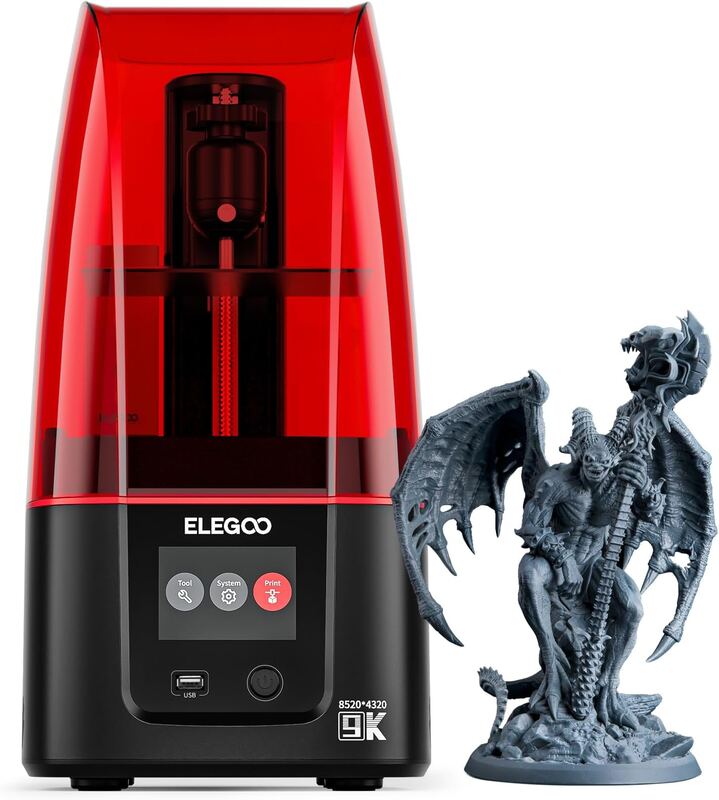
The Anycubic Photon P1 offers a 14K mono LCD and thermally-controlled resin vat, outperforming the Elegoo Mars 5 Ultra in resolution and temperature control.
Rating sources
“There is no automated resin filling on the P1, but an operator can take advantage of the 1000ml vat capacity”
Our 4.3 score is the average of the 3 scored reviews above; 1 more reviewed it without printing a score and is not in the average. More about methodology.