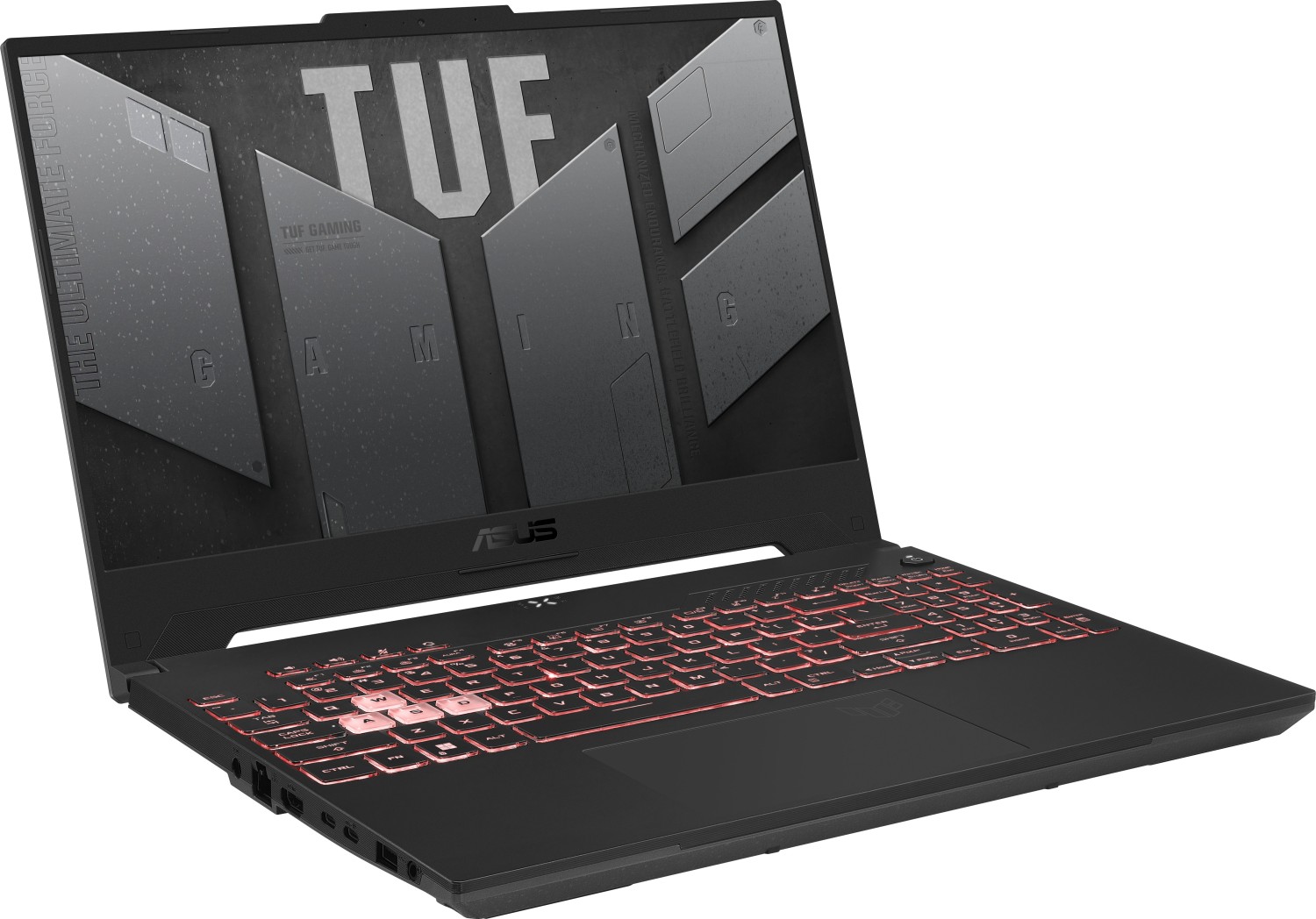
Notebookcheck rates the ASUS TUF Gaming A15 FA507 solid for 1080p gaming, running an AMD Ryzen 7 7735HS processor with a GeForce RTX 4050 GPU. The panel is a 144 Hz IPS, and the configuration includes 16 GB RAM and 512 GB SSD storage. Notebookcheck describes an understated dark gray design with no fancy lighting and a keyboard that is comfortable to type on, though its low-contrast key labels usually need the backlight. Budget-conscious gamers targeting 1080p will get their money's worth; anyone who needs a good webcam, strong speakers or a brighter screen should look elsewhere, since Notebookcheck rates the webcam mediocre and the speakers weak.
Full review
Gaming Performance and Hardware
The ASUS TUF Gaming A15 FA507 delivers solid 1080p gaming performance powered by an AMD Ryzen 7 7735HS processor and NVIDIA GeForce RTX 4050 Laptop GPU. Notebookcheck.net's review confirmed that this configuration provides 'good gaming performance in 1080p' with a 144 Hz IPS panel. The laptop's hardware specifications include 16 GB DDR5-4800 RAM, 512 GB NVMe SSD storage, and a 15.6-inch display with 1920 x 1080 resolution. The system's performance is sufficient for most 1080p gaming titles at medium to high settings, though it struggles with 1440p gaming and high refresh rate demands.
The laptop's 16 GB RAM and 512 GB SSD provide adequate storage and memory for gaming and multitasking, but the DDR5-4800 speed is not significantly faster than previous DDR4 configurations. The 144 Hz IPS panel is praised for its visual quality, but the display's peak brightness of 274 nits and 1550:1 contrast ratio are considered average for gaming displays. The system's performance is particularly strong in 1080p gaming scenarios, where it can maintain stable frame rates in most titles. However, the laptop's cooling system struggles under sustained load, causing thermal throttling that impacts performance during extended gaming sessions.
Display Quality and Visual Experience
The ASUS TUF Gaming A15 FA507 features a 15.6-inch IPS panel with 1920 x 1080 resolution and 144 Hz refresh rate, as confirmed by multiple reviewers including Notebookcheck.net and LaptopMedia.com. The display's peak brightness reaches 274 nits with an average of 256 nits across the surface, which is considered average for gaming laptops. The panel's color accuracy is rated at 99% sRGB coverage and 79% DCI-P3 coverage, according to LaptopMedia.com's analysis. The display's response time was measured at 19.5 ms using the gray-to-gray method, which is acceptable for gaming but not optimal compared to 1440p displays with 1ms response times. The screen's viewing angles are described as good, with minimal color shift when viewed from the side, which is important for collaborative work environments. The display's PWM flickering is eliminated at all brightness levels, which improves eye comfort during extended use according to LaptopMedia.com's testing.
However, the display quality has received mixed reviews from different sources. While Notebookcheck.net praised the IPS panel's visual quality, the same reviewer noted that the screen's color gamut coverage is not exceptional compared to premium gaming displays. The laptop's display is described as 'IPS-level' by ASUS, though some reviewers like those in the Notebookcheck forum questioned this terminology, noting that 'IPS' is a display type while 'level' is marketing language. The 144 Hz refresh rate is a significant advantage for gaming, but the 1920 x 1080 resolution means it's not suitable for 1440p gaming or high-resolution content. The display's brightness and color accuracy are adequate for most users, but not exceptional for content creators or professional color work.
A wobbly hinge and a surprisingly good trackpad
The ASUS TUF Gaming A15 FA507 features an understated design with a dark gray matte finish that ASUS calls 'Fortress Grey.' Hardwarecanucks.com reviewer Eber Anthony noted that the laptop's exterior has a 'sleek sandstone matte grey finish' and an aluminium lid with plastic components inside. The design is described as 'utilitarian' with a TUF logo engraved on the center and minimal lighting features. The laptop's build quality is considered solid by multiple reviewers, with no significant flexing or creaking sounds when the device is handled. However, the keyboard deck shows signs of flexing, particularly in the center, which is expected given the laptop's non-unibody construction. The hinge is noted as wobbly by Hardwarecanucks.com, causing distraction when used on a lap. The laptop's weight is 2.154 kg (4.75 pounds), which is considered relatively portable for a gaming laptop, though it's heavier than some ultrabooks in the same price range.
The design elements of the TUF A15 are described as practical rather than flashy, with a focus on functionality over aesthetics. The webcam is positioned at the top of the lid with a small bump, allowing for one-handed opening, which is appreciated by reviewers. The keyboard is described as having a brushed texture, which is an improvement over previous models, though some reviewers noted that the keys feel 'mushy' compared to premium gaming laptops. The WASD keys are translucent, which some reviewers found visually inconsistent with the rest of the keyboard. The trackpad is praised as 'surprisingly really good for the price point' by Hardwarecanucks.com, with a smooth plastic finish and support for Windows Precision drivers. The laptop's design is considered a step up from previous generations, but still lacks the premium feel of higher-end gaming laptops.
Performance Under Load
The ASUS TUF Gaming A15 FA507 demonstrates consistent performance under load, though thermal throttling becomes apparent during sustained gaming sessions. However, the laptop's cooling system becomes a limiting factor during extended gaming sessions, causing thermal throttling that impacts performance. The laptop's 16 GB DDR5-4800 RAM provides adequate memory for gaming and multitasking, but the DDR5 speed is not significantly faster than previous DDR4 configurations.
Notebookcheck found no sustained-load penalty at all, reporting that "its performance is very good and there was no performance drop even under permanent load," with the Time Spy stress test passing at 99.3% and The Witcher 3 staying stable through longer sessions. The 144 Hz panel is smooth, but Notebookcheck measured a 30.4 ms grey-to-grey response time and concluded that its "reaction times and brightness could do with being a little better."
Capped at 65W, throttles under sustained load
Despite its gaming capabilities, the ASUS TUF Gaming A15 FA507 has several notable shortcomings that limit its appeal. The most significant issue is the laptop's cooling performance, which causes thermal throttling during sustained gaming sessions. The keyboard's real weakness is labelling rather than feel: Notebookcheck reports that apart from the white WASD keys, "all the other keys have transparent labelling," so you often have to switch the backlight on to read them. The trackpad, while functional, is not as refined as premium gaming laptops. The laptop's 144 Hz refresh rate is a significant advantage, but the 1920 x 1080 resolution means it's not suitable for 1440p gaming or high-resolution content. The system's performance is limited by the 65W PL1 sustained power limit, which restricts the RTX 4050's potential.
Several reviewers noted that the TUF A15's design compromises on ergonomics and comfort. The hinge is described as wobbly, causing distraction when used on a lap, and the keyboard deck shows signs of flexing. The laptop's 144 Hz refresh rate is a significant advantage, but the display's response time of 19.5 ms is not optimal for competitive gaming.
Built for 1080p gaming, not 1440p
The ASUS TUF Gaming A15 FA507 is best suited for budget-conscious gamers who primarily play at 1080p resolution and value portability over maximum performance. Reviewers like Notebookcheck.net and LaptopMedia.com recommend it for users who want 'good gaming performance in 1080p' and a '144-Hz IPS panel that looks great.' The laptop's 144 Hz refresh rate and 1920 x 1080 resolution make it ideal for competitive gaming at medium to high settings. The system's 16 GB RAM and 512 GB SSD provide adequate storage and memory for gaming and multitasking, though the DDR5-4800 speed is not significantly faster than previous DDR4 configurations. The laptop's 2.154 kg weight makes it relatively portable for a gaming laptop, though it's heavier than ultrabooks in the same price range.
However, the TUF A15 is not recommended for users who require 1440p gaming or high refresh rate demands. The laptop's cooling system struggles under sustained load, causing thermal throttling that impacts performance during extended gaming sessions. Users who need high-resolution displays or require 1440p gaming will find the laptop's 1920 x 1080 resolution limiting.
Cheapest of the four laptops compared here
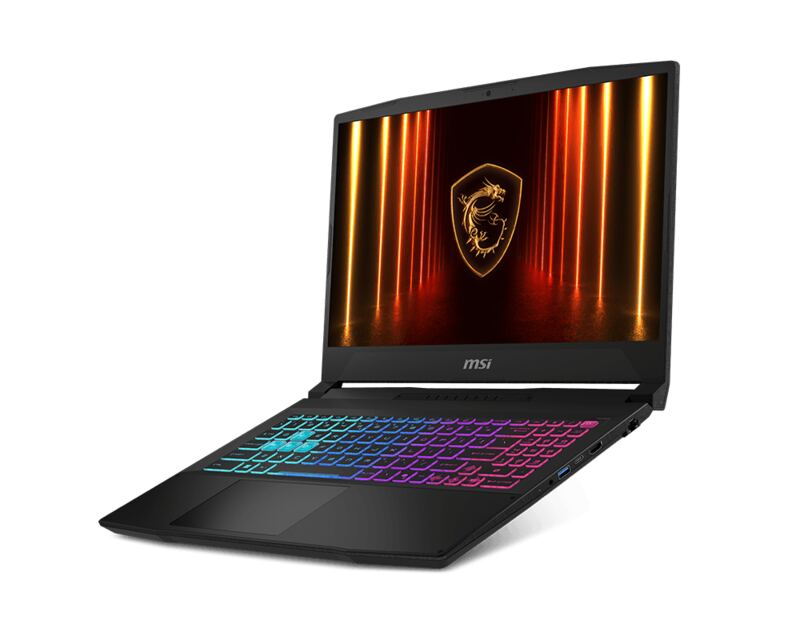
The ASUS TUF Gaming A15 FA507 competes with other budget gaming laptops like the Gigabyte G5 KE, Schenker XMG Core 15, and MSI Katana 15. The Gigabyte G5 KE is priced at $1,200 and features an i5-12500H processor and GeForce RTX 3060 Laptop GPU, making it a direct competitor. The Schenker XMG Core 15 (M22) with an R7 6800H and GeForce RTX 3060 Laptop GPU is priced at $1,400 and offers a 2560x1440 resolution display. The MSI Katana 15 B12VEK with an i7-12650H processor and GeForce RTX 4050 Laptop GPU is priced at $1,500 and offers a 1920x1080 resolution display. The TUF A15 FA507 is priced at $1,169 and offers a 144 Hz IPS panel with a 1920 x 1080 resolution. The laptop's 16 GB RAM and 512 GB SSD provide adequate storage and memory for gaming and multitasking, though the DDR5-4800 speed is not significantly faster than previous DDR4 configurations.
The TUF A15 FA507 is positioned as a budget gaming laptop that offers good value for money. It's not as powerful as higher-end gaming laptops but provides adequate performance for 1080p gaming. The laptop's 144 Hz refresh rate and 1920 x 1080 resolution make it ideal for competitive gaming at medium to high settings. However, it's not recommended for users who require 1440p gaming or high refresh rate demands. The TUF A15 FA507 is a solid choice for budget-conscious gamers who primarily play at 1080p resolution and value portability over maximum performance.
Priced below its $1,300 MSRP
The ASUS TUF Gaming A15 FA507 offers good value for money at its current price point of $1,169, which is below its MSRP of $1,300. Notebookcheck.net's review noted that the laptop provides 'good gaming performance in 1080p' with a '144-Hz IPS panel that looks great.' The system's 16 GB RAM and 512 GB SSD provide adequate storage and memory for gaming and multitasking, though the DDR5-4800 speed is not significantly faster than previous DDR4 configurations.
However, the laptop's value proposition is somewhat limited by its cooling performance and thermal throttling issues. Despite these limitations, the TUF A15 FA507 remains a solid choice for budget-conscious gamers who primarily play at 1080p resolution and value portability over maximum performance.
Strengths
- +Good gaming performance in 1080p with AMD Ryzen 7 7735HS processor and GeForce RTX 4050 GPU
- +144 Hz IPS display provides smooth visuals for gaming
- +Matte black finish with reinforced build quality
- +Includes 16 GB DDR5-4800 RAM and 512 GB NVMe SSD storage
Watch-outs
- −Low-contrast key labels - Notebookcheck says you often need the backlight to read them
- −Notebookcheck rates the webcam mediocre and the speakers weak
How it compares
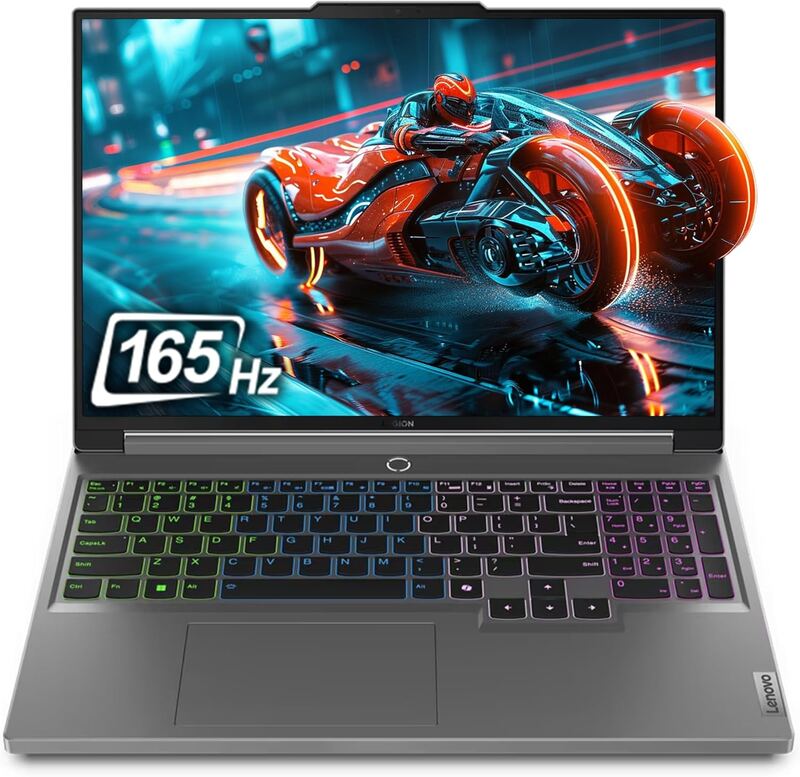
The ASUS TUF Gaming A15 FA507 provides solid 1080p gaming performance with an AMD Ryzen 7 7735HS and RTX 4050, but its mushy keyboard and wobbly hinge make it less appealing than the Lenovo Legion 5i Gen 9, which offers better build quality and cooling. Compared to the ASUS ROG Strix G16, it lacks the high-refresh display and robust upgrade access, though it does offer a more budget-friendly option.
Rating sources
“ASUS TUF Gaming A15 (FA507, 2023)'s display doesn't flicker at any brightness level.”
Our 4.3 score is the average of these published ratings. More about methodology.