The Bosch GMS120 Wall Scanner is a multi-detection device that finds wood studs, metal objects, rebar, copper, and live wiring. Reviewers noted its accuracy on copper pipe and live wiring, with one calling it 'one of the most accurate scanners around, for its size and price.' It performs well in drywall and plaster environments but had difficulty detecting live wires in conduit. One reviewer found the display hard to read when the backlight was on, and another had trouble pinpointing exact locations. Buyers who need more than basic stud detection are the fit; anyone focused primarily on live wiring may want alternatives.
Full review
Wood, ferrous metal, copper and live wiring
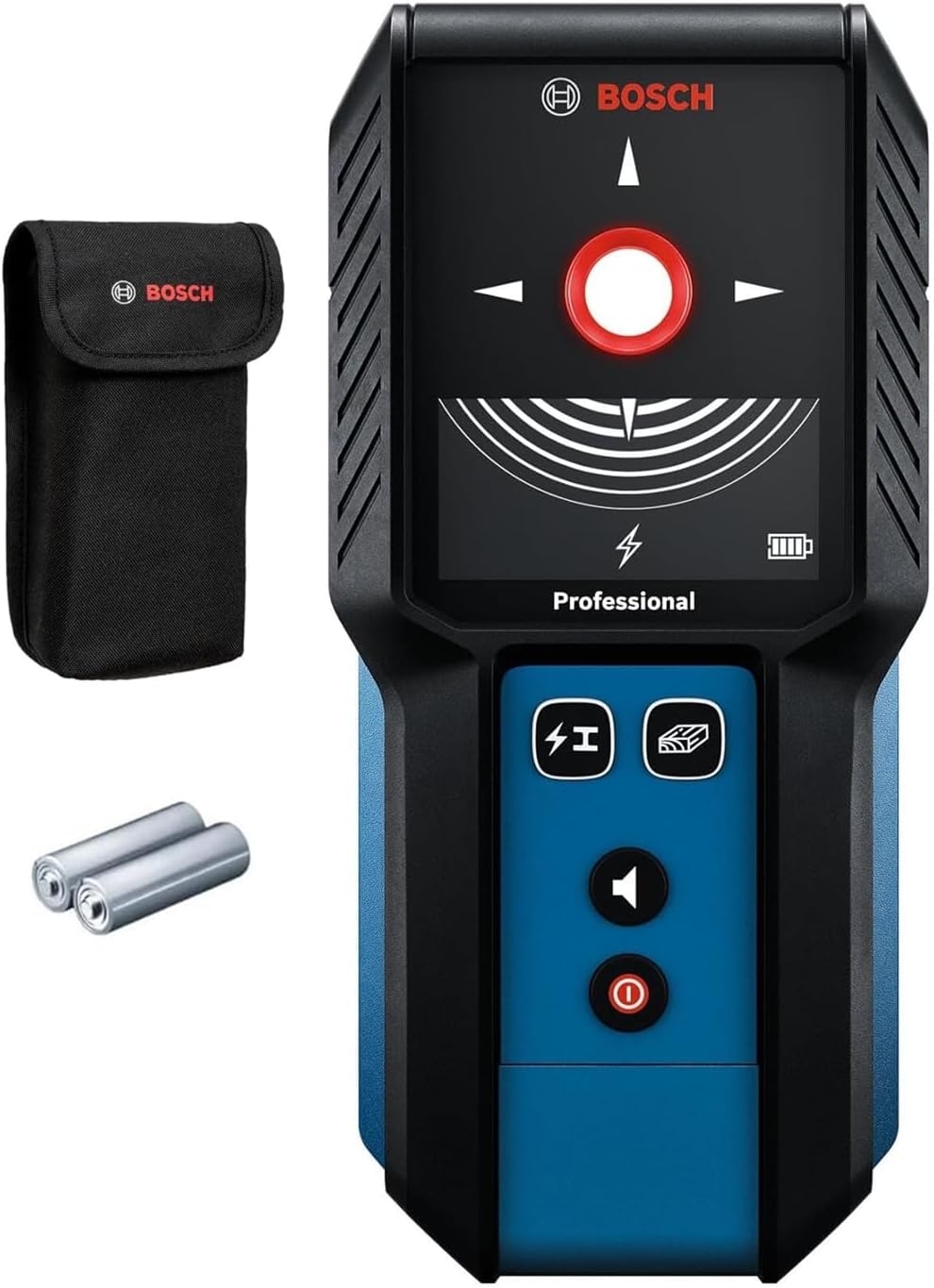
This is a multi-mode wall scanner rather than a stud finder, and the range of what it will locate is the reason to buy it. Tools In Action puts the detection depths at up to 1-1/2 inches for wood studs, 4-3/4 inches for ferrous metals such as steel and rebar, and 3-1/8 inches for non-ferrous metals like copper pipe, with a separate mode for live electrical wiring.
One Project Closer found the copper and live wire detection genuinely accurate, which is the half of the job that a magnetic or capacitive stud finder cannot do at all. For anyone opening up a wall rather than just hanging a shelf, knowing where the pipe and the cable run matters more than knowing where the stud is.
It finds the edge of a stud, not the middle
The wood detection is the weaker mode. One Project Closer found it consistently registering the left edge of a stud rather than its centre, which means the marking hole is pointing at the wrong place unless you scan from both directions and split the difference.
The centring mechanism relies on a ring of signal indicators lighting up as the scanner approaches the middle of an object, and it takes practice to read reliably. A dedicated stud finder does this one job better; the Bosch's argument is everything else it does alongside.
Conduit defeats the live wire mode
The most important limitation is specific. Live wiring in open configurations is detected reliably, and wiring encased in metal conduit is not, which One Project Closer found in testing. Conduit is common in modern and commercial construction, so the mode that most affects safety is the one with the biggest blind spot.
Treat a negative live-wire reading as inconclusive rather than as an all-clear. The tool detects live current up to a mains-level voltage, but the shielding rather than the voltage is what defeats it.
Plaster is fine, cold weather is not
Tools In Action found it located wood studs through plaster, which they had doubted going in and which rules out a lot of cheaper scanners. Reinforced concrete needs the calibration routine first, moving the scanner in a wide circle over the wall before scanning properly, and rebar shows up well once that is done.
Performance drops in the cold, with sensitivity falling away as temperatures approach freezing, so this is not a tool to leave in a van overnight and expect to work at dawn. Nearby metal objects and electronics can also skew readings, so positioning matters more than the marketing implies.
A good display you cannot always read
The screen is large and clear about what has been found, how strong the signal is and what the battery is doing, and there is a colour-coded ring around the marking hole that turns green, yellow or red so you can work without looking away from the wall. Audible and tactile alerts back it up.
The backlight is the flaw. Reviewers found it inadequate at certain viewing angles and in low light, which is exactly when a backlight is supposed to help. The body is rated IP54 with a shock-absorbing rubber casing, and there is a QR code on the back that links to the manual and video guides.
Overkill for hanging a shelf
Tools In Action's read is that the multi-material detection justifies the cost for tradespeople who would otherwise carry several tools. One Project Closer's is the counterweight: for a homeowner who only needs to find a wood stud a few times a year, this is a lot of money for a device that is beaten at that specific task by cheaper alternatives.
Both are right. Buy it if you cut into walls professionally, work with concrete and rebar, or need to know what is behind the drywall before a drill goes in. Do not buy it as a better stud finder, because it is not one.
Strengths
- +Detects multiple material types including wood studs, metal objects, rebar, copper, and live wiring
- +Features large, easy-to-read display with visual, audible, and tactile alerts
- +Accurate detection of copper pipe and live wiring in testing scenarios
- +Compact design weighing only 0.6 lbs with ergonomic handling and marking hole
Watch-outs
- −Display visibility issues with backlight enabled
- −Difficult to detect live electrical wires in conduit
How it compares
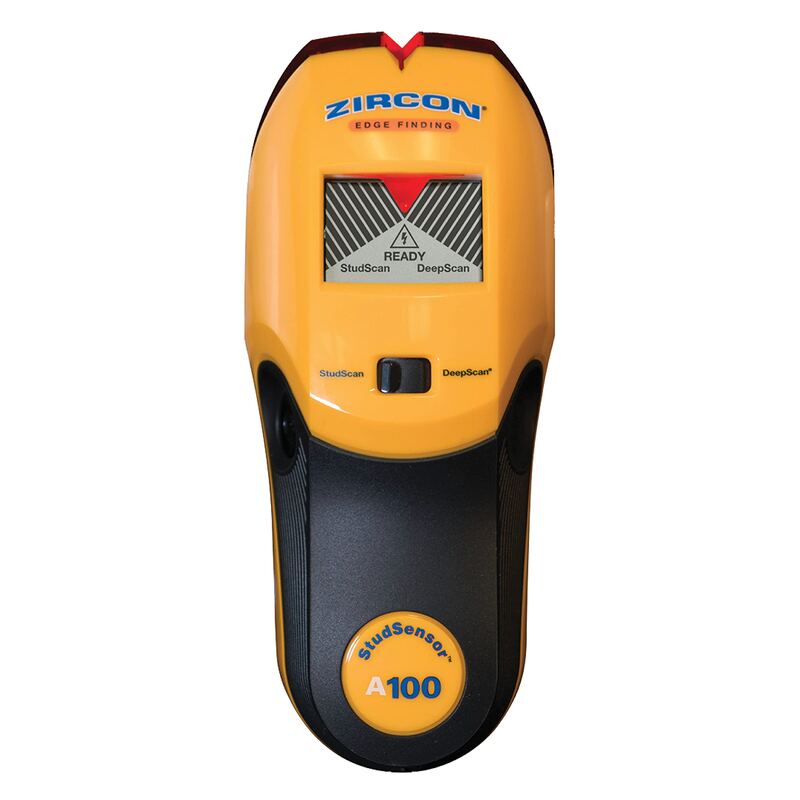
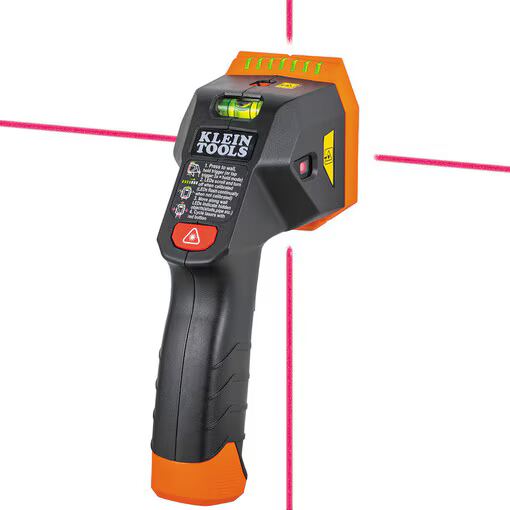
The Bosch GMS120-27 excels in multi-material detection, including copper pipes and live wiring, which the Franklin Sensors ProSensor M210 and Klein Tools ESF150LL don't emphasize. While the Zircon StudSensor A100 and C.H. Hanson 03040 offer edge detection and magnetic alternatives respectively, the Bosch scanner provides the most versatile detection capabilities for complex wall environments. However, its display visibility issues and difficulty detecting live wires in conduit make it less ideal than the ProSensor M210 for deep or precise detection tasks.
Rating sources
“Bosch is known for making professional tools and that is one reason I gravitated towards the GMS120, plus it finds more than just wood studs, its a Multi-Detection device.”
“The GMS120 did an excellent job locating the copper pipe and found center every time. The wall scanner also found the live wire very quickly.”
Our 4.0 score is the average of these published ratings. Ratings marked * were derived from the reviewer’s written analysis or video transcript — the publisher didn’t print an explicit numeric score, so we inferred one from their own words. Click through to verify. More about methodology.