Solo filmmakers get a lot for the money with the FeiyuTech Scorp 2, particularly on stabilization and AI tracking. Digital Camera World singled out the built-in AI sensor as a feature that outperforms similarly specced models like the DJI RS4, making self-tracking through gesture control effortless. Capture Guide reviewer Max Hayman pointed to the dual-grip design and 13-hour battery life. Users noted limited Bluetooth compatibility with some camera brands, Fujifilm among them, and the gimbal doesn't fold down compactly for travel. Creators shooting mirrorless cameras and DSLRs are the fit; anyone who needs maximum payload capacity or an ultra-portable design is not.
Full review
Real-World Payload and Motor Performance
The FeiyuTech Scorp 2 is officially rated for a maximum payload of 2.5 kg (5.51 lbs), positioning it between the DJI RS3 Mini and the heavier RS4. However, real-world testing reveals a practical ceiling lower than the spec sheet suggests. Tim Nicholls at Gimbal Review found that while the gimbal could technically hold a 2.35 kg Blackmagic Pocket 6K Pro setup, the motors warmed noticeably after just ten minutes of use. He advises reserving the full 2.5 kg capacity for short, locked-off shots rather than extended tracking moves. For sustained shooting, keeping the payload under 2.2 kg ensures cooler motor operation and better battery efficiency. Digital Camera World successfully tested a 1.5 kg Sony A7RV with a lens, noting smooth panning and tilting without strain, suggesting that mid-range mirrorless setups are the sweet spot for this device.
Stabilization performance is generally praised, particularly for solo creators. Capture Guide’s Max Hayman noted that the stabilization is effective for most solo filmmaking needs, though he cautioned that users pushing the limits with heavy lenses, shotgun mics, and external monitors might find the RS4 Pro more reliable. The gimbal handles standard mirrorless bodies from Sony, Canon, and Nikon well, but the lack of Teflon coating on the axis arms, a feature found on the pricier DJI RS 4 Pro, means the glide isn't quite as frictionless. Despite this, the motors are powerful enough to handle full-frame cameras with moderate zoom lenses, making it a viable option for hybrid shooters who don't need to lift cinema-grade rigs.
Built-In AI Tracking Capabilities
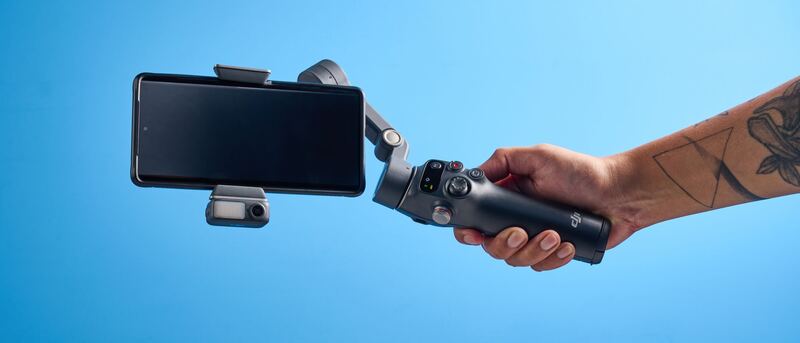
The standout feature of the Scorp 2 is its integrated AI tracking camera, which eliminates the need for a separate transmitter or smartphone app to follow a subject. Unlike DJI’s ActiveTrack, which requires a phone and often an additional image transmitter, the Scorp 2’s built-in 1080p camera locks onto faces or objects independently. Gimbal Review’s Tim Nicholls tested this during a walk-and-talk vlog, finding that the tracker re-acquired his face within half a second when he spun around, performing nearly as well as the more expensive DJI Osmo Mobile 7 Pro. This autonomous tracking is a significant advantage for solo creators who want to keep their hands free for other tasks. The system uses simple hand gestures to start and stop tracking, such as an 'OK' sign to initiate lock and a spread palm to stop recording.
Capture Guide highlighted the user-friendliness of this system, noting that it is arguably the most effective implementation for solo filmmakers currently on the market. The ability to reframe yourself using a double 'L' gesture allows users to move off-center in the frame without losing tracking, a feature that adds creative flexibility. However, Digital Camera World pointed out that while the AI tracking is a major selling point, the Bluetooth connectivity for camera control was inconsistent in their testing. They could not connect their camera via Bluetooth, though smartphone connectivity worked fine. This suggests that while the AI tracking is robust, the broader ecosystem integration may have hiccups depending on the camera brand.
Build Quality and Ergonomic Design
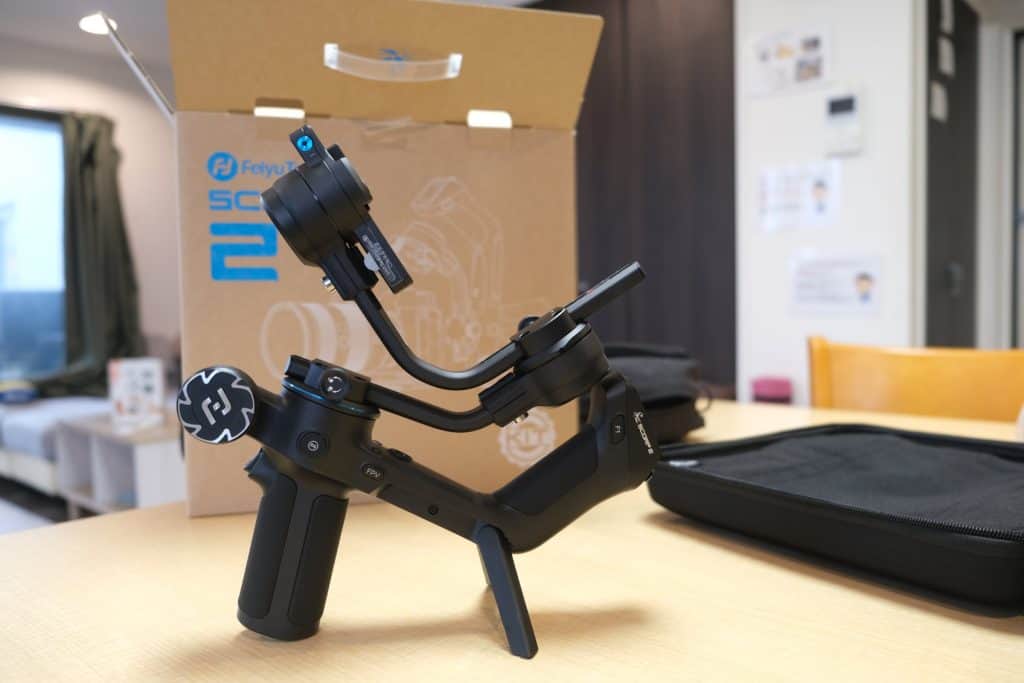
The Scorp 2 features a unique dual-grip design that sets it apart from traditional single-handle gimbals. The Gadgeteer’s Frank Myers described the handle as resembling a helicopter flight stick, with the right hand controlling the joystick and buttons while the left hand grips the bottom handle for stability. This two-handed approach reduces strain, especially when carrying heavier payloads up to the 2.5 kg limit. The construction uses synthetic macromolecular resin and aluminum alloy, resulting in a unit that weighs 1.07 kg (2.36 lbs). The briefcase-style handle folds out neatly, and the silicone texture remains grippy even with gloves on, a detail appreciated by Gimbal Review. The foldable arms also allow the gimbal to stand sturdily on a table when not in use.
Despite the thoughtful ergonomics, the build has some compromises. The battery is non-removable, which is a significant drawback for multi-day shoots. Gimbal Review noted that you will need a power bank to keep the gimbal running during long events, as you cannot swap batteries on the go. Additionally, the quick-release system, while improved from the original Scorp, still requires some adjustment to switch between horizontal and vertical orientations. Digital Camera World mentioned that the evolved L-shaped quick-release allows for vertical shooting, which is useful for social media content, but the process is not as seamless as some competitors. The lack of auto-axis locks, a feature present in the DJI RS 4, means users must manually secure the arms for transport, adding a step to the packing process.
Setup, Balancing, and Connectivity
Setup and balancing are generally straightforward, aided by the 1.3-inch OLED touchscreen. Gimbal Review praised the tool-free locks and the on-screen balance guide, which flashes green when each axis is perfectly centered. This visual feedback significantly speeds up the balancing process, with Tim Nicholls reporting that he could balance a Sony A7 RV with an f/2.8 zoom in under four minutes. The touchscreen also allows for easy navigation of gimbal modes and PID adjustments, making it accessible for beginners. However, The Gadgeteer’s Frank Myers had a frustrating initial experience, forgetting to connect the control cable and having to physically press the camera's record button. Once he used the correct cable for his Sony camera, the start/stop functionality worked perfectly, highlighting the importance of using the provided cables for full control.
Connectivity options include Bluetooth and USB-C, but compatibility varies by camera brand. Capture Guide noted that Bluetooth works well with Sony, Canon, and Nikon Z series cameras, but cable connections are required for advanced features like aperture and shutter speed control. Fujifilm users, for instance, may only get start/stop recording control via cable, with limited Bluetooth functionality. Digital Camera World experienced issues with Bluetooth camera connection entirely, though smartphone connectivity was stable. This inconsistency suggests that users should verify their specific camera model's compatibility before relying on wireless control. The included kit comes with multiple USB-C control cables for different brands, ensuring that most users can find a working connection method.
Battery Life and Charging Speed
FeiyuTech claims a battery life of up to 13 hours, but real-world usage yields lower results. Gimbal Review’s Tim Nicholls tested the gimbal over a mixed-use day, with 50% of the time spent with AI tracking enabled and ambient temperatures at 20°C. He recorded a runtime of 9 hours and 45 minutes, which is still respectable but falls short of the advertised maximum. The 2500 mAh battery is non-removable, which is a common complaint among reviewers who prefer swappable cells for long shoots. However, the charging speed is a bright spot. Using an 18W PD fast charger, the gimbal can go from 10% to 80% in approximately 70 minutes. This fast-charging capability makes it practical to top up the battery during lunch breaks or short downtime periods.
The battery performance is also affected by payload weight and motor usage. Heavier loads and frequent AI tracking drain the battery faster, so users planning extensive shooting sessions should manage their power accordingly. The Gadgeteer's Frank Myers repeated FeiyuTech's own figure of approximately 12 hours on a single charge rather than measuring it, and Capture Guide's Max Hayman said outright that he had not tested the 13-hour claim thoroughly, though a few hours of use never moved the battery indicator. For most users, the battery life is sufficient for a full day of moderate shooting, but the inability to swap batteries means that carrying a power bank is essential for all-day events or multi-day trips.
Motors heat up near the 2.2kg payload limit
Despite its strong points, the Scorp 2 has notable limitations. The most significant issue is the non-removable battery, which limits flexibility during long shoots. Gimbal Review emphasized that this is a major drawback for professionals who need to swap batteries quickly. Additionally, the motors tend to heat up when operating near the maximum payload capacity, which can affect performance and longevity. Tim Nicholls advised keeping payloads under 2.2 kg to avoid thermal issues. The lack of auto-axis locks is another inconvenience, as users must manually secure the arms for transport, unlike the DJI RS 4 which features automatic locking mechanisms. This adds time to the setup and teardown process.
Connectivity inconsistencies also pose a challenge. Digital Camera World’s inability to connect via Bluetooth to their camera highlights that the wireless control is not universally reliable. While cable connections work well, they add clutter and require users to manage extra cords. The AI tracking, while impressive, is not perfect in all lighting conditions or with fast-moving subjects, though it performs well for typical vlogging scenarios. Finally, the gimbal does not pack down as small as some competitors, which may be a concern for travelers looking for maximum portability. The briefcase handle design, while ergonomic, adds bulk when folded.
80 percent of RS 4 power at 40 percent cost
The Scorp 2 positions itself as a budget-friendly alternative to DJI’s RS series, offering similar features at a lower price point. Gimbal Review compared it directly to the DJI RS 4, noting that the Scorp 2 delivers about 80% of the RS 4’s power at 40% of the price. The key differentiator is the built-in AI tracking camera, which the RS 4 lacks without additional accessories. For users who prioritize AI tracking and don't need the extra payload capacity of the RS 4, the Scorp 2 is a compelling choice. However, if you frequently shoot with heavy cinema lenses or need auto-axis locks, the RS 4 remains the safer, albeit more expensive, option. The DJI Osmo Mobile 7 Pro is another competitor, but it is designed for smartphones and cannot support mirrorless cameras.
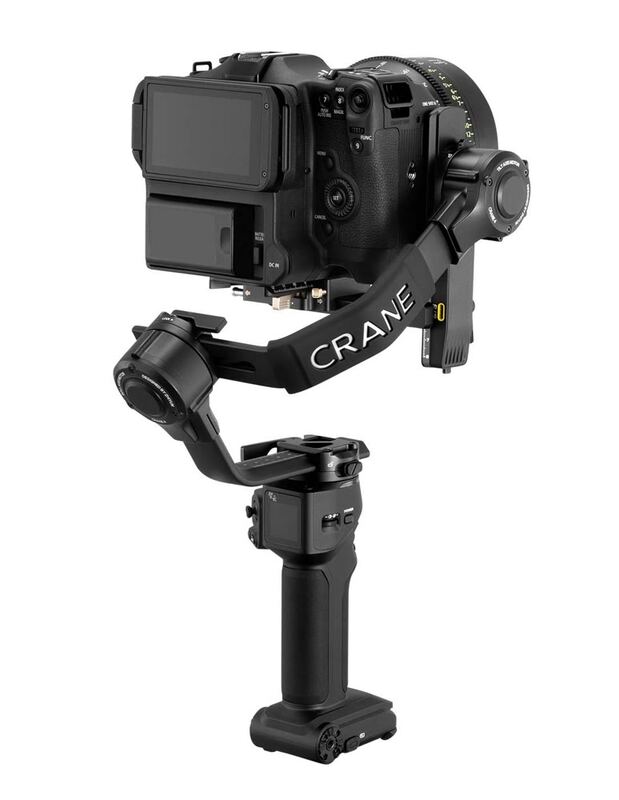
Compared to the original Scorp, the Scorp 2 offers significant improvements, particularly in AI tracking and the quick-release system. The integrated AI camera eliminates the need for a separate module, streamlining the workflow. Capture Guide noted that the Scorp 2 refines the features that made its predecessors successful, making it a more polished product. However, it still lags behind Zhiyun’s Crane series in terms of build quality and motor precision. For users on a tight budget, the Scorp 2 provides excellent value, but those willing to spend more may find better long-term reliability and features in DJI or Zhiyun products.
Built-in AI camera skips the phone app
The FeiyuTech Scorp 2 is ideal for solo creators, vloggers, and hybrid shooters who need AI tracking without the hassle of a smartphone app. Its built-in tracking camera is particularly useful for individuals filming themselves, as it allows for hands-free operation and easy reframing. The dual-grip design reduces strain, making it suitable for longer shooting sessions with moderate payloads. If you are a budget-conscious mirrorless shooter looking for advanced stabilization and AI features, the Scorp 2 offers a strong value proposition. It is also a good choice for beginners who appreciate the visual balance guide and intuitive touchscreen interface.
However, it is not the best fit for professionals who frequently shoot with heavy cinema lenses or require swappable batteries for all-day events. If your payload exceeds 2.2 kg, you may experience motor heating and reduced battery life. Additionally, users who prioritize compact portability may find the Scorp 2 too bulky compared to smaller gimbals. Those who rely heavily on wireless camera control should verify their camera's compatibility, as Bluetooth connectivity can be inconsistent. For smartphone-only creators, the DJI Osmo Mobile 7 Pro is a more appropriate choice, while heavy-lift users should consider the DJI RS 4 Pro.
Strengths
- +Built-in AI tracking camera provides seamless self-tracking without external attachments
- +Dual-grip design offers stable handling and comfortable operation for solo filmmakers
- +13-hour battery life supports extended shooting sessions
- +Supports up to 2.5kg payload including full-frame cameras and larger lenses
Watch-outs
- −Doesn't pack down very small for travel
- −Bluetooth connectivity with some cameras is limited (e.g., Fujifilm XT-3 only supports start/stop recording)
- −May struggle with very heavy lens setups that push payload limits
How it compares
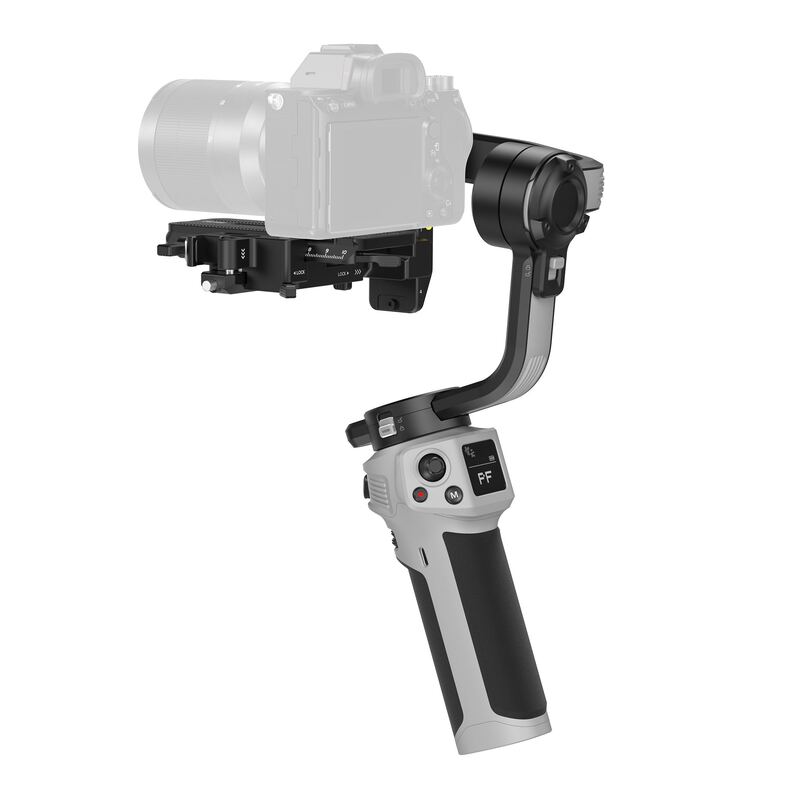
The FeiyuTech SCORP 2 stands out with its built-in AI tracking and dual-grip design, features not found in the Zhiyun Weebill 3E or DJI RS 4 Mini. However, it's less portable than the Weebill 3E and lacks the 16-hour battery life and integrated fill light found in the Zhiyun Crane 4.
Rating sources
Our 4.3 score is the average of the 3 scored reviews above; 2 more reviewed it without printing a score and are not in the average. More about methodology.