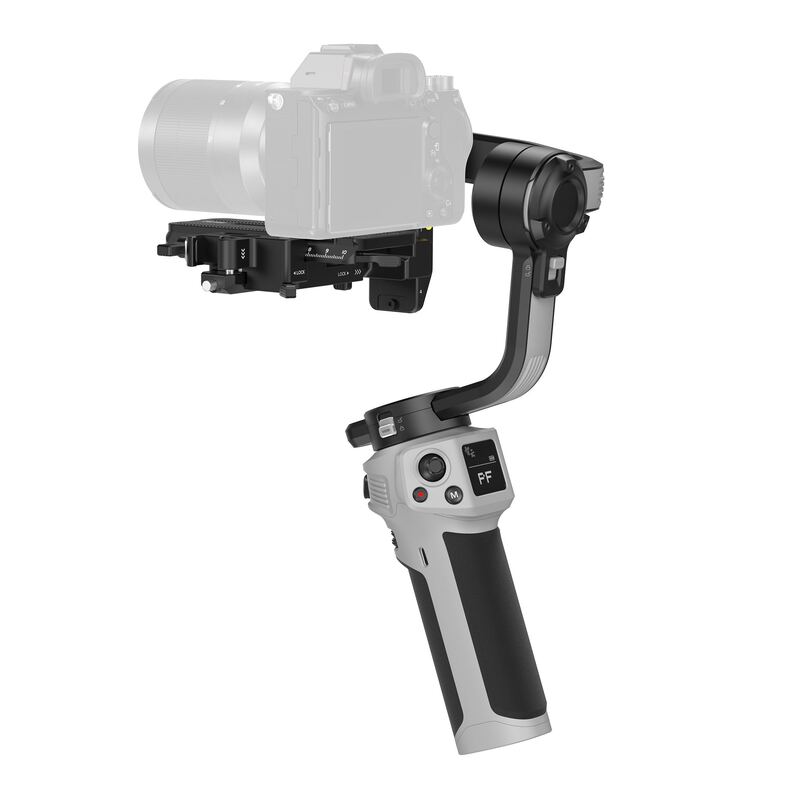
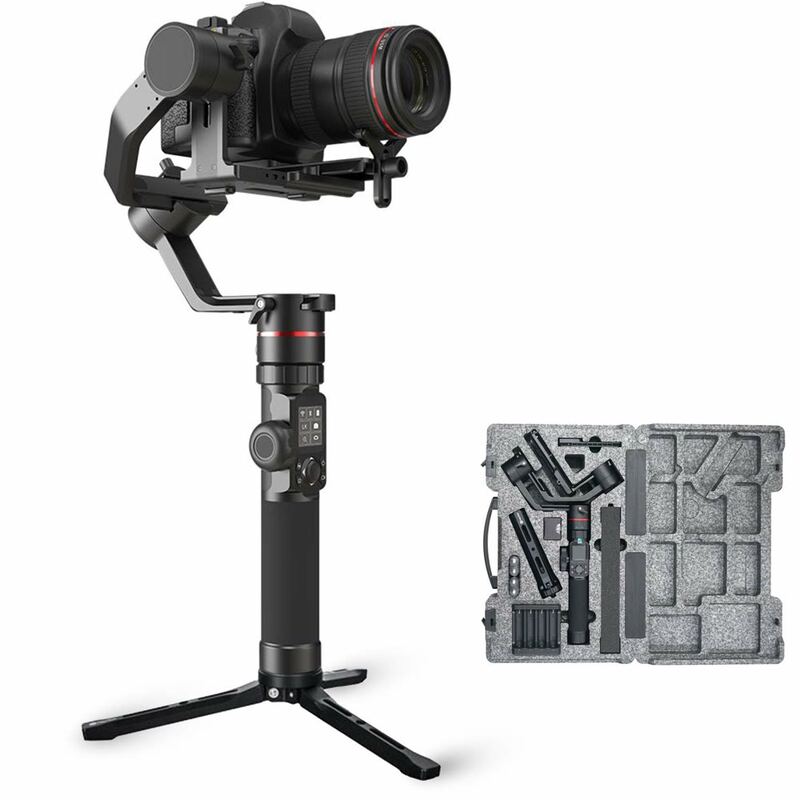
Payload against portability is the Zhiyun Crane 4's balancing act: 4kg of capacity at just 1.7kg of weight. Digital Camera World praised the motor warning lights for speeding up balance adjustments, and Tim Nicholls of Gimbal Buyers Guide highlighted the integrated LED fill light and improved ergonomics. Its 12-hour battery life and quick Auto-Tune calibration are strengths, though reviewers caution that the non-swappable battery and LED power drain can bite on long shoots. Event filmmakers and documentary shooters working beyond 3kg are the fit; anyone prioritizing vertical shooting may prefer DJI's RS 4.
Full review
Real-World Performance and Stabilization
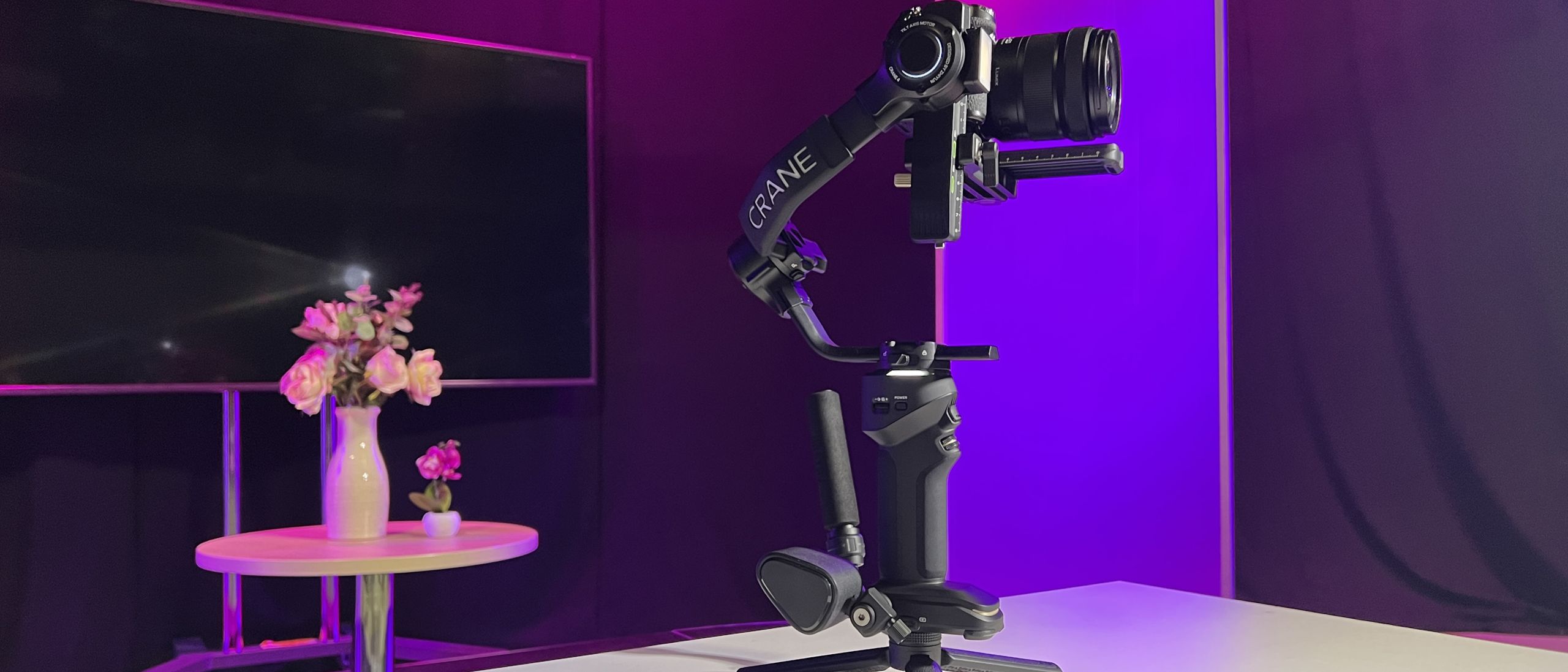
The Zhiyun Crane 4 delivers robust stabilization for heavy mirrorless and DSLR rigs, handling payloads up to 4.5 kg with notable ease. Digital Camera World tested the gimbal with a Panasonic Lumix S5 and a 20-60 mm lens, noting that the motors provided smooth roll, tilt, and pan action without the juddering often seen when cameras are slightly off-balance. The reviewer highlighted that the gimbal’s motor warning lights—white for balanced, red for strained—significantly reduced the trial-and-error process of balancing, allowing for quicker setup times. This diagnostic feature was particularly praised for eliminating the guesswork involved in traditional balancing methods, making it easier for users to achieve professional-grade stability even with heavier glass.
Gimbal Review conducted extensive real-world testing with a Blackmagic 6K Pro, Sigma 18-35 mm lens, and V-mount battery, totaling approximately 3.8 kg. The reviewer found that the Crane 4 maintained motor headroom and exhibited no high-torque vibration under this load, which is close to its practical ceiling. However, when the rig exceeded 4.1 kg with a full cinema cage and matte box, the gimbal struggled, and battery drain increased noticeably. This suggests that while the 4.5 kg spec is accurate, users should aim for a practical limit of around 3.8 kg to ensure optimal performance and battery life. The ZY Auto-Tune algorithm also performed well, completing calibration in just eight seconds after a lens swap, which is faster than competitors like the DJI RS 4, which took closer to fifteen seconds.
Build Quality and Ergonomic Design
The Crane 4 weighs approximately 1.67 kg without the mini-tripod, making it lighter than its predecessor while maintaining a sturdy build. Digital Camera World noted that the carbon-fiber arms and ergonomic design contribute to a comfortable shooting experience, particularly with the addition of an adjustable wrist rest and sling grip. These features allow for single-handed operation and reduce fatigue during extended shoots. The sling grip, borrowed from the Weebill series, enables low-angle dolly shots and smooth upward crane movements, enhancing versatility. However, Camera Jabber pointed out that some design elements, such as the wrist rest and handle, feel more like bolt-ons rather than integral parts of the gimbal, lacking the refinement seen in other components. Despite this, the overall build quality is robust, with a textured handle that remains secure even when wearing gloves.
MakeUseOf highlighted the gimbal’s compact form factor when folded, making it travel-friendly. The included carrying case safely transports the gimbal and accessories, with elasticated pockets for screws and plates. The 1.22-inch color touchscreen on the back provides easy access to settings and shooting features, although some users find it small compared to the Weebill series. The buttons and controls, including the trigger, dial wheel, and mode switch, are angled for natural access, improving usability. The gimbal’s design strikes a balance between professional functionality and user-friendly ergonomics, though the non-integrated feel of some accessories may be a minor drawback for purists.
Battery Life and Power Management
The Crane 4 features a non-swappable 10,000 mAh battery, rated for up to 12 hours of operation. Gimbal Review tested the battery life under realistic conditions, averaging 9 hours and 40 minutes with the LED fill light at 50% brightness and frequent Auto-Tune cycles. This is a significant improvement over previous models, providing ample power for most full-day shoots. The battery supports USB-C PD fast charging, reaching 75% in about an hour, which allows for quick top-ups during breaks. However, the non-removable battery is a notable limitation, as users cannot hot-swap batteries for continuous shooting. This design choice may be inconvenient for professionals who need uninterrupted power during long events or productions.
Digital Camera World and MakeUseOf both noted that the battery life is sufficient for most use cases, but the drain increases significantly when using the built-in LED fill light at full power. The LED, which provides up to 3200 Lux, is a useful feature for low-light situations but should be used judiciously to preserve battery life. The gimbal also supports charging connected cameras, adding to its versatility. Despite the lack of hot-swappable batteries, the fast charging capability and long runtime make the Crane 4 a reliable choice for extended shooting sessions, provided users plan their power management accordingly.
Built-In LED Fill Light Utility
One of the standout features of the Crane 4 is its integrated 10W COB LED fill light, which offers adjustable color temperature between 2700K and 6500K. Gimbal Review found this feature genuinely useful, particularly for interior property shoots where overhead lighting was inconsistent. The LED provided sufficient fill to balance exposure on faces without the need for an external light source, saving space and weight in the kit. The light is controlled via a dial on the pistol grip, allowing for quick adjustments to brightness and color temperature. While it won’t replace a dedicated key light, it serves as a convenient and effective tool for on-the-go adjustments, enhancing the gimbal’s versatility for run-and-gun videographers.
Digital Camera World also praised the LED fill light, noting its utility in low-light environments. The ability to match the color temperature to ambient light conditions helps maintain consistent exposure and color balance, which is crucial for professional-looking footage. However, the reviewer cautioned that using the LED at full power can significantly drain the battery, so it’s best used at moderate levels. The integration of the LED into the roll arm is well-executed, providing even illumination without casting harsh shadows. This feature sets the Crane 4 apart from competitors like the DJI RS 4, which lacks a built-in light, making it a compelling option for filmmakers who value convenience and flexibility.
Setup Speed and Balancing Mechanism
Balancing the Crane 4 is notably faster than previous models, thanks to numbered calibration marks and thumb-toggle locks on each axis. Gimbal Review reported swapping from a 24-70 mm lens to a 50 mm prime in under three minutes, including micro-adjustments, which is significantly quicker than their experience with the DJI RS 3 Pro. The balance-indicator LEDs on each motor provide immediate feedback, turning white when balanced and red when strained. This visual cue eliminates the guesswork involved in traditional balancing methods, reducing setup time and minimizing the risk of motor strain. Digital Camera World echoed this sentiment, noting that the diagnostic lights make it easier to identify and correct balance issues, streamlining the preparation process.
Camera Jabber also highlighted the ease of balancing, particularly with larger cameras like the Canon EOS R5 C. The reviewer found that the gimbal’s powerful motors quickly aligned the camera once balanced, initiating the calibration process efficiently. The ZY Play 2.0 app further simplifies setup, allowing users to connect and control the gimbal directly from their mobile device. The app’s interface is intuitive, providing access to various shooting modes and settings. While the initial setup still requires some practice, the combination of physical indicators and app support makes the Crane 4 one of the most user-friendly gimbals for quick lens changes and on-the-fly adjustments.
Software and Shooting Modes
The Crane 4 is compatible with the ZY Play 2.0 app, which offers a range of shooting modes including Pan Follow, Follow, POV, and GO. Gimbal Review noted that the app pairs quickly and provides reliable control over the gimbal’s functions. The Sling Mode 2.0 is particularly impressive, allowing the gimbal to flip to an under-slung position with a single trigger pull while maintaining horizon lock. This feature enables smooth rising reveals and dynamic camera movements, enhancing creative possibilities. The app also supports panoramic shots and smooth pans, making it a versatile tool for both video and still photography. However, some advanced features require additional transmission systems, which may be a limitation for users seeking a complete out-of-the-box experience.
Digital Camera World and MakeUseOf both praised the app’s functionality, noting its ease of use and comprehensive feature set. The ability to customize buttons and dials through the app adds to the gimbal’s versatility, allowing users to tailor the controls to their specific needs. The Bluetooth 5.0 connectivity ensures stable communication between the gimbal and mobile device, minimizing latency and improving responsiveness. While the app is generally well-received, some users have reported occasional connectivity issues, which can be frustrating during critical shoots. Overall, the software ecosystem supports the Crane 4’s hardware capabilities, providing a seamless and intuitive user experience for most filmmakers.
Tilt axis can pinch your fingers
Despite its many strengths, the Crane 4 has some notable drawbacks. The most significant issue is the non-removable battery, which prevents hot-swapping and can be inconvenient for long shoots. Gimbal Review emphasized this limitation, noting that users must plan their power management carefully to avoid running out of juice during critical moments. Additionally, the LED fill light, while useful, drains the battery quickly at full power, requiring users to balance brightness with battery conservation. The lack of native vertical shooting support is another limitation, as users need an L-bracket to achieve portrait orientation, unlike the DJI RS 4, which has a built-in rotating plate. This may be a dealbreaker for creators focused on vertical content for social media.
Digital Camera World mentioned that the tilt axis can occasionally nip fingers, which is a minor but annoying safety concern. Camera Jabber noted that some design elements, such as the wrist rest and handle, feel less refined than the rest of the gimbal, detracting from the overall premium feel. The 1.22-inch touchscreen, while functional, is small and may be less intuitive to use compared to larger displays on other gimbals. These issues, while not dealbreakers, highlight areas where Zhiyun could improve in future iterations. Users should weigh these limitations against the gimbal’s strengths to determine if it meets their specific needs.
Best for rigs pushing past 3 kilograms
The Zhiyun Crane 4 is ideal for professional filmmakers and serious enthusiasts who need a robust, versatile gimbal for heavy mirrorless or DSLR cameras. Gimbal Review recommended it for event filmmakers juggling multiple lenses and run-and-gun documentary shooters pushing rigs beyond 3 kg. The gimbal’s ability to handle heavy payloads with ease, combined with its fast balancing mechanism and integrated LED fill light, makes it a strong choice for dynamic shooting environments. Users who value convenience and flexibility will appreciate the sling grip and wrist rest, which enhance comfort and control during extended shoots. The Crane 4 is particularly well-suited for those who need a reliable stabilizer for both landscape and portrait orientations, provided they are willing to use an L-bracket for vertical shooting.
However, pure vertical-first creators may prefer the DJI RS 4 for its native rotating plate, which simplifies portrait orientation without additional accessories. Users who prioritize hot-swappable batteries for uninterrupted shooting should also consider alternatives, as the Crane 4’s non-removable battery can be a limitation. The gimbal is best suited for professionals who can manage power planning and are willing to invest in additional accessories for advanced features. For those seeking a high-performance, feature-rich gimbal that balances power and usability, the Crane 4 is a compelling option, but it may not be the best fit for every user’s specific workflow and requirements.
Auto-calibrates in 8 seconds versus DJI's 15
Compared to the DJI RS 4, the Crane 4 offers a higher payload capacity (4.5 kg vs. 3 kg) and includes a built-in LED fill light, making it more versatile for heavy rigs and low-light conditions. Gimbal Review noted that the Crane 4’s ZY Auto-Tune algorithm is faster than DJI’s, completing calibration in eight seconds versus fifteen. However, the DJI RS 4 has a native rotating plate for vertical shooting, which is a significant advantage for social media content creators. The RS 4 is also lighter at 1.4 kg, making it more portable for travel. The Crane 4’s price point of $749 is competitive, especially when compared to the DJI RS 4 Pro at $869, which offers similar payload capacity but lacks the integrated LED. For users who prioritize payload and lighting flexibility, the Crane 4 is a strong contender, but those focused on vertical shooting and portability may prefer the RS 4.
Camera Jabber highlighted that the Crane 4 repositions itself as a top choice for high-end enthusiasts and professionals, challenging the dominance of DJI’s RS 3 Pro. The Crane 4’s improved ergonomics and faster balancing mechanism make it a more user-friendly option for quick lens changes and on-the-fly adjustments. While the RS 3 Pro is a proven workhorse, the Crane 4’s modern features and competitive pricing make it an attractive alternative. Users should consider their specific needs, such as payload capacity, vertical shooting requirements, and budget, when choosing between these options. The Crane 4’s unique combination of power, versatility, and convenience sets it apart in the mid-to-high-end gimbal market.
Strengths
- +Built-in 3200 Lux fill light with adjustable color temperature (2700K-5500K) for low-light shooting
- +Motor warning lights on each axis help quickly diagnose balance issues and reduce setup time
- +Adjustable sling grip and wrist rest enable comfortable single-handed carry and low-angle dolly shots
- +Supports up to 4kg payload with a 1.7kg body, offering good torque for full-frame rigs
Watch-outs
- −Non-removable battery with no hot-swap option limits extended use
- −LED fill light drains battery faster at full power, reducing runtime to ~9.5 hours
How it compares
The Zhiyun Crane 4 surpasses the Zhiyun Weebill 3E in payload capacity and includes a built-in fill light, but it's heavier and lacks the 16-hour battery runtime of the Weebill 3E. Compared to the FeiyuTech SCORP 2, it offers better portability and more stable handling, but lacks the dual-grip design and AI tracking features.
Rating sources
“The Zhiyun Crane 4 steps in. Weighing roughly 1.7 kg yet supporting up to 4 kg, this three-axis gimbal sits neatly between DJI's RS 4 and RS 4 Pro—at a more palatable price.”
Our 4.3 score is the average of these published ratings. More about methodology.