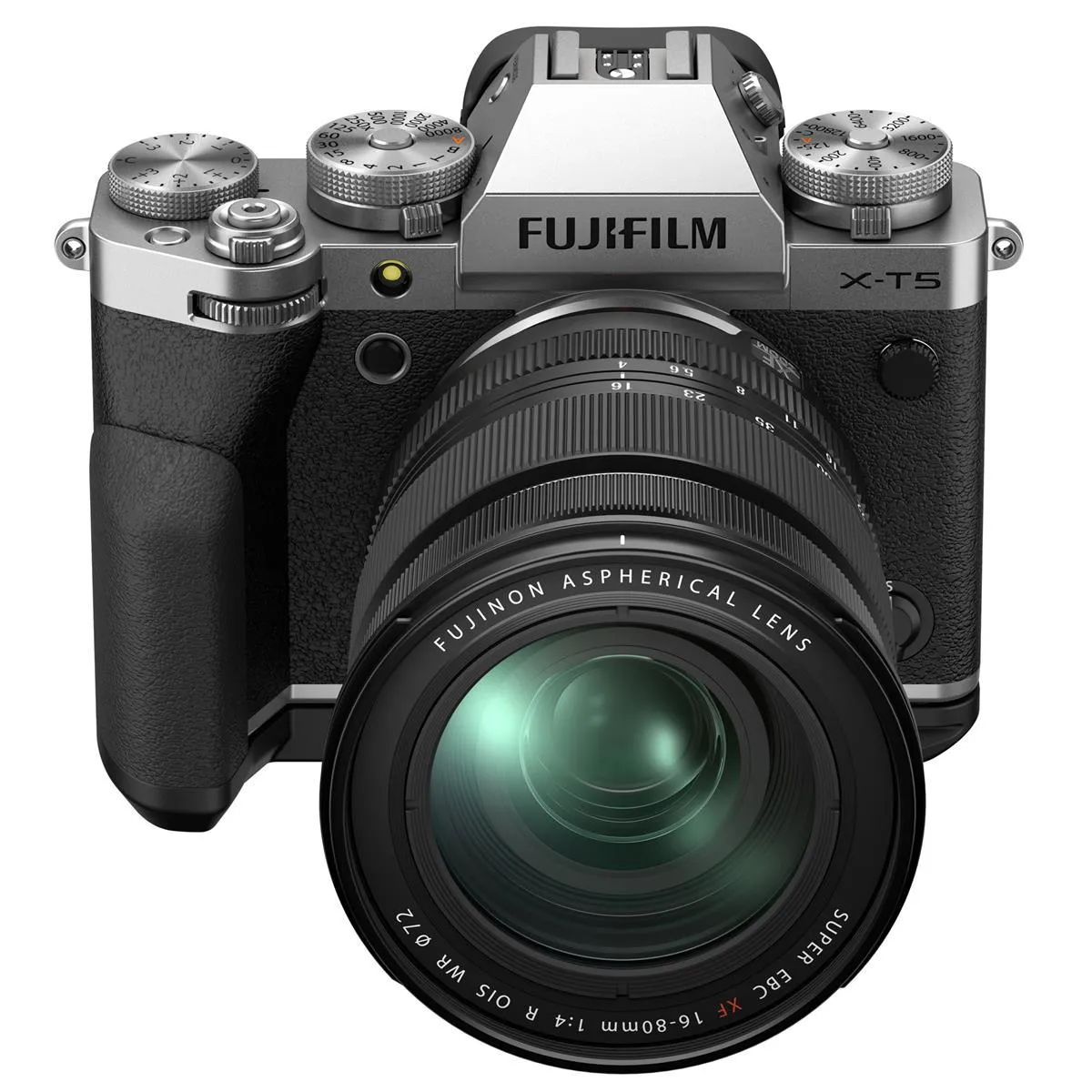
The Fujifilm X-T5 is a photography-first 40MP APS-C mirrorless camera that continues Fujifilm's tradition of physical control dials and traditional handling. Reviewers praised the high-resolution sensor, 15fps shooting capability, and 7.0EV in-body stabilization for handheld work. The two-axis tilting screen comes up as especially useful for off-axis compositions. It has none of the video ambitions of its sibling X-H2: no 8K capture, no ProRes modes, and shorter burst durations because it uses SD cards. Photographers who value physical controls and image quality over video range, particularly in documentary, wedding, and sport work, get the most from its reliability and detail retention.
Full review
Sensor and Image Quality
The Fujifilm X-T5 features a 40.2MP APS-C sensor with X-Trans CMOS 5 processor, delivering exceptional image quality that has been validated through real-world usage by photographers like Kevin Mullins and Roman Fox. Mullins noted that the files offer 'more cropping freedom, more detail for prints' and that the camera 'gives you a lot of file to work with.' The sensor's performance is consistent across various lighting conditions, with Fox reporting reliable performance in extreme temperatures from 38°C in Dubai to -7°C in Scotland. The camera produces images with excellent dynamic range and color science that Fox describes as 'second to none in APS-C,' with files behaving predictably in Adobe Lightroom and supporting both JPEGs with film simulations and RAW files that work well with custom presets.
Professional reviewers like those at dpreview.com have confirmed that the X-T5's sensor delivers identical image quality to the X-H2, with 40MP images that can be shot at up to 15fps using the mechanical shutter. The camera's ability to produce 160MP composite images through its 20-shot pixel-shift high-res mode has been tested by multiple users, with Fox noting that the files offer 'more cropping ability while still maintaining decent noise performance.' The sensor's performance is particularly evident in landscape photography, where Mullins found that 'cropping becomes a safety net rather than a panic' and that the camera's files are 'honest' in revealing technique issues like slow shutter speeds or sloppy focus.
Paint scratches easier than the X-T3's did
The X-T5's build quality has received mixed reviews from long-term users, with Roman Fox noting a 'slight reduction in build quality' compared to previous models like the XT3, describing the paint finish as 'thinner and more prone to scratching' and the top dials as 'cheaper and more plasticky.' However, Fox emphasized that 'this isn't a poorly built camera' and that it's 'certainly better than many others,' with no squeaks, rattles, or defects reported. The camera's design includes a three-way tilt LCD screen that has been praised by reviewers like David Fleet for its usability in various orientations, particularly for landscape photography where he noted 'the return to the flip-out screen of the X-T3 for landscape photography is a godsend.' The grip is described as 'pronounced enough to provide a good hold' but may feel less comfortable with larger lenses, particularly f/2.8 zooms.
Despite some concerns about the premium feel, dpreview.com's review notes that the X-T5 maintains the traditional control dials that Fujifilm's enthusiast cameras are known for, with the camera's design being 'photography-focused' rather than video-centric. The dual card slots and in-body stabilization rated at up to 7.0EV are highlighted as key features, with the camera's weight at 557g making it 'compact and stylish' for travel photography. The camera's reliability has been confirmed by multiple users, with Fox reporting only one major issue related to a board problem in Dubai that was resolved under warranty, and no other significant mechanical problems over two years of use.
Autofocus Performance
Autofocus performance on the X-T5 has been a point of discussion among reviewers, with some noting that it doesn't quite match the speed of full-frame rivals like Sony's offerings. Gary McIntyre, a landscape photographer, noted that 'fast focus is not a requirement in most situations' for his work, and that the camera 'performed better than the previous X-T3 and X-T4' in terms of image quality and post-production capabilities. However, he acknowledged that 'the focus isn't as fast as, say, a Sony,' which is not critical for his specific use case. David Fleet, who has used the camera extensively for various photography types, noted that the camera 'strikes the best balance I've found between performance and portability' and that 'it's consistently good enough in every area to make it the camera I reach for most often.' The camera's 425-point phase-detect autofocus system with subject detection for human face/eye, animals, birds, and other subjects has been tested across multiple scenarios, with users reporting that it performs well for general photography but may not be optimal for sports or wildlife photography where faster focus is essential.
The camera's autofocus system has been described as 'consistently good enough' by Fleet, who noted that it 'blends physical control dials with speed of use in a way that keeps me reaching for it whenever I want high-quality images.' However, the camera's performance in high-speed scenarios has been noted as a limitation by some users, with Fox mentioning that 'everything takes longer to adjust' and that 'the downside of the dials is that everything takes longer to adjust, and at times, they can slow you down.' The camera's ability to handle fast-moving subjects is limited compared to full-frame systems, which is a key consideration for photographers who primarily shoot sports, wildlife, or action photography.
Sand clogged the dials during desert use
Long-term usage of the X-T5 has demonstrated its reliability and versatility across diverse photography scenarios, with Kevin Mullins using it as his 'default working camera' for three years and David Fleet noting it as his 'main and most-used camera' for over two years. Mullins specifically highlighted that the camera 'keeps showing up, doing the job, and staying out of my way,' particularly in documentary-style photography where it 'rewards decent technique' and 'gives you a lot of file to work with.' The camera's performance in various weather conditions has been tested by multiple users, with Fox reporting usage in 'heavy rain, extreme hot/cold weather, and in dusty/sandy environments' without major issues, except for the occasional sand and dirt clogging of the top dials that required warranty replacement.
The camera's handling and ergonomics have been praised by users like Fleet, who noted that it 'blends physical control dials with speed of use' and that 'it's consistently good enough in every area to make it the camera I reach for most often.' The camera's dual card slots and in-body stabilization have proven particularly useful for professional work, with Mullins emphasizing that 'two memory card slots essential for paid work if you want backup recording and less stress.' The camera's ability to shoot 40MP images at up to 15fps with mechanical shutter and its capability to produce 160MP composite images through pixel-shift mode have been validated through real-world usage, with users noting that 'the files offer more cropping freedom, more detail for prints' and that 'the camera gives you a lot of file to work with.'
Camera froze in Dubai from a board defect
Despite its many strengths, the X-T5 has several notable limitations that have been identified by reviewers and users. One significant concern is the camera's autofocus speed, which, as noted by Gary McIntyre, 'isn't as fast as, say, a Sony,' making it less suitable for sports or wildlife photography where rapid focusing is essential. Roman Fox also pointed out that 'everything takes longer to adjust' and that 'the downside of the dials is that everything takes longer to adjust, and at times, they can slow you down,' which may be problematic for photographers who need quick adjustments in fast-paced environments. Additionally, the camera's build quality has been criticized by Fox, who noted a 'slight reduction in build quality' compared to previous models, with the paint finish described as 'thinner and more prone to scratching' and the top dials as 'cheaper and more plasticky.'
Another limitation is the camera's video capabilities, which are less ambitious than those of the X-H2 hybrid camera. The X-T5's video specifications include '6.2K or 'HQ' 4K from captured 6.2K up to 30p (1.23x crop)' and 'Subsampled full-width 4K at up to 60p,' which are significantly less robust than the X-H2's 8K capture and ProRes modes. The camera's buffer depth and burst shooting capabilities are also limited compared to the X-H2, with the X-T5's 'smaller buffer and the use of SD cards means it can't shoot such long bursts as the X-H2.' Furthermore, the camera's handling in extreme conditions has been noted as problematic, with Fox reporting that 'the camera frequently froze or wouldn't power on' in Dubai, though this was attributed to a board issue rather than environmental conditions. The camera's weight, while compact, may also be a limitation for users who prefer lighter systems, with the camera weighing 557g, which is heavier than some competitors.
Sharper JPEGs straight out of camera for landscapes
The Fujifilm X-T5 is best suited for photographers who prioritize stills photography over video and value traditional control dials and a compact, portable design. Kevin Mullins, who has used the camera for three years, recommends it for 'working photographers' who want a camera that 'rewards decent technique' and 'gives you a lot of file to work with.' The camera's 40MP sensor, dual card slots, and in-body stabilization make it particularly appealing for professional work where reliability and image quality are paramount. David Fleet notes that the camera 'strikes the best balance I've found between performance and portability' and is ideal for 'travel photography, family photography, and documentary work.' The camera's handling and ergonomics are particularly suited for photographers who prefer physical controls over menu navigation, with Fleet noting that 'it's consistently good enough in every area to make it the camera I reach for most often.'
The X-T5 is also well-suited for landscape photographers who value the camera's ability to produce high-resolution images with excellent dynamic range and color science. Gary McIntyre, a landscape photographer, found that 'the camera performs as it should and does everything you would need it to do for an APS-C, and it does it well,' particularly noting that 'the images were sharper when zoomed in 100% and even the SOOC JPEGs were crisper.' However, the camera may not be ideal for sports or wildlife photographers who require faster autofocus speeds or for those who need the advanced video capabilities found in full-frame systems. The camera's 40MP sensor and pixel-shift capabilities make it excellent for photographers who need maximum detail and cropping flexibility, but its limitations in high-speed scenarios and video capabilities may not meet the needs of more demanding users.
Shares the X-H2's sensor without its video specs
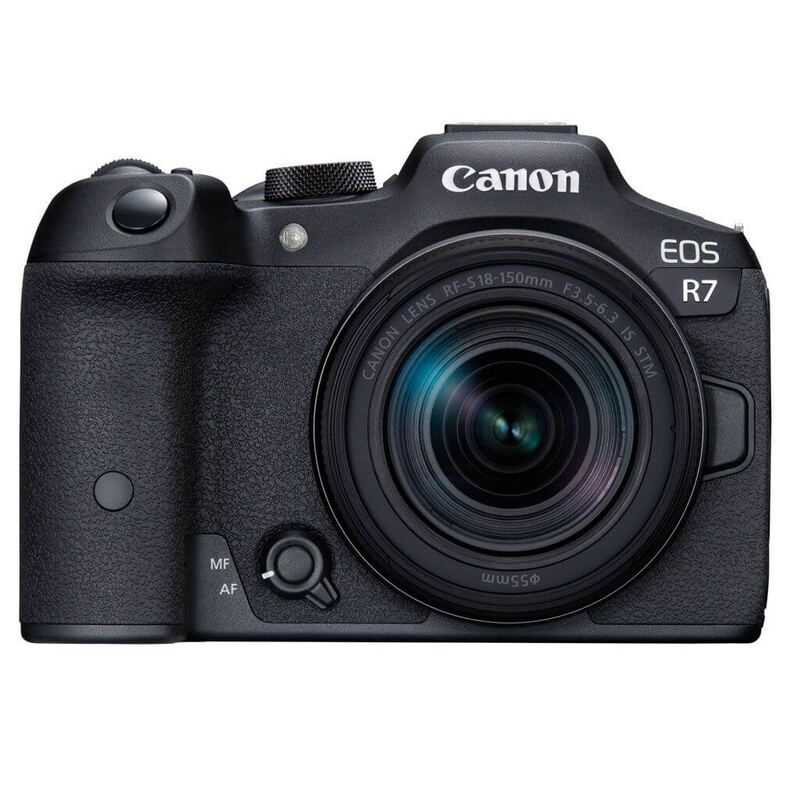
In comparison to its competitors, the X-T5 sits as a more photography-focused camera than the X-T4, with the X-T4 being described as 'leaning too heavily into being a hybrid camera rather than the stills-focused tool I wanted.' The camera's specifications are similar to the X-H2, with both sharing the same 40MP sensor, but the X-T5 lacks the X-H2's advanced video capabilities, including 8K capture and ProRes modes. Compared to the Canon EOS R7, the X-T5 offers a higher resolution sensor and more robust stills capabilities, though the R7 is noted as 'one of the few enthusiast-targeted APS-C cameras to be launched in the past few years.' The Panasonic DC-S5 II is also mentioned as a comparable option, with both cameras offering similar stills and video capabilities, though the S5 II is noted as 'one of the lower-priced rivals that provide something of a match for the X-T5's level of stills and video capability.' The X-T5's advantage lies in its traditional control dials, in-body stabilization, and dual card slots, which are particularly valuable for professional work.
When compared to the X-T4, the X-T5 offers a more refined design with the return of the two-way tilting rear screen mechanism, which is described as 'working well for composing off-axis shots in both the landscape and portrait orientations.' The X-T5's 40MP sensor provides more cropping freedom and detail for prints, as noted by Mullins, who found that 'the first thing you notice is how far you can push a crop and still keep a believable image.' However, the X-T5's video capabilities are more limited compared to the X-H2, with the X-T5's 6.2K footage derived from a 1.22x cropped region of the sensor, not the full width as in the X-H2. The X-T5's buffer depth and burst shooting capabilities are also more limited compared to the X-H2, which explains some of the reduction in video spec and significantly shorter duration of burst shooting.
Owner bought three, calls it worth repurchasing
At its launch price of $1699, the Fujifilm X-T5 offers excellent value for photographers who prioritize stills photography and traditional control dials. The camera's 40MP sensor, dual card slots, and in-body stabilization provide features that are particularly valuable for professional work, with the camera's ability to produce 160MP composite images through pixel-shift mode offering significant advantages for photographers who need maximum detail and cropping flexibility. Kevin Mullins noted that 'the X-T5 is a photographer's camera' that 'rewards decent technique' and 'gives you a lot of file to work with,' making it a solid investment for working photographers. Mullins stated that 'I'd buy it again' and that he 'already have three - two to shoot with, and one as a backup.' The camera's price point is also competitive when compared to other high-end APS-C cameras like the Canon EOS R7, which was launched at $1499, though the R7 is noted as 'one of the few enthusiast-targeted APS-C cameras to be launched in the past few years.'
The X-T5's value proposition is further strengthened by its ability to handle a wide range of photography scenarios, from documentary and landscape work to family and travel photography, with David Fleet noting that 'it's consistently good enough in every area to make it the camera I reach for most often.' The camera's performance in various weather conditions and its reliability over extended periods of use, as demonstrated by Roman Fox's two-year experience, adds to its value. However, the camera's limitations in high-speed scenarios and video capabilities may not justify its price for users who require faster autofocus or advanced video features, making it a more suitable choice for photographers who primarily focus on stills photography.
Strengths
- +40MP BSI CMOS sensor with X-Trans color filter array delivers high detail and cropping flexibility
- +Up to 15fps continuous shooting with mechanical shutter for fast action photography
- +In-body stabilization rated at up to 7.0EV for handheld shooting in low light
- +Two-axis tilting rear screen useful for off-axis compositions in both landscape and portrait orientations
Watch-outs
- −Smaller buffer and SD card usage limits long burst shooting compared to X-H2
- −Video specs are less ambitious than X-H2 with no 8K capture or ProRes modes
How it compares
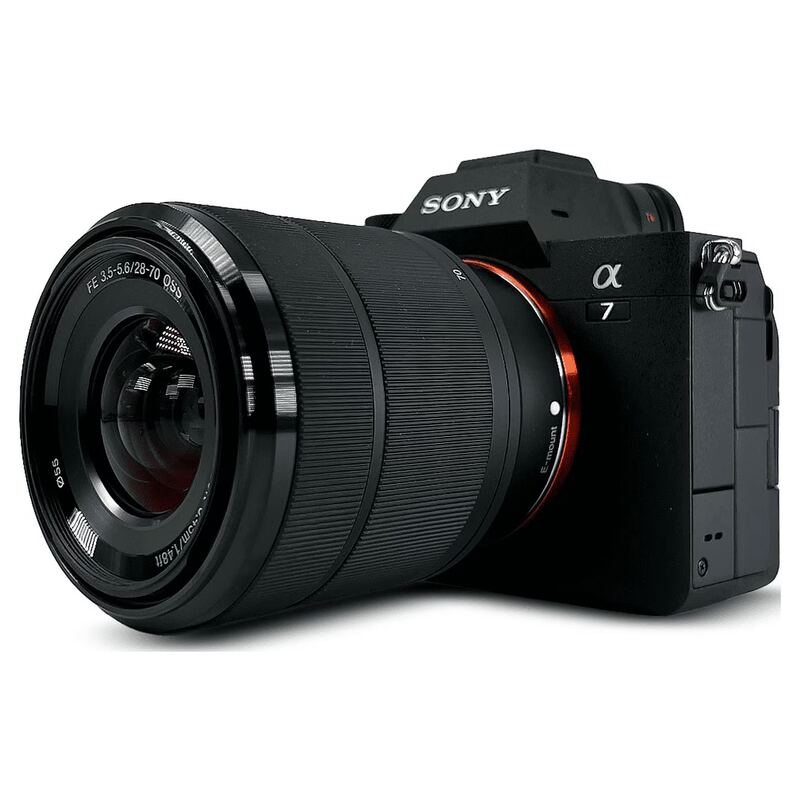
The Fujifilm X-T5 outperforms the Sony α6400 in burst rate and in-body stabilization, but unlike the Canon EOS R7, it lacks the higher resolution sensor and 30 fps electronic shutter capabilities. Compared to the Sony α6700, it offers a more affordable price point and better video features, though the α6700 provides more advanced processor and better video specs.
Rating sources
“The Fujifilm X-T5 is a photography-focused 40MP APS-C mirrorless camera that continues the company's line of cameras with traditional control dials.”
“The Fujifilm X-T5 is a photographer's camera. It rewards decent technique, it gives you a lot of file to work with, and it's reliable enough. You just shoot, and that's the best part.”
Our 4.2 score is the average of the 3 scored reviews above; 1 more reviewed it without printing a score and is not in the average. Ratings marked * were derived from the reviewer’s written analysis or video transcript — the publisher didn’t print an explicit numeric score, so we inferred one from their own words. Click through to verify. More about methodology.