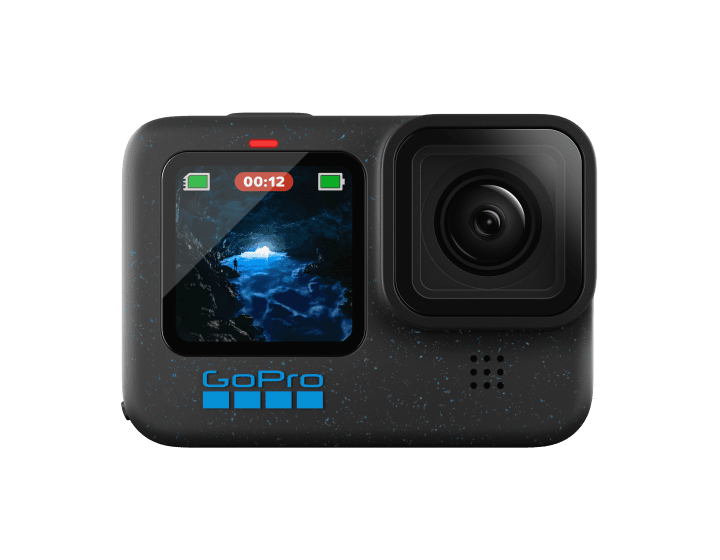
The GoPro Hero 12 Black is the most refined traditional action camera you can buy, leading the category on stabilization, resolution, and accessory support. HyperSmooth 6.0 produces uncannily smooth footage, battery life is roughly double the Hero 11's, and it shoots up to 5.3K 60fps. The smaller sensor means it cedes the low-light crown to DJI, and the generational gains are modest.
Full review
HyperSmooth 6.0 smooths even 360-degree spins
The Hero 12 Black is the most polished traditional action camera on the market, and its standout trait is stabilization. Digital Camera World found that GoPro's fantastic stabilization, HyperSmooth 6.0, makes heavy steps, bike shake and even spins through 360 degrees seem like smooth movements or disappear altogether. TechRadar agreed the Hero 12 edges ahead for anyone who mostly shoots in the day and wants the best stabilization available, which is the camera's clearest claim to the category lead.
It records up to 5.3K at 60fps, among the highest resolutions of any camera in this group, and the footage is crisp and well-color-balanced in good light. Pocket-lint's verdict captured the overall picture: an array of small upgrades make it the best GoPro to date, but only by a small margin. It is the refined, mature option, strongest where there is plenty of light and where stabilization matters most.
That extra resolution is more than a spec-sheet number. Shooting at 5.3K gives editors room to crop, reframe, or stabilize further in post while still delivering a sharp 4K final clip, which is genuinely useful for creators who repurpose footage across formats. The 1/1.9-inch sensor, while smaller than the DJI's, is the same well-proven chip from the Hero 11, and in daylight it produces clean, punchy footage that holds up well against anything in the category.
Stabilization in Detail
HyperSmooth 6.0 is the most reliable stabilization system in the category. GoPro upgraded it from the Hero 11's 5.0, with the new version analyzing four times as much data, and reviewers consistently describe the results as transformative. TechRadar noted the wider field of view with AutoBoost enabled and marginally smoother transitions, taking footage that would otherwise be shaky and unwatchable and turning it into the kind of smooth video you would only expect from a static camera.
The practical benefit is that you can mount the Hero 12 to almost anything moving, from handlebars over rough terrain to a chest harness while running, and trust the footage will be usable. AutoBoost intelligently maximizes stabilization while keeping the crop as small as possible, so you do not give up as much field of view as older stabilization modes demanded. For action shooters, this remains the reason to choose GoPro.
Battery runtime roughly doubles over the Hero 11
Battery life is the most meaningful generational improvement. Using the same 1720mAh Enduro cell as the Hero 11, GoPro's improved power management roughly doubles runtime: T3 measured around 70 minutes of continuous recording at 5.3K 60fps, over 95 minutes at 5.3K 30fps, and over 155 minutes at 1080p 30fps, all with HyperSmooth 6.0 active. That is a substantial real-world gain over the previous generation.
The longer endurance changes how the camera fits into a day of shooting, reducing the number of battery swaps needed for a typical outing. Combined with the unchanged but proven 10m waterproofing without a housing, the Hero 12 is built to keep running through the kind of long, demanding sessions action shooters put it through, which is where the power-management refinement quietly pays off.
Same sensor size and resolution as the Hero 11
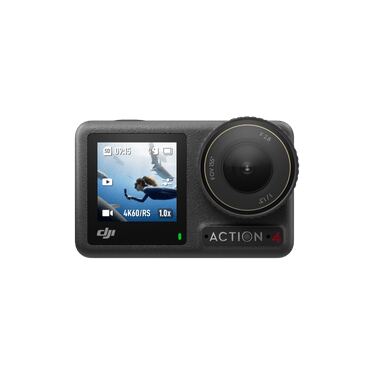
The Hero 12's biggest limitation is its sensor. It retains the 1/1.9-inch chip, smaller than the DJI Osmo Action 4's 1/1.3-inch sensor, and TechRadar found the DJI maintains more shadow detail in demanding low light. In dim conditions the GoPro is the weaker camera, and that gap is the single strongest argument for choosing the DJI instead if you shoot a lot in low light.
The other caveats are about expectations. Pocket-lint and T3 both noted the max photo and video resolution has not changed from the Hero 11, so the upgrade is incremental, and the standard 1/4-20 mounting has its limitations on certain rigs. None of this undermines the camera's strengths, but buyers upgrading from a Hero 11 should know the gains are evolutionary, concentrated in stabilization and battery rather than image resolution.
Best stabilization here, but DJI beats it in low light
The Hero 12 and the DJI Osmo Action 4 are the two cameras to weigh against each other at this price. The GoPro wins on the highest resolution mode, the most refined stabilization, and the deepest accessory ecosystem; the DJI wins decisively in low light thanks to its larger sensor. TechRadar's framing is apt: the Hero 12 edges ahead for daytime shooters who want the best stabilization, while the DJI is the low-light pick.
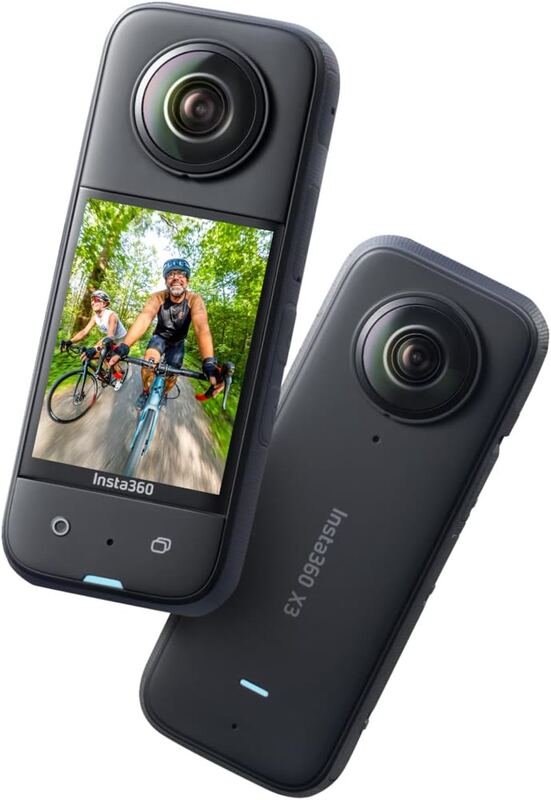
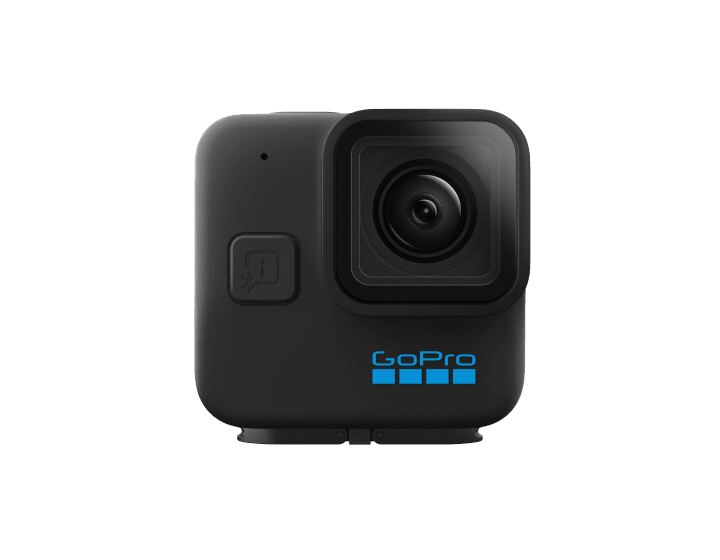
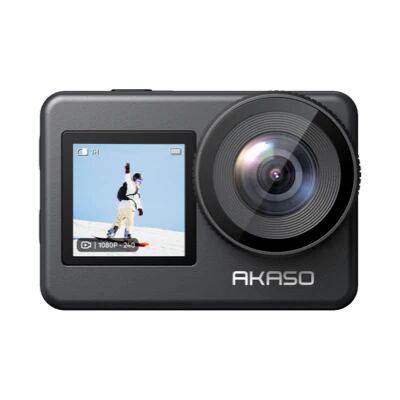
Against its own screenless sibling, the GoPro Hero 11 Black Mini, the Hero 12 adds dual screens and the newer stabilization for a higher price. The Insta360 X3 is a different proposition as a 360-degree camera, and the AKASO Brave 7 is a budget option that cannot compete on stabilization or image quality. For a daylight-focused creator who values GoPro's polish and accessory support, the Hero 12 is the standout.
Ecosystem and Software
One of the Hero 12's enduring advantages is GoPro's mature platform. The accessory ecosystem is the deepest in the category, with mounts, housings, lights, and grips available for almost any conceivable use, and the Quik app and cloud workflow are polished from years of refinement. For a creator already invested in GoPro mounts or subscriptions, the Hero 12 slots seamlessly into an existing kit.
The Hero 12 also added useful creator features, including HDR video, easy vertical capture for social platforms, and Bluetooth audio support for wireless microphones, which broaden its appeal beyond pure action. These quality-of-life additions, layered on the proven hardware, are part of why reviewers describe the camera as the most refined GoPro to date even as the core image sensor carries over from the previous generation. The maturity shows in the small details, from reliable mounting to dependable firmware, that come from many generations of iteration, and it is a meaningful advantage for creators who depend on the camera working flawlessly every time.
269 dollars for the most complete GoPro yet
At around $269 the Hero 12 Black sits comfortably under $300, and its value rests on category-leading stabilization, the highest resolution here, and the unmatched accessory support. For a daylight-focused creator who values GoPro's polish and platform, that combination justifies choosing it over cheaper rivals, and the roughly doubled battery life makes it more practical for long shoots than the Hero 11 it replaces.
The value calculus shifts if low-light performance matters to you, because the DJI Osmo Action 4 offers a larger sensor at a similar or lower price. The Hero 12 is not the cheapest capable action camera, but it is the most complete GoPro experience under $300, and for buyers who want the brand's stabilization and ecosystem it remains a strong, sensible spend rather than an extravagance.
Built for daylight shooting and GoPro's accessory ecosystem
The Hero 12 Black is the best choice for daytime action shooters and content creators who prioritize the smoothest stabilization, the highest resolution, and access to GoPro's vast accessory ecosystem. Mountain bikers, surfers, skiers and vloggers who shoot mostly in good light will find it the most dependable and polished tool in the category.
It is a weaker pick for anyone who frequently shoots in low light, where the DJI Osmo Action 4's larger sensor is clearly better, or for buyers upgrading from a Hero 11 expecting a dramatic leap, since the gains are incremental. But for the creator who wants GoPro's signature stabilization and the maturity of its platform, the Hero 12 remains the benchmark traditional action camera and the camera most others in the category are still measured against.
Strengths
- +HyperSmooth 6.0 delivers the smoothest, most reliable stabilization in the category
- +Records up to 5.3K 60fps, among the highest resolutions of any camera here
- +Roughly double the battery life of the Hero 11 with the same Enduro cell
- +Waterproof to 10m and rugged enough for serious abuse
- +Deepest accessory ecosystem and mature, polished software
Watch-outs
- −Smaller 1/1.9-inch sensor trails the DJI Osmo Action 4 in low light
- −Max photo and video resolution unchanged from the Hero 11
- −Standard 1/4-20 tripod mounting has its limitations on rigs
- −Year-over-year upgrade is incremental rather than transformative
How it compares
It leads the category on stabilization and resolution, edging out the DJI Osmo Action 4 in daylight and on the highest 5.3K mode, but its smaller 1/1.9-inch sensor loses to the DJI's larger sensor in low light. It shares its sensor and core specs with the screenless GoPro Hero 11 Black Mini, but adds dual screens and the latest stabilization. It comprehensively outclasses the budget AKASO Brave 7, and unlike the 360-degree Insta360 X3 it is a flat-video camera.
Rating sources
“An array of small upgrades make the GoPro Hero 12 Black the best GoPro to date, but only by a small margin.”
“GoPro's fantastic stabilization, HyperSmooth 6.0, makes heavy steps, bike shake and even spins through 360 degrees seem like smooth movements.”
“The Hero 12 Black edges ahead for anyone who mostly shoots in the day and wants the best stabilization available.”
Our 4.3 score is the average of these published ratings. Ratings marked * were derived from the reviewer’s written analysis or video transcript — the publisher didn’t print an explicit numeric score, so we inferred one from their own words. Click through to verify. More about methodology.