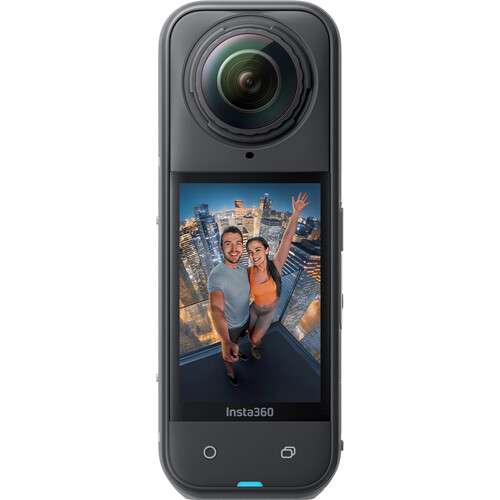
The Insta360 X3 is the most creative camera in this group, capturing everything around it in 360 degrees so you can reframe shots into any angle in editing. Its FlowState stabilization is outstanding, the invisible-selfie-stick effect is genuinely magical, and it can fall back to a flat 4K action camera. The trade-offs are reframed output capped at 1080p and a steeper editing workflow.
Full review
Reframe footage after shooting in any direction
The X3 is a fundamentally different kind of action camera. Instead of pointing it at a subject, you capture everything around you in 360 degrees and then choose the framing in editing. Digital Camera World captured the appeal: 360 imaging is an amazing but also confusing medium to work in, but the X3 makes it the easiest and most fun it has ever been. TechRadar called it a versatile and easy-to-use 360-degree action camera with a large screen, powerful stabilization and Active HDR mode.
That reframe-later workflow unlocks shots no flat camera can get: you never miss the action because the camera recorded all of it, and you can pull a perfectly framed clip from any direction afterward. The X3 can also shoot conventional single-lens 4K when you want a normal action camera, so it is two cameras in one, which is a large part of why reviewers rate it as such a strong all-rounder for creative shooters.
The dual 1/2-inch sensors and improved f/1.9 lenses give the X3 a real step up in image quality over earlier 360 cameras, and TechRadar singled out the Active HDR mode as a useful addition for high-contrast scenes. In bright conditions the spherical footage is sharp and detailed enough to produce convincing reframed clips, and the creative payoff, capturing a whole scene and choosing the story in editing, is something the flat cameras in this group simply cannot offer at any setting.
Stabilization and the Invisible Stick
Stabilization is a highlight. T3 found the X3 retains superb auto-leveling and image stabilization technology, which uses gyroscope data to keep your footage smooth, lined up with the horizon, and far less likely to make a viewer queasy. Because the camera captures the full sphere, its FlowState stabilization can keep footage rock-steady through the most aggressive movement, dropping to ground level, poking through archways, or raising overhead, and it just smooths everything out.
The signature trick is the invisible selfie stick. By exploiting the slight overlap between the two lenses, the X3 erases the stick from the footage, giving the impression that the camera is floating in mid-air following you. T3 described how it gives the impression that the camera is self-suspended, and it is the effect that has made 360 cameras a viral content tool. Combined with the easy reframing, it makes dynamic third-person shots trivial to capture.
Handling and Single-Lens Mode
TechRadar found the larger 2.29-inch touchscreen made it a much easier camera to use handheld than previous 360 cameras, and noted that Insta360's editing workflow proved seamless in testing. The bigger screen makes framing, reviewing, and menu navigation far more comfortable than the cramped displays on earlier models, which matters for a camera whose strength is creative, hands-on shooting.
When you do not need 360, the X3 switches to a single-lens mode that shoots conventional 4K 30fps video, functioning as a more traditional action camera. This dual nature is a genuine advantage: you get the creative spherical capture when you want it and a normal wide-angle action cam when you do not, all in one device. It is the flexibility that justifies its place alongside the more conventional cameras here.
5.7K capture but only 1080p flat exports
The biggest limitation is resolution after reframing. The X3 captures 360 footage at 5.7K, but when you reframe that sphere into a conventional flat clip, the exported output drops to only 1080p, which T3 and Digital Camera World both flagged as too low for modern standards expecting higher-quality flat video. So while the capture resolution sounds high, the usable flat output is lower than the native footage from the DJI or GoPro.
Stitching is the other imperfection. T3 noted the stitching is still not perfect and you sometimes get a stabilization shimmer or a slightly woolly join where the two lenses meet. Image quality also softens and smears in challenging or low light, improving in bright daylight. And the 360 editing workflow, while the best in class, still has a learning curve compared with point-and-shoot flat cameras.
Stabilization matches GoPro and DJI despite the niche
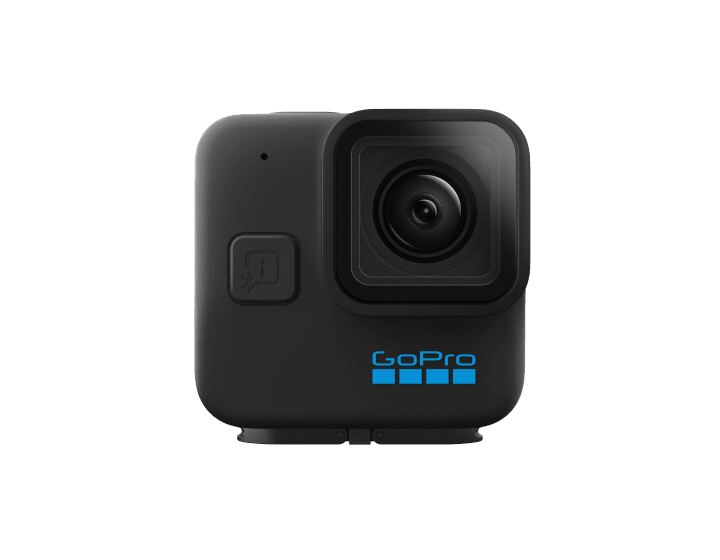
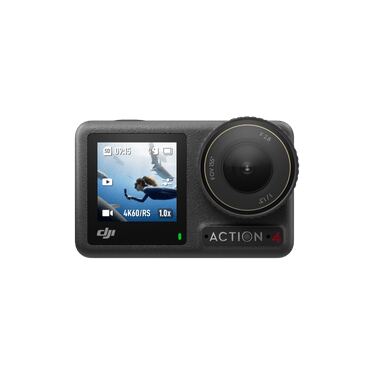
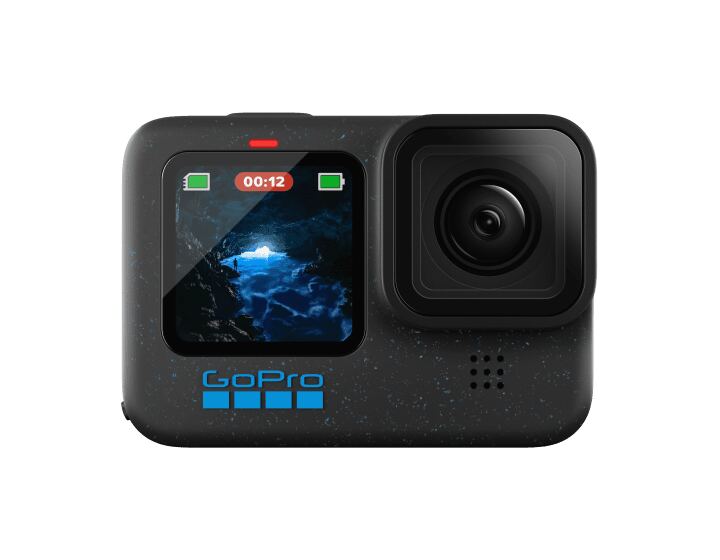
The X3 occupies its own niche. The DJI Osmo Action 4, GoPro Hero 12 Black and GoPro Hero 11 Black Mini are all flat-video cameras, so the real question is whether you want reframable 360 capture or higher-resolution conventional footage. The flat cameras deliver sharper native output and better low light, while the X3 offers creative freedom and the invisible-stick effect they cannot match.
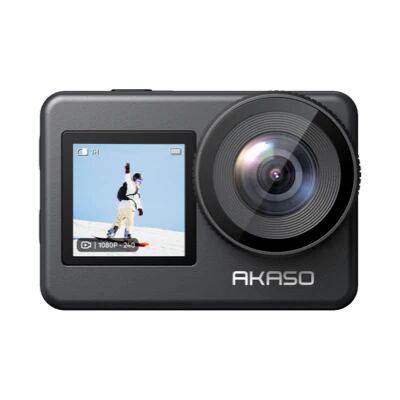
Its stabilization is competitive with the GoPro's HyperSmooth and the DJI's RockSteady, so you are not giving up smoothness by going 360. Against the budget AKASO Brave 7, the X3 is in a completely different league on capability and software. The decision comes down to intent: choose the X3 if 360 capture and creative reframing excite you, and a flat camera if you want the highest-quality straightforward video.
Editing Workflow and Battery
The 360 workflow is what separates the X3 from a flat camera, and Insta360's app is the best in the business at making it approachable. TechRadar found the editing workflow seamless in testing, and the app uses AI-assisted tracking and keyframing to help you pull conventional clips out of the spherical footage with minimal fuss. The learning curve is real, but the tools are designed to flatten it, and reviewers consistently rate the experience as the most fun and accessible 360 editing available.
Battery life is competitive for the category. Insta360 claims roughly 81 minutes of recording in 360 5.7K mode, and T3 measured almost an hour and a half of continuous use in practice, which is solid given the processing demands of stitching two lenses in real time. The 1800mAh removable battery means you can carry spares for longer outings, keeping the creative shooting going across a full day of capture.
250 dollars for 360 capture plus a 4K fallback
At around $250 the X3 offers something none of the flat cameras under $300 can: true 360 capture with reframable output and the invisible-stick effect, plus a fallback single-lens 4K mode. For a creator who wants that creative flexibility, the value is high, because buying a comparable flat camera plus the gear to fake third-person shots would cost more and still not match what the X3 does natively.
The value is lower if you only ever want straightforward flat video, since the 1080p reframe ceiling means the usable flat output trails the native 4K of the DJI and GoPro. But as a dual-purpose creative tool that captures everything and lets you decide the framing later, the X3 delivers a unique capability for the money, which is why it remains a popular and well-reviewed choice in this price bracket.
Floating invisible-selfie-stick shots from full 360 capture
The Insta360 X3 is the camera for creators and adventurers who want to do something different: reframable 360 footage, floating invisible-selfie-stick shots, and the ability to capture everything and decide the angle later. For social-media content, action sports from a third-person perspective, and creative storytelling, it offers possibilities no flat camera can.
It is a weaker choice for someone who simply wants the sharpest, most straightforward flat video, where the DJI Osmo Action 4 or GoPro Hero 12 Black are better, especially given the 1080p reframe ceiling. But for the creative shooter willing to learn the 360 workflow in exchange for shots that look impossible, the X3 is the most exciting camera under $300, and it still doubles as a capable flat 4K action cam when needed.
Strengths
- +Captures full 360-degree footage you can reframe into any angle after the fact
- +Superb FlowState stabilization and auto-leveling for impossibly smooth shots
- +Invisible selfie stick effect makes the camera appear to float in mid-air
- +Large 2.29-inch touchscreen makes it easy to use handheld
- +Doubles as a single-lens 4K action camera when you do not need 360
Watch-outs
- −5.7K spherical capture reframes down to only 1080p flat video
- −Stitching is not always perfect and can show a slight join line
- −Image quality softens and smears in challenging or low light
- −360 editing workflow has a learning curve versus a flat camera
How it compares
It is the only 360-degree camera in this group, offering reframable spherical capture that the flat-shooting DJI Osmo Action 4, GoPro Hero 12 Black and GoPro Hero 11 Black Mini cannot match, though it reframes to a lower 1080p than their native flat resolutions. Its stabilization rivals the GoPro's HyperSmooth and DJI's RockSteady, and it far outclasses the budget AKASO Brave 7 in capability and software.
Rating sources
“A versatile and easy-to-use 360-degree action camera with a large screen, powerful stabilization and Active HDR mode.”
“The X3 retains superb auto-levelling and image stabilisation technology, which uses gyroscope data to keep your footage smooth.”
“360 imaging is an amazing but also confusing medium to work in, but the X3 makes it the easiest and most fun it's ever been.”
Our 4.7 score is the average of these published ratings. More about methodology.