The Manduka PRO is the benchmark thick yoga mat, topping OutdoorGearLab's testing with a 91/100 score. Its 6mm of ultra-dense PVC cushioning protects joints while staying firm enough for stable balance poses, and the closed-cell surface keeps moisture out. Reviewers across OutdoorGearLab and Live Science praise its near-indestructible build, with teachers reporting mats lasting a decade-plus. The trade-offs are real: it is heavy at 7.5 lbs, needs a break-in period, and can slip when wet, so it suits a dedicated home or studio practice more than a daily commute.
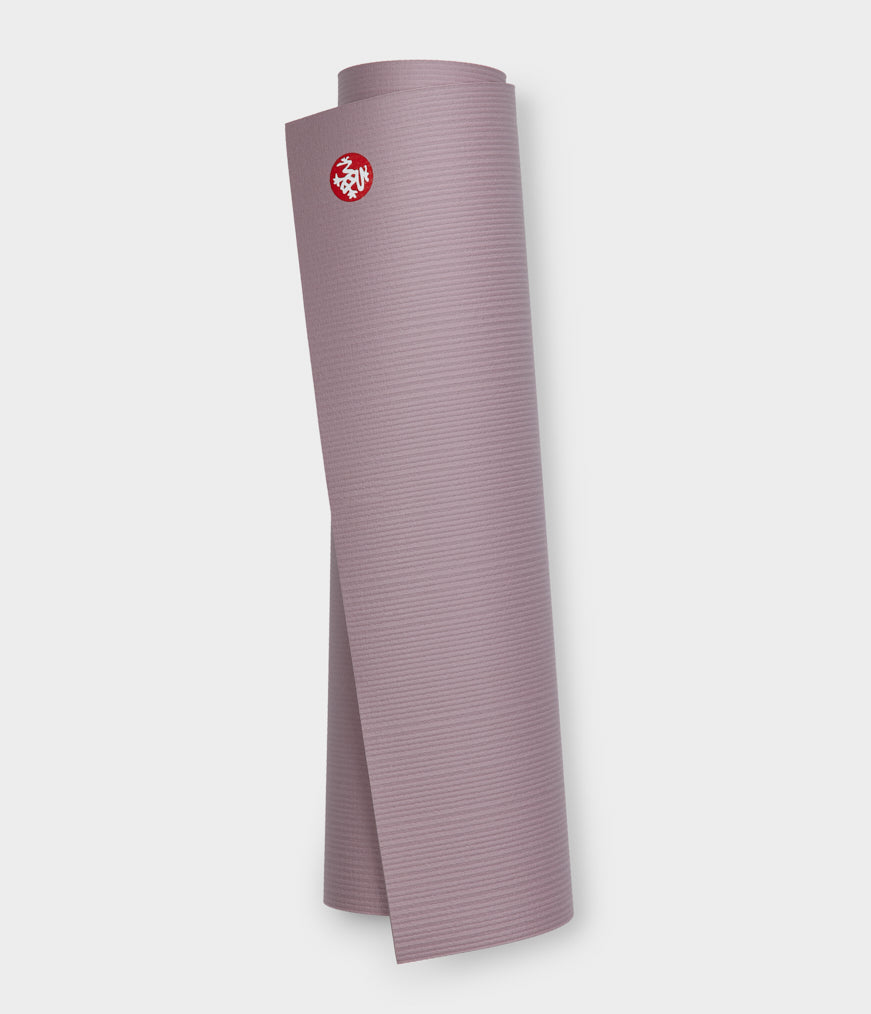
Full review
Scored 91 out of 100
The Manduka PRO earned the top score in OutdoorGearLab's 19-mat test, a 91/100, and its testers explained why in concrete terms: even after years of daily practice, "the surface is still smooth, with no compression or fraying in the areas I use most—under knees, hands, and feet." That resistance to wear is the PRO's signature. Where cheaper foam mats develop permanent indentations where your hands and feet land, the PRO's dense PVC holds its shape, which is why yoga teachers routinely report mats that were five, ten, and nearly twenty years old still in usable condition.
Live Science's reviewer focused on joint protection, noting that "this mat offers ample cushioning being 6mm thick. This means less aches and pains on your knees and we can say truthfully that the thickness does support you during your practice and is one of the best we’ve tried for protecting your joints." The 6mm of padding cushions without feeling spongy, so seated and kneeling poses are comfortable while standing balance poses stay stable, a balance that thinner travel mats and softer foam mats struggle to strike.
What ties the PRO's reputation together is consistency: it performs the same on day one and after years of use, which is rare in a category where most mats degrade noticeably within months. Reviewers across OutdoorGearLab, Live Science, and Leah Ingram independently reach the same conclusion, that it is expensive but uniquely durable and supportive, which is precisely why it sits at the top of this ranking despite carrying the highest price and the most weight.
Cushioning and Support
At a true 6mm, the PRO sits at the upper end of the standard thick-mat range, and its high-density construction is what sets it apart. The cushioning is firm rather than plush, so it absorbs impact under the knees and elbows while giving balance poses a planted, secure feel. Leah Ingram, comparing it directly with her foam mat, captured the difference: "even though it is 6 mm thick like my GAIAM mat, the Manduka mat is thicker and solidly constructed."
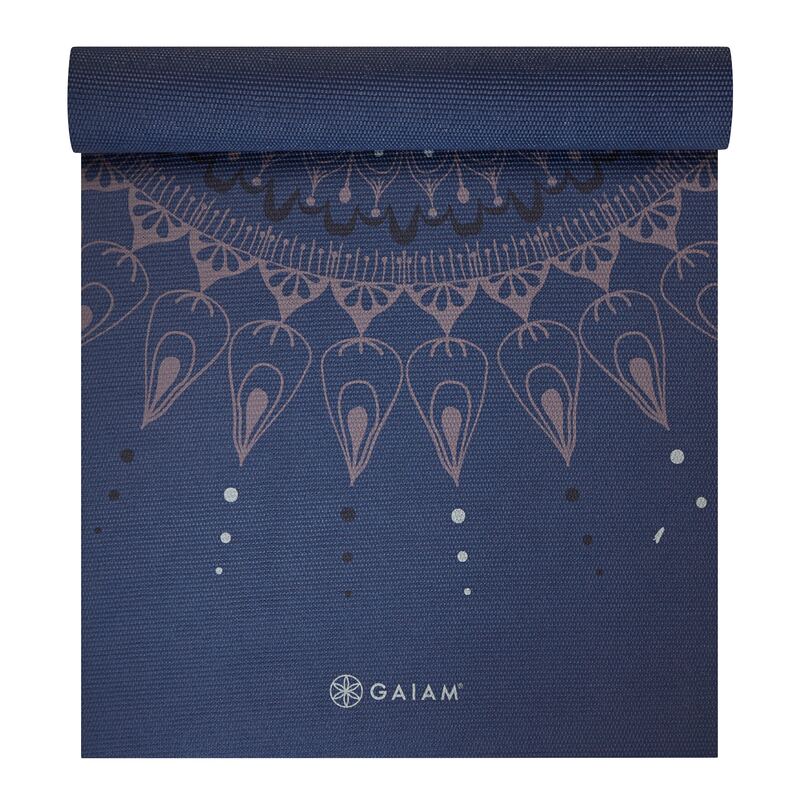
This is the key distinction from softer 6mm mats like the Gaiam Premium: same thickness on paper, very different feel underfoot. The PRO never bottoms out or feels squishy, which makes it as suitable for vigorous vinyasa as for gentle restorative work. For practitioners with sensitive joints who still want stability, that combination is exactly what the thick-mat category is supposed to deliver.
The dense cushioning also has a long-term payoff: because the foam does not crush flat over time, the support you feel in year one is the support you feel in year five, whereas softer mats lose padding as they compress. That stability under load is why OutdoorGearLab's testers trust it for daily practice, and it is the single biggest reason the PRO justifies its premium over thinner or softer competitors.
Grip and Surface
Grip is the PRO's most discussed quirk. The closed-cell surface seals out moisture, which keeps the mat hygienic and prevents sweat from soaking in, but it also means the mat ships with a slick finish that needs breaking in. Manduka recommends a salt scrub to accelerate the process, and OutdoorGearLab's testers confirmed grip improves substantially with use, eventually gripping "when you press into the pads and mounds of the fingers and energetically pull up through the center of the palm like a gecko."
The trade-off is hot yoga: because the surface repels moisture rather than absorbing it, Live Science and others found hands could slide in sweaty sessions. Practitioners who sweat heavily often pair the PRO with a towel. For dry to moderately warm practice, though, a broken-in PRO offers reliable, consistent traction that holds up for years.
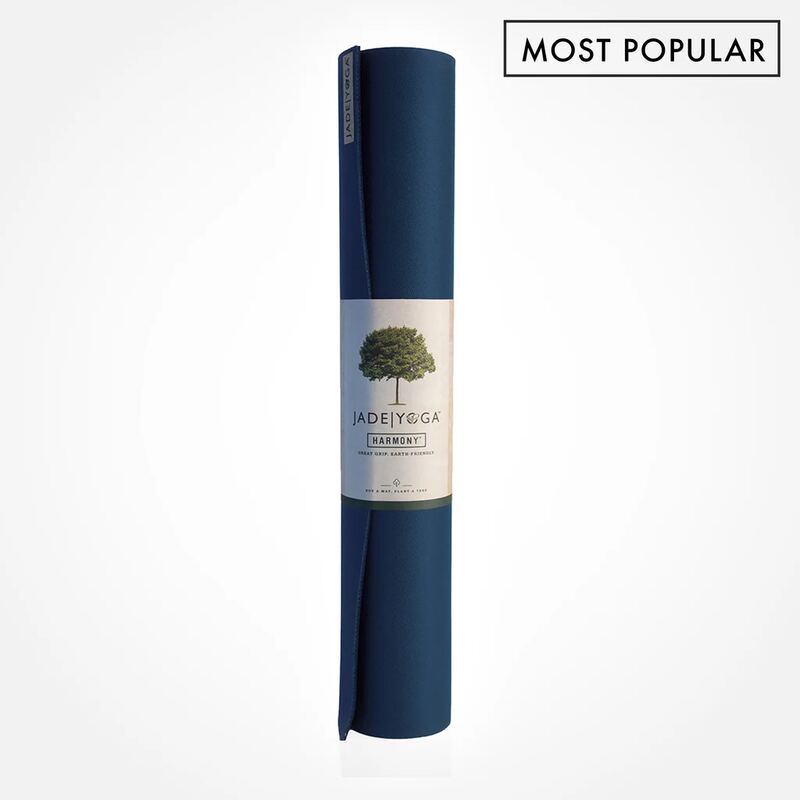
This closed-cell design is a deliberate engineering choice rather than an oversight: by refusing to absorb sweat, body oils, and bacteria, the PRO stays hygienic and easy to wipe clean in a way open-cell rubber mats like the JadeYoga Harmony cannot, which is part of why it endures for years without developing odor or breaking down. The break-in requirement and the towel-for-hot-yoga workaround are the price you pay for that longevity, and most long-term owners consider it a fair trade.
Still looks new after three years of use
Durability is where the PRO justifies its price. Backed by a lifetime guarantee, it is built to outlast every other mat in this guide by a wide margin. OutdoorGearLab's long-term notes are striking: after three years of daily practice their mat "still looks almost new; even the surface sheen hasn't dulled." The dense PVC resists the compression, flaking, and edge-fraying that retire cheaper mats within a year or two.
That longevity reframes the cost. At roughly $138 the PRO is expensive next to a $35 Gaiam, but spread across a decade of use it can work out cheaper per year than mats you replace repeatedly. For anyone committing to a regular practice, the buy-it-once proposition is the PRO's strongest argument.
Heaviest mat here at 7.5 pounds
The PRO's biggest drawback is weight. At 7.5 lbs it is the heaviest mat here by a clear margin, and OutdoorGearLab flagged that while it rolls up tightly, “you feel the weight on your shoulders in a yoga bag” and it is “a lot to carry around.” It is a mat you leave at home or in the studio, not one you sling over your shoulder for a cross-town commute. The break-in period is a second caveat: out of the box the grip disappoints until the surface is conditioned, which can frustrate buyers expecting instant traction.
It is also slippery when wet, which limits its appeal for dedicated hot-yoga practitioners unless paired with a towel, and the premium price is a lot to ask for a 6mm mat if you are not planning years of use. None of these undermine its performance, but they define who it is and isn't for.
Firmer and heavier than the Lululemon or Jade
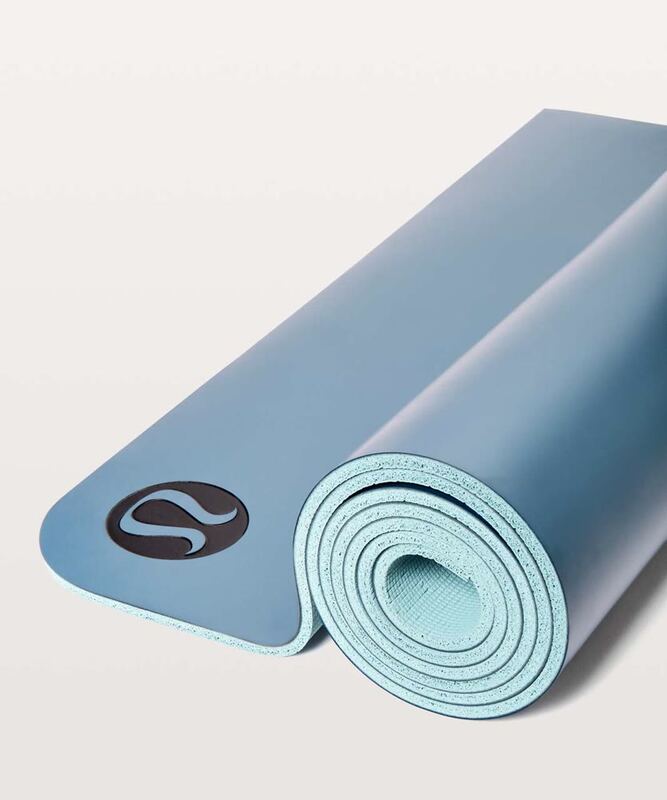
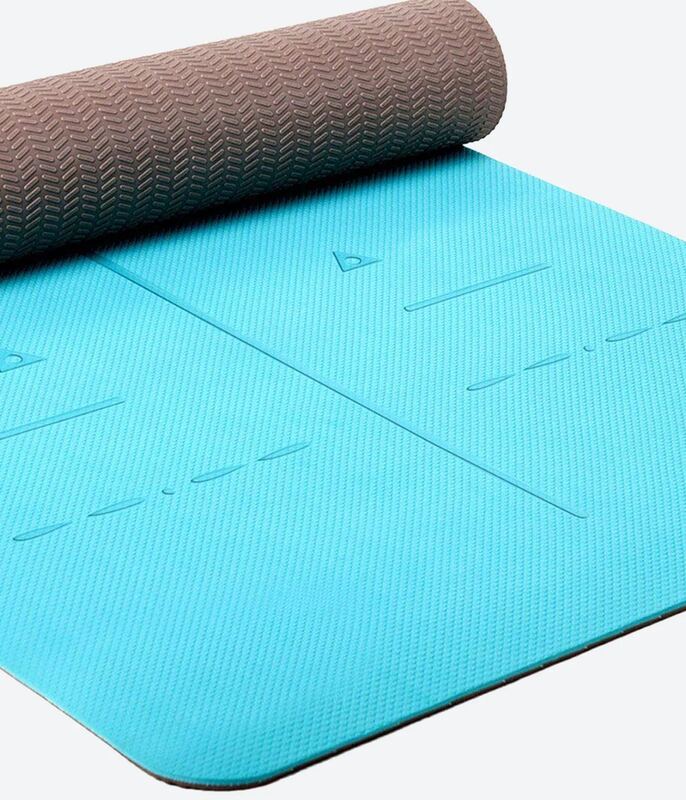
Against the Lululemon The Mat 5mm and JadeYoga Harmony, the PRO trades their grippier natural-rubber surfaces and lighter weight for superior density, cushioning, and lifetime durability. Compared with the Gaiam Premium 6mm, it matches the thickness but vastly outperforms on firmness and longevity, justifying the price gap for serious practitioners. The Heathyoga 6mm offers the same thickness and better out-of-box grip for far less money, making it the value alternative, but it cannot match the PRO's build quality. Within this thick-mat group, the PRO is the durability and stability champion.
The clearest way to frame the choice is by priority: if grip and weight top your list, the natural-rubber Lululemon and Jade pull ahead; if budget is paramount, the Gaiam and Heathyoga win on price; but if you weight cushioning density, balance-pose stability, and a mat that simply will not wear out, nothing in this guide matches the PRO. It is the premium benchmark the others are measured against, and its 91/100 OutdoorGearLab score reflects that standing.
Best for teachers with decade-long practices
The Manduka PRO is the right mat for a committed practitioner who practices mostly at home or in a studio, values firm cushioning and rock-solid stability, and wants a mat that will last a decade or more. It rewards investment with longevity that cheaper mats cannot touch. It is the wrong choice if you need to carry your mat far, want grip that works straight out of the box, or do a lot of hot yoga, in which case the lighter, grippier Lululemon or JadeYoga, or the budget Heathyoga, will serve you better.
It is also a natural fit for teachers and studio owners, who in OutdoorGearLab's testing were the ones reporting decade-old mats still going strong, and for anyone with sensitive joints who needs firm, dependable cushioning every session without the mat degrading. Buyers who are new to yoga and unsure of their commitment may prefer to start with a cheaper Gaiam or Heathyoga and graduate to the PRO once they know they will stick with the practice.
Strengths
- +6mm of dense, supportive cushioning that protects knees, hands, and feet without going soft
- +Legendary durability backed by a lifetime guarantee; teachers report mats lasting 10-plus years
- +Closed-cell surface seals out moisture and sweat, keeping the mat hygienic
- +Exceptionally stable and firm for balance poses, with no bottoming-out
- +OEKO-TEX-certified construction free of harmful substances
Watch-outs
- −Heavy at 7.5 lbs, which makes it a poor choice for carrying to and from class
- −Requires a break-in period before the grip reaches its best
- −Can get slippery when wet, limiting it for hot yoga
- −Premium price is high for a 6mm mat
How it compares
The Manduka PRO is the thickest and most cushioned of the group at a true 6mm, matching the Gaiam Premium 6mm on padding but far outclassing it on density and durability, while the JadeYoga Harmony and Lululemon The Mat 5mm offer grippier natural-rubber surfaces at a slightly thinner 5mm; the Heathyoga 6mm matches its thickness at a fraction of the price.
Rating sources
“The surface is still smooth, with no compression or fraying in the areas I use most—under knees, hands, and feet.”
“Even though it is 6 mm thick like my GAIAM mat, the Manduka mat is thicker and solidly constructed.”
Our 4.4 score is the average of these published ratings. Ratings marked * were derived from the reviewer’s written analysis or video transcript — the publisher didn’t print an explicit numeric score, so we inferred one from their own words. Click through to verify. More about methodology.