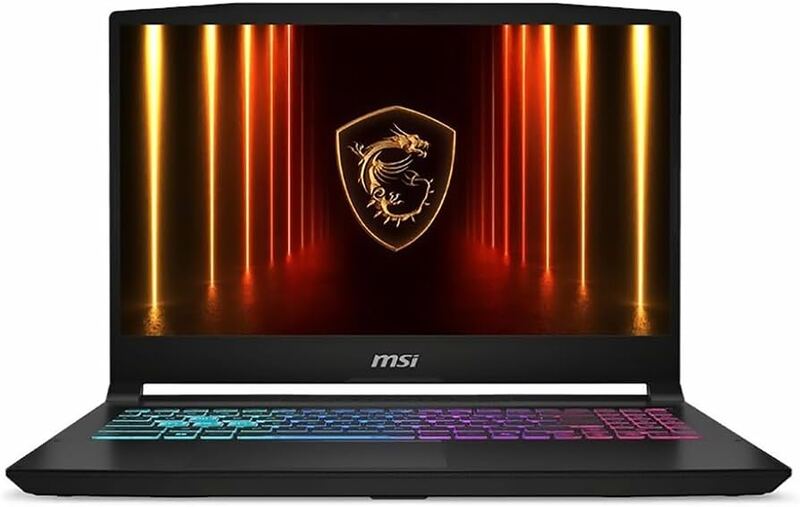
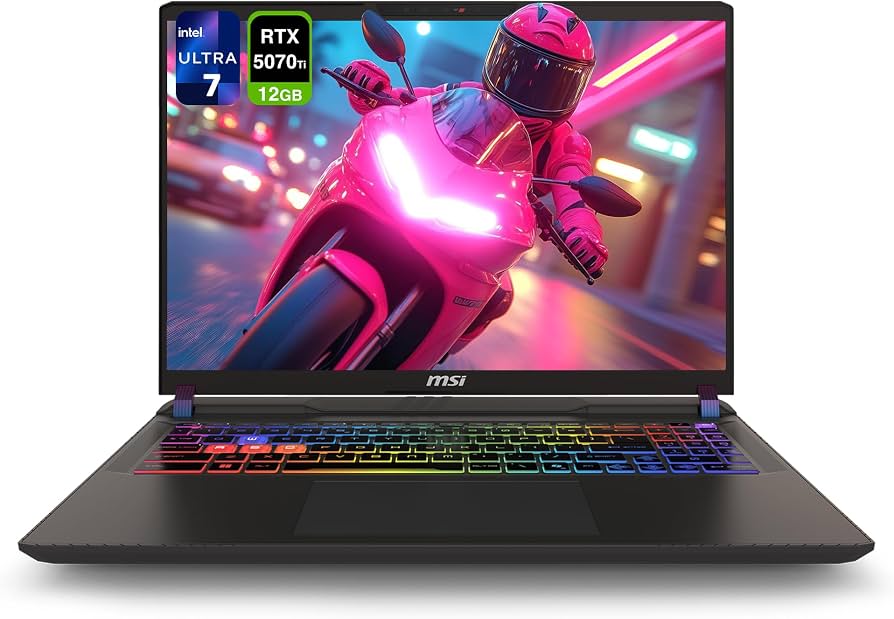
The MSI Vector 16 HX AI delivers top-tier gaming performance through its Intel Core Ultra processors and NVIDIA RTX 50-series GPUs, supported by a sharp 240Hz QHD+ display. Notebookcheck.net found the dual Thunderbolt 5 ports to be a standout connectivity feature, while Trusted Reviews praised the sturdy chassis construction. However, the laptop is heavy at 2.7kg with a bulky design and massive power adapter, making it difficult to transport for mobile users. Base configurations often include only 16GB of RAM or a modest 512GB SSD, limiting out-of-the-box utility, and fan noise remains noticeable even during idle periods due to suboptimal AI mode control. This desktop replacement fits stationary gamers who prioritize raw power over portability, while those requiring silence or mobility should look elsewhere.
Full review
Core Ultra and RTX 5070 Ti deliver peak performance
The MSI Vector 16 HX AI is engineered as a desktop replacement, prioritizing raw computational throughput over portability. Notebookcheck.net recorded consistent CPU and GPU performance across its benchmarks, noting that the Intel Core Ultra 7 255HX paired with the NVIDIA GeForce RTX 5070 Ti provides a compelling feature set for high-end gaming. The laptop is designed to handle demanding workloads without throttling, utilizing a robust cooling architecture to sustain power limits.
Performance enthusiasts will find the hardware configuration particularly potent. LaptopMedia.com tested an A2XW configuration and found it delivered some of the highest multi-core scores seen on a laptop in Cinebench R23 tests.
The processing power extends beyond synthetic benchmarks into real-world gaming scenarios. A YouTube reviewer utilizing the higher-tier Core Ultra 9 275HX and RTX 5080 noted that the machine crushes 3DMark Time Spy scores, achieving what they described as the highest GPU score ever recorded for a 5070 Ti laptop in their testing environment. This indicates that MSI has successfully tuned the BIOS to extract maximum potential from the Blackwell architecture.
240Hz QHD+ display offers vivid color reproduction
Visual fidelity is a central pillar of the Vector 16 HX AI's design. The laptop features a 16-inch IPS panel with a native resolution of 2,560 by 1,600 pixels and a refresh rate of 240Hz. Notebookcheck.net highlighted that this display provides nearly complete coverage of both the sRGB and DCI-P3 color spaces, making it suitable for content creation as well as gaming.
Trusted Reviews noted that the IPS screen is excellent, offering smooth and detailed on-screen action without the backlight bleeding issues common in cheaper LCD panels. The matte coating effectively handles reflections, though reviewers did observe some minor cyan tinting in deep black bars during HDR video playback, a characteristic of the specific AUO panel used.
The high refresh rate provides a tangible advantage in fast-paced competitive titles. A YouTube reviewer emphasized that 240Hz looks significantly better than standard 144Hz panels, delivering fluid motion that enhances gameplay responsiveness.
Thunderbolt 5 connectivity and extensive port selection
Connectivity on the Vector 16 HX AI is exceptionally broad, catering to users who require multiple high-speed peripherals. The chassis includes two Thunderbolt 5 ports capable of DisplayPort output and Power Delivery 3.1, alongside two USB 3.2 Gen 2 Type-A ports. This abundance of modern interfaces allows for extensive docking station setups without sacrificing legacy device support.
Notebookcheck.net specifically praised the inclusion of dual Thunderbolt 5 ports as a standout feature in its class. The layout is practical, with the high-speed ports positioned on one side and audio jacks or SD card readers accessible on others, reducing cable clutter during stationary use sessions.
For creators and students, the presence of a full-size SD Express card reader is a significant convenience factor. A YouTube reviewer pointed out that this feature aligns well with video editing workflows, allowing direct import from cameras without needing external adapters. The inclusion of an RJ45 Ethernet port ensures stable wired networking for competitive gaming or large file transfers.
Sturdy chassis construction but heavy and bulky form factor
The physical design of the Vector 16 HX AI communicates its purpose as a high-performance machine rather than an ultrabook. Trusted Reviews described the metal top lid and chunkier frame as feeling substantial.
Laptop Mag noted that while the chassis is sturdy with firm hinges that prevent lid bounce, the overall footprint is large. The thickness of the device accommodates a massive cooling system and exhaust vents at the rear, which extend the depth of the laptop further. This bulkiness means it is strictly a desktop replacement intended for stationary use.
The power adapter required to fuel this hardware is equally imposing. A YouTube reviewer handling the 330-watt brick described it as enormous, noting that its size and weight make travel cumbersome. While USB-C charging is supported for lighter loads, sustained gaming requires the proprietary DC input and the massive external power supply.
Suboptimal fan control causes audible noise at idle
One of the most significant criticisms leveled against the Vector 16 HX AI involves its thermal management software. Notebookcheck.net found that the fan control in AI mode is suboptimal, resulting in the laptop remaining clearly audible even when idle. This constant background noise can be distracting for users working in quiet environments.
The aggressive cooling strategy ensures temperatures remain low during heavy loads, but it sacrifices acoustic comfort during light tasks. Reviewers noted that while the Cooler Boost 5 module with dual fans and six heat pipes is effective at preventing thermal throttling, the transition between idle and load states can be jarringly loud.
This noise profile makes the laptop less suitable for users who require silence during video calls or background work. The trade-off for peak performance is a fan curve that prioritizes cooling over acoustic discretion, a common issue in high-TGP gaming laptops but particularly pronounced here due to the aggressive AI tuning.
Base storage and memory configurations limit utility
Out-of-the-box specifications reveal cost-cutting measures that may frustrate power users. Notebookcheck.net highlighted that the base configuration often ships with only a 512GB SSD, which is quickly consumed by modern AAA games and large application files. The relatively modest storage capacity forces early upgrades for serious gamers.
Memory configurations also draw criticism. A YouTube reviewer pointed out that MSI opted to include only 16GB of DDR5 RAM in some base models to keep prices stable amidst memory chip shortages. While the laptop supports up to 96GB across two SO-DIMM slots, starting with 16GB means many buyers will need to upgrade immediately for optimal multitasking performance.
Evezone.evetech.co.za argued that these limitations make the Vector 16 HX AI a poor fit for budget-conscious buyers who expect complete utility from day one. The combination of limited storage and base RAM requires additional investment to reach the full potential promised by the high-end CPU and GPU.
Target audience fits stationary gamers over mobile users
The MSI Vector 16 HX AI is best suited for gamers who prioritize maximum performance per dollar and have a fixed setup. Trusted Reviews found it to be surprisingly excellent value compared to rivals like the Medion Erazer Beast, offering beefy gaming performance at a lower price point than competitors with similar specs.
Conversely, students or professionals requiring portability will find this laptop impractical. Evezone.evetech.co.za explicitly advised against purchasing this machine for campus use due to its weight and poor battery life when unplugged. The 90Wh battery cannot sustain the high-power components for long periods away from an outlet.
Content creators who prioritize color accuracy above all else might also look elsewhere, as OLED or Mini-LED panels are available on competing models. However, for users who need a powerful AI-enabled workstation that doubles as a top-tier gaming rig and rarely moves, the Vector 16 HX AI delivers exceptional raw power.
Strengths
- +Equipped with cutting-edge Intel Core Ultra processors and NVIDIA RTX 50-series GPUs, delivering top-tier gaming performance.
- +Features a high-quality 16-inch QHD+ IPS display with a 240Hz refresh rate and wide color gamut coverage.
- +Includes abundant modern connectivity options such as dual Thunderbolt 5 ports, Wi-Fi 7 support, and an SD card reader.
- +Boasts a sturdy chassis construction and a comfortable keyboard layout that includes a numpad.
Watch-outs
- −The laptop is heavy at 2.7kg with a bulky design and massive power adapter, making it difficult to transport.
- −Base configurations often include only 16GB of RAM or a modest 512GB SSD, limiting out-of-the-box utility.
- −Fan noise remains noticeable even during idle periods due to suboptimal AI mode control.
How it compares
However, it is heavy at 5.
Rating sources
Our 4.3 score is the average of the 4 scored reviews above; 5 more reviewed it without printing a score and are not in the average. More about methodology.