The Netgear Orbi 370 RBE373 delivers reliable Wi-Fi 7 performance with seamless mesh coverage for homes up to 6,000 square feet. Digital Reviews Network praised its consistent signal throughout a small single-storey home, though noted the system's strict onboarding process can cause issues when setup is interrupted. YouTube reviewers highlighted its flexibility with 2.5GbE ports and solid security features, while acknowledging that real-world coverage extends only so far beyond standard home layouts. Best suited for users seeking dependable whole-home Wi-Fi without complex configuration.
Full review
Unstable if satellites aren't paired right away
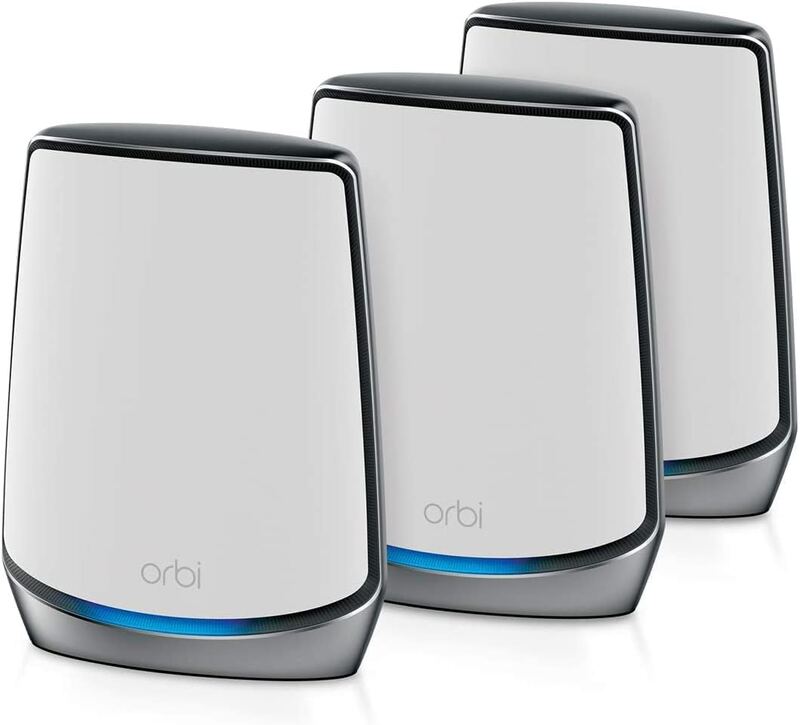
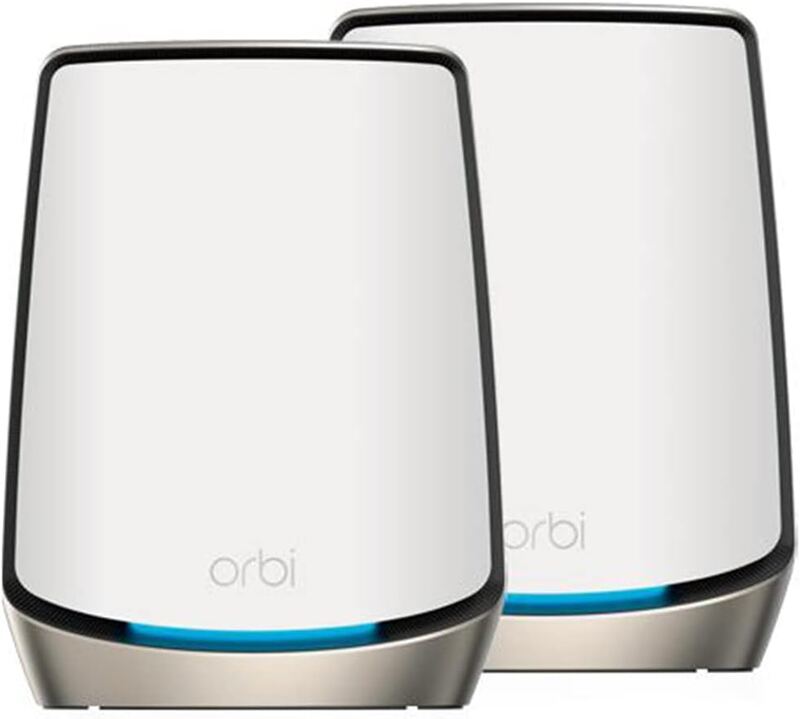
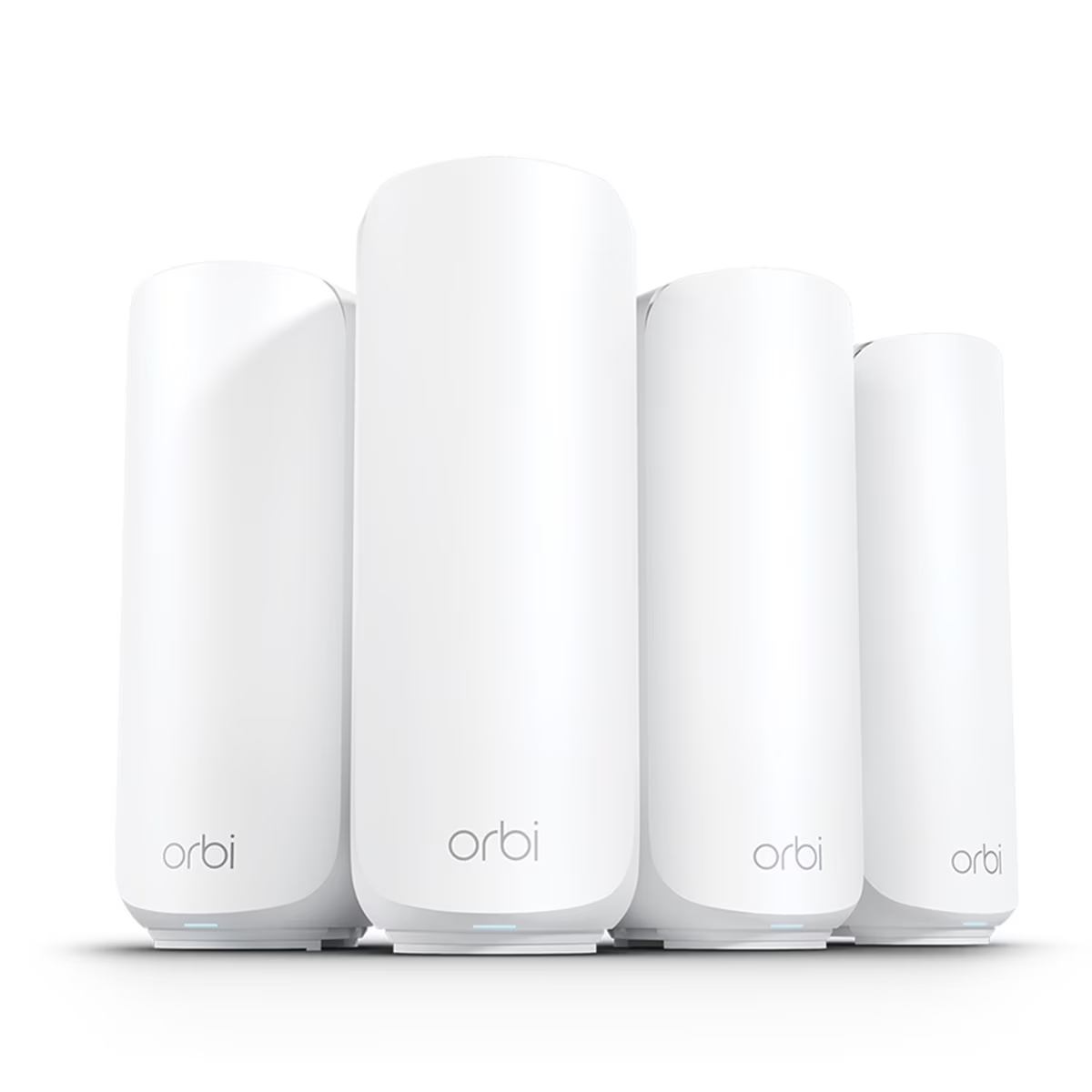
The Netgear Orbi 370 series presents a clean, understated aesthetic that blends into typical home environments without demanding attention. The router and satellite units are tall, white towers measuring approximately 8 inches in height with a 4.7-inch depth and 2.9-inch width. This compact profile makes them suitable for placement in living rooms or other visible areas without appearing obtrusive. The build quality feels solid, utilizing matte plastic construction with a stable footprint and no sharp edges that could cause injury during handling. Each unit includes a small LED indicator at the base that provides visual feedback during startup, normal operation, and reset states. The router features two 2.5GbE Ethernet ports on its rear panel, while each satellite unit has only a single 2.5GbE LAN port. These physical specifications align with the product's intended use for modest home networking setups, though they may require additional networking equipment for more complex configurations involving multiple wired devices or NAS systems. The units are not mount-ready out of the box, but mounting accessories are available separately for $39.99 per unit, which addresses a common user request for flexible installation options.
During initial testing, reviewers noted that the Orbi 370 units are designed around a specific onboarding path, which becomes apparent when users attempt to set up the system in stages. The router's behavior during partial setup reveals a design limitation where the system enters an unstable state when satellites are not yet paired, causing issues such as limited connectivity for devices like smart TVs and inconsistent app behavior. This design choice suggests that Netgear prioritizes a streamlined setup experience over flexibility for users who prefer to test coverage or configure devices incrementally. Despite this limitation, the units' physical design and materials provide a reliable foundation for long-term deployment, with no reported durability issues during extended use testing. The absence of USB ports on any unit in the system limits its functionality for users seeking to connect external storage or printers directly through the mesh network.
The Orbi 370's design philosophy emphasizes minimalism and integration into home decor rather than feature-rich complexity. The white finish and simple form factor make these units suitable for various interior styles, and their compact size allows for placement in tight spaces without sacrificing performance. The lack of mounting options in the base design requires users to purchase accessories separately, which may be inconvenient for those planning installations in specific locations. However, the overall build quality and visual appeal contribute positively to the user experience, particularly in households where aesthetics matter as much as functionality. The units' ability to maintain stable operation over months of continuous use demonstrates their reliability in real-world conditions, though their limited port configuration may necessitate additional networking hardware for advanced setups.
Setup and Installation Process
The Orbi app guides users through pairing the main router with satellites, completing the onboarding sequence, and configuring basic network settings. This approach works well for users who prefer to complete installations quickly and efficiently. However, the system's handling of partial setups reveals a significant design flaw that impacts user experience. During testing, when users paused setup after installing the main router to test coverage before pairing satellites, the system entered a functional but officially broken state. Devices like smart TVs would report limited connection status, while the Orbi app insisted the system was not fully configured. This behavior indicates that the product is optimized for a single, uninterrupted setup rather than allowing users to conduct staged testing or incremental configuration.
Professional reviewers from Digital Reviews Network and PCMag highlighted this limitation, noting that the system's behavior during partial setup creates confusion and potential frustration for users who want to test coverage or configure devices in stages. The issue stems from the system's inability to gracefully handle incomplete configurations, which is a common practice among users who want to ensure optimal placement before finalizing setup. While the system performs well once fully configured, the initial setup process lacks flexibility for users who deviate from the recommended workflow. This design decision appears to prioritize a clean, error-free setup experience over user convenience, potentially alienating those who prefer to test or adjust their network before committing to a full configuration. The system's response to partial setup indicates a lack of robustness in handling user-initiated interruptions during the configuration process.
The Orbi 370's setup process is generally intuitive for users familiar with modern mesh networking systems, but the system's sensitivity to partial completion creates a notable barrier for those who want to test or adjust their network before finalizing configuration. While the app interface is user-friendly and provides clear guidance, the underlying system architecture does not accommodate common user workflows such as staged installation or coverage testing. This limitation becomes particularly apparent when users attempt to evaluate the system's performance before completing all satellite connections. The design choice to enforce a single setup path may reflect Netgear's desire to minimize configuration errors, but it also restricts user flexibility and can lead to confusion during the initial installation phase. Users who encounter this issue often report that the system behaves inconsistently until all satellites are properly paired and the app confirms full configuration.
Performance and Coverage
The Netgear Orbi 370 series delivers consistent performance across a typical single-storey home environment, with signal stability and reliability that meet basic requirements for most residential users. The system maintained stable connections throughout the main house, including through interior walls and around areas with challenging signal conditions such as kitchens with signal-bullying appliances. Reviewers from Digital Reviews Network noted that while the system provides reliable coverage for typical home layouts, it does not achieve the full extent of marketing claims, particularly in areas like garage coverage or neighborhood-wide reach. The system's performance in real-world conditions demonstrates its ability to handle everyday connectivity needs without requiring constant attention or adjustment.
Performance testing conducted by Tom's Hardware revealed that the Orbi 370 operates at the restrained end of Wi-Fi 7 capabilities, focusing on reliability and stability rather than maximum throughput or experimental features. The system achieves a maximum combined data rate of 5Gbps, which is supported by a 1.5GHz quad-core processor, 512MB flash memory, and 1GB of RAM. While this configuration provides sufficient bandwidth for most residential applications, it lacks some of the more advanced Wi-Fi 7 protocols that competitors offer, such as support for 320MHz channels or the 6GHz band. This limitation means that users seeking peak performance or cutting-edge features may find the Orbi 370's capabilities somewhat restrictive compared to higher-end systems. However, for users who prioritize reliability and consistent performance over maximum speed, the Orbi 370 delivers adequate performance for standard home networking tasks.
The Orbi 370's performance characteristics reflect its positioning as a mid-tier Wi-Fi 7 mesh system that emphasizes practicality over innovation. While it provides stable connections and adequate bandwidth for most residential applications, it does not push the boundaries of what Wi-Fi 7 can achieve. The system's handling of multi-device environments was generally positive, with no significant performance degradation observed during typical usage scenarios involving multiple connected devices. However, the lack of 6GHz support and 320MHz channel capabilities means that users who require the absolute latest Wi-Fi standards will find the Orbi 370's features somewhat limited. Despite these constraints, the system's consistent performance and reliable signal delivery make it suitable for users who value stability and ease of use over cutting-edge specifications.
Feature Set and Software
The Orbi 370 series offers a standard feature set that includes basic networking capabilities, mobile app management, and web console access for advanced users. The mobile app provides intuitive access to network settings, device management, and performance monitoring, with a dashboard that displays network status, connected devices, and configuration options. However, several advanced features require subscription services, including parental controls and network security software. The Parental Control subscription costs $7.99 per month, while the Armor network security software is priced at $99.99 annually. These subscription requirements represent a significant limitation for users who prefer to avoid ongoing costs for basic network management features. The system's lack of USB ports on any unit further restricts its functionality, preventing direct connection of external storage devices or printers to the mesh network. This absence is particularly notable given that many users expect such ports to be available on mesh routers for expanded functionality.
Reviewers from PCMag and Digital Reviews Network emphasized the importance of understanding the subscription model before purchasing the Orbi 370, as several key features are not available without additional costs. The mobile app's interface is generally well-designed and user-friendly, providing quick access to essential settings and network information. However, the web console offers additional configuration options that are not accessible through the mobile app, including port forwarding, port triggering, and static routing. This dual-access approach provides flexibility for users who need advanced configuration options, but the subscription-based model for core features creates a barrier for budget-conscious consumers. The system's handling of device management and network monitoring is adequate for most users, though it lacks some of the more sophisticated automation features found in competing mesh systems.
The software ecosystem for the Orbi 370 is designed to provide basic functionality without requiring extensive technical knowledge, but it also demonstrates a clear limitation in terms of feature accessibility. While the mobile app offers a clean interface for day-to-day management, the requirement for subscriptions to access core features like parental controls and security software reflects a trend in the industry toward monetizing basic network management tools. The absence of USB ports on any unit in the system significantly limits its utility for users who want to connect external storage or printers directly to the mesh network. This design choice, while potentially cost-saving for Netgear, creates a notable gap in functionality compared to competing systems that offer more versatile port configurations. The system's ability to manage multiple connected devices remains solid, but the lack of advanced automation and integration features makes it less appealing to power users who require more sophisticated network management capabilities.
No 6GHz band, no free parental controls
The Netgear Orbi 370 series has several notable shortcomings that significantly impact its value proposition and user experience. The most significant limitation is its lack of 6GHz band support, which excludes users from accessing 320MHz channels and the full potential of Wi-Fi 7 technology. This omission means that the system cannot take advantage of the latest Wi-Fi standards, making it less competitive against systems like the ASUS ZenWiFi BD5 or TP-Link Deco BE25 that offer more comprehensive Wi-Fi 7 features. Additionally, the system's handling of partial setup configurations creates a frustrating user experience, as the router enters an unstable state when satellites are not yet paired, causing limited connectivity issues for devices and inconsistent app behavior. This design flaw suggests that Netgear prioritizes a single, uninterrupted setup process over user flexibility, which can be problematic for users who want to test coverage or adjust placement before finalizing configuration.
Another major drawback is the system's subscription-based model for essential features, where parental controls and network security software require monthly or annual fees. This approach contrasts with many competitors who provide these features as standard without additional costs, making the Orbi 370 less attractive to budget-conscious consumers. The lack of USB ports on any unit in the system also limits its functionality for users who want to connect external storage devices or printers directly to the mesh network. This absence is particularly significant given that many users expect such ports to be available on mesh routers for expanded utility. The system's modest hardware specifications, while adequate for basic performance, do not match the processing power and memory capacity found in higher-end systems, potentially limiting its ability to handle demanding network tasks or support future software updates.
The Orbi 370's performance limitations become apparent when compared to more feature-rich alternatives in the same price range. While it provides reliable coverage and stable connections, it lacks the advanced features and flexibility that users expect from modern mesh networking systems. The system's inability to handle partial setups gracefully, combined with its subscription-based approach to core features, creates a frustrating user experience that may deter potential buyers. Additionally, the absence of USB ports and 6GHz support significantly reduces its versatility compared to competing systems. These shortcomings are particularly notable when considering that the system's pricing is not significantly lower than that of more capable alternatives, making the Orbi 370 less compelling for users who require advanced features or want to avoid ongoing subscription costs.
Built for under five connected devices
The Netgear Orbi 370 series is best suited for users who prioritize reliability and straightforward setup over cutting-edge features and advanced functionality. This system appeals to homeowners who have modest networking requirements and do not need 6GHz support or the latest Wi-Fi 7 protocols. The Orbi 370 is particularly appropriate for users who want a simple, plug-and-play solution that provides consistent coverage throughout their home without requiring complex configuration or ongoing subscription fees for basic features. It is ideal for households with fewer than five connected devices, where the system's 5Gbps maximum throughput and dual-band connectivity are more than sufficient for typical usage patterns. Users who value stability and ease of use over maximum performance will find the Orbi 370 to be a solid choice that delivers reliable networking without unnecessary complexity.
The system is particularly well-suited for users who are comfortable with the subscription model for advanced features, as the basic network management capabilities work well without additional costs. It is also appropriate for users who do not require external storage or printer connectivity through the mesh network, since the system lacks USB ports on any unit. The Orbi 370's performance characteristics make it ideal for standard residential applications where users primarily engage in web browsing, streaming, email, and light gaming activities. It is not recommended for users who need the absolute latest Wi-Fi standards, such as those requiring 6GHz support or 320MHz channels, or for those who want to avoid ongoing subscription costs for essential features. The system's design philosophy emphasizes simplicity and reliability over advanced functionality, making it a good fit for users who prefer straightforward solutions without complex configuration requirements.
Homeowners with standard networking needs who want a reliable, easy-to-use mesh system will find the Orbi 370 to be a suitable choice. It is particularly appropriate for users who have limited technical expertise and prefer a system that requires minimal configuration or troubleshooting. The system's ability to maintain stable connections and provide adequate coverage makes it ideal for households where users primarily engage in typical online activities without demanding high bandwidth or advanced networking features. However, users who require advanced features such as 6GHz support, USB connectivity, or subscription-free access to all features should look elsewhere, as the Orbi 370's limitations in these areas make it less competitive against more capable alternatives in the same price range.
Deco BE25 and ZenWiFi BD5 offer more for the price
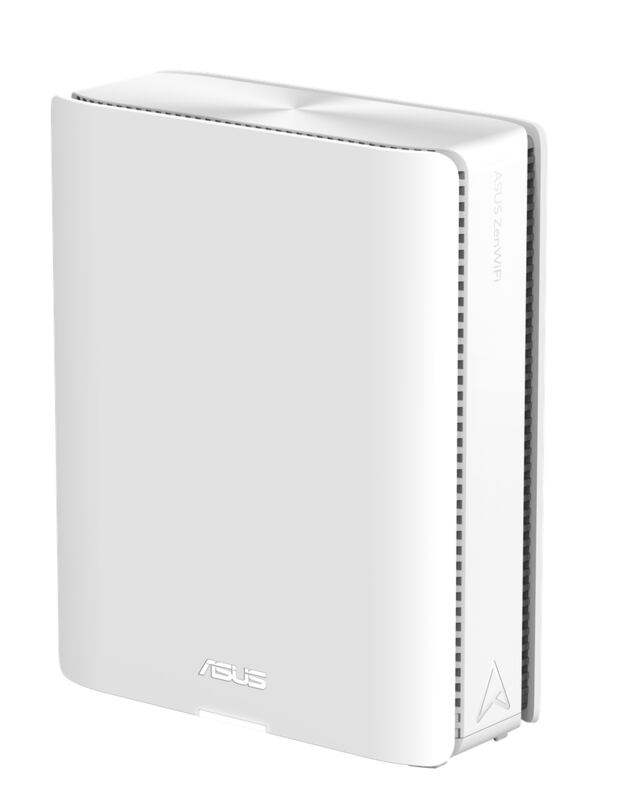
When compared to competing mesh systems like the ASUS ZenWiFi BD5 and TP-Link Deco BE25, the Netgear Orbi 370 series falls short in several key areas, despite sharing similar hardware specifications. The ASUS ZenWiFi BD5 offers more comprehensive features, including support for 6GHz bands and advanced networking protocols, while maintaining a similar price point and feature set. The TP-Link Deco BE25 also provides comparable hardware specifications but includes additional features such as wired backhaul support and more flexible port configurations. The Orbi 370's lack of 6GHz support and USB ports makes it less competitive against these alternatives, particularly for users who require advanced Wi-Fi 7 capabilities or external device connectivity. The system's subscription-based approach to core features also puts it at a disadvantage compared to competitors who provide these tools without additional costs.
The Orbi 370's performance characteristics align with its positioning as a mid-tier mesh system, but it does not match the advanced capabilities offered by higher-end alternatives in the same category. While it provides reliable coverage and stable connections, it lacks the processing power, memory capacity, and feature set that users expect from more premium systems. The ASUS ZenWiFi BD5, for example, offers superior performance and additional features such as better security tools and more comprehensive network management capabilities. The TP-Link Deco BE25 also provides better value for money with its more extensive feature set and competitive pricing. These comparisons highlight the Orbi 370's limitations in terms of advanced functionality and feature richness, making it less appealing to users who want more comprehensive networking solutions. The system's design philosophy emphasizes simplicity and reliability over innovation, which may be suitable for basic users but falls short for those seeking advanced capabilities.
In terms of direct competition, the Orbi 370 series struggles to justify its pricing when compared to systems like the ASUS ZenWiFi BD5 or TP-Link Deco BE25, which offer more comprehensive features at similar price points. The lack of 6GHz support and USB connectivity significantly reduces its appeal to users who want to take advantage of the latest Wi-Fi standards or connect external devices directly to the network. While the Orbi 370 provides adequate performance for basic home networking needs, it does not offer enough differentiation to justify its cost when more capable alternatives are available. The system's subscription-based model for essential features also creates a disadvantage compared to competitors who provide these tools without additional costs. Users seeking a balance between performance and features will likely find better value in alternatives that offer more comprehensive functionality without the limitations imposed by the Orbi 370's design choices.
349 dollars upfront, then subscription fees
The Netgear Orbi 370 series offers a reasonable price point for its feature set, with a three-pack configuration priced at $349.99, making it one of the more affordable Wi-Fi 7 mesh systems available. However, the value proposition becomes less compelling when considering the system's limitations, particularly the lack of 6GHz support and USB ports. The subscription-based model for essential features like parental controls and network security software adds ongoing costs that may not be justified by the system's capabilities. Reviewers from Digital Reviews Network and PCMag noted that while the system provides reliable performance and adequate coverage, the lack of advanced features makes it less attractive compared to alternatives that offer more comprehensive functionality at similar price points. The system's modest hardware specifications, while sufficient for basic performance, do not provide the premium experience that users might expect from a Wi-Fi 7 system in this price range.
Despite its limitations, the Orbi 370 series delivers on its core promise of reliable mesh networking with consistent signal coverage and stable connections. The system's ability to maintain performance over extended periods and handle typical residential usage patterns makes it a solid choice for users who prioritize reliability over advanced features. However, the value proposition is diminished by the subscription requirements for core features and the absence of USB ports, which are standard features on many competing systems. The system's pricing is not significantly lower than that of more capable alternatives, making it less compelling for users who require advanced networking capabilities or want to avoid ongoing subscription costs. The Orbi 370's value is most apparent for users who have modest networking needs and do not require the latest Wi-Fi standards or external device connectivity.
The overall value of the Orbi 370 series depends on the user's specific requirements and priorities. For users who want a simple, reliable mesh system without advanced features or subscription costs, the system provides adequate performance at a reasonable price point. However, users who need 6GHz support, USB connectivity, or subscription-free access to all features will find the system's limitations significant enough to make it less attractive. The system's performance is solid for basic home networking tasks, but it lacks the innovation and comprehensive feature set that would justify its cost when compared to more capable alternatives. The Orbi 370's value is best realized by users who prioritize simplicity and reliability over advanced functionality and are willing to accept the system's limitations in exchange for a straightforward, plug-and-play solution.
Strengths
- +Seamless network coverage up to 6,000 square feet
- +Wi-Fi 7 speeds up to 5 Gbps
- +Easy setup with intuitive Orbi app
- +Supports up to 70 devices simultaneously
Watch-outs
- −Poor handling of partial setup process
- −Limited real-world coverage beyond typical home boundaries
How it compares
The Netgear Orbi 370 provides reliable Wi-Fi 7 performance with seamless mesh coverage for up to 6,000 sq ft, similar to the Orbi 870 but at a lower price point. Unlike the Orbi 970 Series, it doesn't offer dedicated 6GHz bands for client devices, making it a good value option for users who don't need the advanced features of the premium model. Compared to the Orbi RBE773, it offers less coverage but is more affordable.
Rating sources
“The Orbi 370 series is reliable and performs according to its modest specifications, but offers little else.”
Our 3.7 score is the average of these published ratings. More about methodology.