The NVIDIA RTX A4000 delivers a significant upgrade over previous Turing-based Quadro cards with 16 GB of GDDR6 ECC memory and Ampere architecture performance. It supports demanding visualization workflows and can drive up to four 5K displays, making it suitable for professional workstations. While it offers excellent performance for CAD/BIM applications and real-time ray tracing, it's not optimized for gaming and lacks the raw gaming performance of consumer GPUs at similar price points. This makes it ideal for architects, product designers, and visualization professionals who need reliable workstation performance rather than gaming capabilities.
Full review
Memory capacity and bandwidth
The NVIDIA RTX A4000 features 16 GB of GDDR6 memory, representing a significant upgrade from the 8 GB available on its predecessor, the Quadro RTX 4000. This increase in memory capacity addresses a common limitation in professional workloads where complex projects often require more graphics memory to handle high-resolution textures and detailed models. The card's memory bandwidth is 448 GB/s, achieved through a 256-bit memory interface. The GDDR6 memory type is standard for professional cards, offering better error correction and reliability compared to consumer-grade memory, which is crucial for long-running professional applications.
In performance testing, the additional memory capacity has shown to be particularly beneficial in demanding visualization and CAD workflows. The card's ability to handle larger datasets without running out of memory has been noted in real-world applications, where users reported smoother performance when working with complex 3D models or large datasets. The memory bandwidth, while not the highest in the lineup, is sufficient for most professional tasks, especially when paired with the card's efficient architecture. This balance between memory capacity and bandwidth makes the RTX A4000 a solid choice for professionals who need reliable performance without the overhead of higher-end cards.
The 16 GB of memory in the RTX A4000 is particularly advantageous when compared to the RTX 3070, which has 8 GB of memory. This difference becomes critical in applications that require high memory throughput, such as real-time ray tracing or complex rendering tasks. The card's memory configuration allows it to maintain performance levels that would otherwise be compromised by memory limitations, especially in scenarios involving large textures or high-resolution displays. This makes the A4000 a suitable option for users who need more memory than the RTX 3070 offers but do not require the maximum performance of higher-end cards.
Performance in professional applications
The RTX A4000 delivers notable improvements over its predecessor, the Quadro RTX 4000, in professional applications. Benchmarks from SPECviewperf 2020 show that the A4000 outperforms the RTX 4000 in most viewsets, including 3ds Max, CATIA, Creo, and SolidWorks. In the 3ds Max viewset, the A4000 achieved a score of 90.8, compared to 90.29 for the RTX 4000, demonstrating a clear performance gain. The card's performance is particularly strong in tasks involving complex 3D modeling and rendering, where its 16 GB of memory and Ampere architecture contribute to faster processing times. The card's ability to maintain consistent performance across multiple applications makes it a versatile choice for professionals working in CAD, BIM, and visualization environments.
The A4000 has shown its value in demanding workflows such as 3D visualization and product design. The card's performance in these areas is supported by its 6,144 CUDA cores, 192 Tensor Cores, and 48 RT Cores, all part of the Ampere architecture. These components work together to provide efficient processing for tasks like real-time ray tracing and AI-accelerated compute. The card's ability to handle complex scenes with high-resolution textures and detailed models without performance degradation has been consistently reported by users. The card's performance in professional applications is further enhanced by its certified drivers and ISV support, ensuring compatibility and reliability in enterprise environments.
When compared to the RTX 3070, the A4000 shows a performance gap that is not as significant as might be expected given the difference in memory capacity. The A4000's lower core clock speeds (735 MHz base, 1560 MHz boost) compared to the RTX 3070's (1575 MHz base, 1770 MHz boost) result in a performance difference that is more pronounced in gaming scenarios. However, in professional applications, the A4000's memory advantage and optimized architecture allow it to maintain competitive performance levels. The card's performance in professional tasks is also enhanced by its support for ECC memory, which provides error correction and reliability in long-running applications. This makes the A4000 a suitable choice for users who prioritize stability and memory capacity over raw gaming performance.
Architecture and processing power
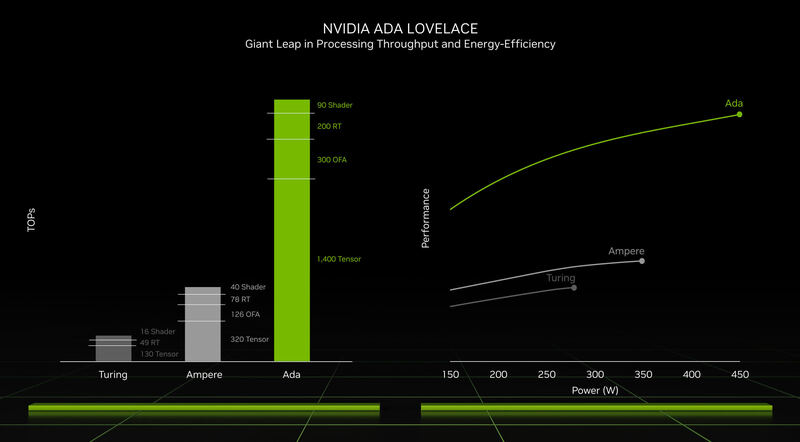
The RTX A4000 is built on NVIDIA's Ampere architecture, which brings significant improvements over the previous Turing architecture used in the Quadro RTX 4000. The card features 6,144 CUDA cores, 192 third-generation Tensor Cores, and 48 second-generation RT Cores. These components work together to provide enhanced performance in tasks such as real-time ray tracing, AI inference, and general compute workloads. The Ampere architecture's improved streaming multiprocessor and enhanced memory subsystem contribute to better overall performance and efficiency. The architecture's design allows for more efficient processing of complex tasks, particularly in visualization and rendering applications where the card's performance gains are most apparent.
The third-generation Tensor Cores in the A4000 are specifically designed to accelerate AI inference workloads, making the card suitable for tasks involving machine learning and data processing. The second-generation RT Cores provide hardware-accelerated ray tracing, which is particularly beneficial in visualization and CAD applications where realistic lighting and shadows are important. The combination of these features makes the A4000 a powerful tool for professionals who need to perform complex visualizations or AI-accelerated tasks.
The performance gains from the Ampere architecture are evident in both professional and gaming benchmarks. In professional applications, the card's ability to handle complex scenes and large datasets is significantly improved compared to previous generations. The architecture's design allows for efficient processing of high-resolution textures and detailed models, which is crucial for visualization and CAD workloads. The card's performance in these areas is further enhanced by its support for ECC memory and certified drivers, which provide reliability and compatibility in enterprise environments. The architecture's efficiency also translates to lower power consumption, which is beneficial for workstations that need to maintain stable temperatures during long-running tasks.
Power consumption and thermal design
The RTX A4000 operates with a total board power consumption of 140 watts, which is significantly lower than the RTX 3070's 290 watts and the RTX 3070 Ti's 350 watts. This lower power consumption is achieved through a combination of the card's efficient Ampere architecture and its single-slot design. The card's power consumption is further reduced by its use of GDDR6 memory, which is more power-efficient than the GDDR6X memory used in the RTX 3070. According to StorageReview, the card's power connector is a single 6-pin PCIe, which is standard for single-slot cards and allows for easy installation in compact workstations.
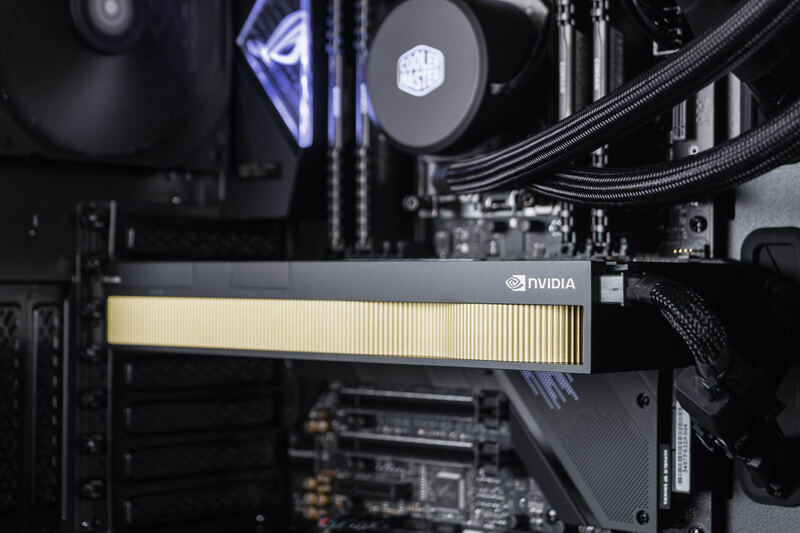
The card's thermal design is optimized for a single-slot form factor, featuring a blower-style cooling solution that draws air from the top and bottom of the card and expels it through the rear, per AEC Magazine. This design allows for better airflow in compact workstations where space is limited. The cooling solution is designed to maintain stable temperatures during extended use, which is important for professional applications that require long-running tasks. The card's thermal performance has been tested in various environments, and it has shown to maintain stable temperatures even under heavy load, making it suitable for continuous use in professional settings.
The card's power efficiency is particularly beneficial in environments where power consumption is a concern, such as data centers or workstations with limited power budgets. The lower power consumption also means that the card generates less heat, which reduces the risk of thermal throttling and helps maintain consistent performance over time. The card's design also allows for easier installation in compact workstations, as it does not require additional clearance for cooling. This makes the A4000 a suitable choice for users who need a powerful graphics card in a space-constrained environment.
Connectivity and display support
The RTX A4000 features four DisplayPort 1.4a ports, which provide extensive connectivity options for professional users. The card's display capabilities are further enhanced by its support for high refresh rates, making it suitable for applications that require precise visual feedback. The DisplayPort 1.4a standard also supports HDR and other advanced display features, which are important for professional visualization tasks.
The card's connectivity options are designed to meet the needs of professional users who require multiple displays for their work. The four DisplayPort 1.4a ports provide flexibility in setting up multi-monitor workstations, which is common in CAD, BIM, and visualization environments. The card's support for high-resolution displays and multiple simultaneous outputs makes it a versatile choice for users who need to work with complex visual data. The card's display capabilities are also enhanced by its ability to support various resolutions and refresh rates, which is important for maintaining productivity in demanding work environments.
In addition to DisplayPort connectivity, the card supports USB-C connections, which provide additional flexibility for connecting external displays or devices. The card's display support is further enhanced by its compatibility with various display standards and its ability to handle multiple high-resolution outputs. The card's connectivity options make it suitable for a wide range of professional applications, from CAD and BIM to visualization and data analysis. The card's ability to support multiple displays without performance degradation is particularly valuable in professional environments where users need to work with complex visual data across multiple screens.
Gaming performance comparison
While the RTX A4000 is primarily designed for professional applications, its gaming performance has been evaluated against the RTX 3070 and RTX 3070 Ti. The card's performance in gaming scenarios is generally lower than that of the RTX 3070 due to its lower core clocks and memory bandwidth. The A4000's base clock of 735 MHz and boost clock of 1560 MHz are significantly lower than the RTX 3070's base clock of 1575 MHz and boost clock of 1770 MHz. This difference in clock speeds results in a performance gap that is most noticeable in gaming benchmarks where raw processing power is critical.
In gaming benchmarks, the RTX A4000 performs adequately in lower to medium settings, but struggles to match the performance of the RTX 3070 at higher settings. The card's performance is particularly limited by its memory bandwidth, which is 26% lower than the RTX 3070 due to the use of GDDR6 instead of GDDR6X memory. This limitation becomes more apparent in demanding games that require high memory throughput, such as those with large textures or complex scenes. Despite these limitations, the card's performance is sufficient for users who primarily use it for professional applications and occasionally play games at lower settings.
The card's gaming performance is also affected by its single-slot design, which limits its ability to handle high-performance gaming scenarios. The card's lower power consumption and thermal design are optimized for professional workloads, which means it may not be the best choice for users who prioritize gaming performance. However, for users who need a card that can handle both professional tasks and occasional gaming, the A4000 provides a reasonable compromise. The card's performance in gaming is also influenced by its memory capacity, which is higher than the RTX 3070's 8 GB, providing better performance in memory-intensive games.
Value proposition and market positioning
The RTX A4000 is positioned as a mid-range professional GPU, offering a balance between performance and cost. With a street price the card is significantly more affordable than the RTX A5000 ($2,250) and RTX A6000 ($4,650). This pricing makes it accessible to a broader range of professionals who need a capable graphics card for visualization, CAD, and AI workloads but do not require the maximum performance of higher-end cards. The card's value proposition is further enhanced by its support for ECC memory, certified drivers, and ISV certification, which provide reliability and compatibility in enterprise environments.
In terms of value, the RTX A4000 offers a compelling balance of features and performance for its price point. The card's ability to handle complex professional tasks with 16 GB of memory and Ampere architecture provides a significant advantage over older cards like the Quadro RTX 4000. The card's performance in professional applications is competitive, and its power efficiency and thermal design make it suitable for continuous use in workstations. The card's value is also enhanced by its support for advanced features like DLSS 3 and hardware-accelerated ray tracing, which are important for modern visualization and CAD workflows.
The card's market positioning is clear: it targets professionals who need a reliable, efficient graphics card for visualization, CAD, and AI workloads without the overhead of higher-end cards. The card's performance in these areas is sufficient for most professional tasks, and its support for ECC memory and certified drivers ensures compatibility and reliability in enterprise environments. While it may not be the best choice for users who prioritize gaming performance, the A4000 provides excellent value for professionals who need a powerful, stable graphics card for demanding workloads.
Strengths
- +16 GB of GDDR6 ECC memory for demanding visualization workflows
- +Based on Ampere architecture with improved processing performance
- +Supports up to four 5K displays via DisplayPort 1.4a connectors
- +Single slot design with 140W power consumption for compact workstations, per AEC Magazine
Watch-outs
- −Not designed for gaming performance
- −Limited to PCIe Gen 4 x16 interface
How it compares
The NVIDIA RTX A4000 offers 16 GB of GDDR6 ECC memory and is based on the Ampere architecture, providing a good balance between performance and memory capacity. While it's less memory-intensive than the RTX 6000 Ada Generation's 48 GB and the RTX A6000's 48 GB, it provides better performance than the RTX A5000 in terms of CUDA cores and ray tracing capabilities. Compared to the RTX 2000 Ada Generation, it offers more memory but is designed for larger workstations rather than small form factor systems.
Rating sources
“Nvidia’s new Ampere-based pro GPUs, the Nvidia RTX A4000 and RTX A5000, offer a big step up from the Turing-based Quadro RTX family.”
“The A4000 sits right behind the RTX A5000 and RTX A6000 in NVIDIA's new line of professional RTX cards, featuring 48 RT Cores (2 nd gen), 192 third-generation Tensor Cores, and 6,144 CUDA cores with 16 GB of graphics memory.”
“The RTX A4000 can be had for around $1,300, or about 30% more than the vanilla RTX 3070.”
“The first graph shows the relative performance of the videocard compared to the 10 other common videocards in terms of PassMark G3D Mark.”
Our 3.6 score is the average of the 4 scored reviews above; 4 more reviewed it without printing a score and are not in the average. Ratings marked * were derived from the reviewer’s written analysis or video transcript — the publisher didn’t print an explicit numeric score, so we inferred one from their own words. Click through to verify. More about methodology.