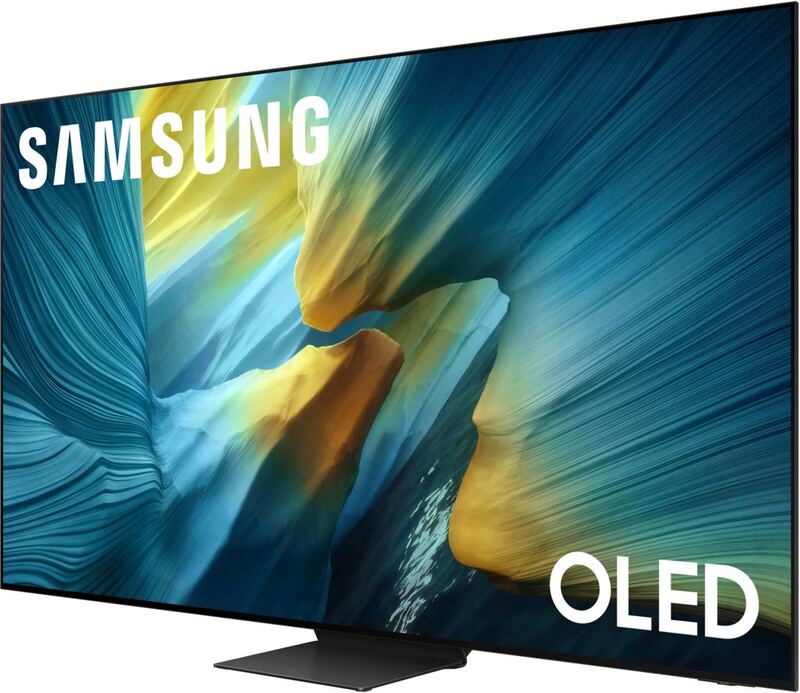
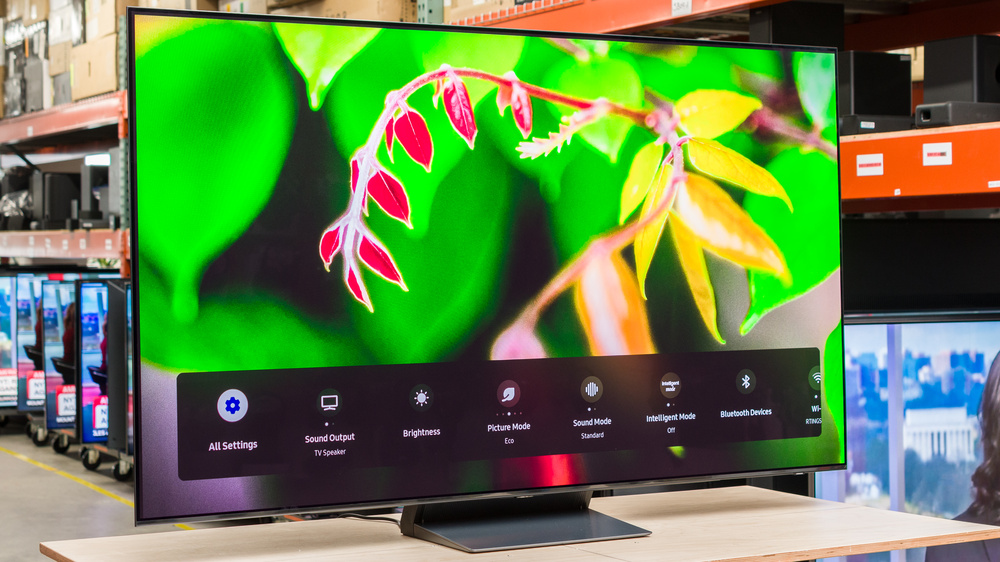
Samsung's mid-range QD-OLED offering excellent value with flagship features at a lower price.
Full review
Picture Quality and Panel
The Samsung S90D sits just below the flagship S95D in Samsung's 2024 OLED lineup and, on the right sizes, delivers genuine QD-OLED performance at a mid-range price. Quantum-dot color is its calling card: reviewers highlight vivid, highly saturated color volume that holds up at high brightness, with peak HDR output measured around 1,300 nits in a small window. Perfect OLED black levels and effectively infinite contrast give HDR content the punch and depth the technology is known for.
One important caveat is the so-called panel lottery. In North America, only the 55-, 65-, and 77-inch models use the QD-OLED panel; the 42-, 48-, and 83-inch versions ship with conventional WOLED panels that trade away some of that standout color brightness. Buyers chasing the full QD-OLED experience should stick to the three mid-size options. Note also that, like all Samsung TVs, the S90D does not support Dolby Vision HDR, relying on HDR10, HDR10+, and HLG instead.
Gaming and Smart Features
For gamers the S90D is well equipped. It offers four HDMI 2.1 ports and supports 4K at up to 144Hz with compatible PC sources, alongside VRR, FreeSync, and ALLM, with reviewers measuring game-mode input lag around a very low 9ms. Combined with OLED's instantaneous pixel response and per-pixel contrast, fast-paced games look exceptionally sharp and fluid, and the Gaming Hub aggregates console and cloud-streaming services in one place.
Processing is handled by Samsung's NQ4 AI Gen2 chip, which the company credits with 20 neural networks for upscaling and image optimization. In practice it does a strong job sharpening lower-resolution sources like cable and streaming. The TV runs Tizen OS, which is fast and well stocked with apps, and includes a 60W 2.2.2-channel speaker system with Object Tracking Sound for above-average built-in audio, though a dedicated soundbar still pays dividends.
Value and Verdict
The main compromises relative to the flagship are brightness and viewing angles. The S90D is dimmer than the S95D and, depending on panel, can show some color shift at off-angle seating, so very bright rooms or wide seating arrangements are where it shows its mid-range position. The absence of Dolby Vision is a genuine consideration for buyers who lean on that format through services that prioritize it.
Despite those caveats, the S90D is frequently described as one of the best bang-for-buck OLEDs available, and with starting prices around $1,000 for smaller sizes it brings near-flagship QD-OLED picture quality and a full HDMI 2.1 gaming feature set well below the cost of Samsung's top tier. For most living rooms, it lands as the value pick of the QD-OLED range, provided buyers choose a size that guarantees the quantum-dot panel.
Strengths
- +QD-OLED color and brightness at lower price
- +4K 144Hz gaming support
- +Slim design with clean aesthetics
- +Good HDR performance
Watch-outs
- −Lower brightness than S95F
- −No Dolby Vision
- −Limited viewing angles
How it compares
Best value QD-OLED option, offering flagship features at a more accessible price point.
Rating sources
“The Samsung S90D is a sensibly priced OLED with incredible contrast, some of the highest luminance on an OLED, and a range of awesome gaming features.”
“Phones iPhone Android iPhone Deals Best Phone Plans Family Plans Cellphone Plans Unlimited Plans Phone Reviews Galaxy S25 Ultra iPhone 16 Pro iPhone 16 Cases Back Laptops Guides from our experts to help you find the best laptop for your specific needs.”
Our 4.4 score is the average of these published ratings. More about methodology.