Sony's flagship OLED with advanced image processing and Acoustic Surface Audio technology.
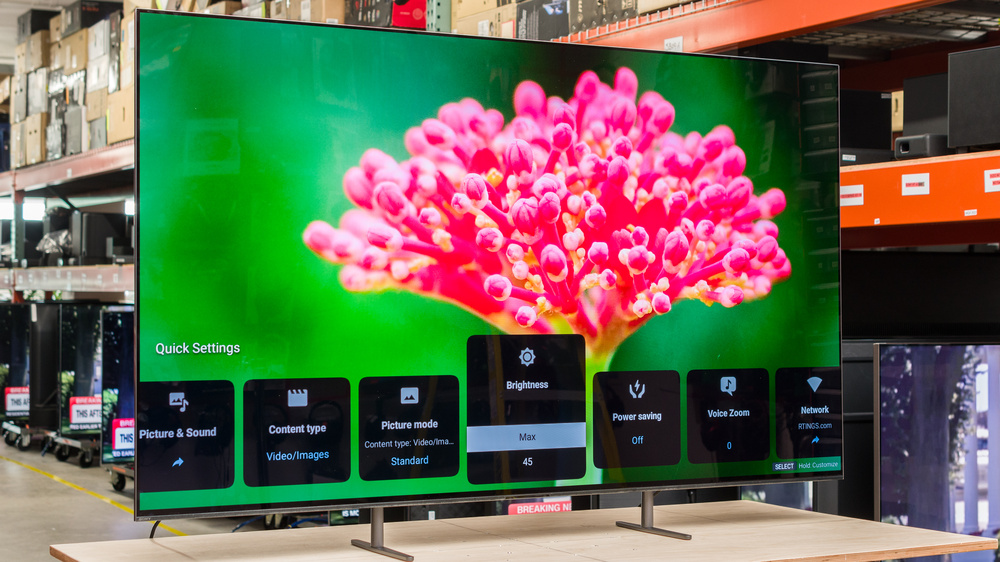
Full review
An A80L refinement rather than a new panel
Reviewers frame the Bravia 8 as a tidy-up of the A80L rather than a new class of television. PCMag's three-and-a-half-star review credits Sony's XR processing for the things Sony is known for: colour that stays believable, motion that holds together in fast pans, and upscaling that does not smear detail into mush. Digital Trends reaches the same verdict from a different angle, calling it a solid and lovely OLED without claiming it moves the category on. The panel does what OLED panels do — black is black, contrast is effectively infinite, and a dark room is where it looks its best.
Two full HDMI 2.1 ports across four inputs
Gaming support is present but rationed. The set handles 4K at 120Hz with VRR and ALLM, and HDR highlights have real punch on a PS5. Only two of the four HDMI inputs are the full 2.1 kind, though, so a household with two current consoles and a soundbar runs out of high-bandwidth ports quickly. Owners in the r/bravia forum also describe the Google TV interface as sluggish next to the picture it is driving — menu lag rather than video lag, but noticeable.
SDR brightness is the weak point in a lit room
The consistent complaint concerns bright rooms. This is a conventional OLED panel, not QD-OLED and not Mini-LED, and viewers coming from either describe standard dynamic range material — daytime sport, news, anything watched with the curtains open — as looking flat by comparison. Buyers on r/4kTV who watch mostly in daylight keep landing on the same advice: this is a television for controlled light, and cheaper Mini-LED sets will out-punch it at noon.
Costs close to double a comparable Samsung S90F
Price is the other sticking point. At $2,798 the Bravia 8 sits near double what comparable Samsung OLEDs such as the S90F ask, and the forum consensus is that Sony's processing and build justify a gap but not that gap unless picture accuracy is a hobby rather than a preference. The LG C4 has fallen far enough to make the comparison uncomfortable. The Bravia 8A variant drops the backlit remote and some streaming credits for a lower entry price if the accessories are not the point.
Burn-in worry still shapes the buying decision
Long-term reliability keeps coming up in owner threads, usually from people replacing an older Sony OLED that developed dead pixels or lost its panel outside warranty. Nothing about the Bravia 8 specifically suggests a defect, but out-of-warranty OLED repair is expensive enough that some shoppers choose a Mini-LED set instead and accept grey blacks in exchange.
Strengths
- +Industry-leading image processing
- +Acoustic Surface Audio technology
- +Perfect black levels and motion handling
- +Google TV with excellent app support
Watch-outs
- −Lower peak brightness than competitors
- −Only two full HDMI 2.1 ports
- −Premium pricing
How it compares
Best-in-class image processing delivers the most cinematic picture, though at a premium price.
Rating sources
“OLED TVs typically aren't as bright as similar LED TVs, and the Bravia 8 isn't Sony's highest-tier or brightest OLED TV (the A95L is currently Sony's flagship OLED), but it still puts out a respectable amount of light.”
“If you are looking at getting your first OLED, or even replacing an OLED that's four years old or older, the Bravia 8 is absolutely worth considering.”
Our 3.8 score is the average of these published ratings. More about methodology.