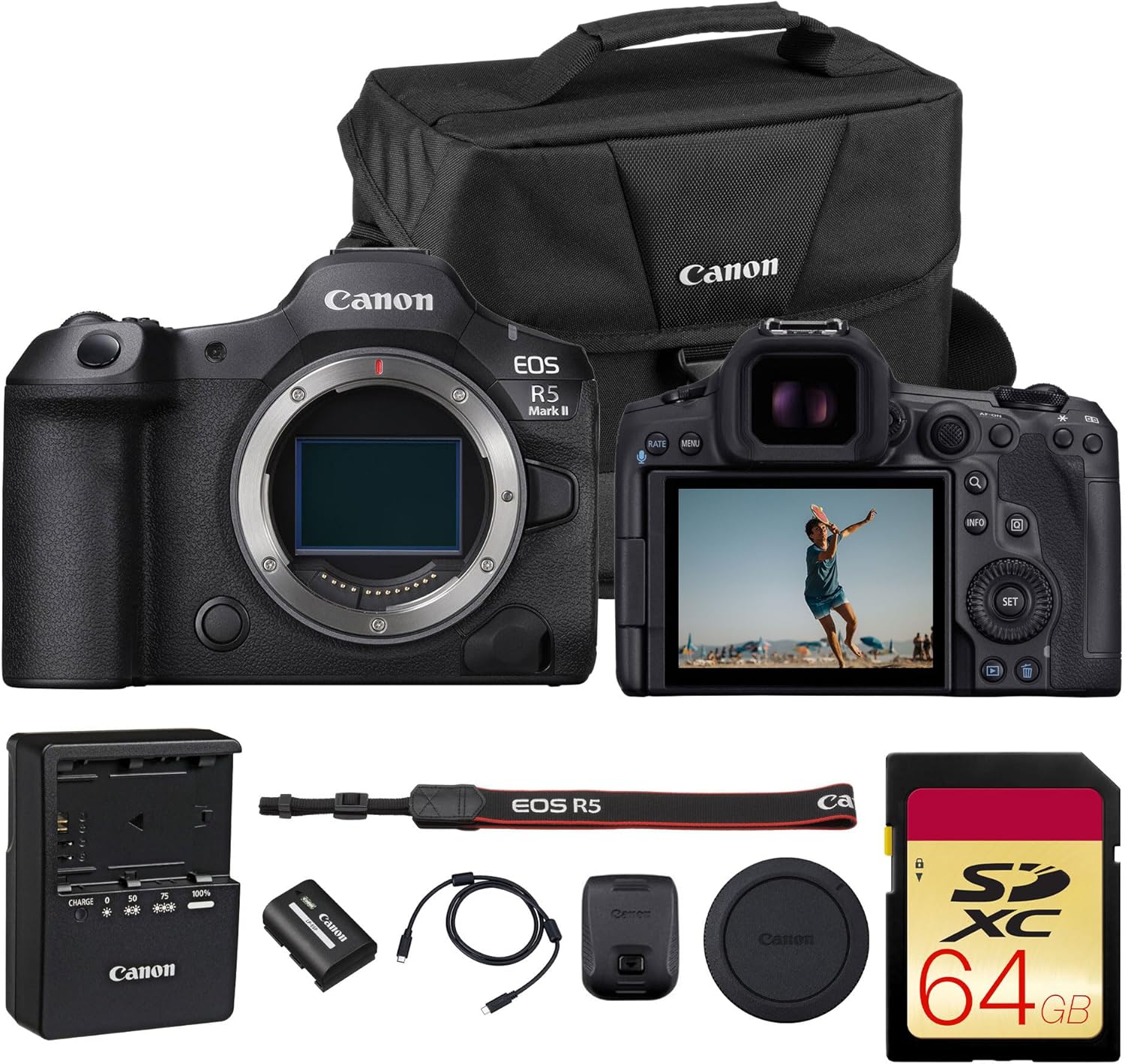
The Canon EOS R5 Mark II is the strongest all-rounder here: a 45MP stacked sensor, 30fps electronic-shutter bursts, 8K RAW video and Eye Control AF in a 746 g body. TechRadar and Photography Blog both gave it a perfect 5 out of 5, and Tom's Guide 4.5 out of 5. It fixes the original R5's overheating reputation and adds subject tracking that holds where the older camera slipped. The reasons to look elsewhere are the price, the switch to LP-E6P batteries that strands an existing set, and the Nikon Z8 doing much of the same work for less.
Full review
A stacked 45MP sensor and 30fps bursts
The defining change from the original R5 is the move to a 45MP stacked BSI CMOS sensor. Stacking speeds up readout, and fast readout is what makes the rest of the camera possible: blackout-free electronic-shutter bursts at up to 30 frames per second against the original's 20, and rolling-shutter distortion cut to the point where the electronic shutter becomes the default rather than the compromise. Photography Blog, which scored the camera a full 5 out of 5, noted a buffer good for 200 JPEGs or 93 RAW frames to a CFexpress card. TechRadar also rated it 5 out of 5, with Tom's Guide at 4.5.
Digic Accelerator and Action Priority autofocus
Canon added a Digic Accelerator co-processor, borrowed from the R1, to run subject detection without loading the main image processor. The result is tracking that holds onto people, animals and vehicles more stubbornly than the original R5 managed, plus Action Priority modes trained on football, basketball and volleyball that identify the player involved in the play rather than the nearest face. TechRadar praised the breadth of the system. Registered People Priority is the other addition worth knowing about: save specific faces in advance and the camera favours them in a crowd, which is aimed squarely at wedding and event photographers who need one subject held through a busy frame.
Eye Control AF still does not suit everyone
Eye Control AF returns with a wider field of view, revised algorithms and a spectacles-detection mode that addresses the loudest complaint about the first implementation. When it works, selecting a focus point by looking at the subject is faster than any joystick. It does not work for everyone: it depends on a consistent eye position behind the finder, and calibration can be defeated by glasses, contact lenses or stray light reaching the infrared sensors. Treat it as a bonus that some photographers come to rely on and others switch off within a week, rather than a reason to choose this body over another.
8K RAW, and the cards it demands
Video is the other half of the pitch: 8K RAW recorded internally, 4K at up to 120p for slow motion, and Canon Log 2, Log 3 and HLG for grading. Thermal behaviour is much improved on the original R5, which had a genuine reputation problem in this area, though long 8K takes still generate heat and enormous files. That is the hidden cost — 8K RAW needs fast CFexpress Type B media plus the storage and editing workflow to match, and the SD UHS-II slot is a backup rather than an equal partner. Pre-capture recording, which buffers frames before the shutter is fully pressed, is the feature wildlife shooters will notice most.
746 g, familiar controls, a new battery
At 746 g the body is dense rather than heavy, in a magnesium-alloy shell with dust and splash sealing and the deep Canon grip that anyone coming from a 5D will recognise instantly. The viewfinder is a 5.76-million-dot panel, bright and detailed enough to work in rather than tolerate. The upgrade tax is the battery: the Mark II wants LP-E6P cells, and older LP-E6NH batteries bring a warning screen and reduced functionality instead of simply working, so an existing R5 owner's set does not carry over cleanly. Budget for new batteries alongside the body rather than after it.
Against the Nikon Z8 at this price
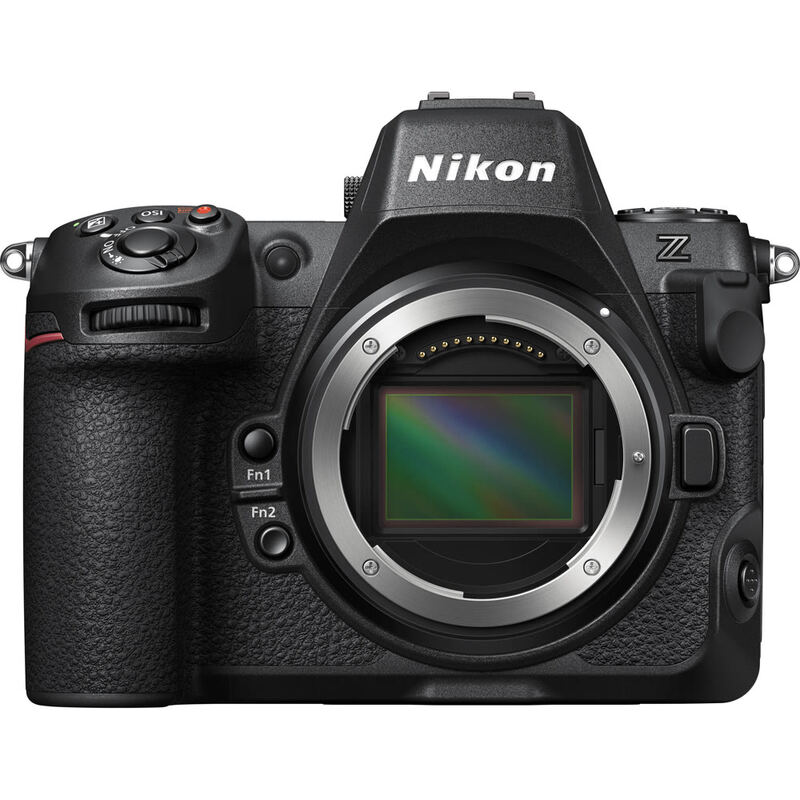
The R5 Mark II is expensive, and the Nikon Z8 is the obvious comparison: similar stacked-sensor capability, very strong autofocus and strong video for less money. Canon's answers are the deeper RF lens range, Eye Control AF and Action Priority tracking, none of which Nikon matches directly. There is one regression worth noting — Dual Pixel RAW from the original R5 is gone, which matters to the small group who used it for post-capture focus adjustment. For anyone already holding RF glass this is a straightforward upgrade; for anyone choosing a system from scratch, the price gap deserves more thought than the feature list does.
Strengths
- +45MP stacked BSI CMOS sensor with minimal rolling shutter
- +Blackout-free bursts at up to 30fps with the electronic shutter
- +8K RAW recorded internally, with far better thermal behaviour than the original R5
- +Pre-capture buffering and Action Priority tracking for sports and wildlife
- +In-body stabilisation rated up to 8.5 stops with compatible RF lenses
Watch-outs
- −Costs $4,099 for the body, a clear premium over the Nikon Z8
- −Requires LP-E6P batteries; older LP-E6NH cells trigger a warning and reduced function
- −CFexpress Type B media is effectively mandatory for 8K RAW and the fastest bursts
- −Dual Pixel RAW from the original R5 has been dropped
How it compares
Best all-rounder: highest editorial rating, with the strongest balance of 45MP stills, 8K RAW video, and AF. Pricier than the Z8.
Rating sources
Our 4.8 score is the average of these published ratings. More about methodology.