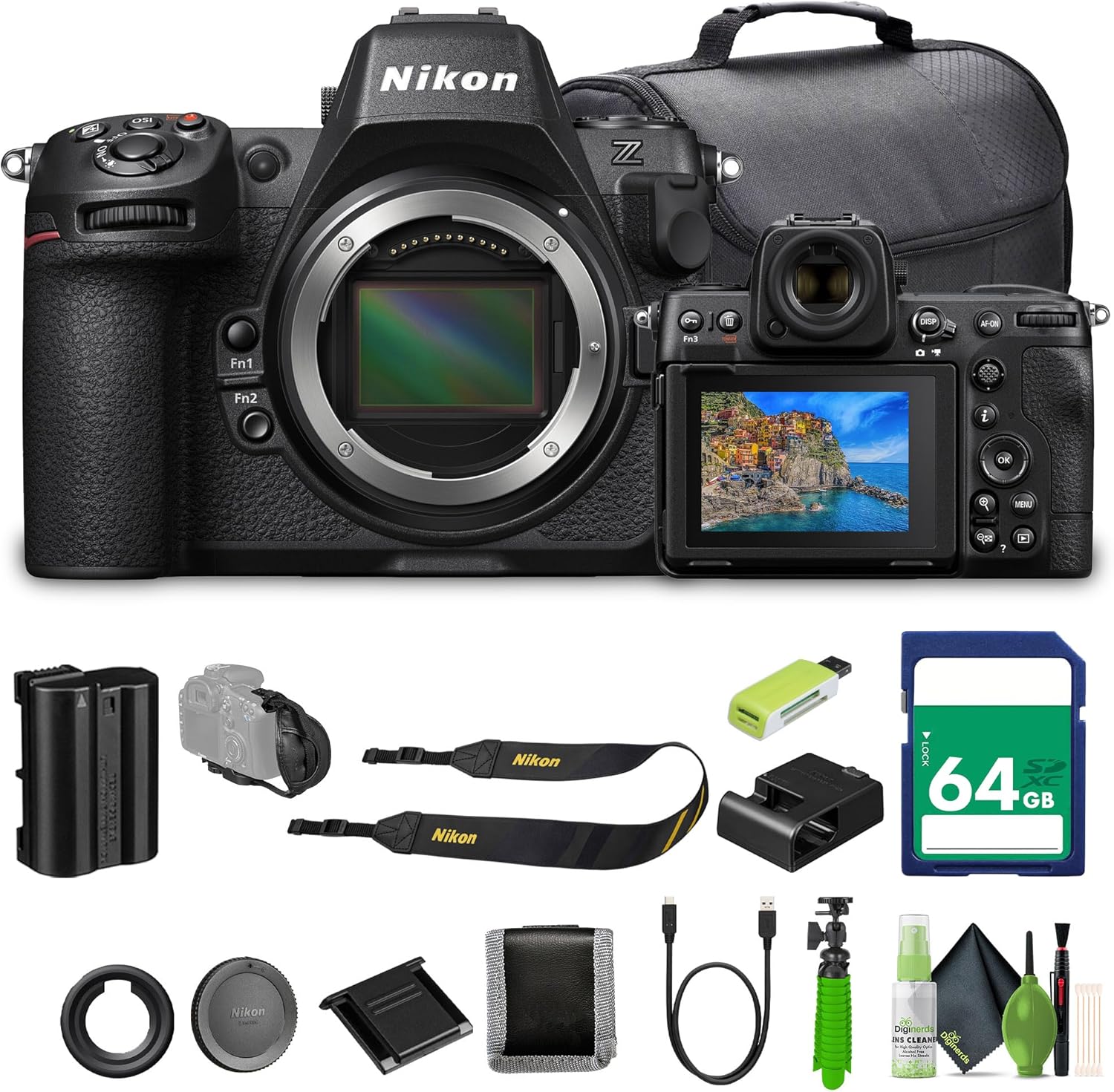
The Nikon Z8 puts Z9 internals into a smaller, cheaper body: the same 45.7-megapixel stacked BSI CMOS sensor, the same Expeed 7 processor, the same 8.3K/60p N-RAW video. PhotographyBlog rated it 4.5 out of 5 and gave it a Gold Award. Weight and battery life are the tradeoffs against smaller full-frame rivals, and the electronic-only shutter is a design decision you either want or you do not.
Full review
Z9 sensor and processor in a D850-sized body
The Z8 is the Z9's imaging hardware in a body roughly the size of the old D850: a 45.7-megapixel stacked BSI CMOS sensor, an Expeed 7 processor, and a magnesium-alloy chassis weighing 910 grams. That is heavier than most full-frame rivals, and the grip is deep enough to carry it, but nothing in the imaging pipeline was cut down to fit the smaller shell. ISO runs from 64 to 25600 natively, expandable to 32 and 102400.
No mechanical shutter anywhere in the camera
Every frame is read off the stacked sensor electronically; there is no mechanical shutter at all. That removes the loudest moving part and the component most likely to wear out, and it gives blackout-free bursts through the 3.68-million-dot viewfinder. The trade is that rolling shutter and banding under artificial light become sensor behaviour rather than shutter behaviour, with no mechanical fallback when they appear.
20fps raw, or 120fps at 11 megapixels
Continuous shooting reaches 20 frames per second in raw with full autofocus and exposure tracking, and 120 frames per second if you accept an 11-megapixel cropped JPEG. The 493-point phase-detect system carries subject detection across people, animals, birds and vehicles, with an aircraft mode aimed at aviation work. For wildlife and sport this is the part of the specification that justifies the body over a higher-resolution, slower camera.
8.3K/60p N-RAW recorded internally
Video tops out at 8.3K/60p in N-RAW, with ProRes 422 HQ, H.265 and H.264 options and oversampled 4K pulled from the full sensor width at up to 120p. Recording is internal, so raw capture needs no external recorder and no rigging. Continuous clip length is capped near 90 minutes against the Z9's 125, which is the practical cost of the smaller body's thermal headroom.
910 grams and about 330 shots per battery
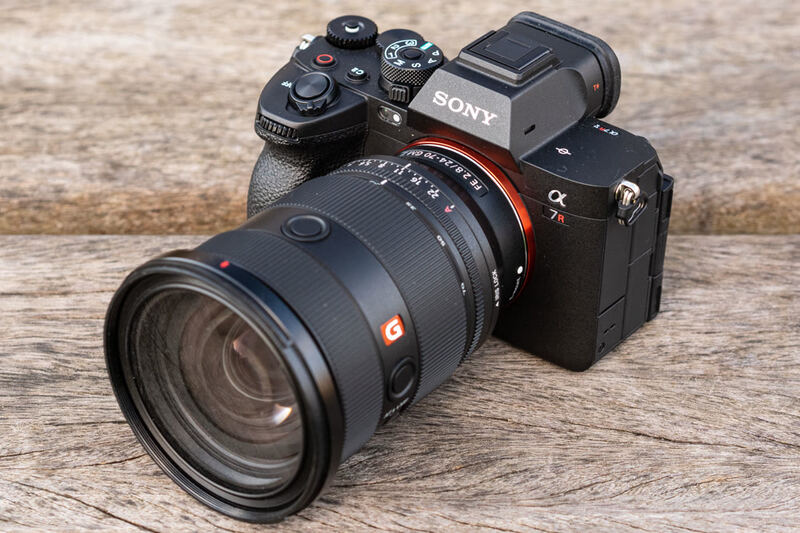
The two real costs are mass and endurance. At 910 grams the Z8 sits well above the Sony A7R V's 723 grams, which tells against it for travel and street work, and the EN-EL15c is rated near 330 shots on the CIPA standard - a second battery is not optional for a full day. CFexpress Type B media adds cost on top of the body, and heavy 8K work drains cards and cells faster still.
Strengths
- +45.7 MP stacked BSI CMOS sensor inherited from the flagship Z9 at 25% less weight and ~60% lower price
- +Mirrorless design with no mechanical shutter — silent, zero shutter blackout, rated to 1/32,000s electronic
- +8.3K/60p ProRes RAW internal recording — matches the Z9 for professional video workflows
- +20fps RAW burst (120fps at reduced 11MP JPEG) with full AF/AE tracking and 493-point phase-detect AF
- +3D Tracking AF with 9 subject-detect modes (people, animals, birds, vehicles, aircraft, motorcycles, trains, planes, bicycles)
Watch-outs
- −Larger and heavier than the Sony A7R V at 910g (vs 723g) — not as comfortable for travel/street
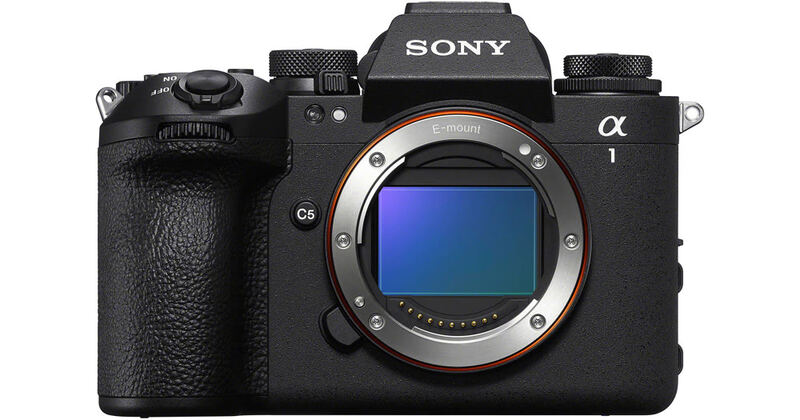
- −Battery life (330 shots CIPA) trails the Sony A1 II (530 shots) — two batteries recommended for shoots
- −XQD/CFexpress card slot adds media cost compared to the Sony A7R V's dual SD
How it compares
Z9 internals (45.7MP stacked, 8.3K/60p) in a smaller body for less money — the value-per-capability leader of the flagships.
Rating sources
Our 4.5 score is the average of these published ratings. More about methodology.