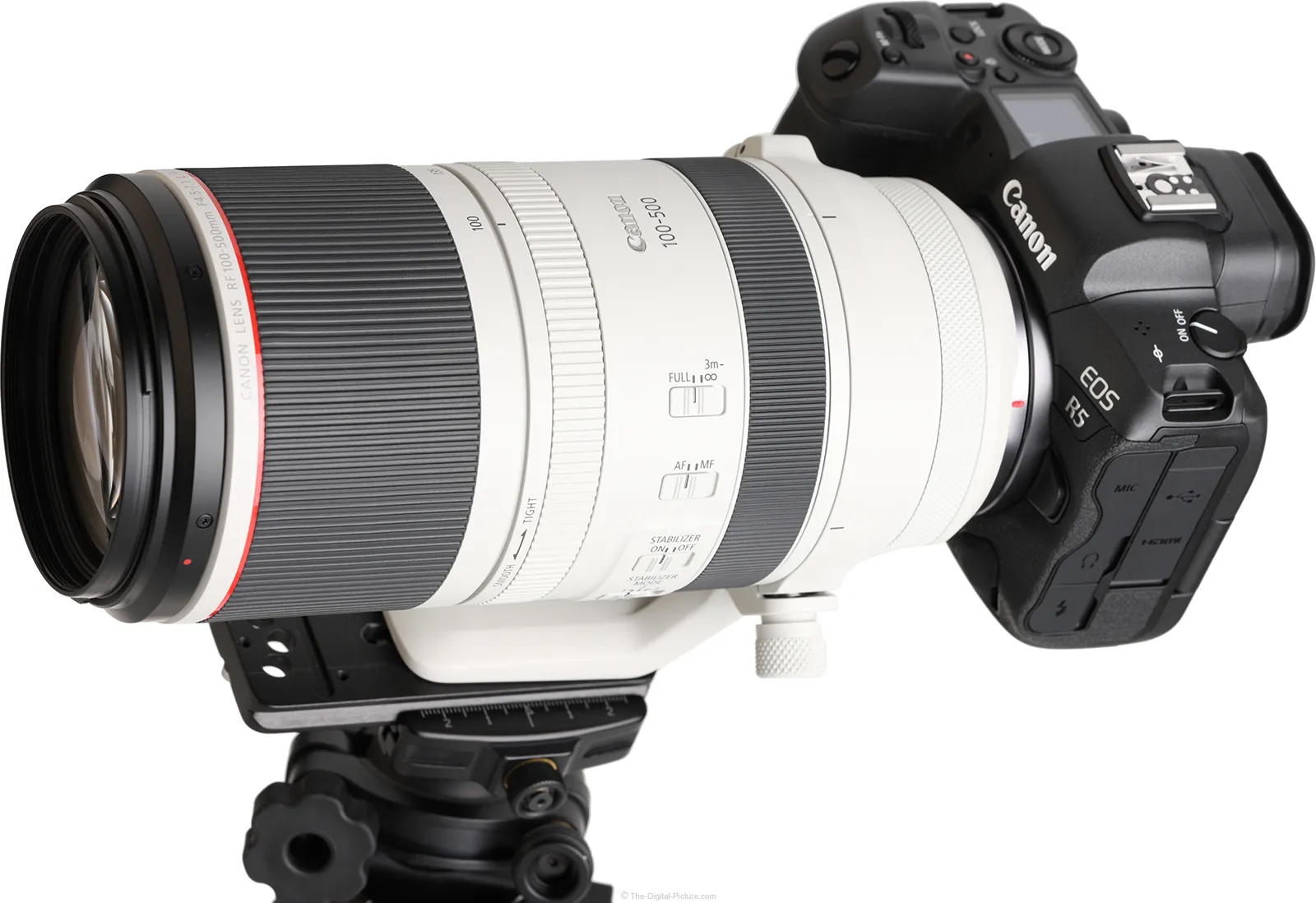
The Canon RF 100-500mm F4.5-7.1 L IS USM is the most adaptable super-telephoto zoom in the RF lineup and the benchmark for the mount. It delivers L-series sharpness corner to corner across a huge 5x range, focuses fast and accurately, and stays surprisingly light at 1365g. The slow variable aperture is the only real compromise, making it a daylight specialist rather than a low-light tool.
Full review
Sharp corner to corner across the whole 5x zoom
The RF 100-500mm has become the default recommendation for Canon RF shooters who need reach, and the optics are why. The-digital-picture's reviewer found the lens creates extremely sharp images from full-frame corner to full-frame corner, including at wide-open apertures, over the entire focal length range, and described it as an outstanding choice for wildlife, landscape, sports and family photography. Cameralabs concurred, reporting that in testing it delivered sharp results across the frame throughout the focal range, and rated it Highly Recommended.
What makes that performance remarkable is the focal range it covers. A 5x zoom that holds its sharpness from 100mm all the way to 500mm is unusual, and it means a single lens can frame a distant raptor and a closer mammal without a lens change. Dustin Abbott's MTF and field testing confirmed strong resolution across the range, and reviewers consistently note that the lens resolves enough detail to crop aggressively on high-megapixel bodies like the R5.
That combination of reach and resolving power is why the 100-500mm has become a fixture in so many wildlife kits. The-digital-picture's reviewer called it a must-have lens for many kits and an outstanding choice for wildlife, landscape, sports and family photography, a breadth of recommendation few telephotos earn. The corner-to-corner sharpness even at the widest available aperture at each focal length is the trait that separates it from cheaper zooms, which typically soften toward the edges and at the extremes of their range; here the image holds together across the whole frame and the whole zoom.
1365 grams, lighter than the older EF 100-400mm
Canon's engineering achievement here is weight. Dustin Abbott noted that Canon managed to squeeze out a longer 5x zoom ratio while reducing the weight to 1365g, down from 1650g for the comparable EF 100-400mm, despite adding 100mm of reach. For a lens that reaches 500mm, that is genuinely portable, and it is the difference between a lens you can handhold and track with for an afternoon and one that demands a monopod.
The build carries full L-series weather sealing, a 77mm filter thread, and a retractable design with a zoom-tension ring to lock the barrel for transport. The lens supports up to 5 stops of image stabilization on its own, which combines with in-body IS on stabilized bodies for steadier handheld shots at long focal lengths. It feels like the professional tool it is, balanced and robust without being unwieldy.
Autofocus and Stabilization
Autofocus is a standout. Dustin Abbott reported seeing good autofocus with still subjects even in very dim lighting, and across reviews the lens is praised for fast, confident acquisition and reliable tracking of moving subjects, which is exactly what wildlife and sports shooters need. The dual Nano USM motors drive focus quietly and quickly, and the lens keeps pace with Canon's best subject-detection autofocus systems.
The image stabilization is rated up to 5 stops on its own and more with coordinated in-body IS, which matters enormously at 500mm where the smallest shake is magnified. In practice that lets photographers shoot at slower shutter speeds than the focal length would normally allow, gaining a margin in the dawn and dusk light when wildlife is most active and the slow aperture is most limiting.
Aperture drops to f/7.1 by 500mm
The defining limitation is the variable aperture. Dustin Abbott measured that the lens does not hold its brighter apertures for long, reaching f/6.3 by 363mm and ending at f/7.1 at 500mm, where the older EF 100-400mm held f/5.6 throughout. He concluded that this is a lens that works best with adequate light, and that the slow aperture limits low-light performance. In deep shade or at the edges of the day, that means pushing ISO higher than a faster lens would require.
The teleconverter situation is the other caveat. The RF 1.4x and 2x teleconverters only attach beyond roughly the 300mm mark of the zoom, so you cannot use them across the full range, and adding them darkens the already-slow aperture further. And at around $2,900 it is a premium purchase, even if it is the most capable all-round telephoto here.
None of these shortcomings are flaws in execution; they are the deliberate trade-offs Canon made to keep the lens light and versatile. A wider constant aperture would have meant a far heavier, bulkier lens, and the partial teleconverter compatibility is a consequence of the retracting optical design. Buyers simply need to recognize that this is a daylight-oriented, do-everything zoom rather than a low-light specialist, and judge it against that intent rather than against a brighter prime.
The versatile middle ground of Canon's RF telephotos
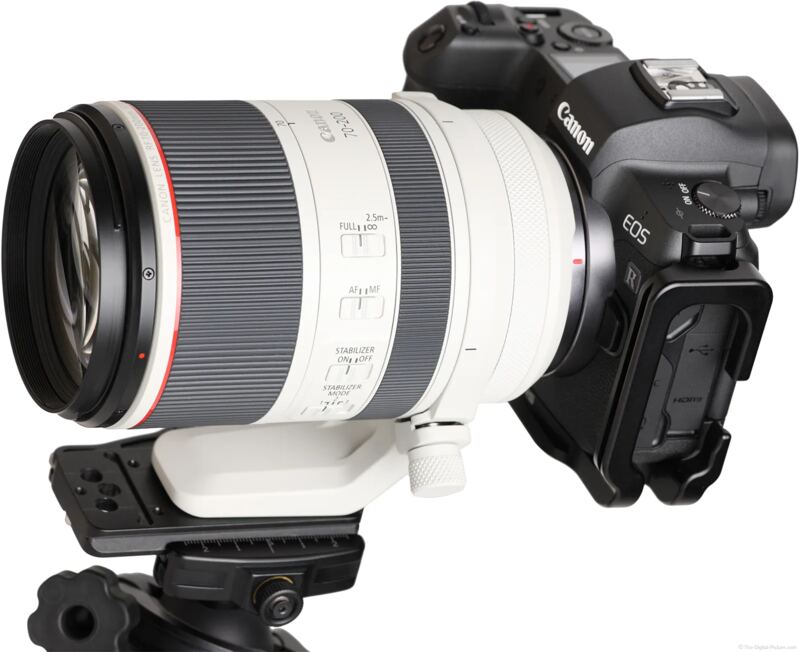
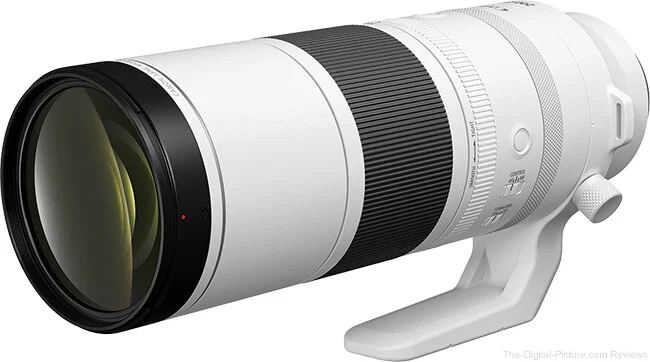
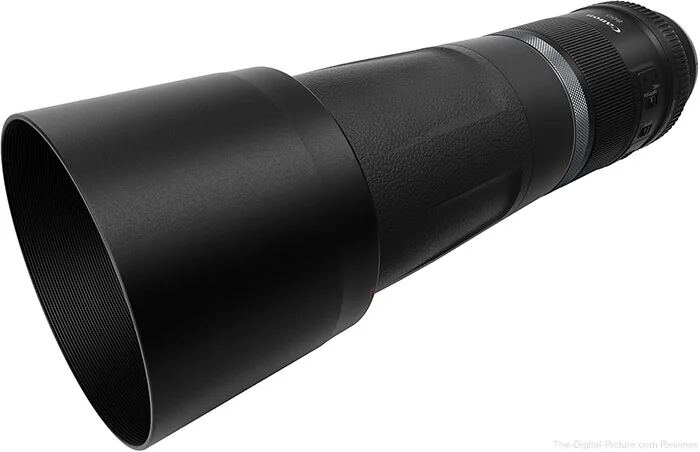
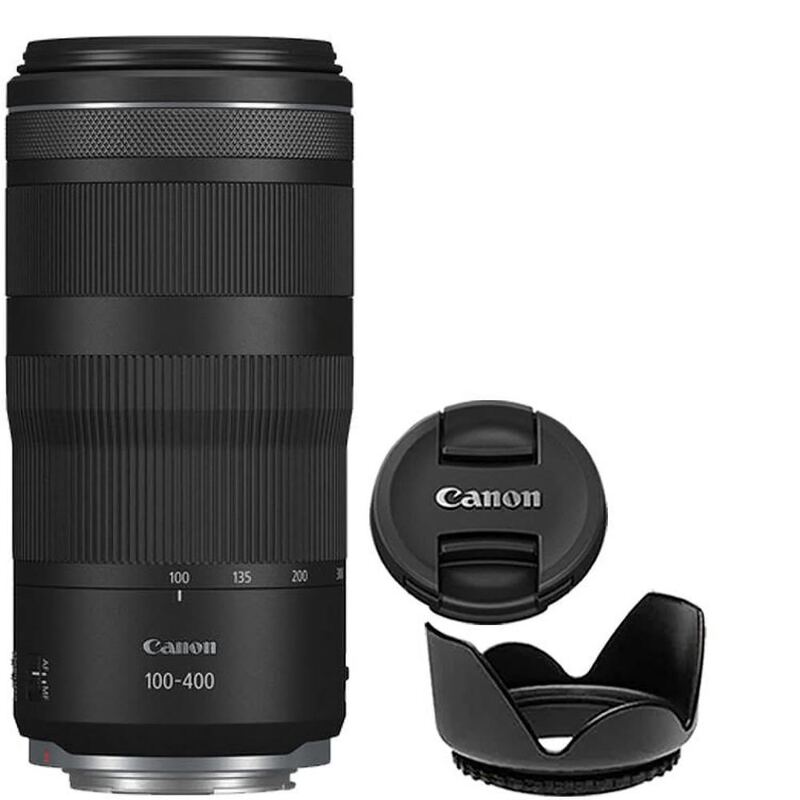
Within this group the 100-500mm is the versatile centerpiece. It is sharper and far better built than the budget Canon RF 100-400mm F5.6-8 IS USM, and more flexible than the fixed-aperture, fixed-focal-length Canon RF 800mm F11 IS STM. The Canon RF 70-200mm F2.8 L IS USM beats it decisively for low light with its constant f/2.8, but stops at 200mm, while the Canon RF 200-800mm F6.3-9 IS USM offers more raw reach to 800mm but is bulkier and not quite as sharp.
If you can only own one telephoto and you want it to do nearly everything well, this is the lens. The decision comes down to whether you need more reach (the 200-800mm), more speed (the 70-200mm), or a lower price (the 100-400mm). For the photographer who values balance and outright optical quality above any single specialty, the 100-500mm is the clear choice.
2900 dollars replaces two or three lenses
At around $2,900 the 100-500mm is a serious investment, and the value case rests on its versatility. Owning it can replace two or three more specialized lenses, because its range, sharpness and autofocus let it handle wildlife, sports, landscape detail and travel from a single barrel. For a working pro or a serious enthusiast who would otherwise carry multiple telephotos, consolidating into one lens of this quality is where the money is justified.
Compared with Canon's exotic super-telephoto primes, which cost many times more, the 100-500mm delivers a large share of the capability for a fraction of the price and weight. It is not cheap, but it is the lens most RF wildlife and sports shooters end up recommending precisely because it does so much so well, which is why it ranks so highly on this list.
There is also a longevity argument. A lens this versatile tends to stay in the bag for years rather than being traded as needs change, and its broad appeal means it holds value well on the used market. For a photographer weighing a one-time premium spend against years of use across multiple genres, the 100-500mm amortizes its cost more comfortably than a narrower specialist lens, which strengthens an already strong value case.
Built for wildlife, sports, and travel in one lens
This lens is for the wildlife, sports or travel photographer who wants one premium telephoto that covers nearly every situation. The reach to 500mm handles distant subjects, the light weight makes it handholdable for long sessions, and the L-series sealing means it can work in the conditions wildlife shooting demands. On a high-resolution body the sharpness leaves room to crop, extending its effective reach further.
It is a weaker fit for photographers who work primarily in low light or deep shade, where the constant-aperture RF 70-200mm F2.8 is the better tool, or for those who specifically need 800mm of reach, where the RF 200-800mm wins. But as a do-everything super-telephoto with the best optics in this group, the 100-500mm is the lens that earns its place in the most kits.
Strengths
- +Extremely sharp from corner to corner across the entire 100-500mm range, even wide open
- +A 5x zoom that reaches 500mm yet weighs only 1365g, lighter than the EF 100-400mm it succeeds
- +Fast, accurate autofocus that locks on even in very dim light
- +L-series weather sealing built for wildlife, sports and travel use
- +Versatile do-everything reach for wildlife, landscape and family photography
Watch-outs
- −The variable aperture darkens quickly, reaching f/6.3 by 363mm and f/7.1 at 500mm
- −Works best with ample light; not a low-light or deep-shade performer
- −Teleconverters only attach beyond about 300mm, limiting their usefulness
- −At around $2,900 it is a premium investment
How it compares
It is the all-rounder of this group, sharper and brighter than the budget Canon RF 100-400mm F5.6-8 IS USM and far more flexible than the fixed Canon RF 800mm F11 IS STM. It cannot match the constant f/2.8 of the Canon RF 70-200mm F2.8 L IS USM for low light, nor the raw 800mm reach of the Canon RF 200-800mm F6.3-9 IS USM, but it covers the widest practical range with the best optics here.
Rating sources
“The Canon RF 100-500mm F4.5-7.1 L IS USM Lens creates extremely sharp images from full-frame corner to full-frame corner, including at wide-open apertures, over the entire focal length range.”
“Canon has managed to squeeze out a longer ratio (5x zoom) while reducing the weight of the lens (1365 vs 1650g).”
“In my tests it delivered sharp results across the frame, throughout the focal range.”
Our 4.4 score is the average of these published ratings. Ratings marked * were derived from the reviewer’s written analysis or video transcript — the publisher didn’t print an explicit numeric score, so we inferred one from their own words. Click through to verify. More about methodology.