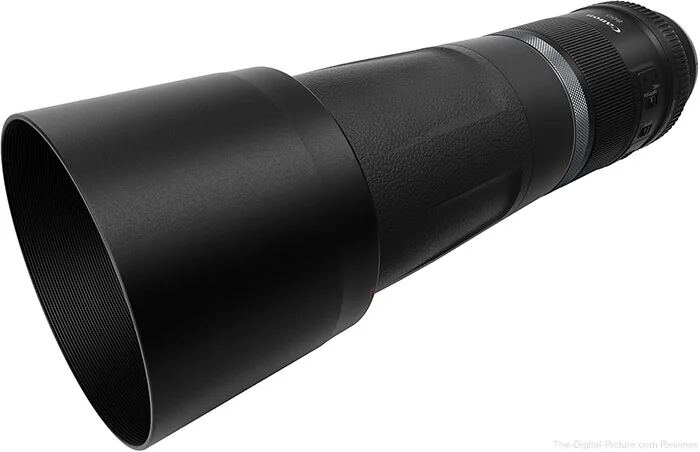
The Canon RF 200-800mm F6.3-9 IS USM delivers an astonishing 800mm of reach at a price that puts serious super-telephoto wildlife photography within reach of enthusiasts. Images are sharp with clean color, the 5.5 stops of stabilization are essential at these focal lengths, and the 4x range covers everything from 200mm to 800mm. The slow aperture and considerable bulk are the trade-offs for that reach.
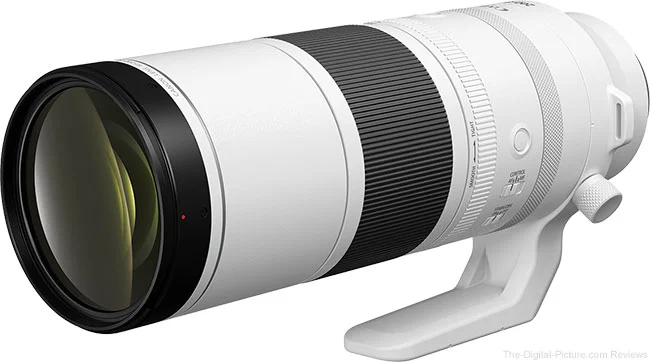
Full review
800mm of reach with next to no color aberration
The RF 200-800mm exists to deliver reach. The-digital-picture's reviewer called it destined to be one of the all-time favorite wildlife lenses, praising its enormous range and good stabilization at a competitive price. Fstoppers found that the images came out crispy, with plenty of detail and with next to no color aberrations, certainly more than well enough for wildlife or moon photography.
At 800mm the lens delivers a perspective that previously required an exotic prime costing many times more. Reviewers note that while it does not quite match the per-pixel sharpness of the RF 100-500mm L, it is sharp enough to satisfy serious wildlife and bird photographers, and the extra 300mm of reach is often more valuable in the field than a marginal gain in sharpness. For distant, skittish subjects, getting closer optically beats cropping.
Fstoppers reached the same conclusion in the field, finding the images came out crispy with plenty of detail and certainly more than well enough for wildlife or moon photography. The lens handles fine feather detail and the subtle tonality of fur convincingly, and reviewers repeatedly stress that the practical benefit of standing 800mm closer to a wary animal far outweighs the small optical edge the pricier RF 100-500mm holds. For the wildlife specialist, that reach is the whole reason the lens exists.
Reach and Versatility
The 4x zoom range from 200mm to 800mm is the lens's defining feature. It lets a photographer frame a perched bird at 800mm and then pull back to 200mm for a bird in flight or an environmental shot, all without changing lenses, which is a genuine advantage over a fixed super-telephoto. Paired with the RF 2x teleconverter the lens reaches a staggering 1600mm, and mounted on an APS-C body like the EOS R7 the equivalent field of view stretches to 320-1280mm.
That flexibility is what separates it from the fixed Canon RF 800mm F11 IS STM. Where the prime gives you one focal length, the zoom adapts to whatever the situation demands, which in unpredictable wildlife photography is often the difference between getting the shot and missing it. For an enthusiast building a wildlife kit around a single long lens, that adaptability is a large part of the appeal.
Autofocus and Stabilization
Stabilization is essential at these focal lengths, and the lens delivers 5.5 stops of image stabilization that reviewers found crucial for handheld shooting at 800mm. Fstoppers called the IS a lifesaver, noting it is pretty much mandatory for usable handheld results at such a long focal length. The one shortcoming is the absence of multiple selectable IS modes on the switch, which more expensive telephotos offer for panning.
Autofocus uses Canon's Nano USM, which fstoppers described as promising fast subject acquisition and easy tracking while staying fairly quiet and perfectly accurate. In good light the lens locks on quickly and tracks reliably, taking full advantage of Canon's animal- and bird-detection autofocus. In dim conditions the slow aperture can slow acquisition, which is the main autofocus caveat reviewers raise.
The stabilization deserves emphasis because it directly enables the lens's signature use case. Handholding at 800mm is normally impractical, but with 5.5 stops of correction reviewers found they could shoot static and slow-moving subjects steadily without a tripod, which is what makes the lens genuinely portable in the field. The lack of dedicated panning IS modes is a real but minor limitation; for the perched-bird and stationary-wildlife shooting most owners do, the stabilization is more than enough to keep the long reach usable.
No built-in Arca-Swiss tripod collar
The variable f/6.3-9 aperture is the central compromise. If most of your work happens at dawn, dusk or in forest shade, the lens pushes ISO high and a faster option like the RF 100-500mm L may serve better.
Size is the other consideration. At about 2.05kg the lens is, in fstoppers's words, pleasantly lightweight in hand for its size but still requires a substantial camera bag for transport. The tripod collar also lacks built-in Arca-Swiss compatibility, an annoyance for photographers who shoot from a head, and the per-pixel sharpness, while very good, trails the pricier RF 100-500mm L.
These are the predictable costs of getting to 800mm affordably. The lens is physically big because the optics required for that reach simply cannot be made small, and the variable aperture is how Canon kept the price and weight down. For the wildlife shooter who accepts those realities in exchange for the reach, none of them is a deal-breaker; for someone expecting a compact, all-conditions lens, they will feel like compromises. As ever with this lens, the verdict hinges on whether 800mm of affordable reach is what you actually need.
Only lens here that reaches 800mm with a zoom
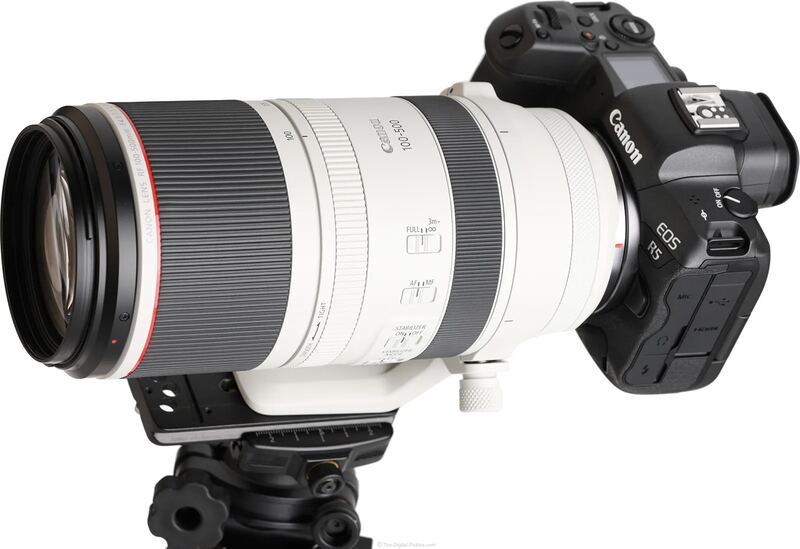
Within this group the 200-800mm is the reach champion. It goes to 800mm where the Canon RF 100-500mm F4.5-7.1 L IS USM stops at 500mm, and unlike the fixed-aperture, single-focal-length Canon RF 800mm F11 IS STM it offers a full 4x zoom range and works with teleconverters. For pure affordable reach, nothing else here matches it.
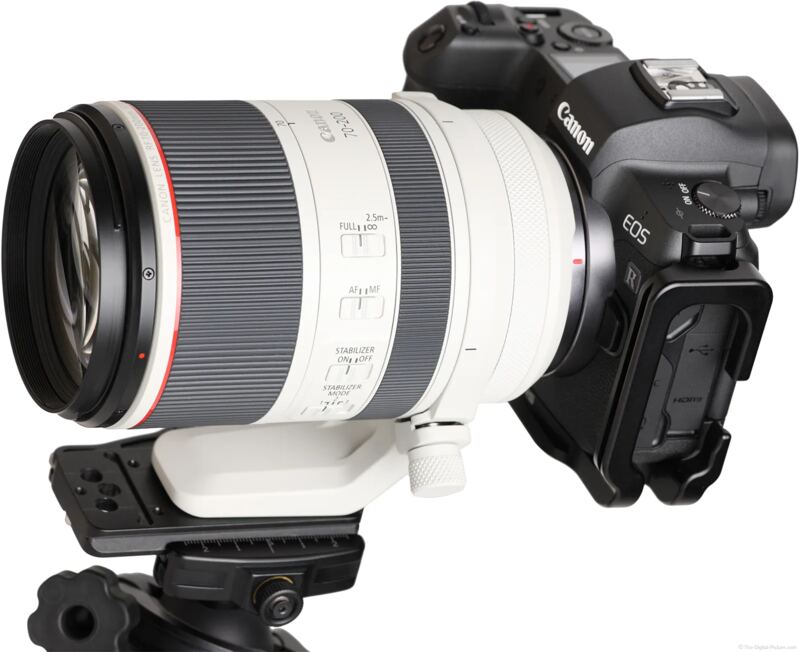
It cannot rival the RF 100-500mm L for outright sharpness or build, and it gives up enormous light to the constant-f/2.8 Canon RF 70-200mm F2.8 L IS USM. But none of those alternatives reach 800mm. The decision is straightforward: if your priority is the longest possible reach for wildlife on a sensible budget, the 200-800mm is the lens; if you value sharpness and low-light flexibility more, the 100-500mm is the better all-rounder.
Crops to a 1280mm equivalent on APS-C
At around $1,900 the RF 200-800mm represents a genuine breakthrough in value for super-telephoto reach. As reviewers repeatedly point out, 800mm of reach at this price would have been unthinkable a few years ago, when getting to 800mm meant an exotic prime costing five figures. For the serious amateur or budget-conscious professional, the lens opens up bird and wildlife photography that was previously out of financial reach.
The value is amplified on an APS-C body, where the crop turns the lens into a 320-1280mm equivalent for an even longer effective reach at no extra cost. Yes, the aperture is slow and the lens is big, but those are the price of affordable reach, and for the photographer whose main constraint is getting close enough to the subject, the 200-800mm delivers more usable focal length per dollar than anything else in the RF lineup.
Built for bird photographers who can't afford exotic primes
This lens is built for wildlife and bird photographers who need real super-telephoto reach but cannot justify an exotic prime. Serious bird shooters in particular will value the 800mm reach and the flexibility of the zoom for both perched and in-flight subjects, and the strong stabilization makes handheld shooting at these focal lengths practical.
It is a poor fit for anyone who shoots mostly in low light, where the slow variable aperture is a liability and the RF 100-500mm L or RF 70-200mm F2.8 are better suited. But for the daylight wildlife shooter chasing distant subjects on a budget, the RF 200-800mm is a remarkable tool that delivers reach far beyond its price class. It is the lens that lets a dedicated bird photographer fill the frame with a distant subject without the five-figure cost an exotic prime would demand, and that alone earns it a firm place in this list.
Strengths
- +Jaw-dropping 800mm of reach at a price that was unthinkable a few years ago
- +Sharp, detailed images with clean color, ample for wildlife and the moon
- +5.5 stops of image stabilization that proves crucial at such long focal lengths
- +A 4x zoom range that extends to 1600mm with the RF 2x teleconverter
- +Reaches 320-1280mm equivalent on an APS-C body like the EOS R7
Watch-outs
- −Variable f/6.3-9 aperture forces high ISO in dim conditions
- −Large and heavy at about 2.05kg, demanding a substantial bag
- −The tripod collar lacks built-in Arca-Swiss compatibility
- −Not quite as sharp as the pricier Canon RF 100-500mm L
How it compares
It offers the longest reach in this group by far, going to 800mm where the Canon RF 100-500mm F4.5-7.1 L IS USM stops at 500mm, and it is more flexible than the fixed Canon RF 800mm F11 IS STM. It is not as sharp or as bright as the RF 100-500mm L, and it gives up enormous light to the constant-f/2.8 Canon RF 70-200mm F2.8 L IS USM, but for pure budget reach it stands alone.
Rating sources
“The Canon RF 200-800mm F6.3-9 IS USM Lens is destined to be one of the all-time favorite wildlife lenses.”
“The images came out crispy, with plenty of detail and with next to no color aberrations.”
Our 4.3 score is the average of these published ratings. Ratings marked * were derived from the reviewer’s written analysis or video transcript — the publisher didn’t print an explicit numeric score, so we inferred one from their own words. Click through to verify. More about methodology.