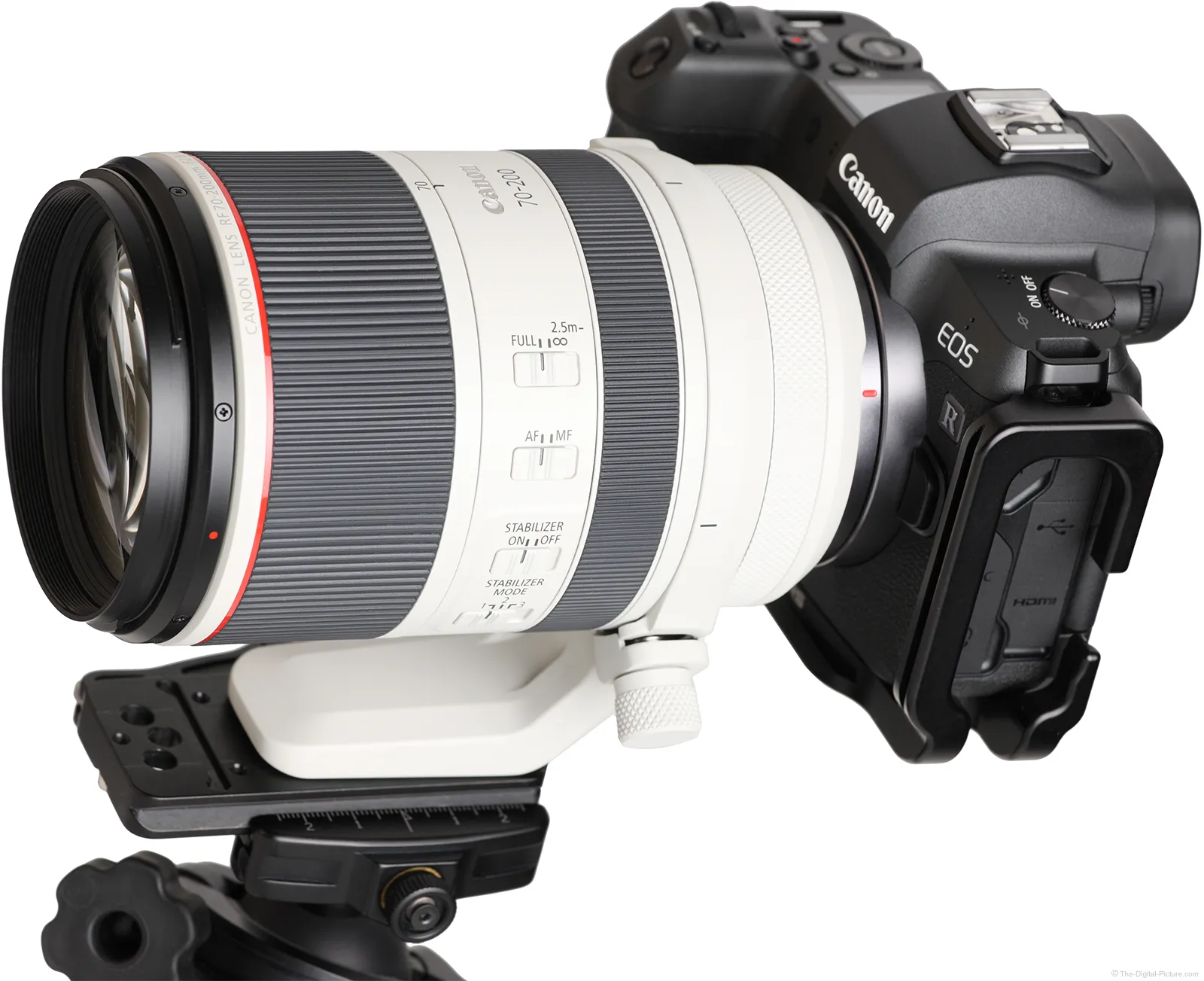
The Canon RF 70-200mm F2.8 L IS USM reinvents the classic pro zoom for mirrorless, delivering the performance of a full-size 70-200mm f/2.8 in a package nearly 30% lighter and shorter. It is sharp wide open across the range, has class-leading stabilization, and pairs a constant f/2.8 with gorgeous bokeh. The trade-offs for that compactness are an extending barrel and no teleconverter support.
Full review
Constant f/2.8 holds sharpness from 70 to 200mm
The RF 70-200mm F2.8 takes the most important pro zoom in the lineup and makes it dramatically more portable without sacrificing image quality. Dustin Abbott agreed, loving the image quality and noting it was both sharp throughout the range and capable of really beautiful bokeh, the two qualities portrait and event shooters prize most.
Because the aperture is a constant f/2.8, the lens performs identically in light-gathering at 70mm and at 200mm, which is exactly why it remains the workhorse of the genre. Whether shooting a dim reception, a backlit portrait or indoor sports, the bright aperture keeps shutter speeds high and isolates subjects against smoothly rendered backgrounds in a way none of the variable-aperture telephotos here can match.
Reviewers also praise the lens's rendering character, not just its measured sharpness. The transition from sharp subject to blurred background is smooth and natural, which is why portrait and wedding photographers gravitate to the 70-200mm focal range in the first place. On Canon's higher-resolution bodies the lens resolves fine detail cleanly while the wide aperture keeps backgrounds soft, giving images that crisp-subject, melted-background look that defines professional portraiture and event coverage.
30% lighter than the EF Mark III it replaces
The headline is the size reduction. Dustin Abbott summarized that Canon managed to give the performance of their typical pro-grade 70-200mm F2.8L IS in a package nearly 30% lighter and shorter, with the RF version weighing 1070g against 1480g for the EF Mark III and measuring 146mm versus 199mm. Digital Camera World noted the telescoping design makes it about 27% shorter than the DSLR version. That portability changes what the lens is comfortable for, from all-day events to travel.
To achieve that size Canon used an externally zooming design, and Abbott loved how compact it could get while retaining a build like a tank. Despite the extending barrel, he traveled extensively with the lens and never had problems with dust or moisture intrusion, because it is well built and well sealed. It carries a 77mm filter thread, matching the RF 100-500mm, which simplifies a shared filter kit and lets a photographer carry one set of polarizers and ND filters across both of these lenses without buying duplicates.
Autofocus and Stabilization
Stabilization is class-leading. The-digital-picture and Dustin Abbott both highlight that the lens is rated at an incredible 7.5 stops of stabilization when combined with the EOS R5's in-body IS, an extraordinary figure for a telephoto. In practice that allows handheld shooting at shutter speeds that would have been impossible on the DSLR equivalent, which is a real advantage for available-light event work.
Autofocus is fast, quiet and accurate thanks to Canon's dual Nano USM system, tracking moving subjects reliably for sports and candid event coverage. Combined with the bright f/2.8 aperture, the lens locks focus confidently even in dim venues, where slower telephotos hunt. It is the kind of focusing performance professionals depend on when there is no second chance at a moment.
The practical upshot of pairing 7.5-stop stabilization with a fast aperture is a wide working envelope. A photographer can drop the shutter speed to keep ISO low in a dim church, or hold a fast shutter wide open to freeze movement on a sports field, and the lens supports both extremes. That adaptability within the 70-200mm range, more than any single spec, is why the lens remains a default professional choice across portrait, wedding, event and indoor-sports work.
Cannot accept teleconverters at any focal length
The compromises Canon made for compactness are real. Dustin Abbott flagged two: the lens features external zooming, so it extends as you zoom, and crucially it is not able to use teleconverters, so it is strictly limited to its existing 70-200mm range. For a wildlife shooter who wants to add reach, that is a hard stop and the main reason this lens sits below the 100-500mm here.
The extending barrel, while sealed well enough, is conceptually less robust than an internally zooming design and draws air as it moves. The minimum focus distance is also longer than some competing telephotos, limiting tight close-ups. And at around $2,700 it is a professional-grade investment that only makes sense if the constant f/2.8 aperture is genuinely useful to your work.
It is worth being honest that the teleconverter exclusion is the single biggest reason this lens sits below the RF 100-500mm for some buyers. A wildlife shooter who occasionally wants extra reach has no option to add a 1.4x or 2x here, so the lens is permanently a 70-200mm. For its intended portrait and event audience that is irrelevant, but anyone who imagines occasionally reaching for distant subjects should weigh that hard limit carefully against the brighter aperture they are paying for.
The only constant f/2.8 lens in this lineup
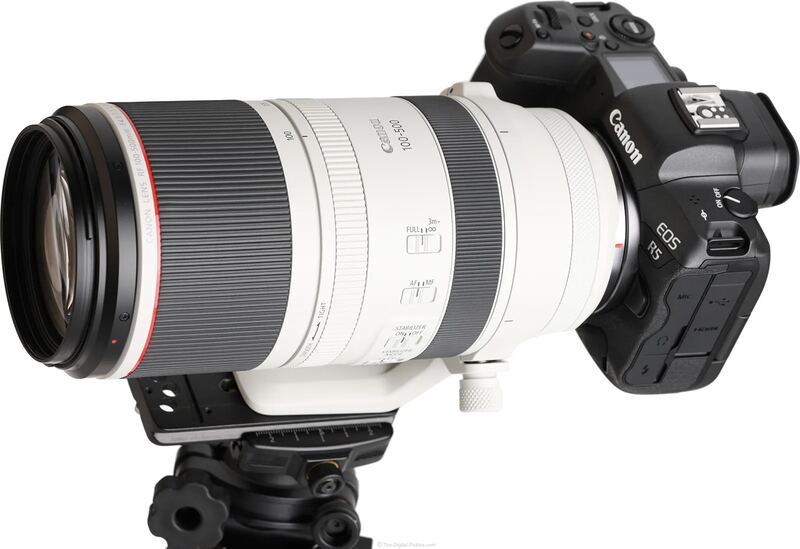
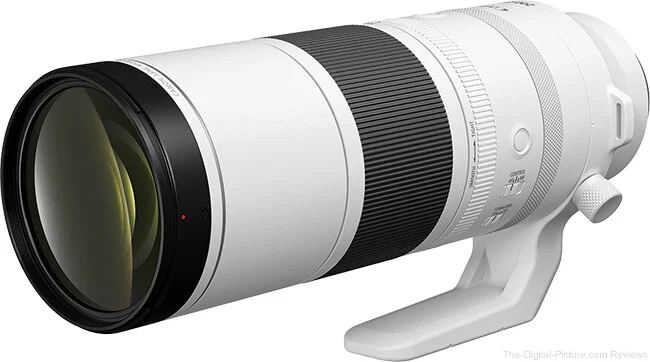
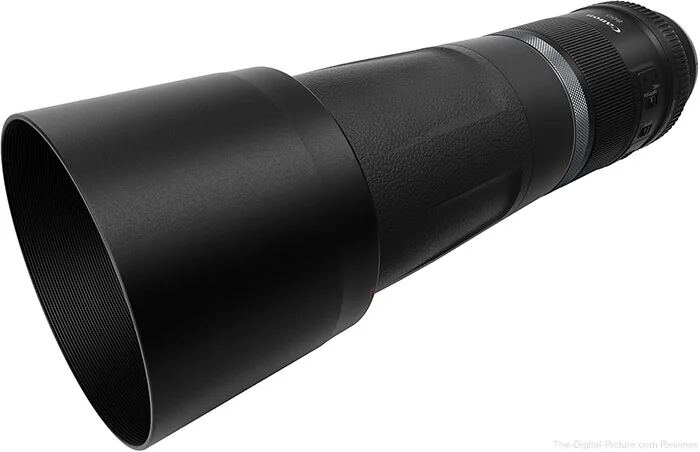
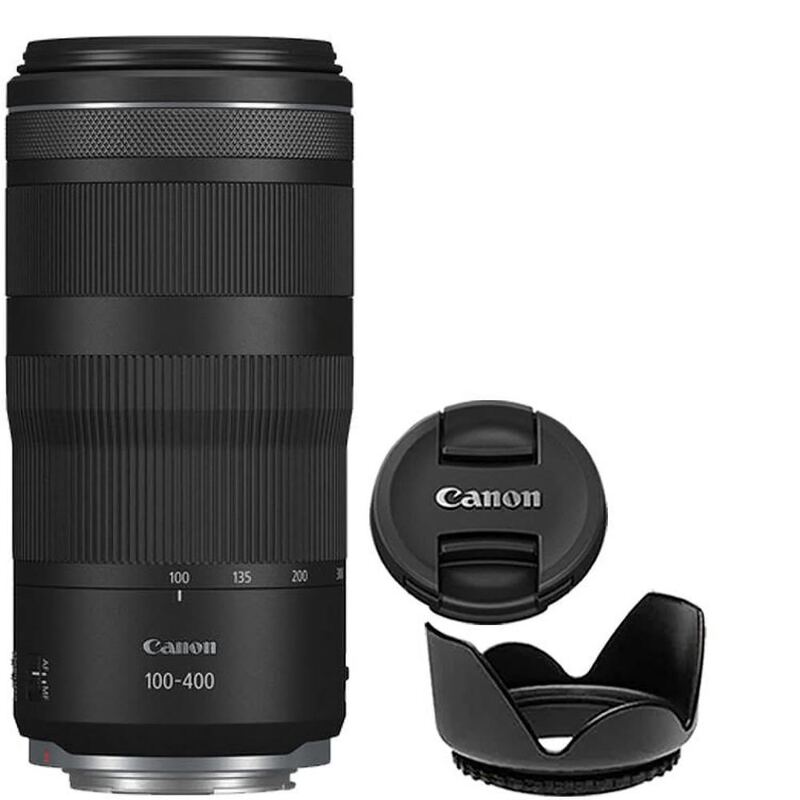
This lens is the odd one out in this group, and deliberately so. It is the only constant-f/2.8 option, which makes it far brighter than the variable-aperture Canon RF 100-500mm F4.5-7.1 L IS USM, Canon RF 200-800mm F6.3-9 IS USM and Canon RF 100-400mm F5.6-8 IS USM. For low light, portraits and indoor sports, nothing else here competes on light-gathering or subject separation.
The trade-off is reach. It stops at 200mm and cannot take teleconverters, so for wildlife and birding it is outclassed by the longer zooms. The choice between this and the 100-500mm is really a choice between speed and reach: pick the 70-200mm if you shoot people and events in controlled or dim light, and the 100-500mm if you chase distant subjects in daylight.
2700 dollars for 7.5 stops of stabilization
At around $2,700 the RF 70-200mm F2.8 is priced as the professional tool it is, and its value is clearest for photographers who earn from low-light and portrait work. The constant f/2.8 aperture and 7.5-stop stabilization directly translate into keeper rates at weddings, events and indoor sports that a slower lens simply cannot match, and for a working pro that reliability pays for the lens quickly.
Set against the older EF Mark III it replaces, the RF version offers the same optical pedigree with a major reduction in size and weight plus dramatically better stabilization, which is a meaningful upgrade for anyone carrying it all day. For the enthusiast who rarely shoots in dim conditions, the cheaper variable-aperture zooms make more financial sense, but for the f/2.8 use case this lens is the standard.
Built for weddings and dim indoor venues
This lens is the natural choice for portrait, wedding, event and indoor-sports photographers who need a fast, constant-aperture telephoto. The f/2.8 aperture handles dim venues and produces the smooth background blur that flatters portraits, while the light weight and superb stabilization make it comfortable for long shooting days handheld.
It is a poor fit for wildlife and birding, where the lack of reach and teleconverter support is disqualifying, and for those uses the RF 100-500mm or RF 200-800mm are far better. But for the photographer whose work lives between 70mm and 200mm in challenging light, the RF 70-200mm F2.8 L IS USM is one of the most rewarding lenses Canon makes for the RF system. It is the kind of lens that, once owned, tends to stay attached to a second body throughout a shoot, ready for the moments a wider lens cannot reach.
Strengths
- +Nearly 30% lighter and shorter than the EF Mark III at around 1070g
- +Exceptional image stabilization rated up to 7.5 stops with in-body IS
- +Constant f/2.8 aperture for low light, sports and creamy subject separation
- +Tank-like, well-sealed build that resisted dust and moisture
Watch-outs
- −Externally zooming design extends the barrel and is less weather-resistant in concept
- −Cannot accept teleconverters, so it is locked to its 70-200mm range
- −Longer minimum focus distance than some rivals
- −At around $2,700 it is a professional-grade investment
How it compares
It is the low-light and portrait specialist of this group, the only lens here with a constant f/2.8 aperture, far brighter than the variable-aperture Canon RF 100-500mm F4.5-7.1 L IS USM, Canon RF 200-800mm F6.3-9 IS USM or Canon RF 100-400mm F5.6-8 IS USM. The trade-off is reach: it stops at 200mm and cannot take teleconverters, so it lacks the wildlife range of the others.
Rating sources
“Canon managed to give us the performance of their typical pro-grade 70-200mm F2.8L IS, but in a package that is nearly 30% lighter and shorter.”
“Thanks to its telescoping design, it's also 27% shorter than the DSLR version.”
Our 4.5 score is the average of these published ratings. Ratings marked * were derived from the reviewer’s written analysis or video transcript — the publisher didn’t print an explicit numeric score, so we inferred one from their own words. Click through to verify. More about methodology.