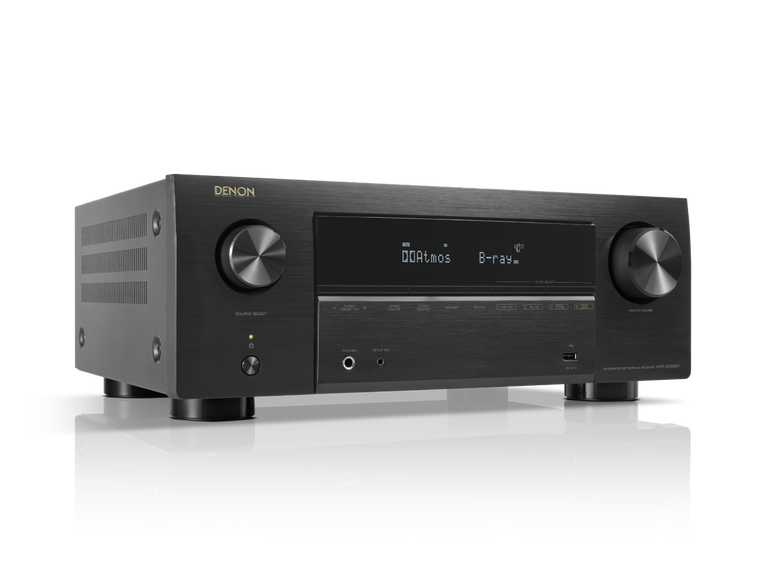
The AVR-X2800H is the safest all-rounder under $1000, pairing Denon's mature, open sound with a complete modern feature set. What Hi-Fi handed it a full five stars and Empire four, both praising precise Atmos imaging and an authoritative, well-spread soundstage. Three HDMI 2.1 ports cover 8K and 4K/120Hz gaming, and Audyssey MultEQ XT makes calibration painless. The only real catch is that 8K is limited to half the inputs.
Full review
95 watts that sound bigger than the spec
What Hi-Fi's five-star review describes a receiver that has been "tuned to produce a more open, well-spread soundstage that's less reliant on heavy low-end prowess to produce a mature and authoritative sound" than the model it replaces. That tuning shows up most clearly with Dolby Atmos material: Empire's reviewers found the AVR-X2800H "creating distinct Atmos effects with precision while still managing to project an integrated cinematic soundscape," which is the balance most buyers in this bracket are chasing. Across a 5.2.2 layout, Simple Home Cinema noted "precise positioning of sound" that painted a genuinely immersive image rather than just throwing effects around the room.
Rated at 95 watts per channel into 8 ohms with two channels driven, the 2800H is not the most muscular amplifier here, but reviewers repeatedly say it sounds bigger than the number suggests in small-to-medium rooms. The presentation leans toward refinement and coherence over brute slam, which suits mixed movie-and-music duty better than a power-first rival would.
Gaming and HDMI 2.1
Three of the six HDMI inputs are full HDMI 2.1, supporting 8K/60Hz and 4K/120Hz pass-through at up to 40Gbps along with Variable Refresh Rate and Auto Low Latency Mode. Simple Home Cinema confirmed those "three 8K-capable inputs support Dynamic HDR, VRR (Variable Refresh Rate), ALLM (Auto Low Latency Mode)," concluding the receiver "ticks most of the boxes for home theater enthusiasts and gamers alike." For a PS5 or Xbox Series X owner who also runs a 4K/120Hz display, that is everything you need.
The caveat, flagged by What Hi-Fi, is that Denon "has missed the opportunity to include 8K support across all HDMI inputs" — only three of the six are 8K-ready, with full coverage reserved for pricier X3800H-class models. In practice most setups never run out of 8K inputs, but it is a genuine spec-sheet asterisk worth knowing.
Setup and Room Correction
The 2800H ships with Audyssey MultEQ XT, a step up from the entry-level MultEQ in cheaper Denon models, and pairs it with an on-screen HD Setup Assistant that walks first-timers through speaker assignment and calibration. Owners on Amazon describe the process as "very intuitive and easy to set up, with the TV running through setup step-by-step." That hand-holding is a real differentiator against rivals whose calibration is more opaque.
What it does not offer is Dirac Live, the room-correction system enthusiasts increasingly prize and which appears on some similarly priced competitors. For most buyers Audyssey MultEQ XT is more than sufficient, but power users planning to chase the last few percent of in-room accuracy should be aware of the ceiling.
Streaming and Connectivity
HEOS is baked in, so multi-room audio, Spotify, TIDAL, Amazon Music HD and internet radio all work without buying additional hardware. AirPlay 2, Bluetooth and Wi-Fi round out the wireless options, and an HDMI eARC output keeps a single cable carrying lossless audio back from a TV's built-in apps. A phono input even covers turntable owners.
Physical connectivity is generous for the class — six HDMI inputs, dual subwoofer outputs and analog and digital inputs — which is part of why reviewers treat this as the default recommendation rather than a niche pick.
Beefier power supply than the previous gen
Denon upgraded the chassis over the previous generation in ways reviewers noticed. What Hi-Fi pointed out that the 2800 "uses higher density feet than the 1700, as well as a larger power supply and capacitors" — unglamorous changes that contribute directly to the more authoritative, composed sound the panel praised. The build feels reassuringly solid for the money, with a clean front panel and the familiar Denon dual-line display.
The dual-subwoofer outputs and full 7.2 channel layout give the 2800H genuine configuration flexibility, whether you run a 5.2.2 Atmos array or a traditional 7.2 surround setup. Reviewers also single out the redesigned on-screen interface as a meaningful usability improvement over older Denon menus, making day-to-day operation and source switching less of a chore.
Price creep pushes it toward $1000
The two recurring criticisms are the partial 8K coverage and the price creep. What Hi-Fi acknowledged "the price hike" even while keeping the five-star rating, and at full retail the 2800H can brush against the $1000 line that defines this category. If your sources are all 4K, the missing 8K inputs are irrelevant; if you have multiple 8K devices, plan your input assignments carefully.
Power is the other ceiling. At 95W per channel it is comfortable in normal rooms but not the receiver to buy for a large, hard-to-fill space or notably inefficient speakers — that is where a higher-tier model or one of the punchier rivals here earns its place.
Trades THX modes for Denon's polish
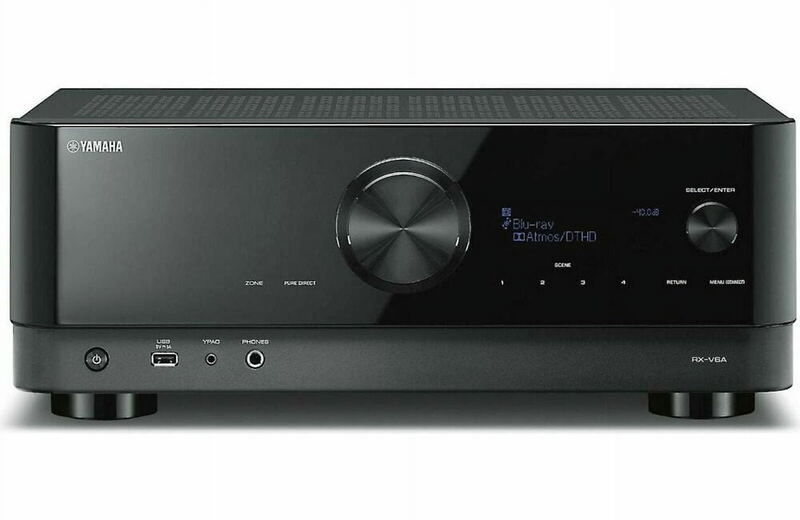
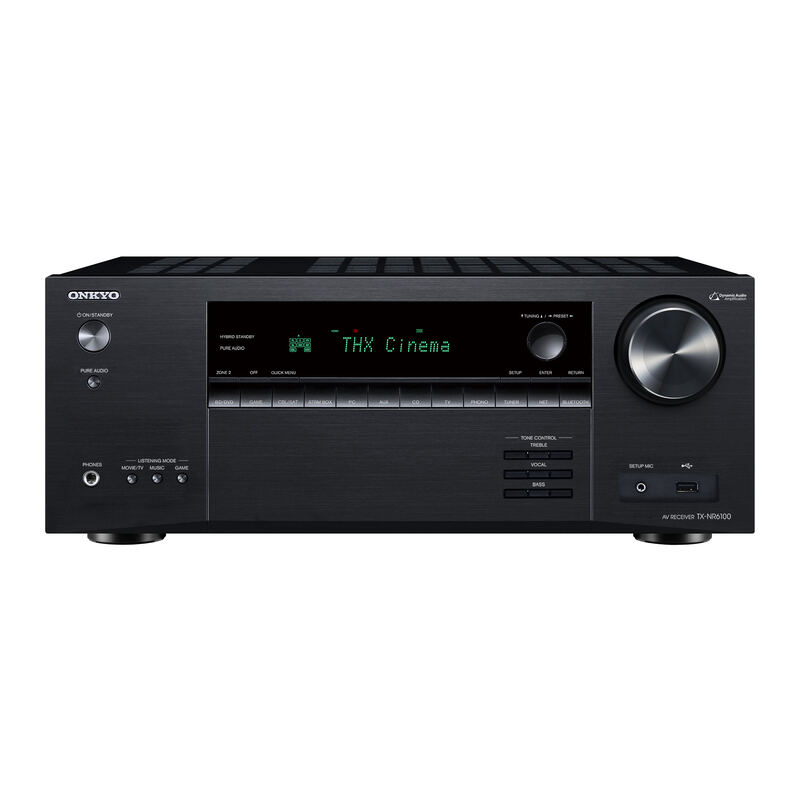
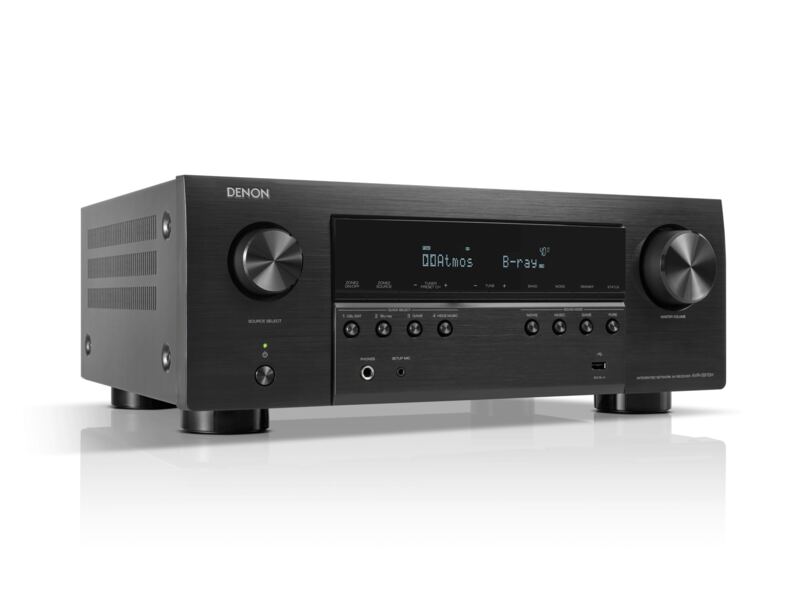
Against the cheaper Denon AVR-S970H it offers stronger amplification, the upgraded Audyssey MultEQ XT and a more open, refined sound, which is why it ranks a clear step higher. Compared with the Onkyo TX-NR6100 it trades the Onkyo's THX listening modes for Denon's friendlier setup and what reviewers describe as a more polished tonal balance. The Yamaha RX-V6A and Sony STR-AN1000 both have distinct strengths — Yamaha's value, Sony's 360 Spatial Sound Mapping — but neither matched the 2800H's consensus all-round score.
Three HDMI 2.1 inputs for future-proofing
At a street price hovering just under $1000, the 2800H is not the cheapest receiver in this group, but reviewers consistently frame it as the one that justifies its money. What Hi-Fi's verdict that it "still sits at the head of the class" came despite an explicit acknowledgement of the price increase, which tells you the panel felt the performance gains earned the premium. Empire's blunt summary — that upgrading to it "from any premium soundbar (or skipping a soundbar altogether) is something of a no-brainer" — captures the value proposition for the typical buyer crossing over from a one-box system.
The hidden value is longevity. Full HDMI 2.1 on three inputs, eARC, and a complete streaming stack mean this is a receiver you can keep for years without it becoming a bottleneck as you add an 8K display or a next-gen console. For most households that buy once and keep for the long haul, the 2800H is the lowest-regret choice in the category.
Skip it only for Dirac or big rooms
Buy the AVR-X2800H if you want one box that does everything competently with the least fuss: clean Atmos imaging, full next-gen gaming support in a small-to-medium room, painless calibration and comprehensive streaming. It is the receiver to recommend to someone upgrading from a soundbar who does not want to think about the purchase again for years. Skip it only if you specifically need Dirac Live, more than three 8K inputs, or significantly more power for a large room — in which case a higher-tier model or the punchier Onkyo TX-NR6100 makes more sense.
Strengths
- +Rich, spacious, well-balanced sound that reviewers say outclasses its predecessor and most rivals at the price
- +Three HDMI 2.1 inputs handle 8K/60Hz and 4K/120Hz with VRR and ALLM for next-gen consoles
- +Audyssey MultEQ XT room correction is genuinely effective and beginner-friendly via the on-screen Setup Assistant
- +Full 7.2 channel layout supports 5.2.2 Atmos plus a dual-subwoofer setup
- +HEOS multi-room streaming, AirPlay 2, Bluetooth and HDMI eARC built in with no extra hardware
Watch-outs
- −8K support is limited to three of the six HDMI inputs, not all of them
- −Street price has crept up over its predecessor and can flirt with the $1000 ceiling
- −95W per channel is adequate but not class-leading for large, demanding rooms
- −No Dirac Live option, which some rivals offer at similar money
How it compares
Steps above the Denon AVR-S970H with stronger amplification, Audyssey MultEQ XT (versus the S970H's lighter MultEQ) and a more refined, open presentation.
Rating sources
“Despite the price hike, the AVR-X2800H still sits at the head of the class, just as its excellent predecessor did.”
“The Denon manages to harness the power and volume it has at its disposal, creating distinct Atmos effects with precision while still managing to project an integrated cinematic soundscape.”
“The AVR-X2800H demonstrated precise positioning of sound across a 5.2.2 speaker setup, painting an immersive soundstage.”
Our 4.5 score is the average of these published ratings. Ratings marked * were derived from the reviewer’s written analysis or video transcript — the publisher didn’t print an explicit numeric score, so we inferred one from their own words. Click through to verify. More about methodology.