The STR-AN1000 is the spatial-audio specialist: its 360 Spatial Sound Mapping conjures height and width from a standard speaker set, and reviewers loved the result. What Hi-Fi gave it a full five stars, StereoNET called it "muscular and dynamic," and Tom's Guide praised its "smooth sonic steerage of objects." The trade-offs are bloated bass without parametric EQ and a slightly thinner connectivity set, which keep it just behind the all-rounders.
Full review
Sounds bigger than its modest power rating
Sony's return to the AV-receiver market earned a five-star What Hi-Fi review that called its "crisp, precise and punchy sound" a "nearly perfect balance" that "elevates every movie and song we throw at it." Tom's Guide described "an exciting listen, with smooth sonic steerage of objects and real sense of drama," adding that it "sounds bigger than its power specification implies, and handles blockbusters with authority." That sense of effortless scale, despite a modest power rating, is the STR-AN1000's calling card.
StereoNET agreed on the energy — "a muscular and dynamic home cinema sound that punches well above its modest price point" — while being more measured about the overall result, reflecting the receiver's split personality: thrilling spatial presentation, with some rough edges in bass control.
360 Spatial Sound Mapping
The headline feature is 360 Spatial Sound Mapping, which What Hi-Fi explained "creates a 3D audio processing bubble of sound around and above you without the need for additional speakers, creating a much more expansive soundfield with enhanced verticality." Simple Home Cinema described how it "creates virtual 'phantom speakers' that simulate a multi-dimensional sound field." In practice it lets a standard 5.1 or 7.1 layout throw a far more immersive image than the speaker count suggests.
It is not free magic, though: What Hi-Fi noted the effect "does sacrifice some precision in the focus of voices and other sounds." For movie immersion the trade is usually worth it; for dialogue-critical or music-first listening, some users prefer to switch it off.
Gaming and Connectivity
The STR-AN1000 supports 8K/60Hz and 4K/120Hz HDMI 2.1 pass-through, but only two of its inputs are 8K-capable, fewer than the three on the Denon and Yamaha. It carries Dolby Vision and HDR10 for video and works with Chromecast, AirPlay 2, Spotify Connect and Sonos for streaming.
A standout convenience is the wireless expansion ecosystem: Sony's SA-RS5 wireless rear speakers and SA-SW3/SW5 wireless subwoofers pair directly, letting owners build out a full surround system without running speaker cable across the room — a genuinely useful path for apartments and tidy installs.
Setup and Room Correction
Calibration is handled by Sony's Digital Cinema Auto Calibration IX, which measures distance, angle, level and frequency response per speaker. It gets a system playing correctly quickly and pairs naturally with the spatial processing.
The limitation reviewers keep returning to is the absence of parametric EQ. StereoNET characterized the receiver as "a mixed bag" specifically because "impressive soundstaging" was "offset by bloated bass resulting from the lack of parametric EQ functionality." Owners with a problematic room or boomy subwoofer have fewer tools to fix it than on an Audyssey- or Dirac-equipped rival.
Built for wireless rears, not cable enthusiasts
The STR-AN1000 marks Sony's return to the AV-receiver market after a five-year absence following the award-winning STR-DN1080, and it carries a cleaner, more contemporary aesthetic than most rivals here. The front panel is minimalist, the on-screen interface is among the most modern in the group, and setup leans on the kind of guided, approachable design Sony brings from its soundbar and TV lines.
The design philosophy clearly prioritizes the spatial-audio experience and ecosystem integration over raw I/O count. The wireless rear and subwoofer support, Sonos and Chromecast compatibility, and DSD native playback all point at a receiver built for a modern, app-driven household rather than a traditional cable-everything enthusiast — which is both its charm and the source of its connectivity compromises.
Only two 8K inputs, bloated low end
Bass control is the clearest weakness — without parametric EQ, low-end can sound bloated in rooms that reinforce it, and Simple Home Cinema warned that "bass enthusiasts or advanced users may find limitations that require supplemental tools." The 360 Spatial Sound Mapping that defines the receiver can also slightly defocus voices when engaged.
Connectivity is the other compromise: only two 8K HDMI inputs and a generally leaner I/O count than some rivals at the price. What Hi-Fi noted plainly that "connectivity can be bettered elsewhere at the price." These are why a brilliant-sounding receiver lands at fourth rather than higher.
Only one here with spatial sound mapping
The STR-AN1000 offers something none of the others do: convincing height and width from a standard speaker layout via 360 Spatial Sound Mapping. Against the Denon AVR-X2800H it trades better room correction and more 8K inputs for that spatial trick and a slightly more exciting presentation. The Onkyo TX-NR6100 beats it on raw power and THX certification, and the Yamaha RX-V6A undercuts it on price, but neither replicates Sony's spatial-audio approach or its slick wireless-expansion ecosystem.
Add wireless rears and subs down the road
The STR-AN1000 sits in the middle of this group on price, and the value case rests almost entirely on the spatial-audio feature set. What Hi-Fi's five-star verdict and Tom's Guide's praise reflect a receiver that punches above its modest power rating, and StereoNET agreed it "punches well above its modest price point" sonically. For the money you are buying a distinctive listening experience rather than the deepest feature list.
The wireless-expansion ecosystem adds long-term value that a spec sheet does not capture. Being able to drop in Sony's SA-RS5 wireless rears and SA-SW subwoofers later, without cabling, lowers the cost and hassle of building toward a full immersive system over time. For buyers who want to start modest and grow, that flexibility is worth real money.
Best without ceiling-mounted speakers
Choose the STR-AN1000 if immersive, room-filling height and width matter most and you cannot or will not mount ceiling speakers — the spatial mapping is genuinely effective. It also suits anyone planning to expand wirelessly with Sony's rear speakers and subwoofers. Look elsewhere if you have a bass-heavy room that needs serious EQ correction, or if you want the maximum number of 8K HDMI inputs for a console-heavy setup — the Denon AVR-X2800H or Yamaha RX-V6A serve those needs better.
Strengths
- +360 Spatial Sound Mapping creates convincing height and width without ceiling speakers
- +Crisp, precise, punchy sound that reviewers say balances detail and drama
- +Sounds bigger and more authoritative than its modest power spec implies
- +Integrates with Sony's wireless SA-RS5 rears and SA-SW subwoofers for an easy expansion path
- +Clean, modern interface with Chromecast, AirPlay 2, Spotify Connect and Sonos support
Watch-outs
- −Bass can sound bloated and there is no parametric EQ to tame it
- −Only two of the HDMI inputs are 8K-capable
- −Connectivity and input count trail some rivals at the price
- −360 Spatial Sound Mapping can slightly soften the focus of voices
How it compares
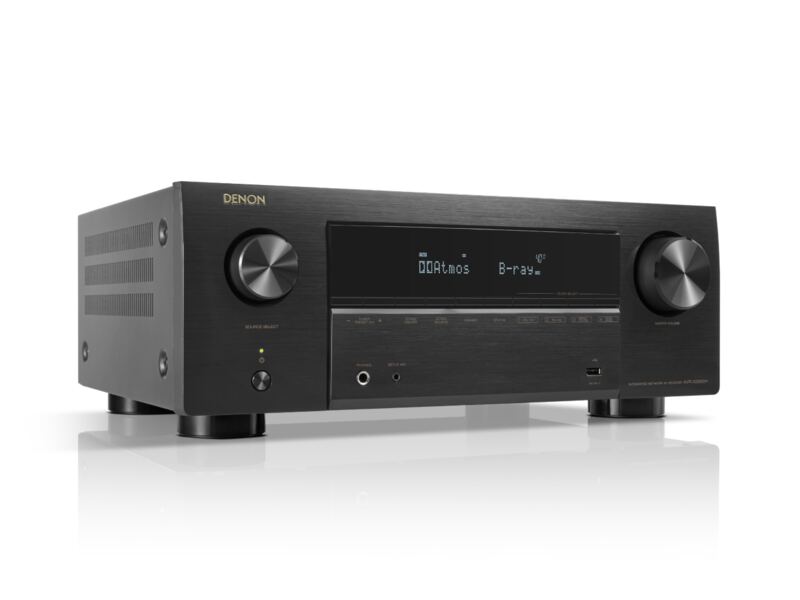
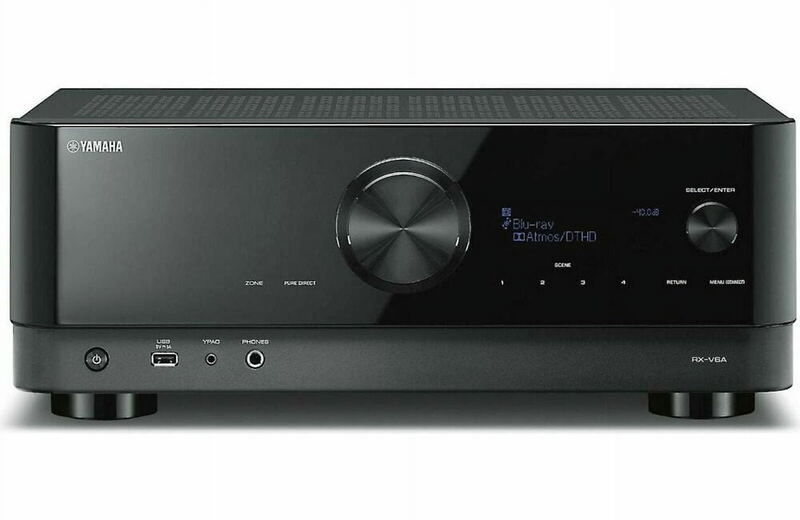
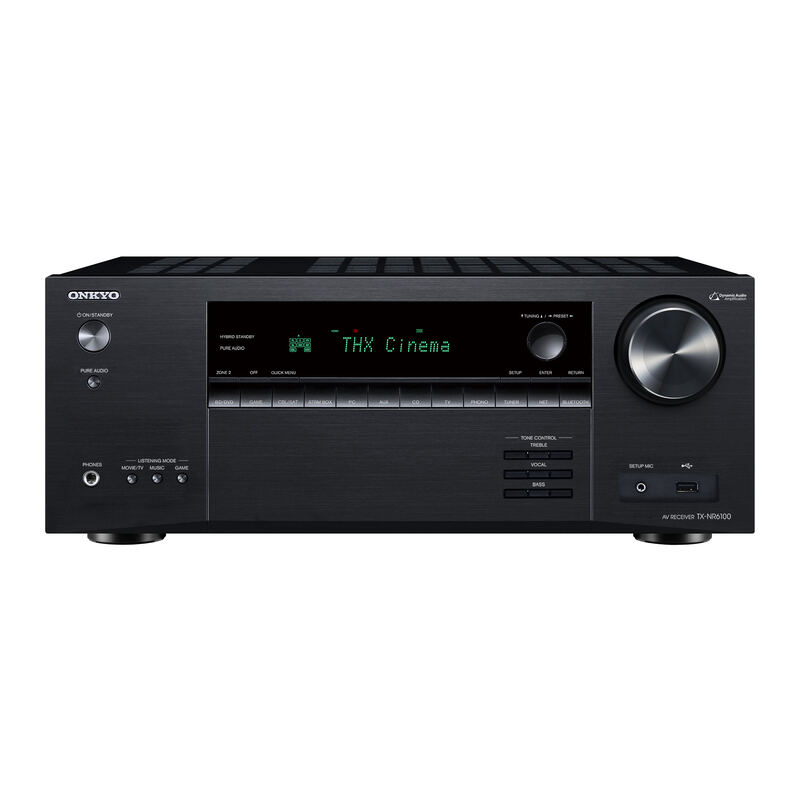
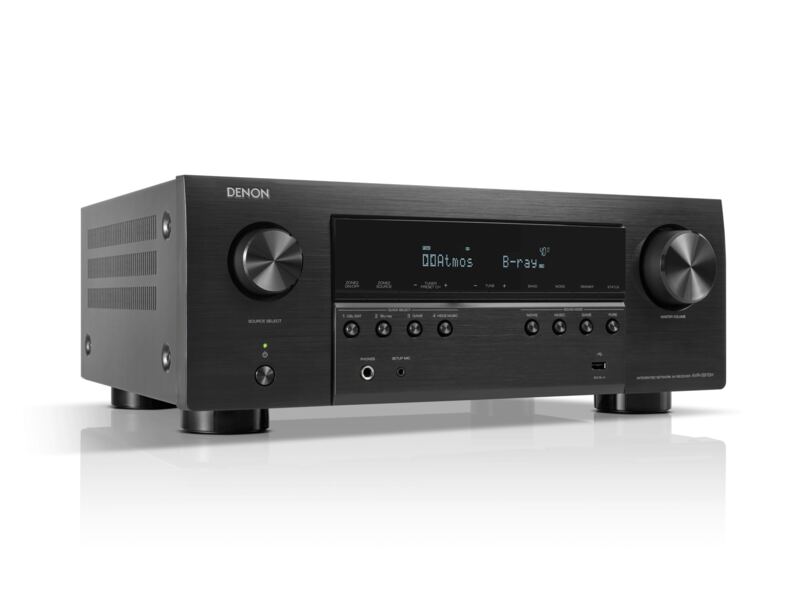
Sony's 360 Spatial Sound Mapping is a feature none of the rivals here offer, conjuring height and width without ceiling speakers in a way the Denon AVR-X2800H, Onkyo TX-NR6100 and Yamaha RX-V6A all rely on physical layouts to achieve. The trade-off is bass control: with no parametric EQ it trails the Audyssey MultEQ XT calibration of the Denon AVR-X2800H, and it offers fewer eight-K HDMI inputs than the Yamaha RX-V6A.
Rating sources
“Its crisp, precise and punchy sound strikes a nearly perfect balance, and it elevates every movie and song we throw at it.”
“An exciting listen, with smooth sonic steerage of objects and real sense of drama. It sounds bigger than its power specification implies, and handles blockbusters with authority.”
“Sony's STR-AN1000 produces a muscular and dynamic home cinema sound that punches well above its modest price point.”
“the receiver creates virtual phantom speakers that simulate a multi-dimensional sound field”
Our 4.2 score is the average of the 3 scored reviews above; 1 more reviewed it without printing a score and is not in the average. Ratings marked * were derived from the reviewer’s written analysis or video transcript — the publisher didn’t print an explicit numeric score, so we inferred one from their own words. Click through to verify. More about methodology.