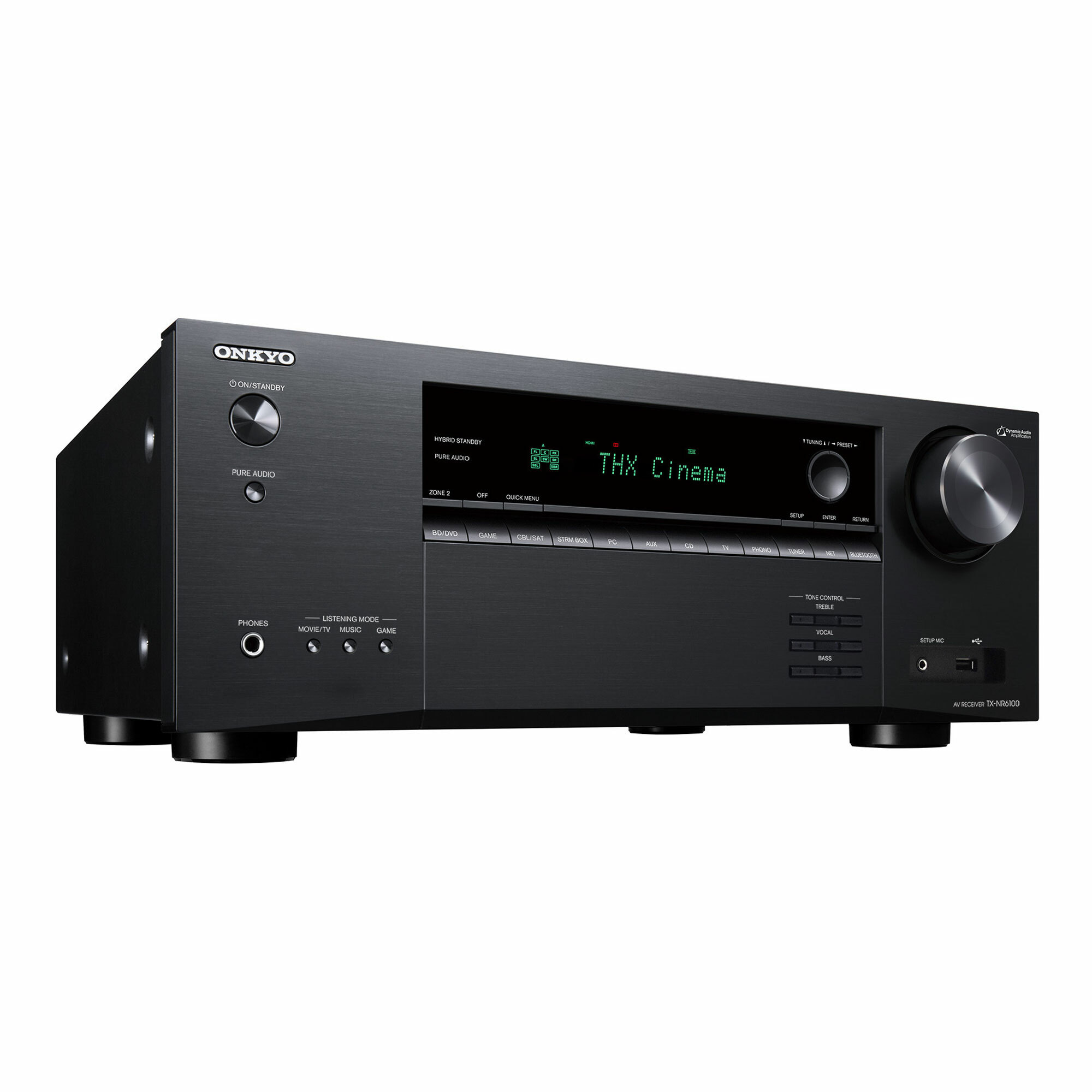
The TX-NR6100 is the value-and-power pick: a THX Select-certified 7.2 receiver with a genuinely muscular amplifier and full HDMI 2.1 gaming support. Z&K Electronics scored it 90/100 and AVForums praised its impressive moments under load, though both flag AccuEQ as the weak link versus Audyssey. For buyers who want THX modes and clean 8K/120Hz pass-through at the lowest sensible price, it is hard to beat.
Full review
THX Select certified with real headroom
AVForums summed up the TX-NR6100 as a receiver that "performed well in listening tests, producing some genuinely impressive moments," and that punch is the Onkyo's signature. HiFiReport found its sound "much more neutral, retaining Onkyo's powerful driving capability while offering a more balanced distribution across the three frequency bands." In practice that means an amplifier that grips speakers hard and stays composed when an action scene gets loud, which is exactly what its THX Select certification is meant to guarantee.
Rated at 100 watts per channel into 8 ohms with two channels driven, the 6100 has real headroom for a mid-priced unit. THX Select certification means, in THX's words, that "no matter what input is used or combination of built-in features, there can be absolutely nothing added or taken away from the source material" within its certified room size of roughly 3.5 meters screen-to-seat.
THX Modes and Sound Tuning
Where most rivals leave you with generic surround presets, the 6100 offers four distinct THX listening modes — cinema, gaming, music and surround EX — each tuned for a different use case. The cinema mode in particular re-equalizes overly bright film mixes the way they were intended in a dubbing stage, a feature audiophile buyers specifically seek out at this price.
The flip side, noted across reviews, is that the AccuEQ room-correction system doing the heavy lifting underneath is the receiver's weakest area. AVForums was blunt that "the AccuEQ room correction system lacks the sophistication offered by competing products," so the THX modes are doing more of the tonal work than the automatic calibration is.
Gaming and HDMI 2.1
Three of the HDMI inputs are full HDMI 2.1, carrying uncompressed 8K/60Hz and 4K/120Hz with HDR, and the receiver supports Variable Refresh Rate for tear-free gameplay. For a PS5 or Xbox Series X owner this is a fully spec'd next-gen passthrough at a lower price than most competitors charge.
It also carries the Works with Sonos certification, letting it slot into a Sonos ecosystem — an unusual touch in an AV receiver and a genuine convenience for households already invested in that platform.
MM phono input, but a dated interface
The TX-NR6100 carries the substantial, no-nonsense build Onkyo receivers are known for, with a heavy transformer and the kind of chassis mass that tracks with its punchy amplifier. Reviewers consistently note that it feels like more receiver than its price suggests in the hand, even if the cosmetics lean utilitarian. The metal front panel and full-size knobs are built to last rather than to dazzle.
Connectivity is comprehensive: six HDMI inputs, two outputs, an MM phono input, and a full complement of analog and digital connections. The 7.2 channel layout supports a dual-subwoofer setup and Dolby Atmos height channels, giving it the same configuration flexibility as the more expensive options here. The trade-off is an on-screen interface that looks a generation behind the newer Denon and Sony menus.
AccuEQ trails Audyssey, some firmware quirks
Two issues come up repeatedly. First, AccuEQ: it works, but it is the least capable auto-calibration among the receivers here, and there is no Dirac Live option without jumping to the pricier RZ-series. Second, reliability anecdotes — a subset of owners on AVS Forum report firmware quirks and HDMI handshake hiccups, the kind of thing that is usually resolved with updates but can frustrate early.
The cosmetics and on-screen interface also feel a generation behind the newer Denon and Sony menus. None of this undermines the core performance, but it explains why the 6100 ranks just behind the more polished, easier-to-live-with AVR-X2800H.
Out-muscles the Denon, loses on polish
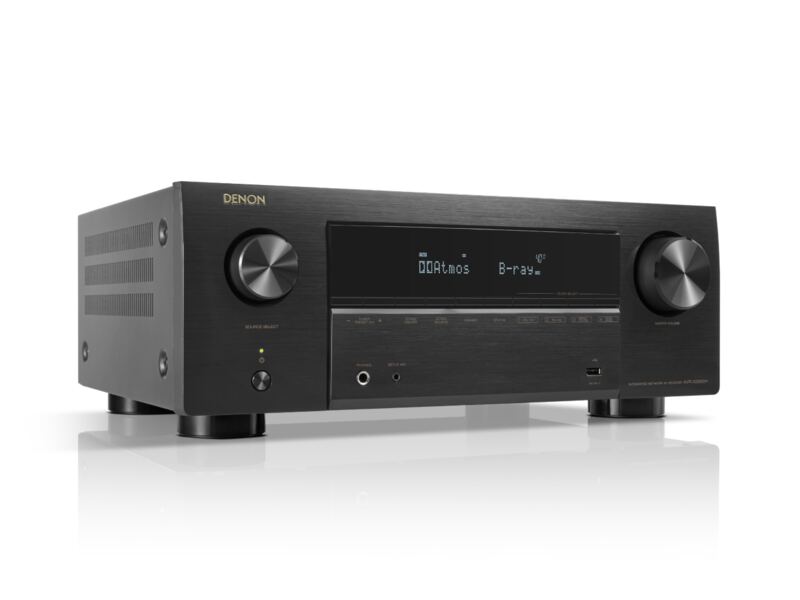
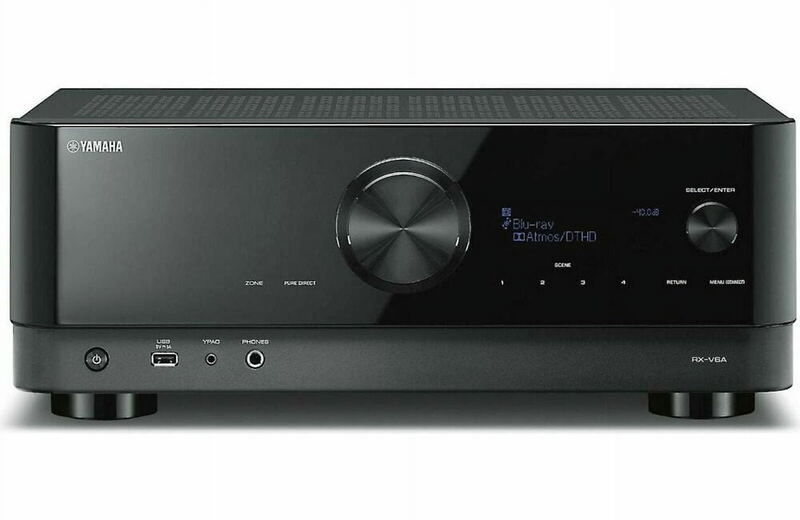
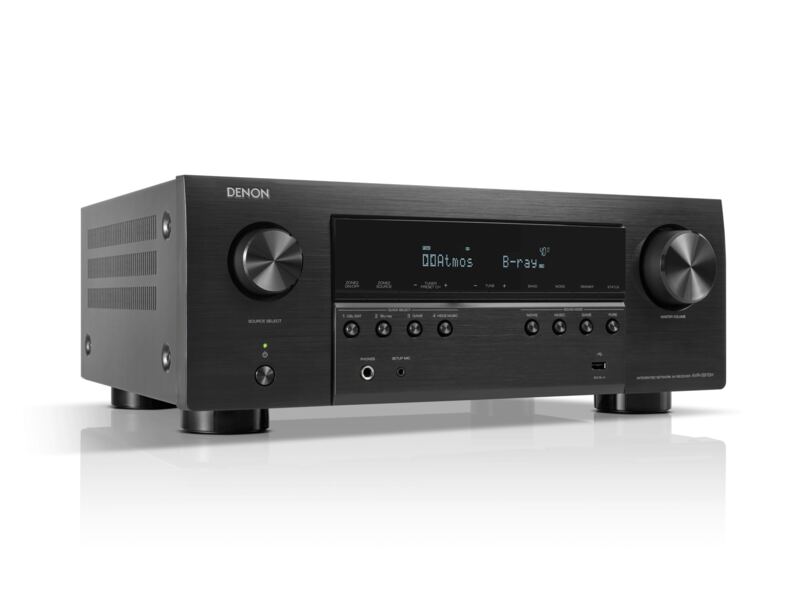
The TX-NR6100 is the power-and-value answer to the Denon AVR-X2800H: it matches or beats it on raw amplification and adds THX modes, but loses on room correction (AccuEQ versus Audyssey MultEQ XT) and on the polish of setup and menus. Against the Denon AVR-S970H it is a clear step up in performance and certification. It lacks the Sony STR-AN1000's 360 Spatial Sound Mapping trick, and the Yamaha RX-V6A undercuts it on price, but neither offers the same THX-backed performance-per-dollar.
THX certification for well under $800
The TX-NR6100's appeal is concentrated almost entirely in its price-to-performance ratio. When the headline amplifier spec, THX certification and full HDMI 2.1 gaming support all arrive for less than the class leaders charge, the math is hard to argue with.
HiFiReport positioned it as "a top choice in the sub-$1,500 AV receiver category for its high performance-to-price ratio," and that framing holds at the lower price point too. The 6100 is the receiver to buy when you want maximum capability per dollar and are willing to live with a slightly older interface and less-refined room correction to get it.
The enthusiast pick for price per watt
Choose the TX-NR6100 if performance-per-dollar and THX certification matter more to you than the slickest setup experience. It is the enthusiast value pick: a hard-hitting, properly certified receiver with full 8K/120Hz gaming support for noticeably less than the class leaders. Look elsewhere if you want best-in-class automatic room correction or a Dirac Live upgrade path, or if firmware fiddling would frustrate you — the Denon AVR-X2800H is the more polished, lower-maintenance alternative.
Strengths
- +THX Select certification with four dedicated THX listening modes (cinema, gaming, music, surround EX)
- +Powerful, driving amplifier reviewers describe as punchy with strong dynamics
- +Three full HDMI 2.1 inputs deliver 8K/60Hz, 4K/120Hz, VRR and ALLM
- +Works with Sonos and supports Dolby Atmos and DTS:X height layouts
- +Strong value, often the most receiver-per-dollar in the sub-$1000 bracket
Watch-outs
- −AccuEQ room correction is less sophisticated than Audyssey or Dirac
- −No Dirac Live without stepping up to pricier RZ-series models
- −Some owners report firmware quirks and HDMI handshake issues
- −Styling and on-screen menus feel dated next to newer rivals
How it compares
Brings THX Select certification and a punchier amplifier than the Denon AVR-X2800H or Yamaha RX-V6A, making it the value-and-power choice.
Rating sources
“the TX-NR6100's sound is much more neutral.”
Our 4.3 score is the average of the 2 scored reviews above; 1 more reviewed it without printing a score and is not in the average. Ratings marked * were derived from the reviewer’s written analysis or video transcript — the publisher didn’t print an explicit numeric score, so we inferred one from their own words. Click through to verify. More about methodology.