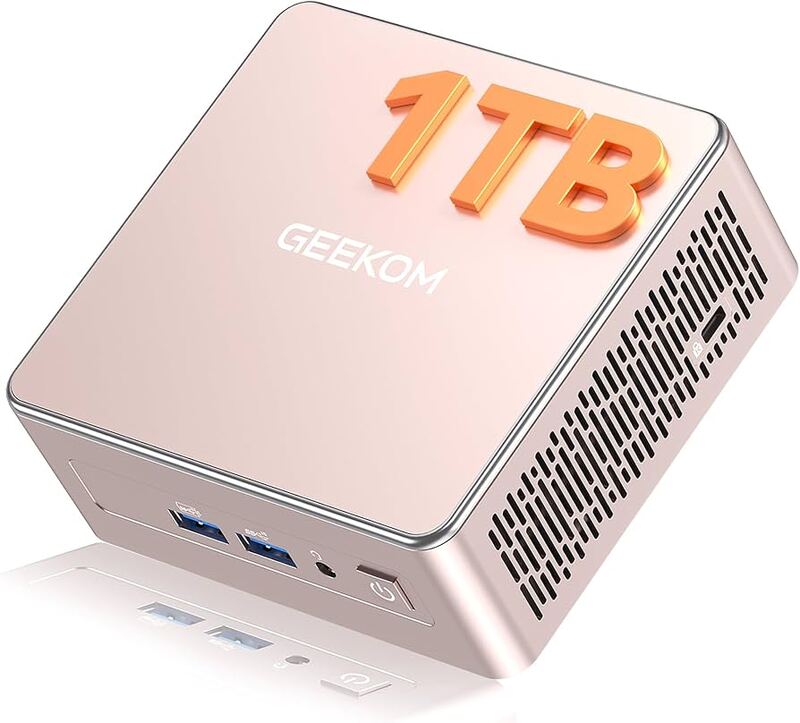
KitGuru found that the Geekom A9 Max 2026 Edition’s single-channel memory configuration severely bottlenecks its integrated Radeon 890M graphics, creating a significant performance handicap for gaming. PCMag noted that pricing has risen tremendously compared to the previous model, while KitGuru identified a downgrade to QLC-based SSD storage that reduces sustained write speeds and overall value. The system does offer extensive connectivity with dual USB4 ports and Wi-Fi 7, along with a dedicated NPU capable of local AI workloads for privacy-conscious professionals. This compact aluminum unit fits users who require extreme space-saving VESA mounting options or specialized on-device processing, but those seeking strong out-of-the-box graphical performance should look elsewhere.
Full review
Single-channel memory throttles integrated graphics
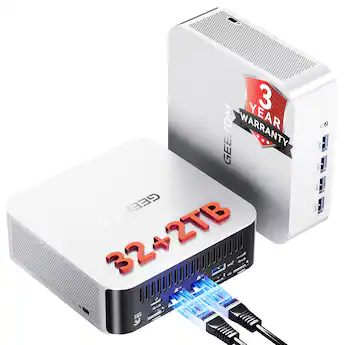
KitGuru discovered that the 2026 model ships with a single 32GB DDR5-5600 SODIMM stick, whereas the previous year's unit utilized two 16GB modules in dual-channel configuration. This hardware change is not explicitly highlighted on the manufacturer's product page, leading reviewers to find significantly worse performance than expected from an iterative update. The shift from a dual-rank memory architecture to a single-rank setup creates a severe bottleneck for the integrated Radeon 890M graphics, which relies entirely on system RAM bandwidth for video processing.
The practical impact of this configuration is substantial for gaming workloads. A YouTube reviewer who tested the machine found that running in single-channel mode completely starved the GPU of necessary data throughput. The reviewer noted that simply increasing shared video memory from four gigabytes to eight gigabytes provided zero performance gains while stuck in single-channel mode because the memory bus could not keep up with the graphics processor's demands.
This means shoppers seeking gaming or heavy graphical performance will find the out-of-the-box experience deeply frustrating. The machine requires immediate user intervention—purchasing and installing a second identical RAM stick—to unlock its actual potential. For users who do not open the chassis, the single-channel limitation remains an invisible but crippling constraint on the APU's integrated graphics capabilities.
QLC storage degrades sustained write speeds
KitGuru identified that the 2026 model is equipped with a QLC-based solid-state drive, marking a downgrade from the SLC drive utilized in their evaluation of the previous year's hardware. While the system retains two M.2 slots supporting PCIe 4.0 x4 speeds, the specific NAND technology chosen for the base storage configuration impacts long-term data handling and sustained write performance. QLC flash memory generally offers lower endurance and significantly slower sequential write speeds once the cache is exhausted compared to TLC or SLC alternatives.
For content creators transferring large media files or developers compiling massive codebases, this storage choice represents a tangible compromise in daily workflow efficiency. The transition away from higher-tier NAND suggests a cost-cutting measure that directly affects how quickly data can be moved off the drive during heavy usage sessions. Reviewers noted this change alongside other hardware shifts, positioning it as part of a broader pattern of reduced out-of-the-box value.
Users who prioritize raw storage speed will likely need to replace or supplement the included SSD immediately. The presence of an empty M.2 slot allows for easy expansion with higher-performance drives, but relying on the stock QLC drive for primary workloads introduces unnecessary latency during sustained data writes compared to what was available in prior iterations.
Pricing escalation erodes competitive value
KitGuru recorded that pricing has risen tremendously since the 2025 model review, placing the A9 Max 2026 Edition in a significantly more expensive market segment. PCMag highlighted this trend by describing the machine as an outpaced and out-priced mini PC, noting that the performance gains from the Ryzen AI 9 HX 470 processor do not justify the steep price hike. The combination of higher costs and degraded memory configuration creates a poor value proposition for consumers comparing it to previous generations or competing desktop alternatives.
At these elevated price points, buyers can construct traditional tower gaming PCs that offer vastly superior graphical performance through dedicated discrete graphics cards. A YouTube reviewer pointed out that spending over sixteen hundred dollars on this compact unit makes little sense if the primary goal is high-fidelity gaming, as the integrated Radeon 890M cannot compete with even entry-level desktop GPUs in raw rasterization power.
The value equation only shifts when considering specialized use cases like local AI inference or extreme space-saving requirements. For general users who do not need a palm-sized workstation capable of running Copilot Plus workloads, the price-to-performance ratio has deteriorated sharply. The premium paid for the compact aluminum chassis and extensive port selection is no longer offset by competitive benchmark scores.
Dedicated NPU enables local AI processing
This hardware acceleration enables practical local execution of artificial intelligence workloads without relying on cloud connectivity. Tasks such as real-time translation, background removal in video calls, and intelligent image editing can run directly on the device.
This capability is particularly valuable for privacy-conscious professionals who handle sensitive documents or source code that must remain on-premise. A YouTube reviewer emphasized that modern AI workflows increasingly depend on specialized hardware to function efficiently within tight power envelopes. The system meets Microsoft's Copilot Plus certification threshold of forty TOPS, ensuring compatibility with next-generation Windows features designed specifically for this type of local acceleration.
Developers and creators benefit from the ability to run smaller language models or perform machine learning inference locally. While the integrated graphics handle traditional rendering tasks, the NPU offloads specific matrix operations required by AI applications. This division of labor allows the A9 Max to function as a compact workstation for software development and content creation without generating excessive heat or consuming massive amounts of electricity.
Extensive port selection supports multi-display setups
The rear panel houses an impressive array of connectivity options, including dual USB4 ports supporting forty gigabits per second with DisplayPort Alt Mode and power delivery input. Users also get two HDMI 2.1 outputs, dual 2.5-gigabit Ethernet ports, a single USB 3.2 Gen 2 Type-A port, and a legacy USB 2.0 port. This density of interfaces eliminates the need for external docking stations in most professional environments.
A full-sized SD 4.0 card reader is conveniently located on the left side of the chassis, catering to photographers and videographers who need rapid media transfer speeds without reaching around to the back. The right side features ventilation perforations and a Kensington lock slot for physical security.
Supporting up to four simultaneous displays through the dual USB4 and dual HDMI connections makes this machine highly suitable for complex office setups or creative production environments. The inclusion of Wi-Fi 7 and Bluetooth 5.4 ensures modern wireless connectivity standards are met, while the dual wired network ports allow for advanced networking configurations such as link aggregation or dedicated management traffic separation.
Aluminum chassis facilitates VESA mounting
The metal construction provides structural rigidity and aids in passive heat dissipation alongside the active cooling system. Reviewers noted that the build quality feels premium compared to basic plastic office mini PCs, giving it an aesthetic similar to high-end desktop workstations despite its diminutive footprint.
The chassis design includes a VESA mount compatible bracket measuring one hundred twenty-one point eight by one hundred sixteen point five millimeters. This allows users to securely attach the device behind monitors or beneath desks, optimizing desk space in cramped environments. The ability to hide the entire computer tower inside a display mount is increasingly important for modern home offices and minimalist workspace designs.
Disassembly reveals a straightforward maintenance path where removing four rubber feet exposes cover screws. Once opened, users can access two DDR5 SODIMM slots, dual M.2 storage bays, and the Wi-Fi card. The internal layout keeps the large blower fan and heat sink assembly separate from the motherboard standoffs, allowing for relatively easy cleaning or component upgrades without requiring specialized tools beyond a standard screwdriver.
Strengths
- +Powered by AMD Ryzen AI 9 HX 470 processor with up to 5.2 GHz boost clock and dedicated NPU for local AI workloads.
- +Includes extensive connectivity with dual USB4 ports, HDMI 2.1 outputs, Wi-Fi 7, and dual 2.5Gb Ethernet ports.
- +Features a compact aluminum chassis that supports VESA mounting behind displays to save desk space.
- +Supports up to 128GB of DDR5 RAM across two SODIMM slots for significant future upgrade flexibility.
Watch-outs
- −Ships with single-channel memory (one 32GB stick), which reviewers found significantly bottlenecks integrated graphics performance.
- −Equipped with a QLC-based SSD rather than the higher-performance SLC drive found in previous models.
- −Pricing has risen substantially compared to the prior year's model, reducing overall value.
How it compares
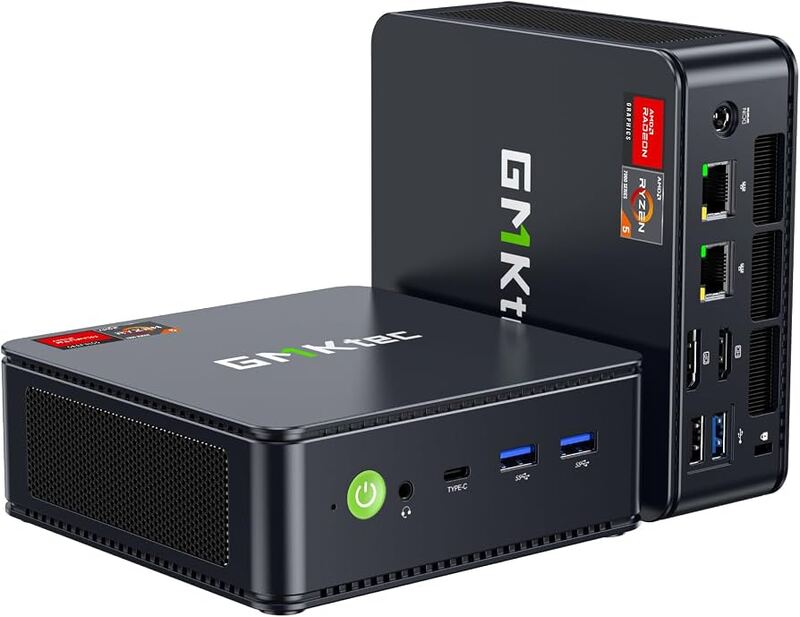
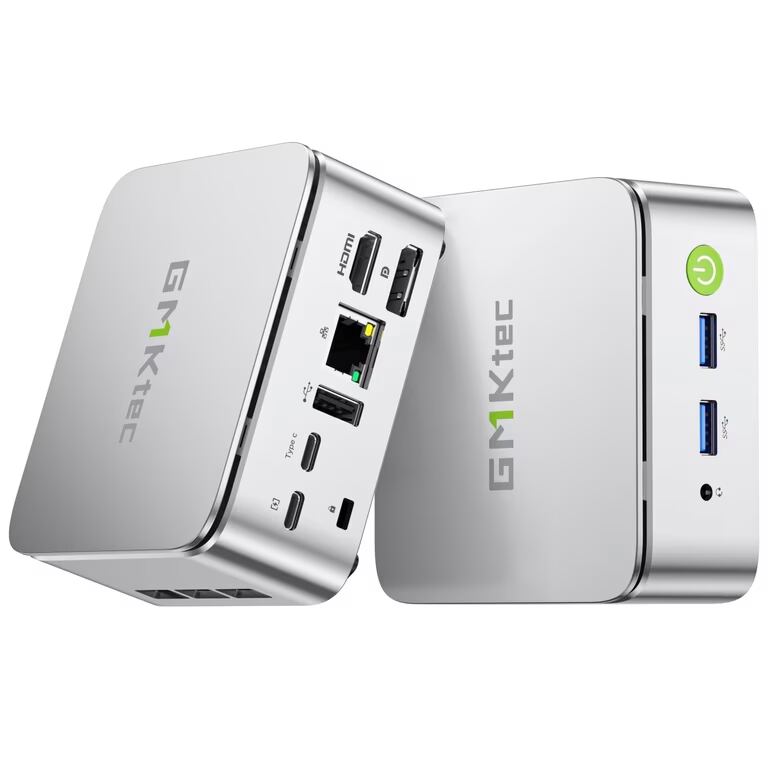
The Geekom A9 Max 2026 Edition features a powerful Ryzen AI 9 HX 470 processor and dual USB4 ports, providing superior connectivity compared to the Wi-Fi 5 limitations of the GMKtec G10. However, its single-channel memory configuration severely bottlenecks integrated Radeon 890M graphics performance, whereas the GMKtec NucBox M6 Ultra's dual-channel DDR5 RAM ensures its Radeon 760M graphics reach their full potential.
Rating sources
Our 3.4 score is the average of the 3 scored reviews above; 3 more reviewed it without printing a score and are not in the average. More about methodology.